|
 |
March - April 2001 Volume 33, Number
2 ISSN: 0162-3583 Number 194 |
|
|
On the
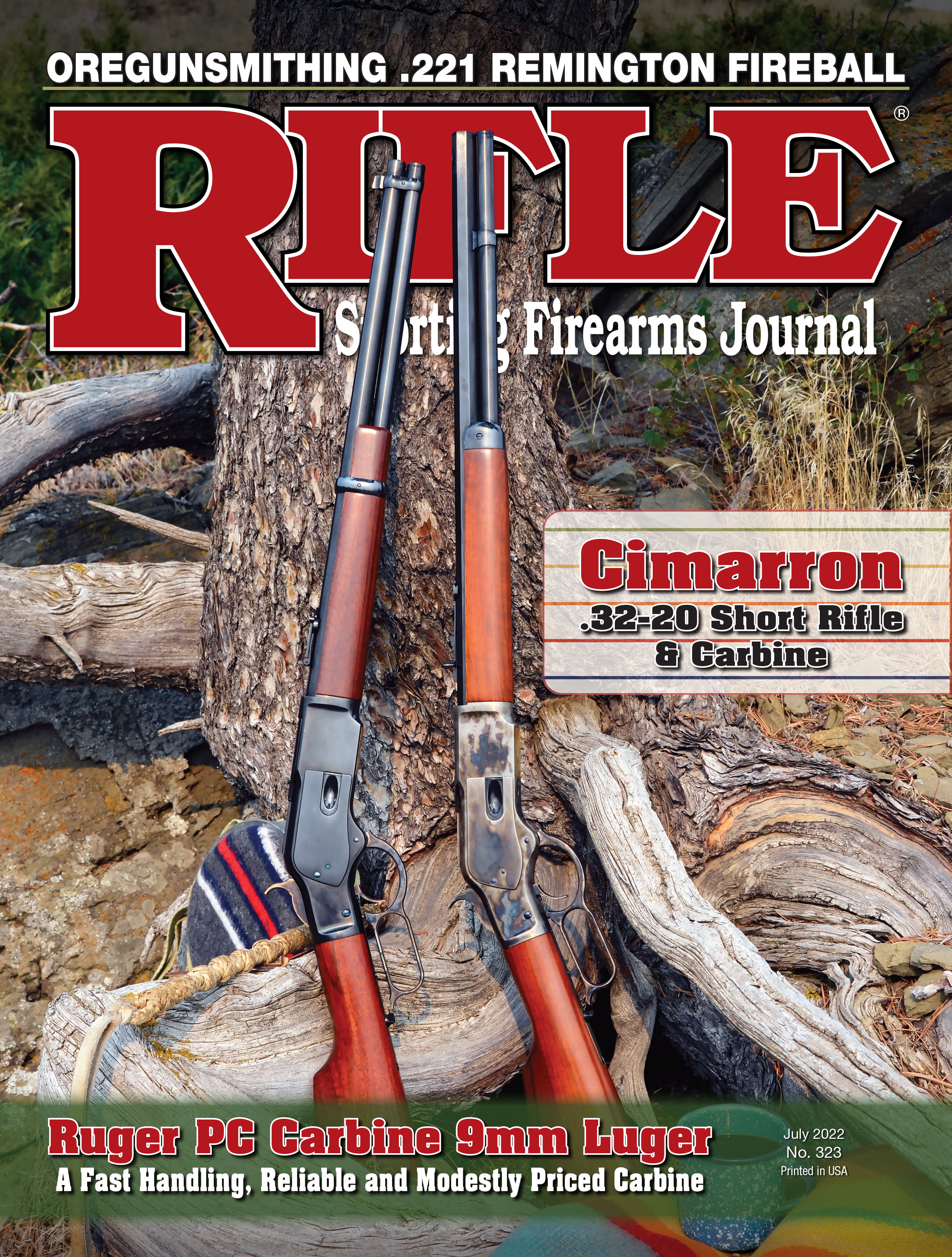
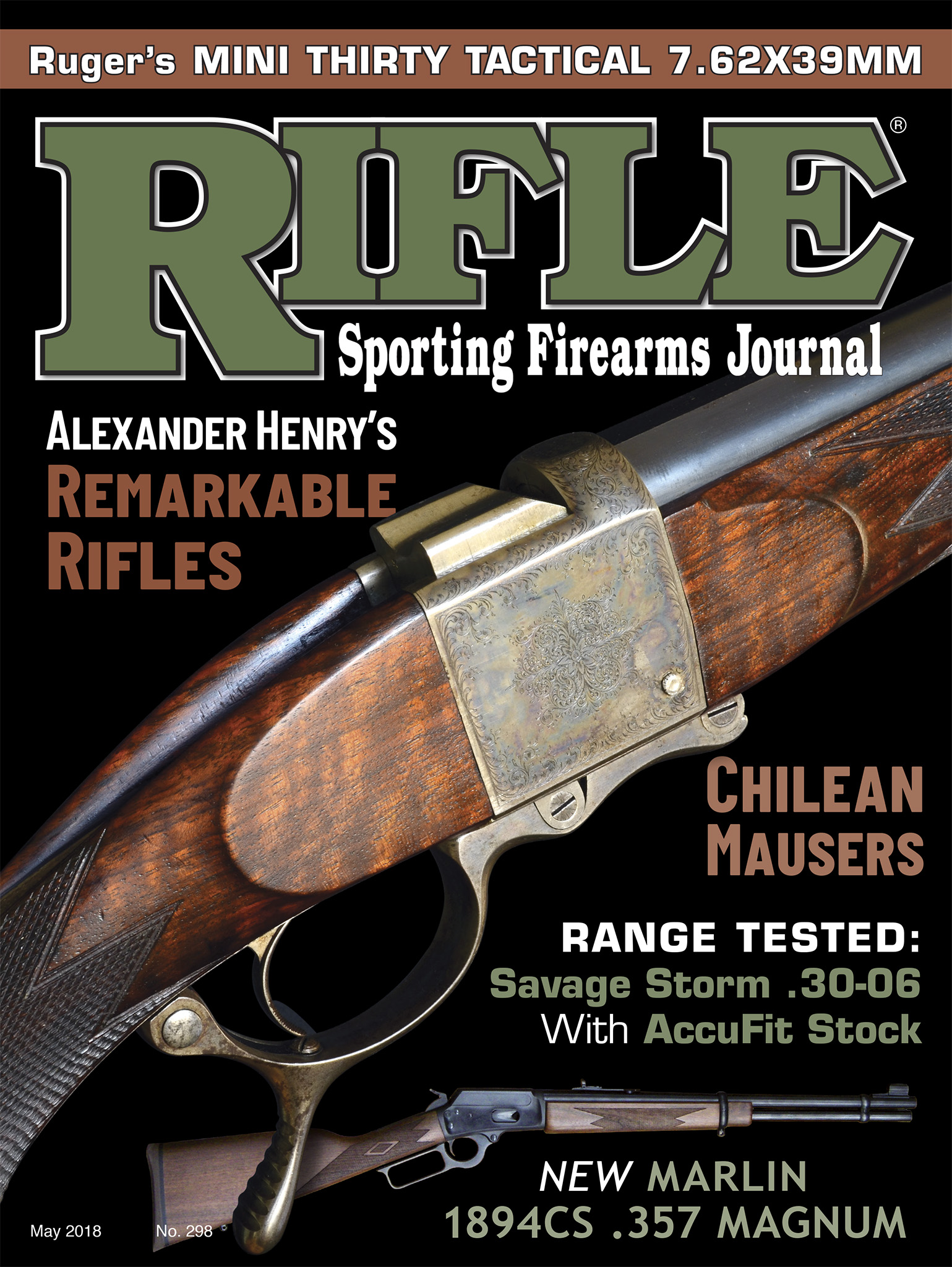
cover... This issue is only available on CD-ROM.The stainless steel Marlin Model 336M is shown with a Leupold LPS 1.5-6x 42mm scope in Leupold rings and mounts. Photo by Stan Trzoniec. Purchase the CD-ROM here |
|
|
|
|
|
|

Evolution in hunting tools has
always moved toward longer range, from the thrown rock to todays unending lineup of
.300 magnums, but tools and skill remain two different things. These days many shooters
believe the purchase of a .300 Remington Ultra Mag and the appropriate monster scope
automatically endangers any elk within half a mile. Just place the crosshairs and pull the
trigger. Presto! Youre a long-range wapiti artiste.
Anti-hunters use this very argument
against us, saying modern rifles make hunting too easy. Lets see if its true.
Ive been hunting big game for 35 years and have seen dozens of hunters miss lots of
big game at long range, almost always by overshooting.
This is most common among new
pronghorn hunters. If the hunter hasnt purchased a brand-new zapper for the hunt, hes
sighted his old .30-06 3 inches high at 100 yards - which puts his 150-grain handload
about 4 inches high at 200. The first dawn in Wyoming he crawls up a ridge with his guide,
who says 200 yards. But the pronghorn looks tiny, and the hunter decides to hold just
above its back, as he read about in Bill Wondershots article Whanging Away!
in the September issue of High-Scorin Horns magazine. Dust erupts beyond his
buck, the pronghorn departs, and the guide asks, Where the hail did you hold?
This scene is caused by pessimism,
dreams of glory and brainwashing. First, the hunter assumes the guides a
range-judging idiot, even though our hero has never seen a buck pronghorn before. The
glory comes from wanting to tell the boys in Minneapolis how he expertly slipped a
150-grain Hornady through the bucks heart at 350 yards. The brainwashing claims a
modern magnum is essential at long range.
Long Range, that distant, winking
devil! Some claim long begins at 300 yards, while a few others put it past 400
or even 500. I say long range varies more with the shooter than the cartridge, though if
pressed would place it at about 175 yards, because thats where the average hunter
starts holding a little high - and missing animals.
Do you want to hit big game
consistently beyond 175? I will not discuss shots beyond 500, because after seeing
hundreds of big game animals taken, Ive yet to see a first-shot kill on any big game
past that range.
Only about 1.5 percent of the big
game Ive seen taken fell to a well-placed bullet beyond 400 yards. Here are three
steps necessary to making clean quarter-mile shots:
1) Sight in properly with an accurate
rifle, using ammunition with enough muzzle velocity for the bullets to expand at maximum
range.
2) Know the range. Not guess, KNOW.
3) Practice, especially in the wind.
First, we need a rifle that groups
three shots, consistently, into 2 inches at 200 yards. Most big game scopes are set to be
parallax-free at around 200, one reason rifles often show better relative accuracy at 200
yards than 100. If your rifle wont consistently group three shots into 2 inches at
200 yards, then it isnt capable of consistently hitting an 8-inch paper plate at
400. And were looking for the capability to hit the center of a deers chest,
not somewhere around the edges. Most modern factory bolt actions will attain 2 inches at
200 yards with a little fiddling, usually through epoxy-bedding the action and free
floating the barrel.
If you handload, some combination
should do the job if you do yours, but when using factory stuff, I obtain at least three
boxes of the load desired, then run them through my RCBS Case Master, checking how
straight the bullets are seated, separating the 20 worst rounds. I use those for sighting
in and practice, the others for serious hunting. If you dont have a
cartridge-spinning tool, roll the rounds across a piece of glass. Separate any that show
tip-wobble.
My custom 7x57 from Rifles, Inc.
will group my best handloads into one inch at 200 yards, but sometimes I dont have
the time to load a couple boxes. One of the best factory 7x57 loads for pronghorn and
average deer is Hornadys Light Magnum using its 139-grain boat-tail InterLock. From
this rifles 24-inch Lilja barrel, this load chronographs 2,925 fps. But is it
accurate enough?
Sixty recent rounds showed a maximum
run-out of .006 inch, pretty darn good. I separated them into three boxes, one with
run-out over .004 inch, one with run-out between .003 and .004 inch, and one with run-out
under .003 inch. Then I shot three-shot groups with each at 100 yards, using a new Burris
Fullfield II 3-9x scope, with these results:
| run-out
(inch) |
group (inches) |
| .005+ |
1.59 |
| .003 to .005 |
1.03 |
| less than .003 |
.74 |
I cannot beat the .003-inch stuff
much with my finest handloads. At 200 yards it averaged under 1.5 inches.
Modern propaganda suggests muzzle
velocities under 3,200 fps are insufficient for long-range shooting. Instead, look at
downrange velocity. Any big game bullet will expand reliably down to around 2,000 fps.
Look for that number in the ballistics table, and your load will do fine out to that
range. The 139-grain Hornady boat-tail in its Light Magnum 7x57 load is still traveling
1,980 fps at 500 yards.
Next, how to sight in. For years the
standard advice was 3 inches high at 100 yards. This came directly from The Celestial
Chorus of Gun Writing: Elmer Keith of Guns & Ammo, Jack OConnor of Outdoor Life
and Warren Page of Field & Stream. The bullet would peak 4 inches high at around 150
to 175 yards, then start dropping, hitting point of aim somewhere between 225 and 300
yards, depending on the cartridge. Even pronghorns measure around 15 inches through the
chest, so a center hold would do the job out to around 250 or 300 yards.
This system worked very well with
low-mounted scopes and the moderate-velocity cartridges Keith preferred, and even with the
faster rounds OConnor and Page liked. Being a gullible young hunter, I sighted in
all my big game rifles 3 inches high for a long time, with fine success. But sighting in 3
inches high doesnt work as well with many of todays rifles. Heres why.
Mount the scope higher than the
standard 1 1/2 inches listed in most ballistics tables and the midrange trajectory can be
too high, an effect exaggerated by extremely high velocity. Sight a 7mm STW 3 inches high
at 100, using a 140-grain spitzer at 3,400 fps and a fat scope mounted as high as a camel
saddle, and the center of impact will be at least 5 inches high at 200 yards. If the rifle
isnt capable of 1 1/2-inch accuracy at 200 yards, shots on the high side of the
group may land a couple inches higher. Add 2 to 5 inches trajectory and its very
easy to miss a 200-yard pronghorn if your aim wanders slightly high.
But shoot a lot with a more normal
rifle and scope and the +3 inches sight-in, and youll automatically compensate for
the added trajectory. When I guided pronghorn hunters, my backup rifle was my grandmothers
.257 Roberts. This Remington Model 722 was extremely accurate, often putting three
100-grain Nosler Partitions in an inch at 200 yards. The muzzle velocity of my handload
was over 3,200 fps from the 24-inch barrel. The scope was a steel-tube Weaver 3-9x with
about a 36mm objective, mounted as low as possible. At 200 yards the bullets landed 4
inches above point of aim, then hit dead on at 300 and 10 inches low at 400. At normal
ranges I automatically held slightly low and cannot remember missing an animal with that
combination.
But lately Ive been sighting
in most rifles a little lower at 100 yards. Why? Most big game animals are shot at ranges
inside 250 yards.
Over the decades Ive kept notes on all
my big game animals and those taken by my wife, friends, guides and other companions. Many
fell before the advent of laser rangefinders, so ranges were rounded off to the nearest 5
or 10 yards, but always paced when possible. If not possible, calculations were made from
bullet drop. The results from hundreds of animals, all numbers in yards, are listed in the
table on page 34.
|

The whitetails came from East and
West, but there wasnt much difference in ranges. Eastern deer were taken from
hardwood forests to soybean fields, and western deer from prairie to rain forest. The mule
deer came from both mountains and plains. The black bears were all taken by spot-and-stalk
hunting, not over bait or with dogs. The elk were all killed in Montana, where most elk
are taken in timber, though I understand longer shots can be common in the Southwest. The
African game was taken everywhere but truly open country, ranging from river bottoms to
open thornbush, the terrain that makes up the vast majority of safari country. Given those
parameters, these probably do represent fair averages for each type of game. (Other game
was omitted because too few made the list for a reliable average.)
The 700-yard pronghorn came after a
barrage of shots by a self-styled expert. Eventually a buck fell, though not the buck the
expert wanted. He didnt notice until the deed was done, even through his
high-powered scope. The longest one-shot kill Ive ever seen was 450 yards, a
pronghorn buck my wife shot nine years ago using her trusted Browning A-Bolt in .270 WCF
and a 4x Leupold scope. Eileen deliberated a long time as we lay above the Dry Creek
flats, but when she pulled the trigger, the buck stood up on his hind legs, twirled twice,
then fell, shot through both shoulders.
Ive seen hunters armed with
the latest rifles shoot at a lot of open-country game, mostly pronghorns and caribou. Ive
seen an awful lot of deer taken, in all sorts of terrain, and have yet to see one killed
much past 300 yards. A couple were hit past that range, but none recovered. The two
longest shots on deer I made myself - and Ive never felt the need to shoot at a buck
farther away. Deer rifles dont need to be sighted in for 300 yards, or even 250. (I
should also mention the fact that any long-range sight-in needs to be precise. Years ago a
buddy and I went to the local range to sight our rifles for deer season. A couple of older
guys were also sighting in their rifles. We all shot, then went to check our targets. The
older fellows came over to look at our target. Tonys shots were in a nice group
about 5 1/2 inches high. Thats perfect! one of the older men said.
Three inches high at 100! I wonder how many misses have been blamed on such
3 inches-high sight-ins?)
But even long-range shooting doesnt
require long-range sight-in - as long as you KNOW the range and trajectory. The +3 inches
sighting originated when most scope reticles were simple crosshairs, not the familiar
plex of today. Plain crosshairs are useless as ranging tools, and the only
accurate rangefinders were military models, longer and heavier than most rifles.
So hunters guessed. In my youth I
read many essays on this art. Most suggested imagining football fields laid end to end
across the landscape. This made some sense on a grassy pronghorn flat (though at really
long range most people envisioned too many football fields) but very little while looking
across an elk canyon.
Some suggested relying on your guides
estimate, because guides are familiar with the country and game at hand. I never hunted
with a guide until my late 30s, and in the dozen years since have come to strongly
distrust the ranging ability of anybody without a laser rangefinder. Human eyes are simply
too close together to reliably estimate any distance beyond rock-throwing range, one of
the lessons the laser rangefinder has taught some, but not all.
Most recently an Alaskan guide told
my hunting partner that a bull caribou stood 200 yards away, when the real range was over
300. I knew this by comparing the bulls chest to the reticle in my scope, but the
guide insisted so strongly that my friend went along with the wild-ass guess. My buddys
first shot (from a .30-06 sighted in at 200 yards) broke the bulls leg below the
body. He held higher and got the job done. We paced the range at 325.
The only guide Ive ever known
worth a whoop at eyeballing range was me, but only when I guided pronghorn hunters
intensively. I got good by first guessing the distance, then pacing it off. But I never
claimed the same skill on any other game and have lost the ability, since I never guess
anymore, instead using my scopes reticle or a laser rangefinder.
Mostly I use a reticle, for two
reasons. One, I dont have to carry something else around. Two, few laser
rangefinders are perfectly reliable in country where theyre really needed.
Pronghorns and caribou are the only really open-country game animals in North America.
Problem is, the affordable laser rangefinders of recent years feature a very
wide beam. Consequently, at distances where shooting a pronghorn or caribou becomes
problematic, the wide beam sometimes bounces off not the animal but the surrounding
landscape. The reading can be quite wrong Ive had a laser rangefinder tell me
the same placid pronghorn buck was 153 and 318 yards distant, in readings taken 10 seconds
apart - or you get no reading at all.
The only rangefinders Ive
tried that work all the time are the Leica Geovid and Swarovskis RF-1 and LRS. All
are expensive but use narrow beams capable of bouncing off a pronghorn at 500 yards. I own
the RF-1, but mostly use it for prairie dog shooting, since both a binocular and
rangefinder around my neck are just too much. The Geovid combines the rangefinder with a
7x42 binocular but costs $3,000 and weighs 3 pounds. Most of us cannot tolerate more than
2 pounds around our neck for any length of time, and less works better. (Early in 2000
Leica announced a $400, pocket-size rangefinder supposedly as accurate as the Geovid. Ive
yet to see a production model, though rumors are theyll be here soon.) The Swarovski
LRS combines a scope and rangefinder but is almost as heavy and expensive as the Geovid.
So I use my reticle.
Lots of people have described how to
do this. I keep it simple. First, I determine how much the reticle of my scope covers at
100 yards. Sometimes this can be found in a catalog; if not, a target marked in one-inch
squares will do. My old .257 is a fine example. When set on 6x the scopes reticle,
from crosshairs to the tip of the bottom post, subtends 5 inches at 100 yards. Subtend is
a fancy word meaning span or surround, and at 6x it increases arithmetically at longer
ranges: 10 inches at 200, 15 inches at 300, 20 inches at 400.
This worked handily for pronghorn hunting,
since a mature buck usually measures 15 inches from back to brisket. If a bucks
chest apparently fit the crosshairs-to-post distance, he stood about 300 yards
away and I held right on. If his chest appeared bigger than the space, he was closer, so I
held slightly low on the chest, compensating for the bullets height above point of
aim. If his chest appeared 2/3 the size of the reticle gap, he was about 450 yards away,
which is how one looked on an October morning in 1988, when I killed my biggest pronghorn.
He fell to one 100-grain Partition at 430 of my paces, which measure just about 36 inches
with my stride stretched slightly. (The bottom post also made a perfect aiming point at
500 yards, where the bullet dropped two feet. I
once finished a buck a client wounded at a little over 500 yards, by holding the posts
tip on the bucks spine.)
|
You can use the method with any
duplex reticle, but these days many scopes feature specialized long-range reticles,
usually mil-dots. Two late entries, perhaps more practical for most hunters, are Burris’s
Ballistic Plex and Swarovski’s TDS Tri-factor. The Ballistic Plex is found only in
Burris’s 3-9x Fullfield II (the model on my 7x57) and features four slashes across
the bottom of the vertical crosshair. These correspond closely to the trajectory of many
big game loads out to 500 yards. (Burris includes a chart.) Sighted dead-on at 100, the
Hornady Light Magnum 7x57 load matches up well. I’ll be using this outfit on an
upcoming Coues’ deer hunt and report afterward.
The Swarovski reticle is similar,
except that the lower slashes grow progressively longer. Supposedly this “Christmas
tree” reticle matches the drift of most modern hunting bullets in a 10-mph breeze. If
there’s no wind, you aim with the intersection of the slash and the crosshair. If
there’s a breeze, aim with the end of the appropriate slash. I’ll be trying the
TDS on prairie dogs next spring and report on it too.
This brings us to the final step:
practice. Any practice helps, but the best is varmint shooting. A single day spent
shooting prairie dogs or woodchucks, especially in a breeze, teaches more about game
shooting at varying distances than any amount of reading or benchresting. You cannot learn
to compensate for wind drift through ballistics tables. The numbers in every table I’ve
seen only list how much a bullet blows sideways in a wind 90 degrees to the shooter. They
do not list how much a bullet drifts in a breeze quartering from the rear, varying between
12 and 17 mph, or how much a bullet rises when a stiff wind hits a hill near the target.
This can be considerable. I once
shot and missed a distant rockchuck nine straight times with a .220 Swift that had, in my
hands, killed a running (and extremely unlucky) coyote at over 300 yards with a shot right
between the ears. This rockchuck sat on a rocky ridge top about 400 yards away. I lay in
the calm air on the east side of the ridge, while a 30-mph wind blew against the west
side. The wind hit the ridge and deflected almost straight up, along with my 55-grain
Nosler. I finally noticed the grass on the ridge top lay bent almost flat by the wind and
killed the chuck by holding a foot low.
The only way to become competent at
hitting distant targets is by shooting. I do this every year, mostly with .22 or 6mm
varmint cartridges with muzzle velocities of 3,500 to 3,900 fps. Relatively light bullets
at these velocities drift much like heavier hunting bullets at 2,800 to 3,000 fps. Please
feel free to confirm this with a few shots on the same day from your favorite big game
rifle.
Now, let’s put it all together.
I’m a caribou addict and hadn’t been after those innocent, beautiful animals in
several years, so booked a hunt in Nunavut Territory with Canada North Outfitting, Inc.
(PO Box 3100, Almonte, Ontario, Canada KOA 1A0), whom I’ve used for several
adventures in the Far North. I took what may be my favorite big game rifle, an Ultra Light
Arms .30-06 with a 10-year-old 1.5-6x Bausch & Lomb Balvar and 180-grain Federal
ammunition using its new Deep-Shok “whitetail” bullet. Unlike many of today’s
Wonder Bullets, the Deep-Shok is simple. The jacket encloses a bulb of lead core in the
boat-tailed rear, thickens along the sides to hold the bulb in place, then thins near the
tip. It holds together not just on 300-pound bucks but much larger game (Federal claims an
average of 85 percent weight retention) and sells for little more than competing “deer”
ammunition.
Because of their simplicity,
Deep-Shoks are also accurate. Sorting three boxes resulted in 40 rounds with a maximum of
.003 inch run-out, averaging 1 1/2 inches for three shots at 200 yards with a muzzle
velocity just under 2,800 fps. This is pitiful compared to most modern magnums, but
remaining velocity at 400 yards was over 2,000 fps. I sighted in 2 inches high at 100, for
a drop below point of aim of 7 inches at 300 yards and 22 inches at 400.
When 10 assorted caribou hunters
arrived in Arviat, the little Inuit village formerly known as Eskimo Point, we were
informed that no caribou could be found near our planned fly-in camp. Instead we’d be
camping just outside town, and Inuit guides on ATVs would take us to caribou. Some hunters
were initially unhappy with this deal, but we filled all our tags with very good bulls. (I’d
spent time in caribou camps with no caribou before and never once complained.) The Inuits
went beyond the call of normal guiding to make us happy and successful, but the limited
time would make every chance more important.
The first night my partner Len
Murphy and I stayed in a tiny trapper’s cabin with guides Darryl Baker and Johnny
Mamgak, the next morning sighting in our rifles on an empty Log Cabin syrup can at 50
yards. Here’s another tip: one inch high at 50 yards puts most scoped rifles 2 to 2
1/2 inches high at 100. I’ve used this trick in more than one camp lacking a formal
range, since it’s much easier to shoot precisely from improvised rests at 50 yards
than 100.
Len took his bull first, which
confirmed these were the slightly smaller-bodied caribou common near the Arctic Circle,
measuring about 21 inches from back to brisket. This worked out perfectly with my scope,
with its reticle gap of 7 inches at 100 yards. If a bull’s chest fit the gap, he was
300 yards away. If 3/4 the size of the gap, he’d be about 400 yards out.
Two hours later we found another
fine bull in a small herd. They were nervous, leading us over three low ridges before I
crawled up the fourth to find the bull grazing at slightly over 400 yards. A fair breeze
quartered from over my right shoulder, so from a prone rest over my day pack, I held 6
inches over the bull and a foot into the wind. At the shot the bull wobbled a few feet and
stood angling toward me, head lowered. I held the same amount high and right, and on the
second shot he collapsed. The first had
gone through both lungs; the second went just inside the left shoulder, ending up in the
right ham, nicely expanded and weighing 167 grains. There were 430 of my steps to the
bull, 420 of Len’s, but he’s 6 feet, 2 inches with very long legs.
Are super-magnums necessary for long-range
shooting? They can make things easier, especially in the wind, but if you know the range
and your rifle, even a factory-loaded 180-grain .30-06 will do. That mundane combination
matched the longest shot of my life.
|
|
 |
|
|
|
|