


Fouling Shots
A Matter of Survival
column By: Art Merrill | November, 26
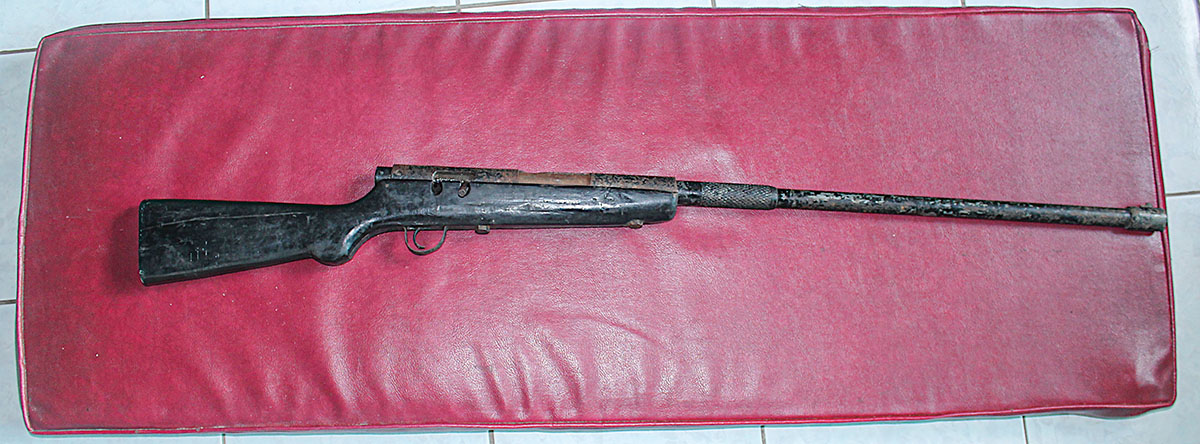
Perhaps the most remarkable firearm I’ve ever handled came about as the result of a natural disaster of historic proportion that killed thousands, closed roads for weeks (and suffered bandits when they partially reopened), and for five months left our village without electricity.
It was a full-on, real-life survival situation.
As if this weren’t enough, we learned 70 convicts had escaped a damaged prison about 50 kilometers away, and a group of them were literally raping and murdering their way towards our village. In response, I cobbled together a kind of defense-in-depth, starting with the walls around my small courtyard. I padlocked the gate. There was plenty of torn-away tin roofing from destroyed homes lying about the streets, and we gathered up enough to lay against the inside and outside courtyard walls so that anyone climbing the walls would make an alarming racket. We drove nails through boards and at night laid the boards on the ground nail-point upwards; anyone jumping the walls onto those nails would produce considerable noise, too, as the population universally wears only thin sandals.
I showed the others how to defend at the house doors with machetes, sweeping at an intended invader’s feet under the doors or thrusting upwards from below (an unexpected direction) if an invader managed to force a door open slightly. “Criminals are not brave,” I told them, “and if you injure one, the rest will run away.” I gave them sharp kitchen knives and insect spray. “Spray it in their face and eyes,” I said. These were peaceable people living in a country where firearms possession is forbidden. Even carrying a machete off one’s property is a crime unless going to or from a place where it is needed for work. Their silent attention signaled to me how appalled they were at the prospect of engaging in such violence.
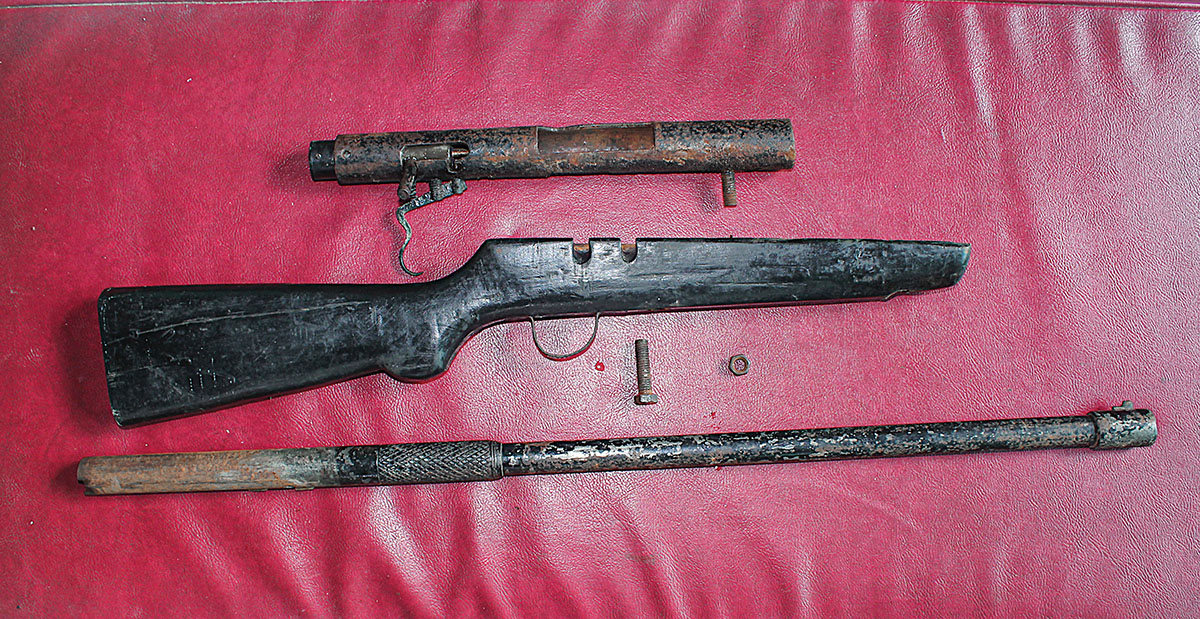
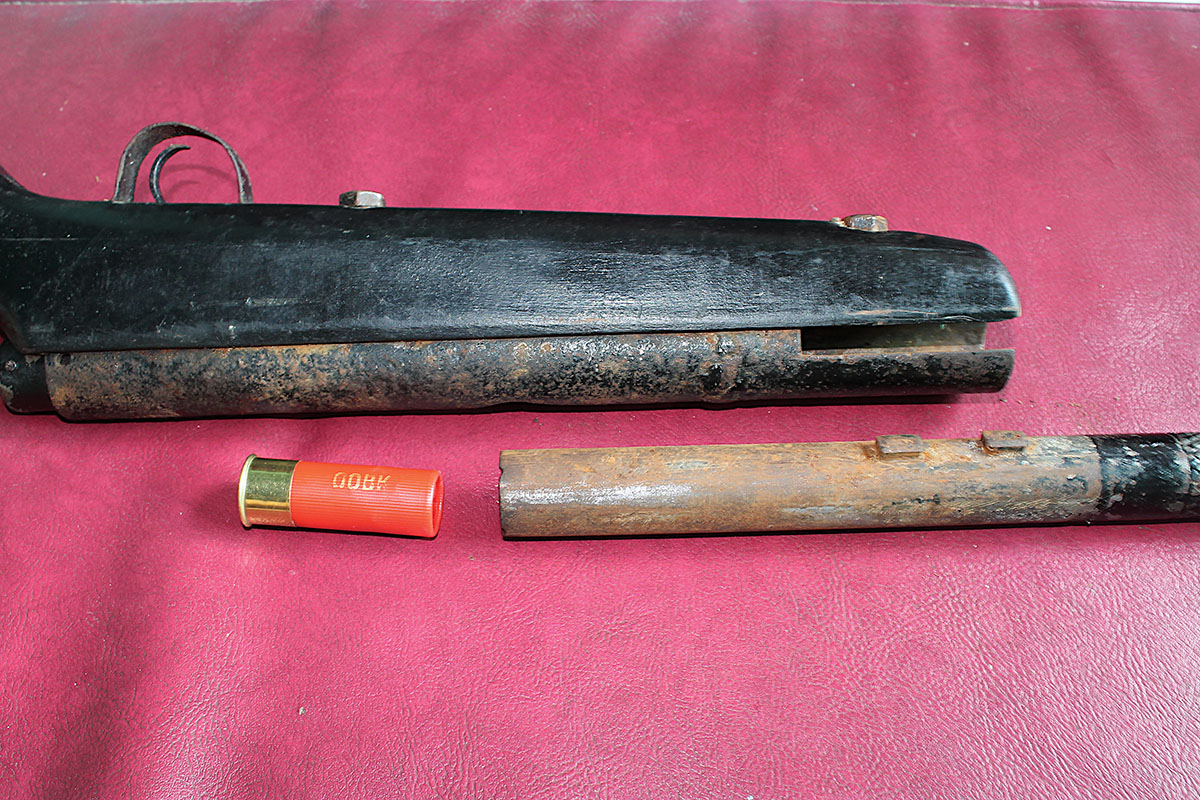
The maker had used steel tubing to fashion a barrel and receiver. Two steel locking lugs welded to the barrel slid into a slot cut in the left receiver wall; a quarter turn of the barrel rotated the lugs into recesses in the receiver to lock the barrel in place. A steel, reinforcing sleeve soft-soldered or perhaps epoxied onto the back of the barrel included knurling to facilitate rotating the barrel into the locked position. A similar short sleeve at the muzzle added some strength at that point, too. Common hardware store nuts and bolts secured the receiver to a hand-carved wooden stock coated with black paint.
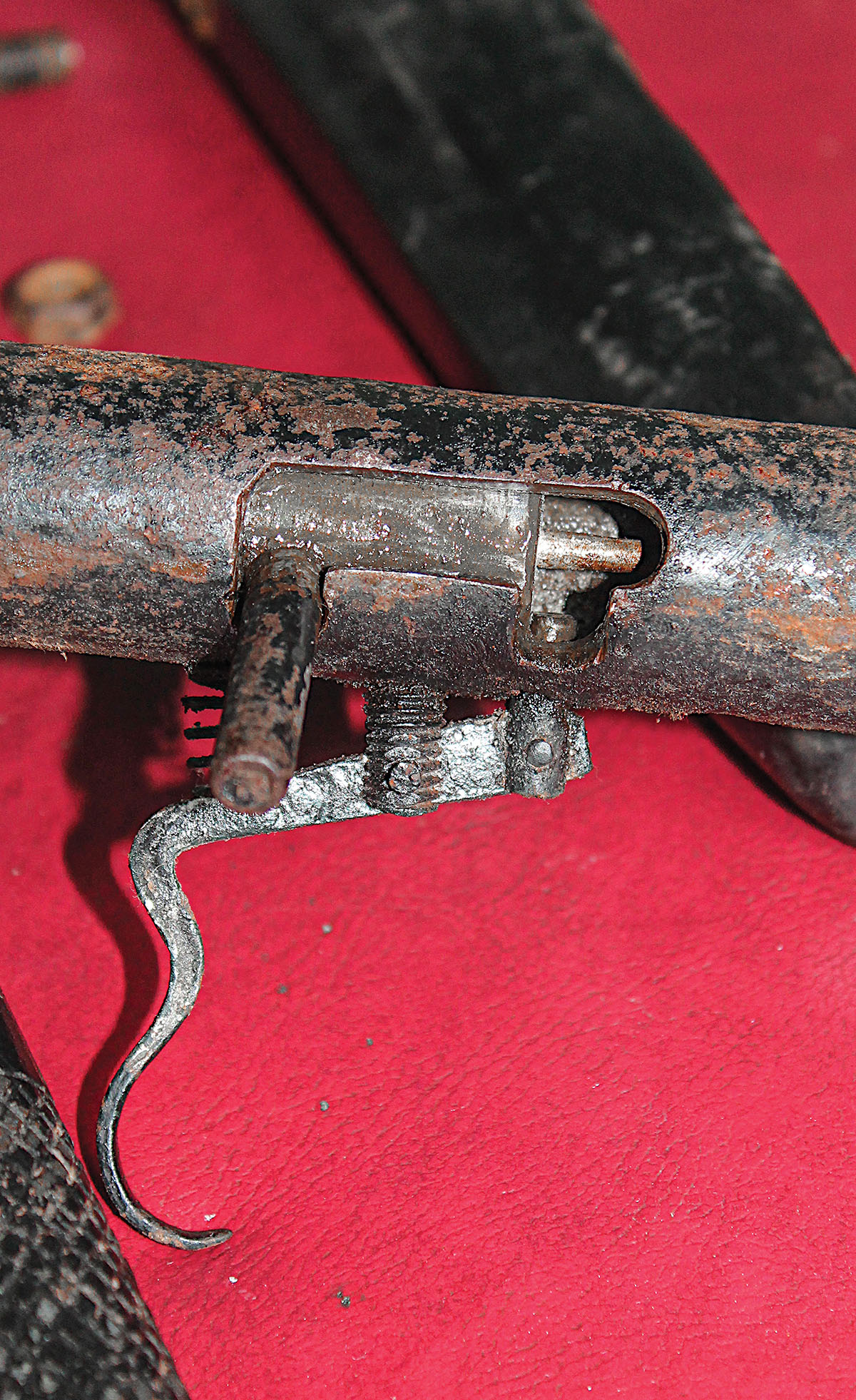
I doubt anyone could design a simpler trigger mechanism, this one composed of only four parts: trigger, spring, pivot screw and a rudimentary sear. The spring pushed the back of the trigger downward, raising the “sear” (a bit of steel rod) upward in front of the bolt face to hold the bolt rearward against the pressure of its large spring. Pulling the trigger lowered the “sear” and allowed the bolt to fly forward and its fixed firing pin to strike the shotshell’s primer.
To fire, one lowers the handle into its forward recess, then removes the barrel with a twist and a pull, inserts a shotshell into the chamber, and reinstalls the barrel with a push and a twist. Pulling the bolt handle rearward cocks the action; the homemade shotgun then goes “bang,” and hopefully holds together.
Those latter two actions going “bang” and not blowing apart upon firing were both of considerable concern to me at the time. The accompanying photos are only as clear as circumstances permitted (yes, despite the grim situation, my fascination demanded I make a record of the thing), but they do show the badly rusted condition of the homemade shotgun. With only pliers and a screwdriver, I disassembled the shotgun and did what I could to remove rust from the receiver interior and the bolt and to lubricate them with coconut oil in hopes the action would function slickly enough to fire. But that presented the other side of the coin: if it fired, would it explode in my face? I showed the others how to operate the shotgun and said if the time came to employ the thing, to fire it from the hip rather than from the shoulder. They agreed unanimously among themselves that only I would use the shotgun and that they would stick to the machetes and bug spray.
I fervently hoped that if the time came, simply brandishing the homemade shotgun would suffice. Sleeping on the living room floor with windows open, every night I snapped awake to an adrenaline surge and grasped a machete whenever the wind rustled the tin roofing laid around the courtyard walls. As it turned out, however, the escaped convicts didn’t molest our neighborhood; I gladly returned the shotgun to deal with other pressing matters of survival, such as finding food.
It still strikes me how readily a clever man with a few tools can manufacture a working firearm. That homemade shotgun remains for me a compelling demonstration of the need and justification for citizens owning and bearing firearms. When the memory of it pops up now and then, I feel fortunate and grateful to live where wise men long ago firmly established our civil right to keep arms. And I recognize there are strong forces of misapprehension actively working to circumvent and abolish that civil right, rendering us all vulnerable to the whims of evil, and I must work just as actively against them.