
The New Howa Fence Line Series
An Affordable Working Man’s Rifle from Howa
feature By: Patrick Meitin | November, 26
Japan’s Howa Machinery has a manufacturing history reaching back to 1907. Toyoda’s Loom Works built textile equipment before expanding into military weapons production in the 1930s, including Arisaka Type 99 rifles used during World War II. Following WWII, Toyoda Loom Works, Ltd. merged with Showa Heavy Industries, Ltd. to become Howa Heavy Industries, Ltd. Howa resumed manufacturing textile machinery, as Japan was restricted from weapons production under the Potsdam Order resulting from WWII.
With the outbreak of the Korean War, the Potsdam Order was amended, allowing Howa to resume weapons manufacturing.
At various times, Howa produced licensed variations of U.S. M1 Garands and M1 Carbines, AR-18s under license from Armalite, and developed domestic service rifles such as the Type 64, Type 89, and Type 20 for the Japanese military. Howa entered the U.S. sporting market with the Golden Bear bolt action rifle, introduced at the 1967 Chicago SHOT Show. Howa began manufacturing Weatherby Vanguard actions in 1970, an OEM agreement that endures to this day. The company’s highly-regarded Model 1500 appeared in 1979, the Howa Model 1500 Mini Action in 2015, a design optimized for compact cartridges such as the 6.5 Grendel and 7.62x39mm Soviet.
Howa firearms are imported into the United States by Legacy Sports International of Reno, Nevada.
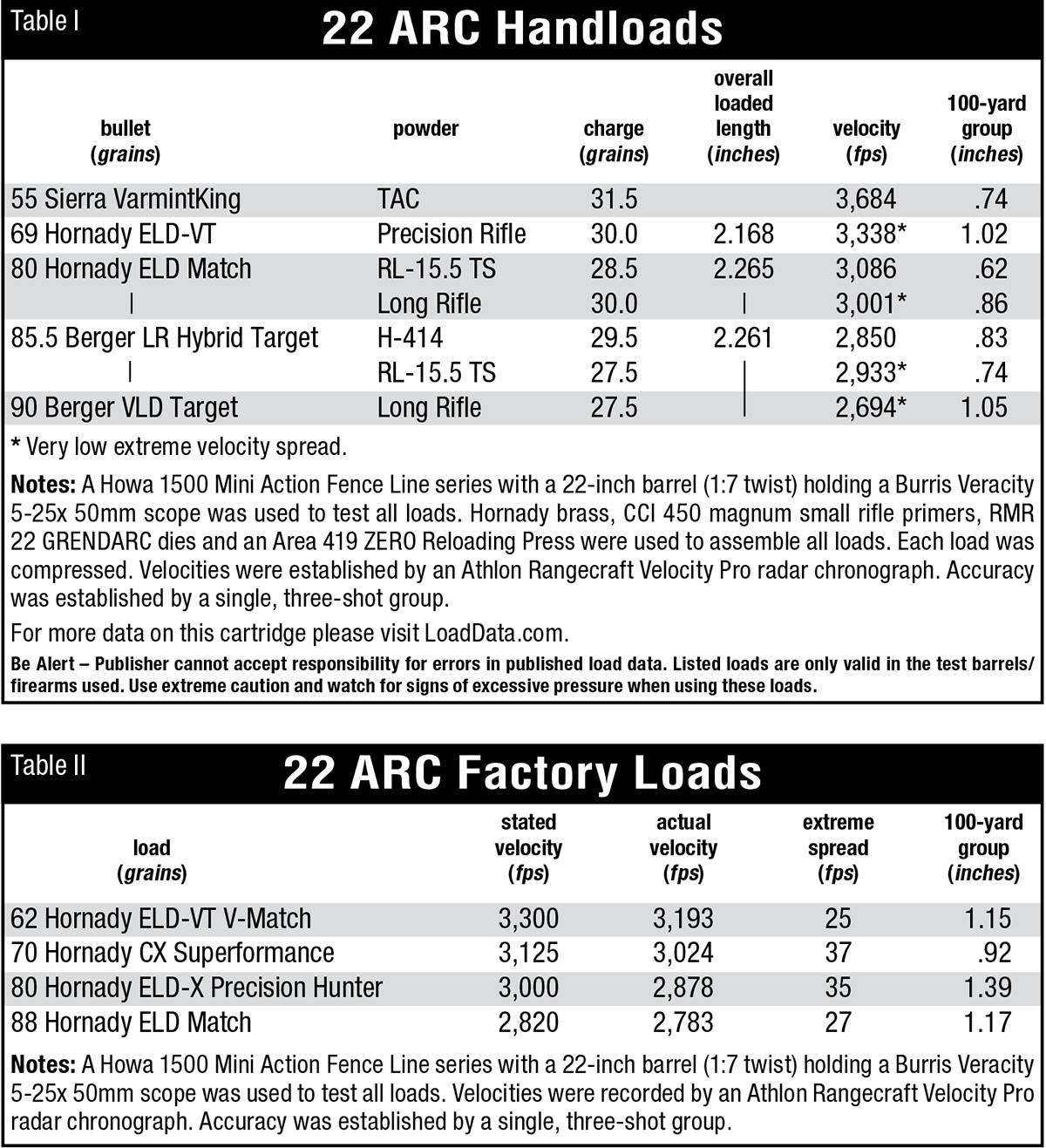
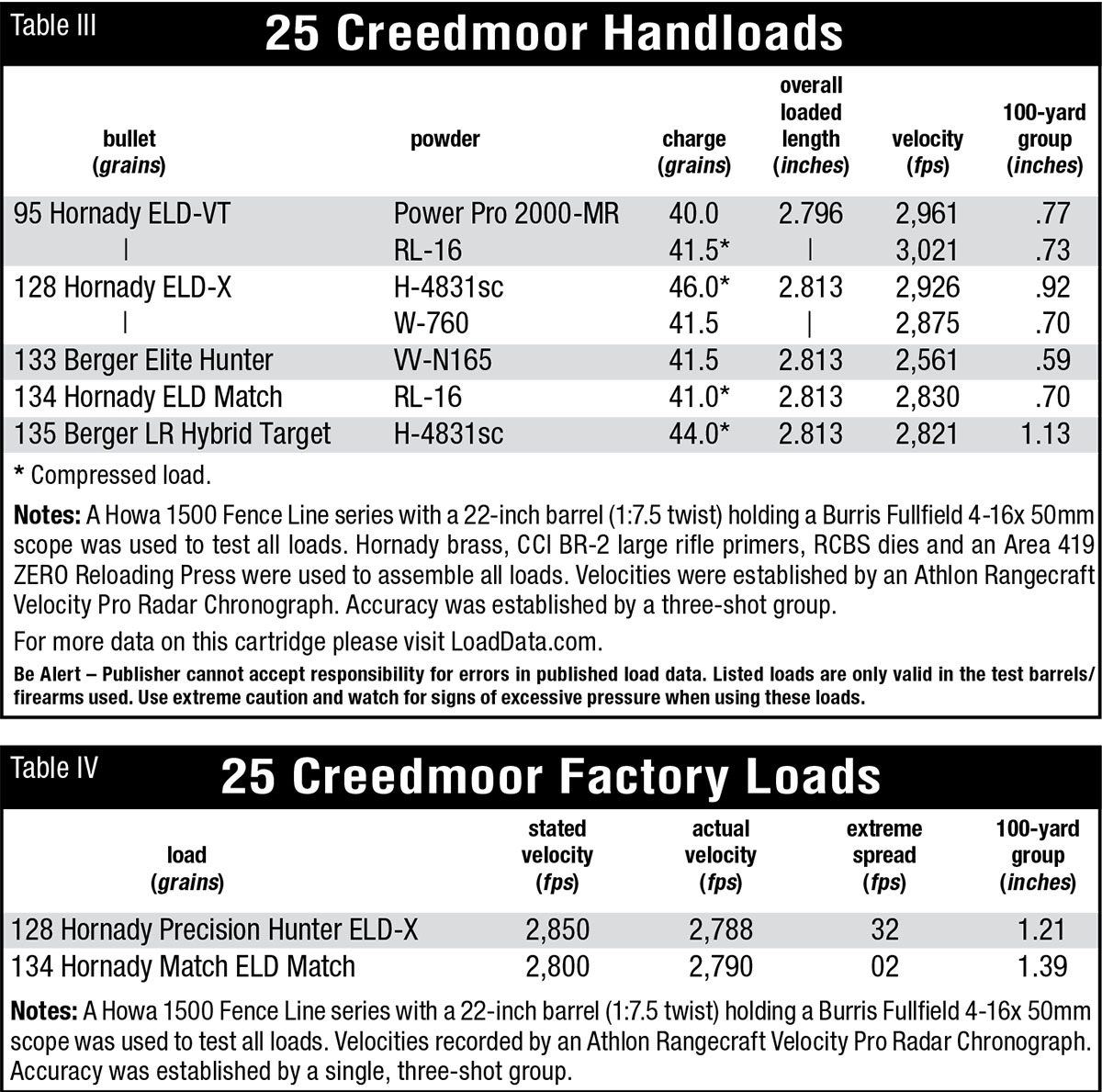
The new Howa Fence Line series bolt action rifles debuted at the 2026 Las Vegas SHOT Show, and were conceived to provide an affordable but aesthetically pleasing rifle for the masses. In the interests of more thoroughly investigating the Fence Line series, rifles chambered in both the recently released 22 ARC (built on a M1500 Mini Action) and the brand-new 25 Creedmoor (built on a standard M1500 short action) were secured.
Howa fans understand the company has a talent for introducing interesting rifles in a multitude of configurations, many of the most recent including contemporary synthetic and carbon-fiber stocks from various makers. Those less familiar with Howa should know these rifles come with a sub-MOA accuracy guarantee and utter dependability at blue-collar prices. That is what drives the 2026 Fence Line series. These are budget-friendly rifles offered in both standard (short and long) and Mini Actions that continue a nearly 50-year run of Model 1500 service. They include a $730 MSRP, with MidwayUSA, as an example, pricing them at $650 to $699 as you read this. Fence Line rifles are offered in right-hand models only.
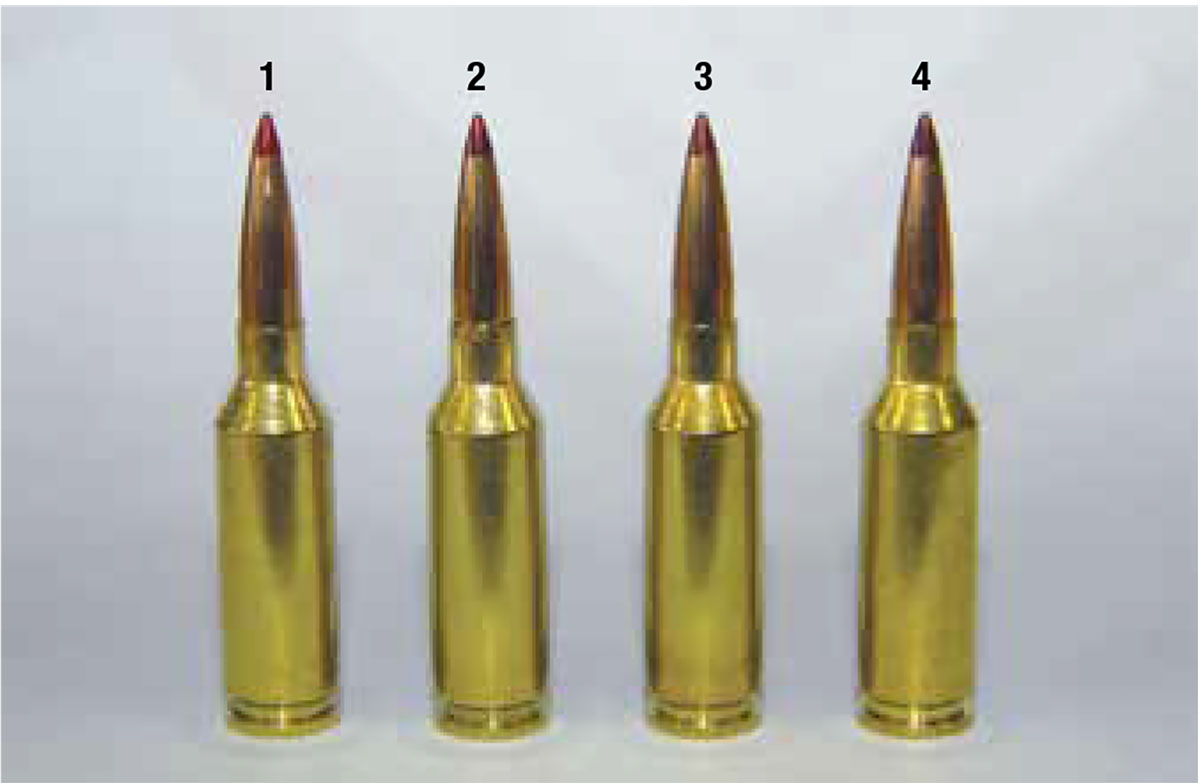
The Fence Line’s proven Howa M1500 barreled actions are manufactured to stringent quality-control standards. The Japanese adopted Deming and Juran’s quality control manufacturing procedures in the 1950s, long before the U.S. did. They include exacting headspace specs and bolt faces that sit square to the chamber.
With the Fence Line, barreled actions are given the Cerakote treatment and dropped into synthetic stocks including handsome Scorched Earth, Gray Light or Prairie Reaper sponge-paint/splatter finishes. Barrels are threaded 1⁄2x28 to hold an integrated radial muzzle brake that reduces muzzle rise and felt recoil. This also makes them suppressor ready. For those who crave interesting or new cartridges, the Fence Line Mini Action can be had in 22 and 6mm ARC, 6.5 Grendel and 350 Legend. If you prefer boring rounds, there are the 223 Remington, 300 Blackout and 7.62x39mm Soviet
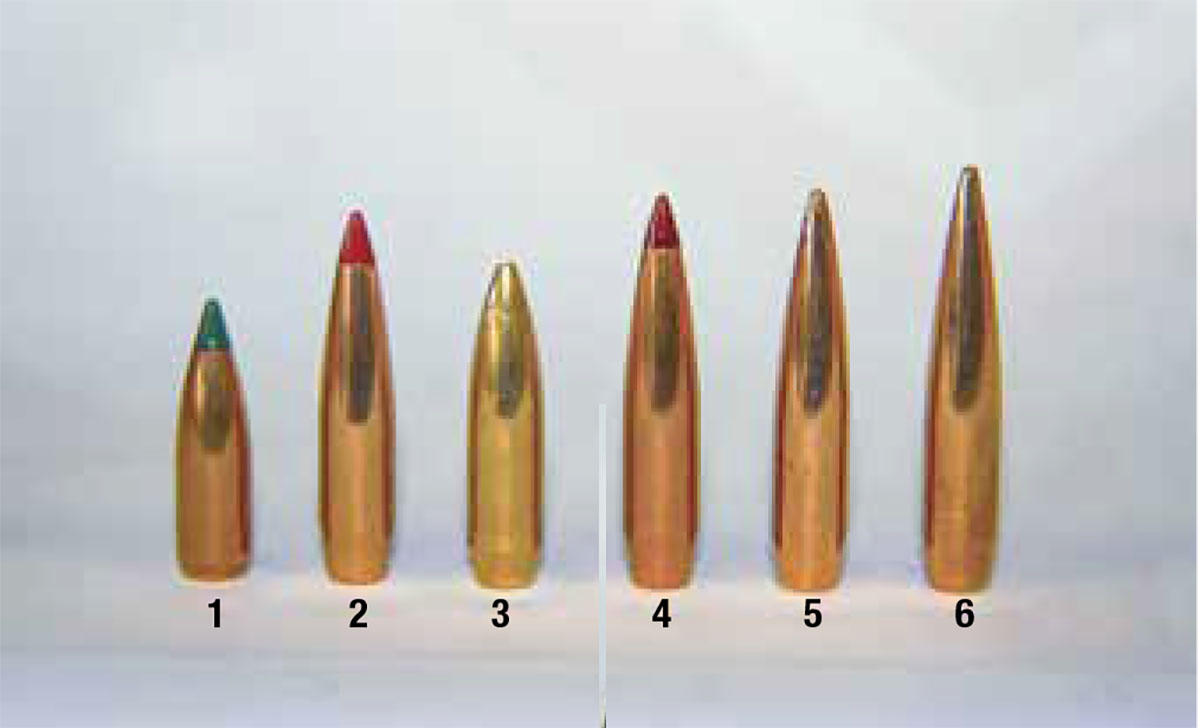
to choose from. In standard actions, choices include 22-250 Remington, 243 Winchester, 6.5 Creedmoor, 6.5 PRC, 270 Winchester, 7mm-08 Remington, 7mm Remington Magnum, 7mm
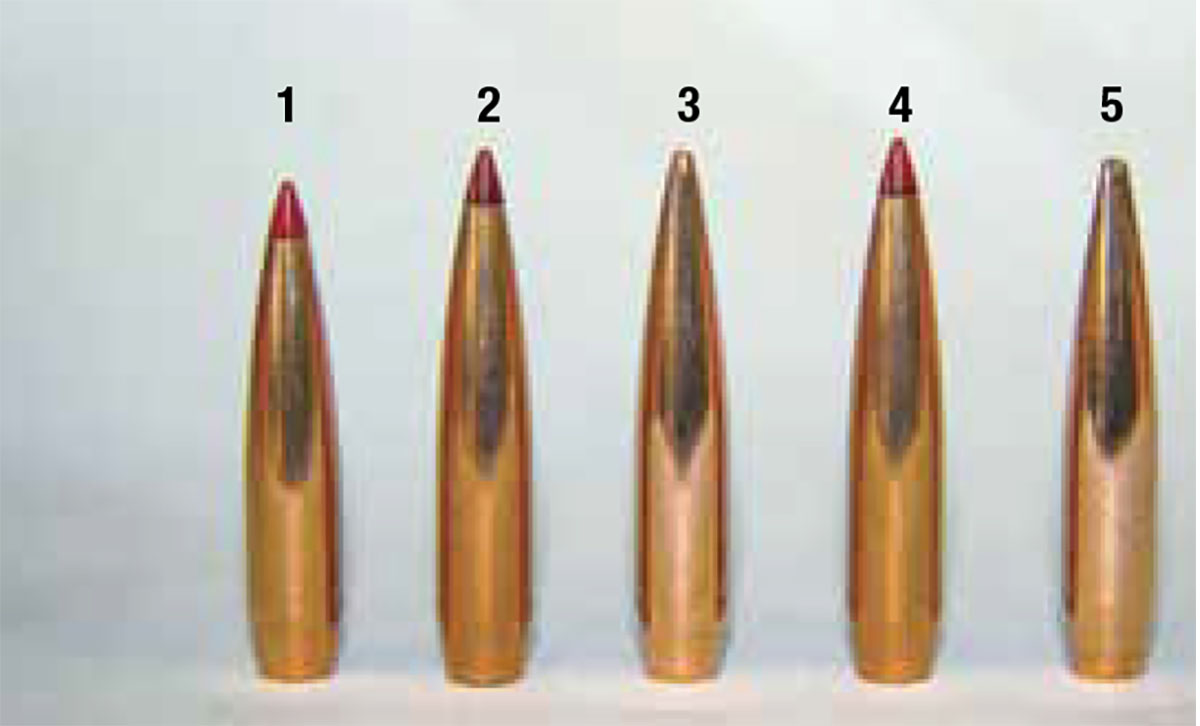
PRC, 308 Winchester, 30-06 Springfield, 300 Winchester Magnum and 300 PRC. Standard 22-inch and light varmint 20-inch barrels are available.
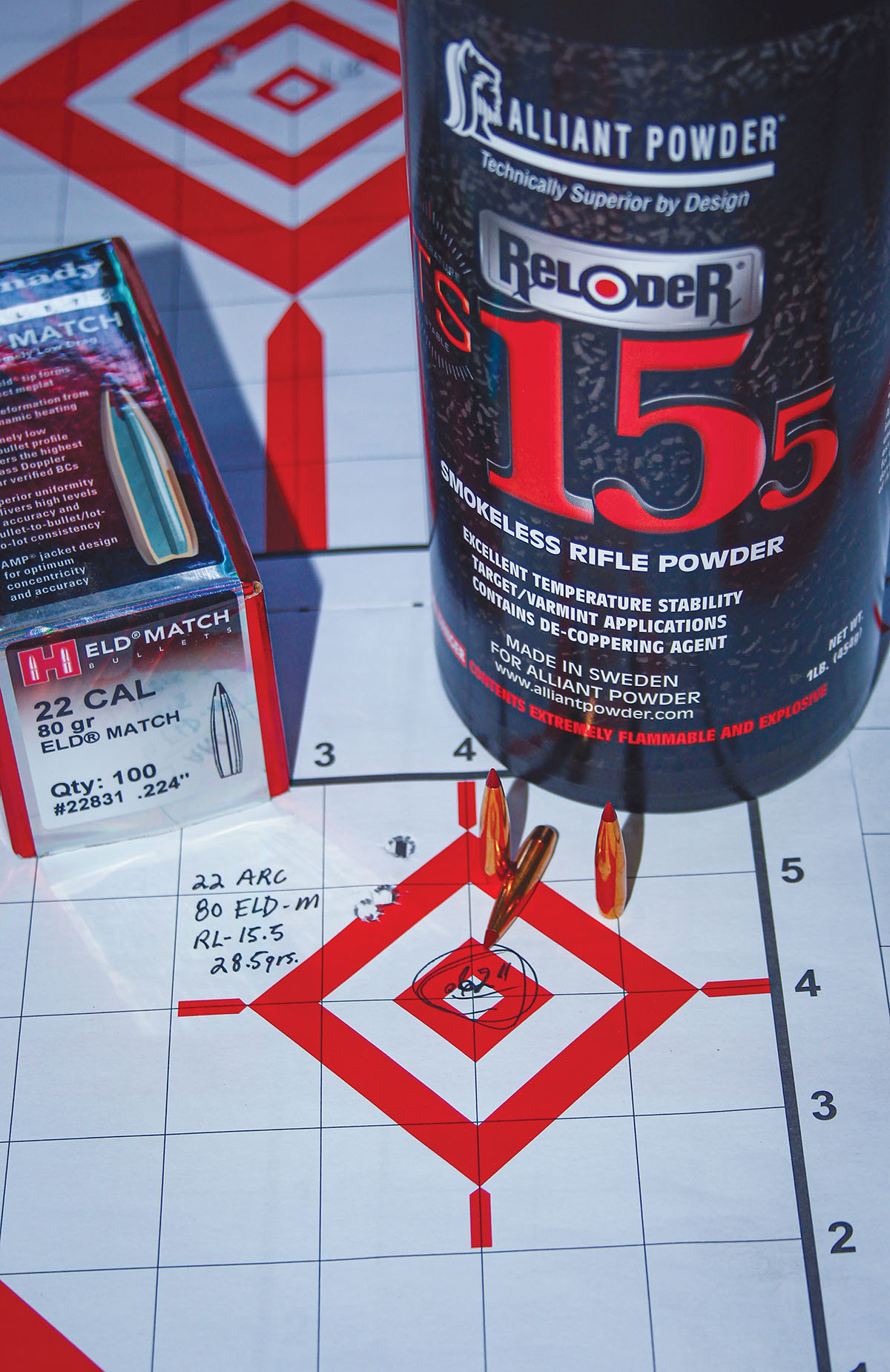
I opted for something exciting and new for this review. The 22 ARC was created by necking the 6.5 Grendel to accept .224-caliber bullets, with no other major changes. Rifles are given fast 1:7 twist rates to handle bullets up to 90 grains. The 22 ARC is ultra-efficient and handles light varmint bullets down to 50 to 55 grains – sent at 3,500 to 3,600 feet per second (fps), heavy monolithic copper bullets to 77 grains (at 3,000 to 3,100 fps), and target and hunting bullets up to 90 grains (sent at around 2,800 fps). I’ve found the 22 ARC suited to both varmint and wild hog hunting due to its inherent versatility.
The newer 25 Creedmoor is nothing more than the 6.5 Creedmoor necked down to .257 caliber, with no other changes. The key to the 25 Creedmoor’s exceptionalism are rifles given fast 1:7.5 twist rates, and especially newly-minted, high-ballistic coefficient (BC) bullets in the 128- to 135-grain class. From the 25
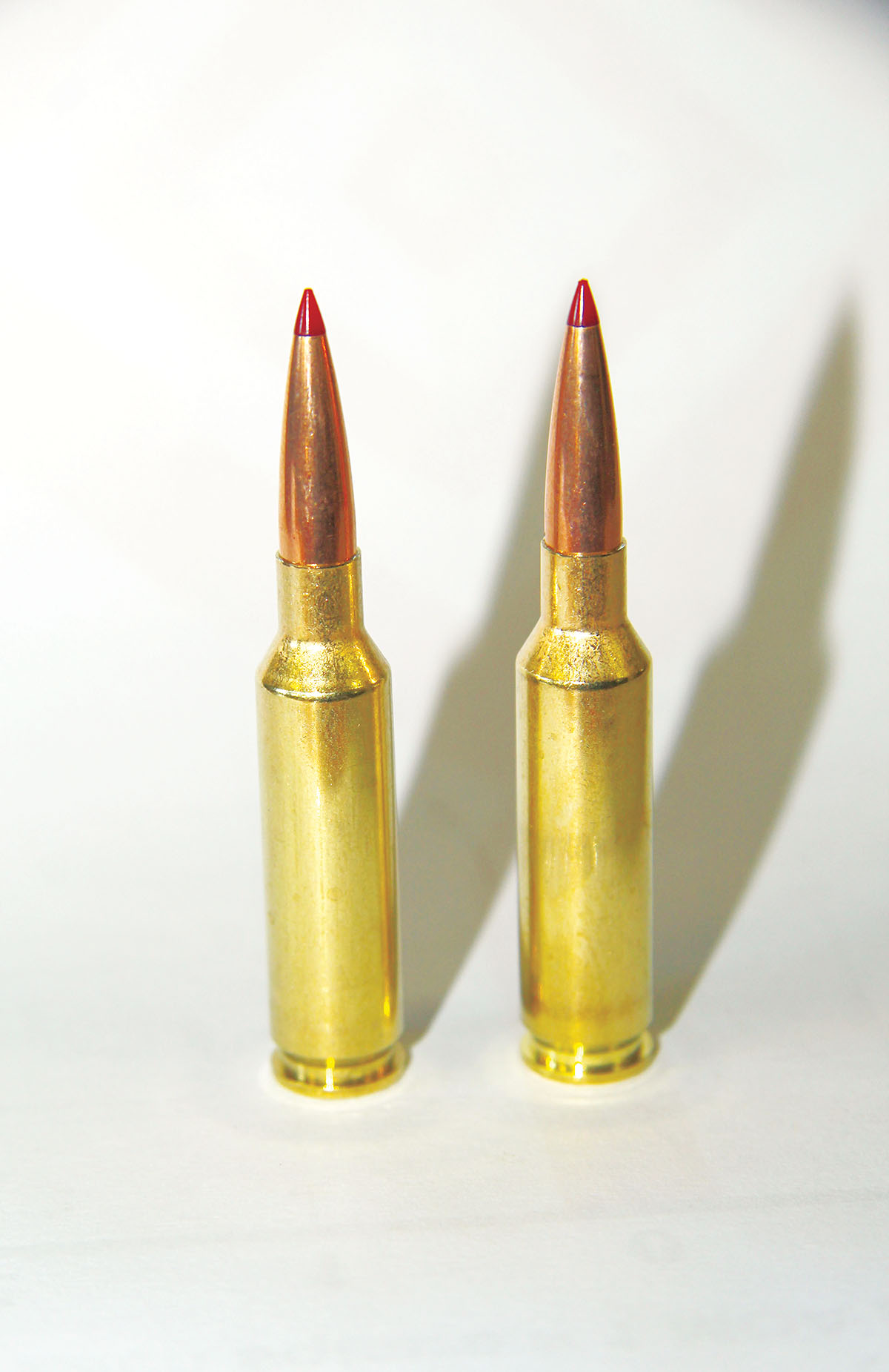
Creedmoor, these bullets leave the muzzle at 2,800 to 2,900 fps. With G1 BCs ranging from .633 to .695, the 25 Creedmoor slightly edges out the 6.5 Creedmoor with less drop and wind drift beyond 500 yards. It also offers the efficiency of the modern cartridge design (minimal case taper, sharp shoulder, short/fat profile), and the versatility to handle bullets from light varmint (70-75 grains) to heavy big-game numbers to 135 grains.
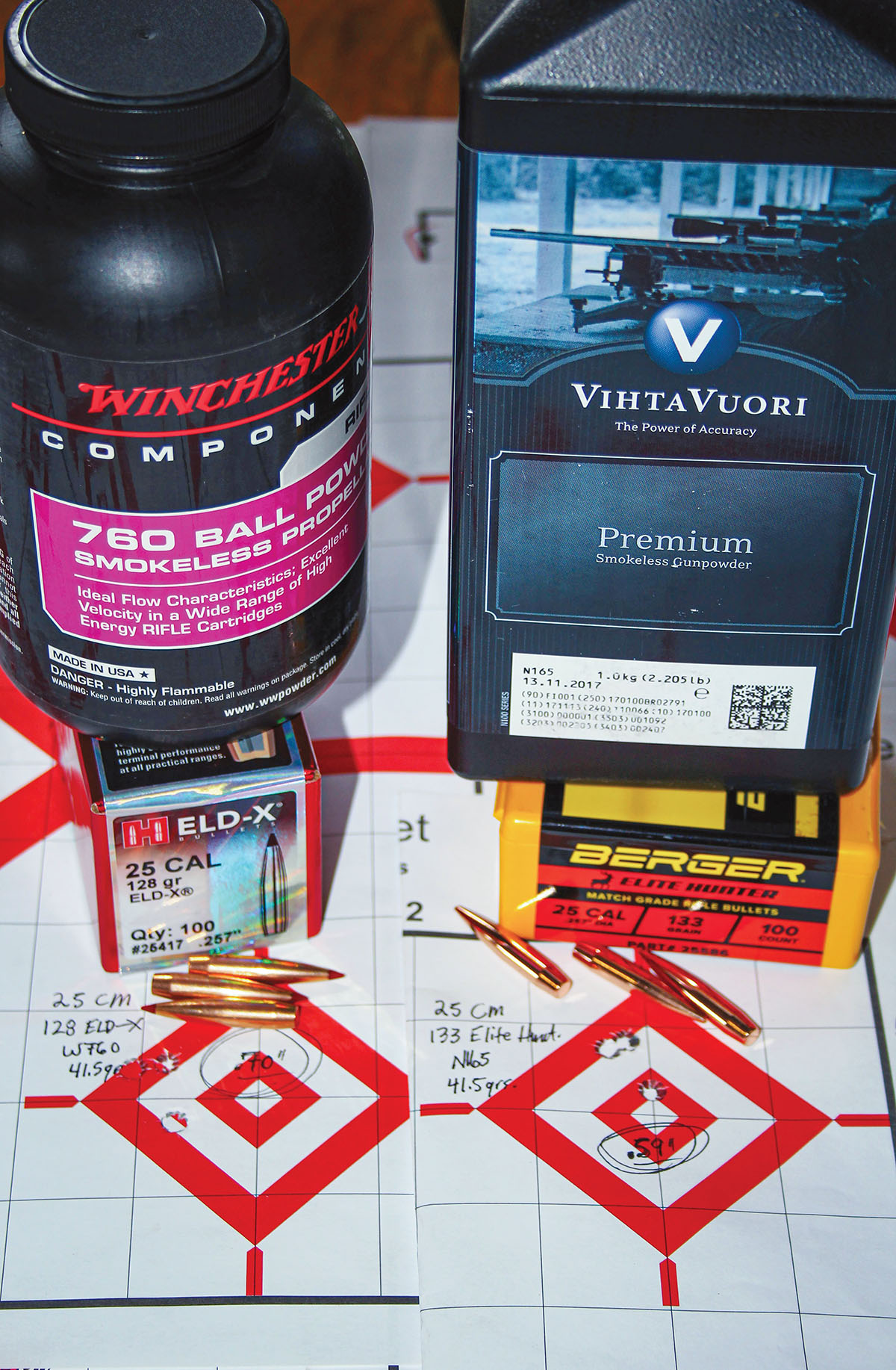
Either of these cartridges would serve the single-rifle varmint/deer hunter well by handloading appropriate bullets; the 22 ARC pressed into big-game duties, the 25 Creedmoor into varmint duties. This is fitting as Legacy Sports labels the Fence Line the ultimate everyman’s rifle. It certainly offers unbeatable value backed by a 100 percent lifetime warranty covering manufacturing defects.
The machined action holds a hammer-forged barrel promising exceptional durability. I would have preferred to see a bit more barrel girth on the 22 ARC, the Mini Action rifle holding a skinny tube measuring just .58 inch just behind the muzzle threads. This makes for an easy-toting rifle ideal for coyote calling or deer hunting, but it warmed quickly while shooting burrowing rodents. I can’t help but also wonder if some accuracy was sacrificed, particularly when a suppressor is added (more momentarily). The Mini Action Fence Line held a barrel measuring about .63 inch in diameter just behind the threaded muzzle, which seems about right for a big-game rifle. This offers a good balance between carrying ease and stability, and it certainly provided more consistent accuracy than the thin-tubed 22 ARC.
Howa’s HACT (Howa Actuator Controlled Trigger) two-stage trigger takes a bit of getting used to, especially for someone like me who shoots mostly light-pull, single-stage triggers. After conquering that short learning curve, I found the HACT trigger to be acceptably crisp and quite manageable. The 22 ARC trigger broke at around 4 1⁄2 pounds out of the box, the 25 Creedmoor a smidge more. The trigger adjustment mechanism is dabbed with sealant, signaling that user adjustments are discouraged.
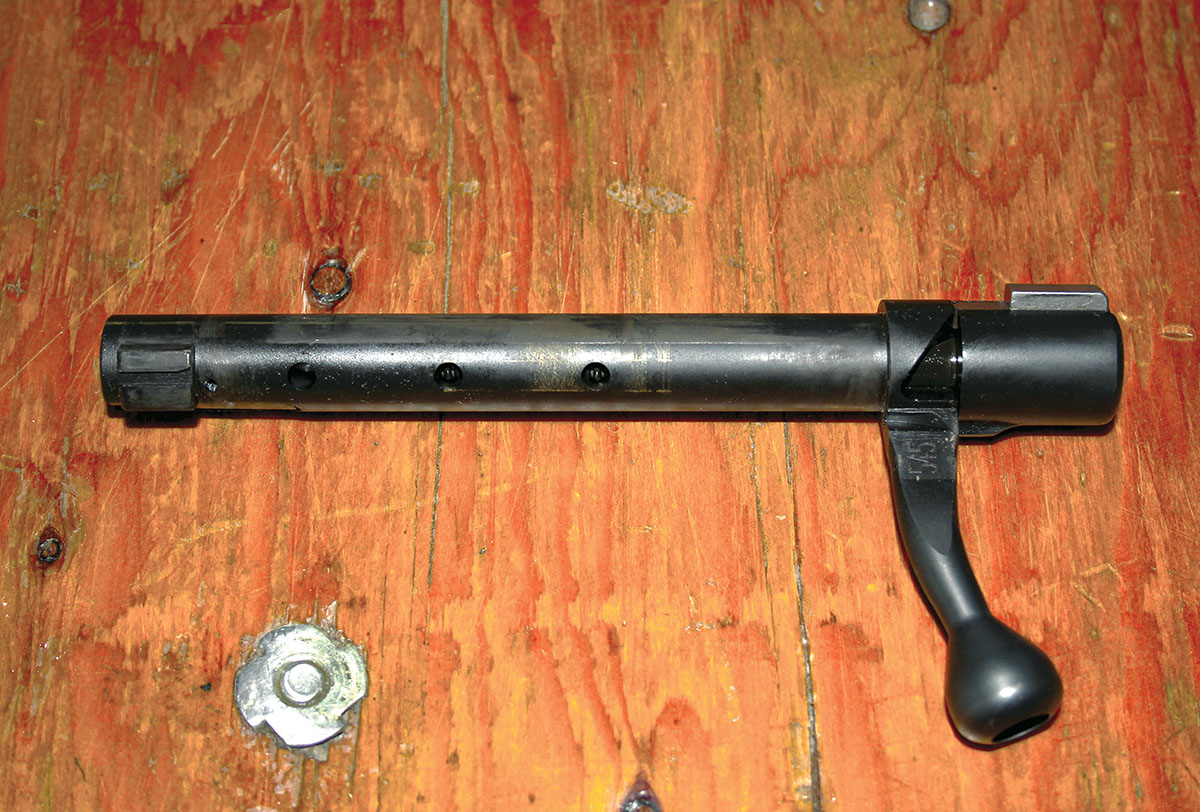
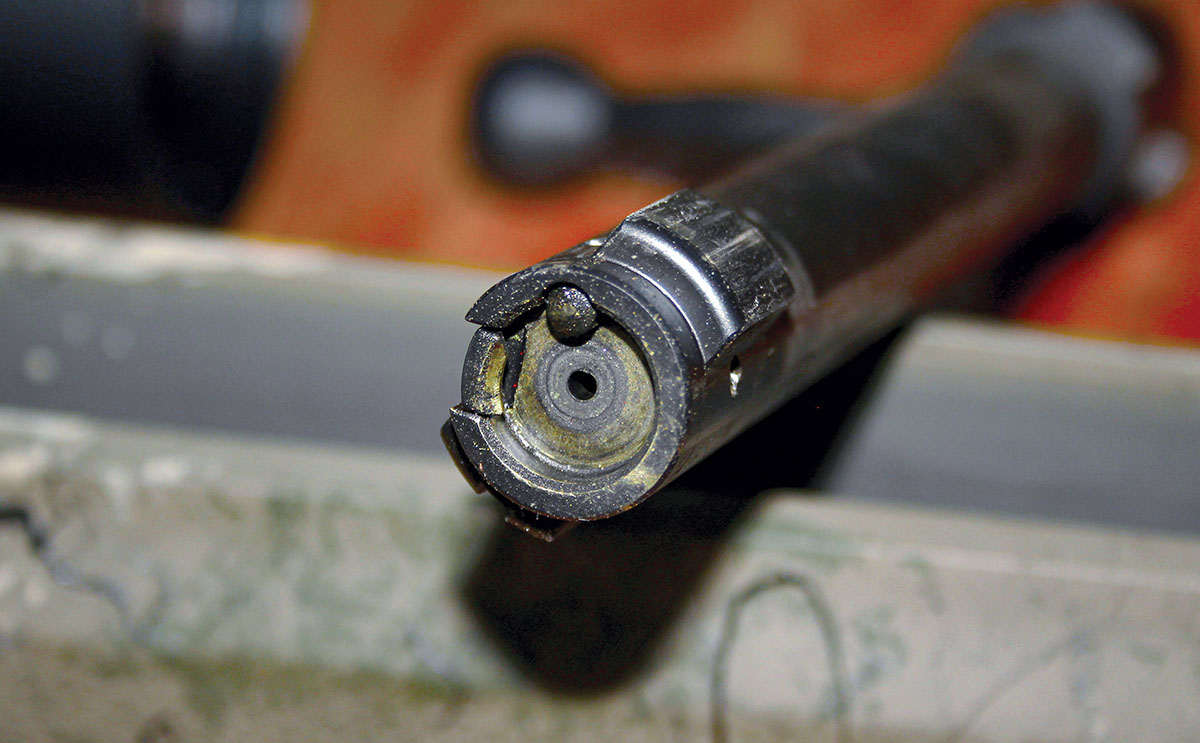
The Howa 1500 action includes a forged bolt with standard 90-degree throw created by dual locking lugs. This is a straightforward bolt with no flourishes such as fluting or applied chrome, though the push-feed cycling is smooth and utterly reliable. Three internal pressure-relief vents are found on the bolt body (and one on the left side of the receiver) in the event of a ruptured cartridge case, protecting the shooter’s eyes from hot gases. The firing pin can be removed without tools for cleaning, and the bolt head holds a spring-loaded M-16-style extractor. This is the extractor style my gunsmith Wayne York, owner of Oregunsmithing in Pendleton, Oregon, prefers as replacements due to extreme reliability, even in models like Remington’s Model 700.
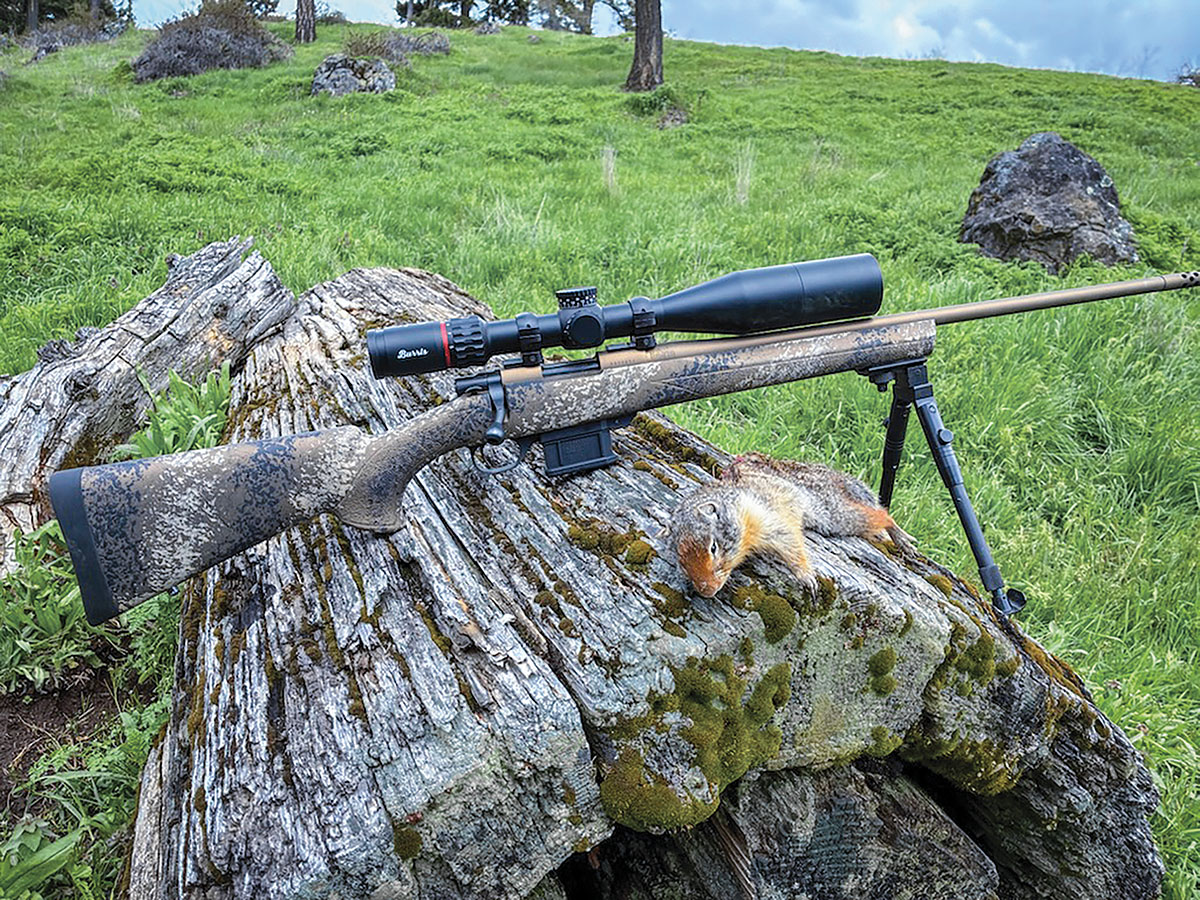
The Howa 1500 receiver includes a three-position safety, which also takes a little time to become accustomed to. The rearward position engages the safety while also locking the bolt, which ensures it stays closed while, say, fighting thick brush. The middle position blocks the sear but allows cycling the bolt for safe unloading. Pushing the safety fully forward allows the rifle to be fired. While shooting varmints with the 22 ARC Fence Line this spring, I found myself repeatedly clicking the safety forward from the rear safe position and squeezing and squeezing until realizing the lever was in the middle position. I eventually learned to keep the safety in the middle position, allowing quicker reaction to fleeting shots at busy ground squirrels.
The Mini Action receiver requires a Picatinny rail made specifically for that action, or two-piece Remington Model 700 bases. The short action is compatible with Remington 700 two-piece bases, though the Remington short-action Picatinny rail thatI had on hand did not provide proper screw spacing to be of use.
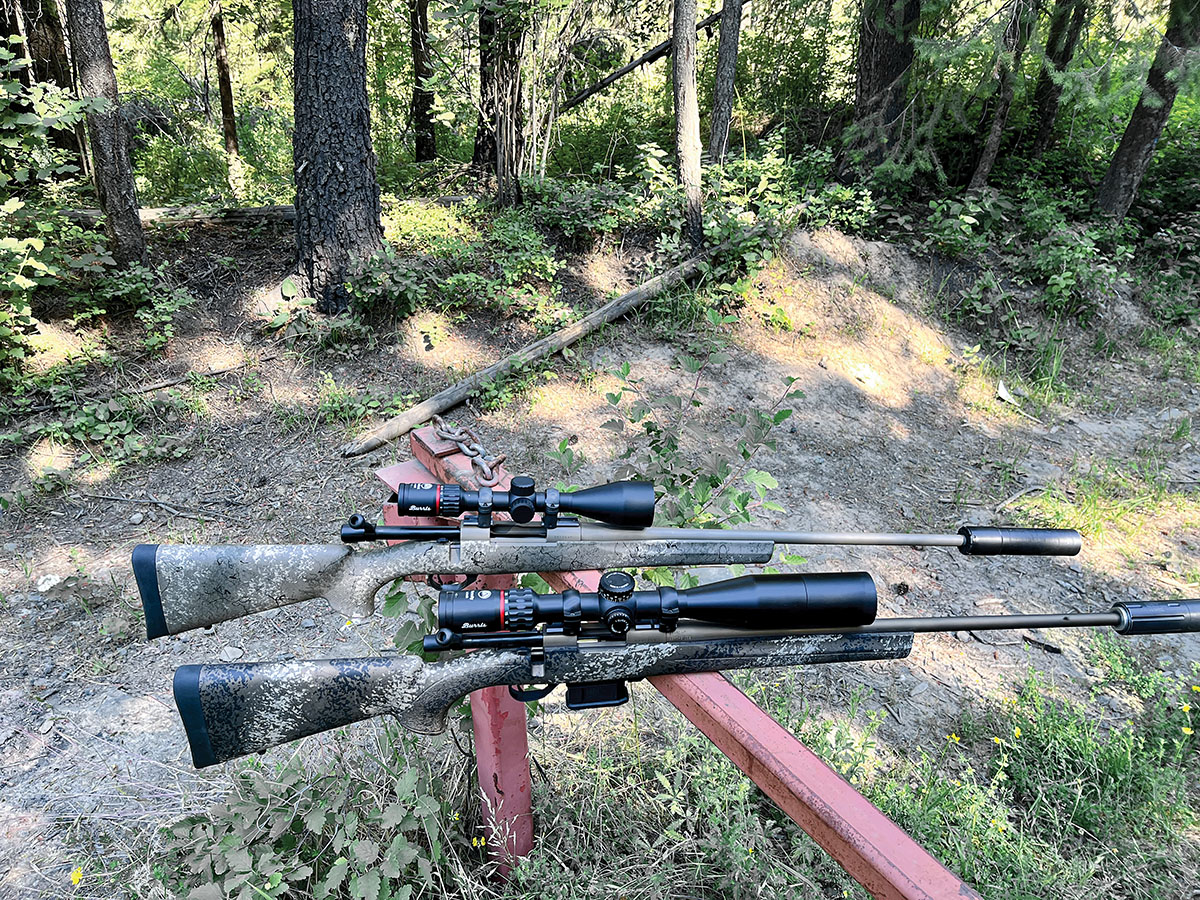
The Fence Line Mini Action 22 ARC came with a Scorched Earth finish, which included gold Cerakote on the barreled action and a stock finished with a gold base and sponge-paint/splatter camouflage overlays. I know the gold sounds odd, perhaps garish, but it actually proved subtly appealing. The short-action 25 Creedmoor included a Prairie Reaper finish, with Coyote (tan) CERAKOTE barreled action and more of an overall “desert” sponge-paint/spatter camouflage motif. The stocks gave the appearance of rifles costing much more. The synthetic stocks hold a soft-rubber recoil pad and front and rear sling studs. My only gripe is common to many of today’s stock designs: the comb needs to be raised to come up to speed with today’s larger-tubed, larger objective-lens riflescopes and the common use of Picatinny rails with built-in MOA. The flat comb makes it difficult to establish a solid cheek weld with such scopes properly installed.
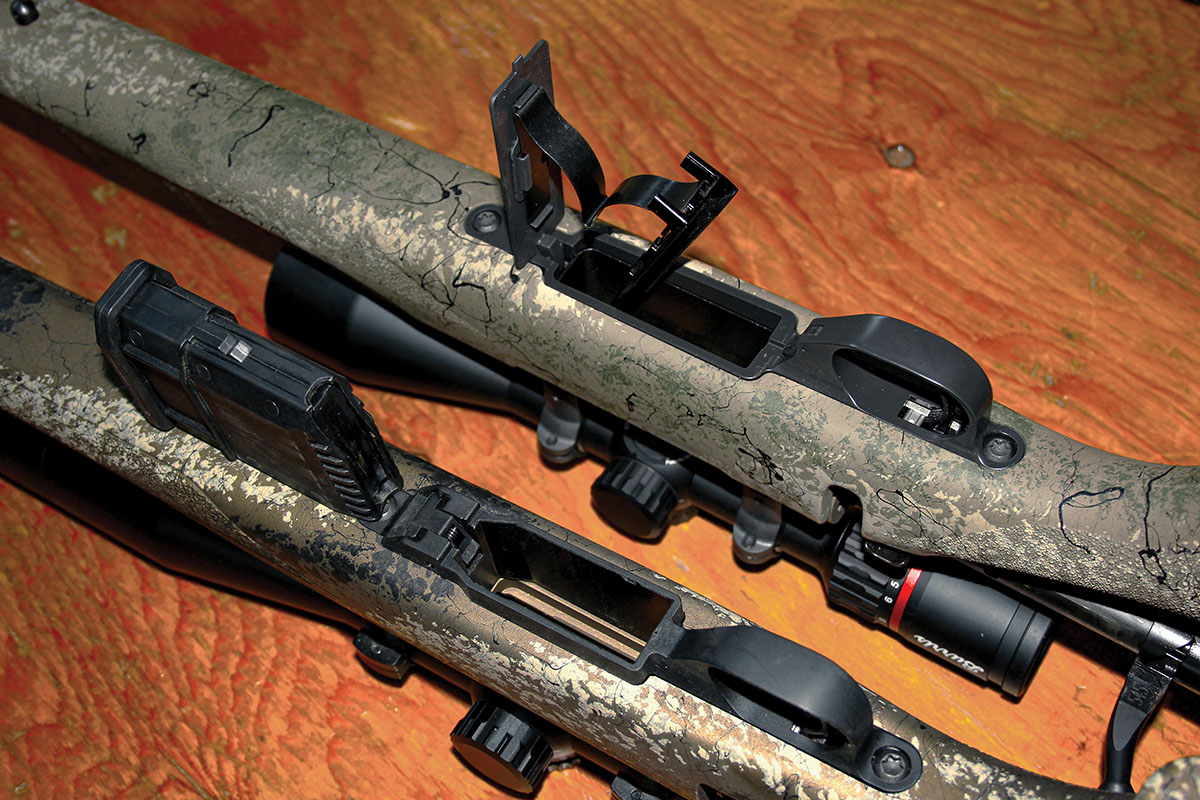
The 22 ARC Mini Action is equipped with Howa’s proprietary detachable box magazine, while the short-action 25 Creedmoor rifle includes a traditional hinged floorplate magazine. Both rifles hold five rounds and feed off the magazine smoothly. The detachable magazine system is part of an overall polymer trigger guard/bottom metal assembly. The mag is dropped by pulling a front, spring-loaded tab rearward and clicks into place and releases smoothly. With the hinged floor plate, you get components milled from aluminum. The Howa-logoed floorplate is disengaged with a spring-loaded button found outside and forward of the trigger guard. The hinged floor plate is also utilized on long action rifles.
For testing, the Fence Line pair was fitted with Burris Optics’ newest riflescope line additions. Wishing to unleash the 22 ARC on local ground squirrels, I added a Veracity 5-25x 50mm scope using two-piece Warne steel bases and generic 30mm rings. This is a first focal plane (FFP) scope with an illuminated RCT-MOA reticle. It includes an exposed elevation and capped windage turret. The RCT-MOA reticle includes an open center crosshair allowing unobstructed aiming, and a simple Christmas-tree arrangement for faster corrections on the fly. The side parallax is sandwiched beneath the illumination knob, and all controls were easily manipulated. Spring-loaded lens covers are included.
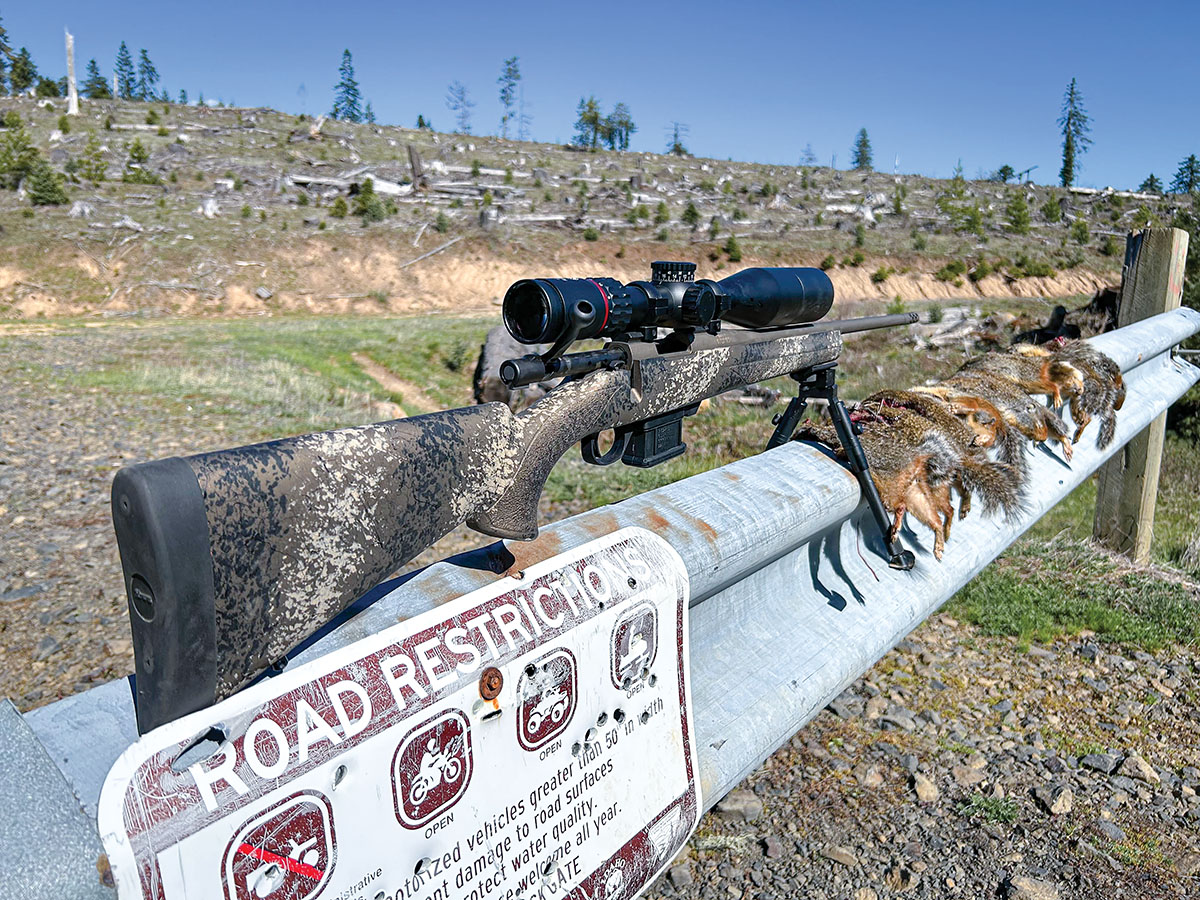
The short action 25 Creedmoor received a Burris Fullfield 4-16x 50mm riflescope in two-piece Weaver bases and steel Burris Z-Rings. This is a scope better suited to big-game hunting. It includes a lighter 1-inch tube and side parallax adjustments sandwiched beneath the 11-position illumination knob. The FFP E3 illuminated reticle is simple and fine enough to allow precision work. The capped elevation and windage turrets can be used like an exposed system after removing the milled-aluminum caps. These red-anodized turrets include aggressive gripping edges. Both of these scopes are tidy, straightforward hunting optics with excellent glass and optical systems.
To put Howa’s 1-MOA guarantee to the test, I assembled some proven handloads for each rifle, and fired what factory rounds I had on hand. The 22 ARC proved most frustrating, as while the rifle performed more predictably with the factory muzzle brake installed, adding a suppressor (an aluminum Rebal Silencers SOS Hunter and my lightest) made the rifle conspicuously fussier. I blame this on the thin barrel. The 25 CM, and its heavier barrel, shot more consistently, even after adding a heavier steel SilencerCo Harvester EVO suppressor.
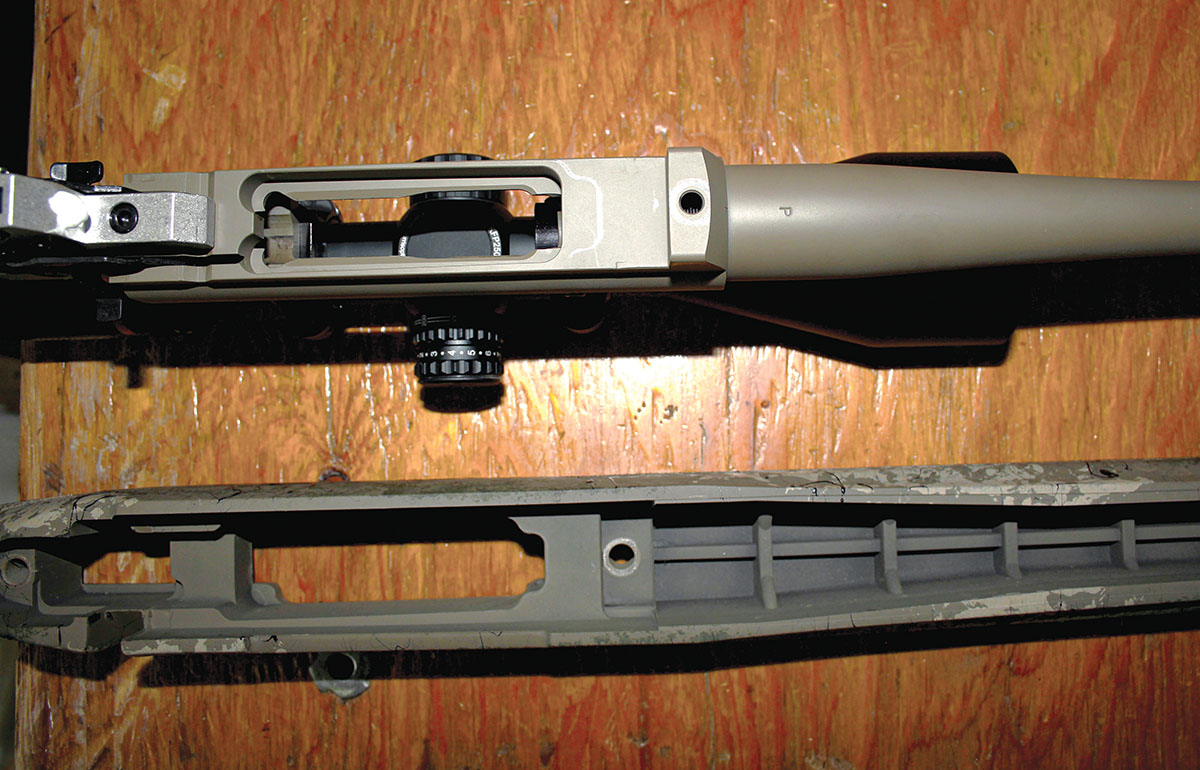
Before I began shooting, I was required to loosen the action bolts (large Torx-heads) on both rifles, center the barrel in the stock’s barrel channel and torque the action screws tightly. After firing a good number of shots through the 22 ARC with suppressor attached, I discovered subtle rub marks on the barrel’s left side, revealing it was making contact with the forend. That explains the persistent third-shot fliers that ruined so many promising groups.
In all honesty, if I were to purchase these rifles, I would immediately open the barrel channels and invest in glass-bedding jobs, which would undoubtedly stabilize the works. Both rifles certainly met Howa’s sub-MOA guarantee with many loads, but I have to believe there is still more accuracy to be had from these well-made rifles.