

Mitch Boyer Colt
The Little Bighorn Survivor
feature By: Alan Garbers | November, 26
No other event symbolizes the clash of cultures between Manifest Destiny and Native Americans – specifically the Lakota Sioux, Arapaho and Northern Cheyenne – than the Battle of the Little Bighorn or the Battle of the Greasy Grass, depending on which side you were on. Few other battles have inspired more books, articles, paintings or movies. Few topics can provoke opinions and feelings as deeply and strongly as those of amateur and professional historians who have dedicated their lives to the run-up, battle and aftermath.
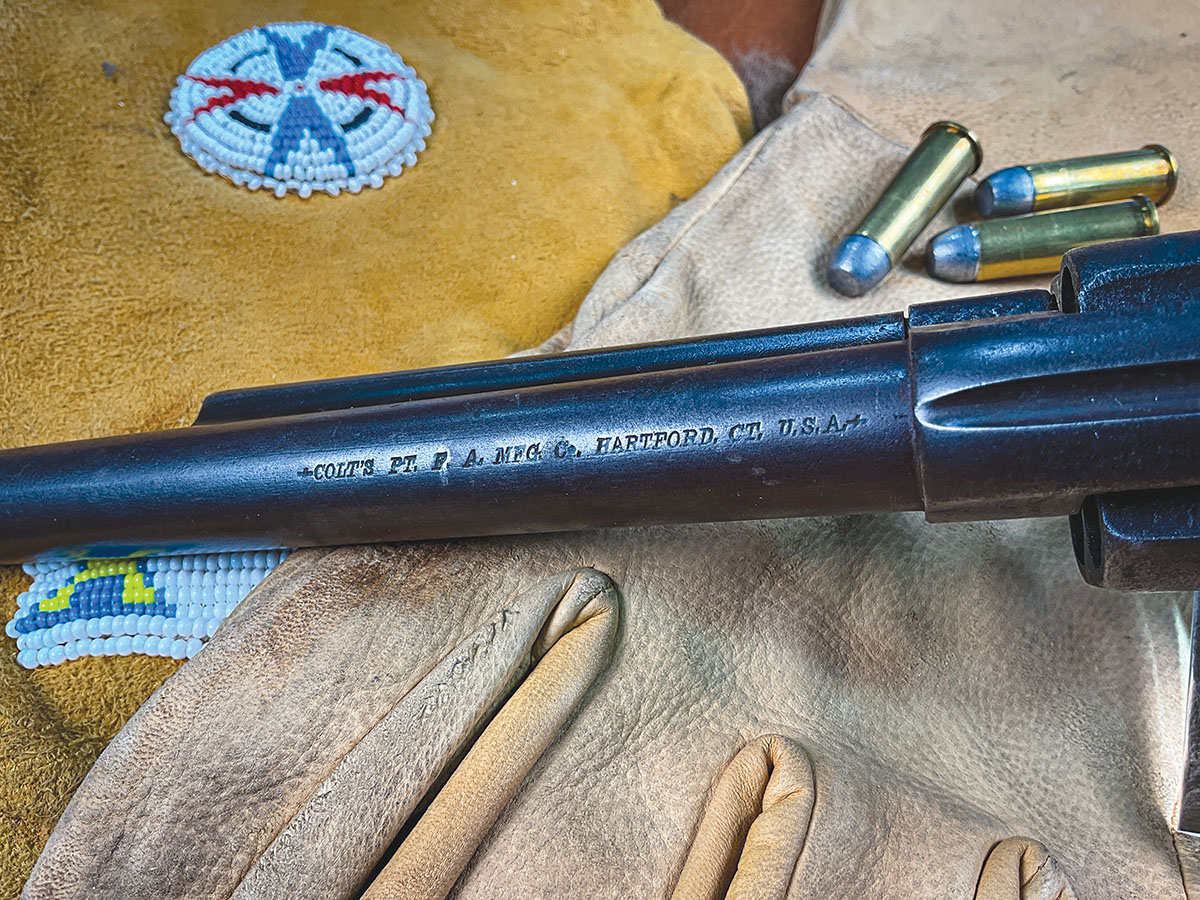
Lot Five, which went from serial number 4500 to 5504, is considered the prime lot. Fewer examples came from Lot Six, which ranged from 5505 to 6516. Speculation is that 755 revolvers from these lots went to Custer’s Seventh in June 1874. Colt revolvers from earlier and later lots were also recorded, but not in any significant numbers. Some collectors believe that any Colt marked for the U.S. Army and having a four-digit serial number may have been used by the 7th Cavalry. Scholars make these assumptions based on records of guns found on the battlefield, those turned in for repairs, those recovered from Sioux and Cheyenne warriors and those turned in when the army adopted a new model decades later.
Any Lot Five and Lot Six Colt is desirable in the eyes of collectors. The closer the gun is to being in “as issued” condition, the higher the value. In 2023, Rock Island Auctions sold a Lot Five Colt with 65 percent of its original finish for an astounding $293,750. While that boggles the mind, a documented Lot Five battlefield pickup Colt hammered at $763,750 a year earlier!
Mitch Bouyer was the son of a French trader and a Santee Sioux. From the age of nine, he and his father traded with the Sioux, Cheyenne, Crow, Arikara, Bannack, Snakes and more. As a result, Bouyer spoke English, Sioux and Crow.
As a scout, Bouyer was required to provide his own equipment, horse and weapons, and it made sense to have a sidearm that used government-issued ammunition and repair parts readily obtained from the supply train.
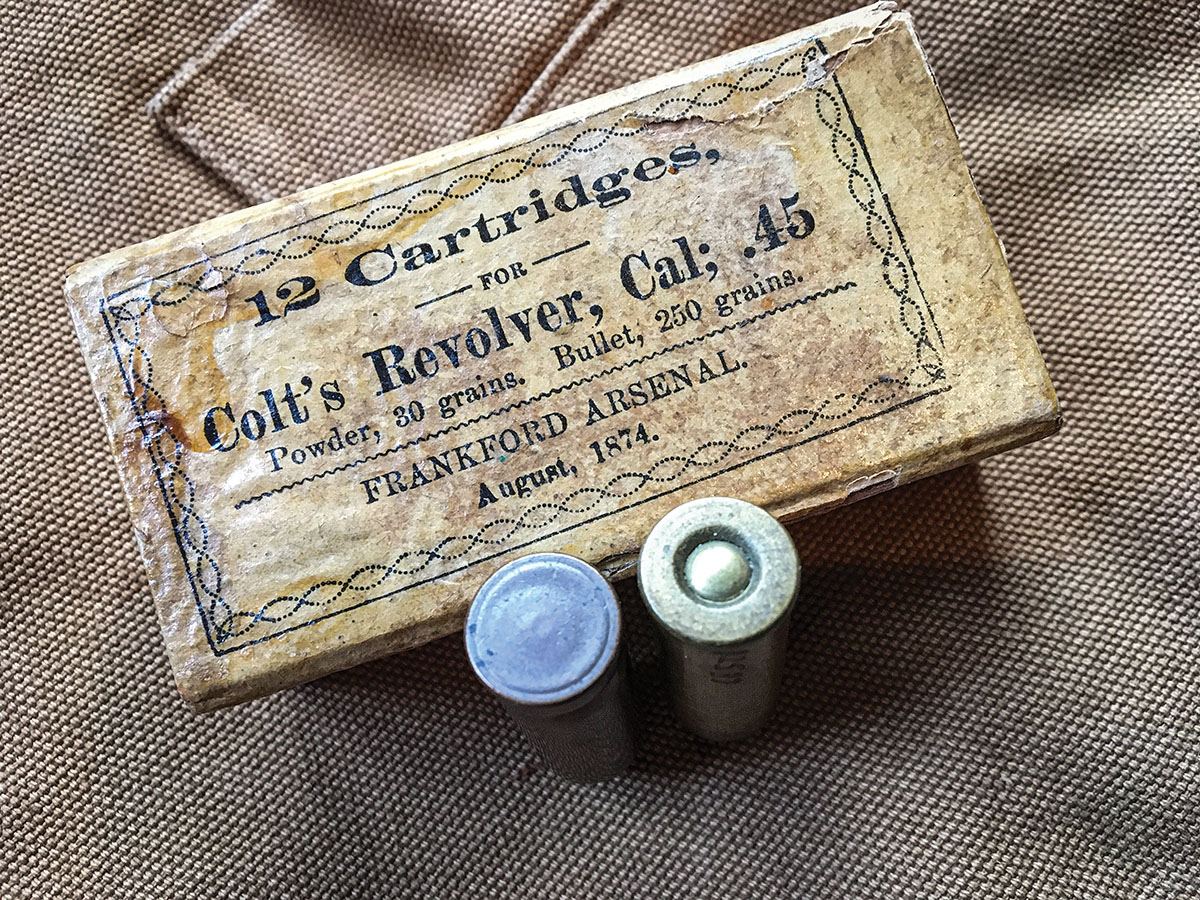
By 1874, certain regiments of the U.S. Army were also using the Smith & Wesson (S&W) Schofield revolver, which required a shorter .45-caliber cartridge. The S&W cartridge was loaded with 28 grains of black powder under a 230-grain hollow-based conical bullet. Since the cartridge could also be used in the Colt, it became the standard loading. History would show that troopers used both the original 45 Colt and the shorter 45 Schofield at the same time. In 1990, a rusted Colt revolver was found at the Canyon Creek Battlefield. It was there in September 1877 that Colonel Sturgis and the 7th Cavalry fought to stop the Nez Perce from escaping into Canada. The derelict revolver was still loaded with six Benét-primed cartridges: four 45 Colt and two 45 Schofield.
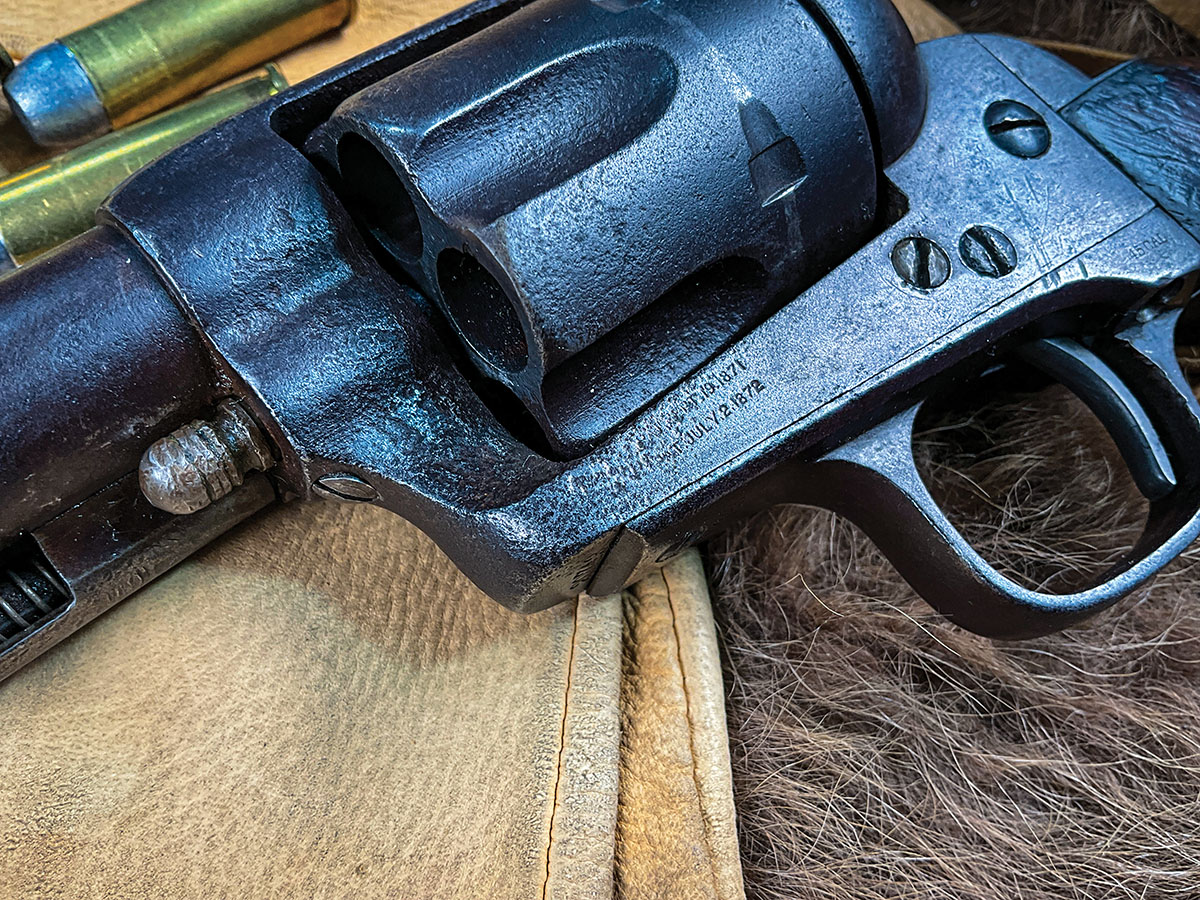
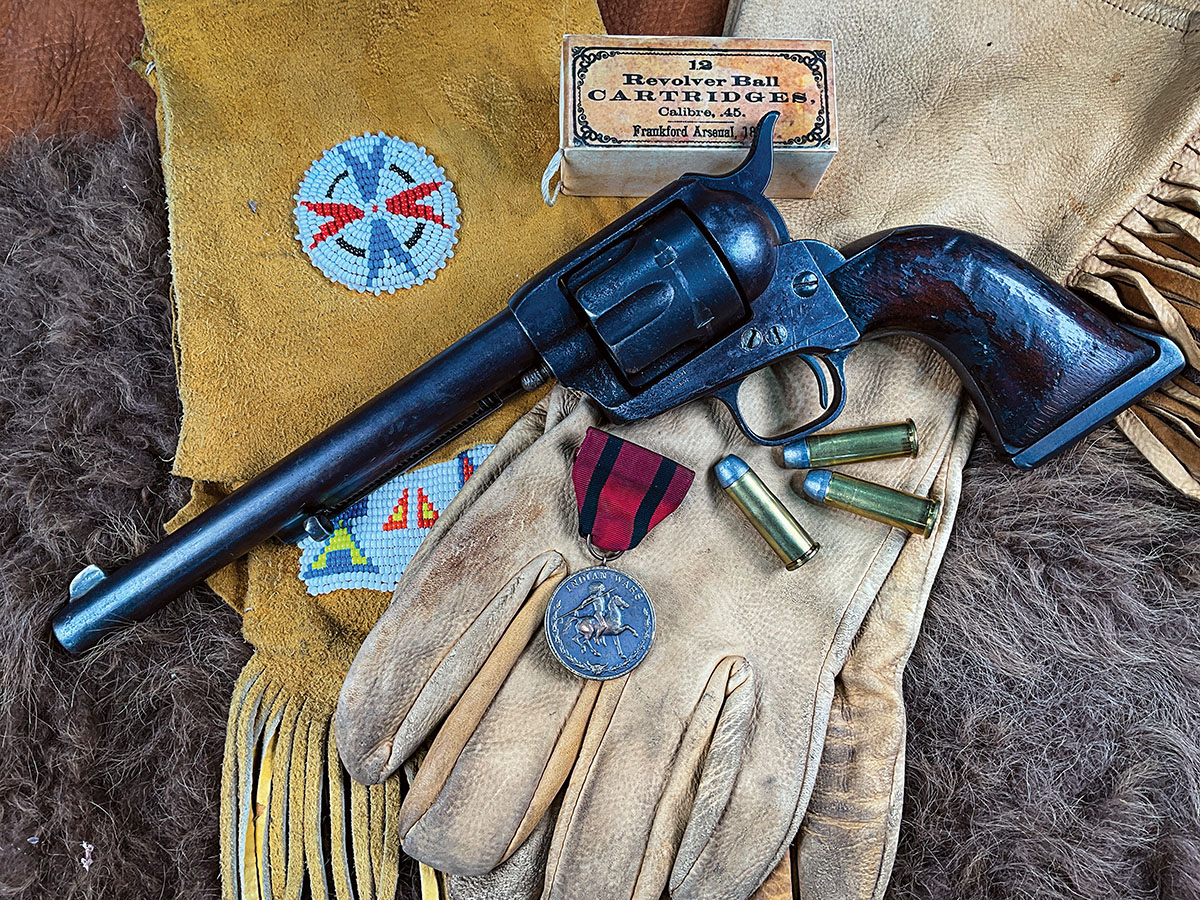
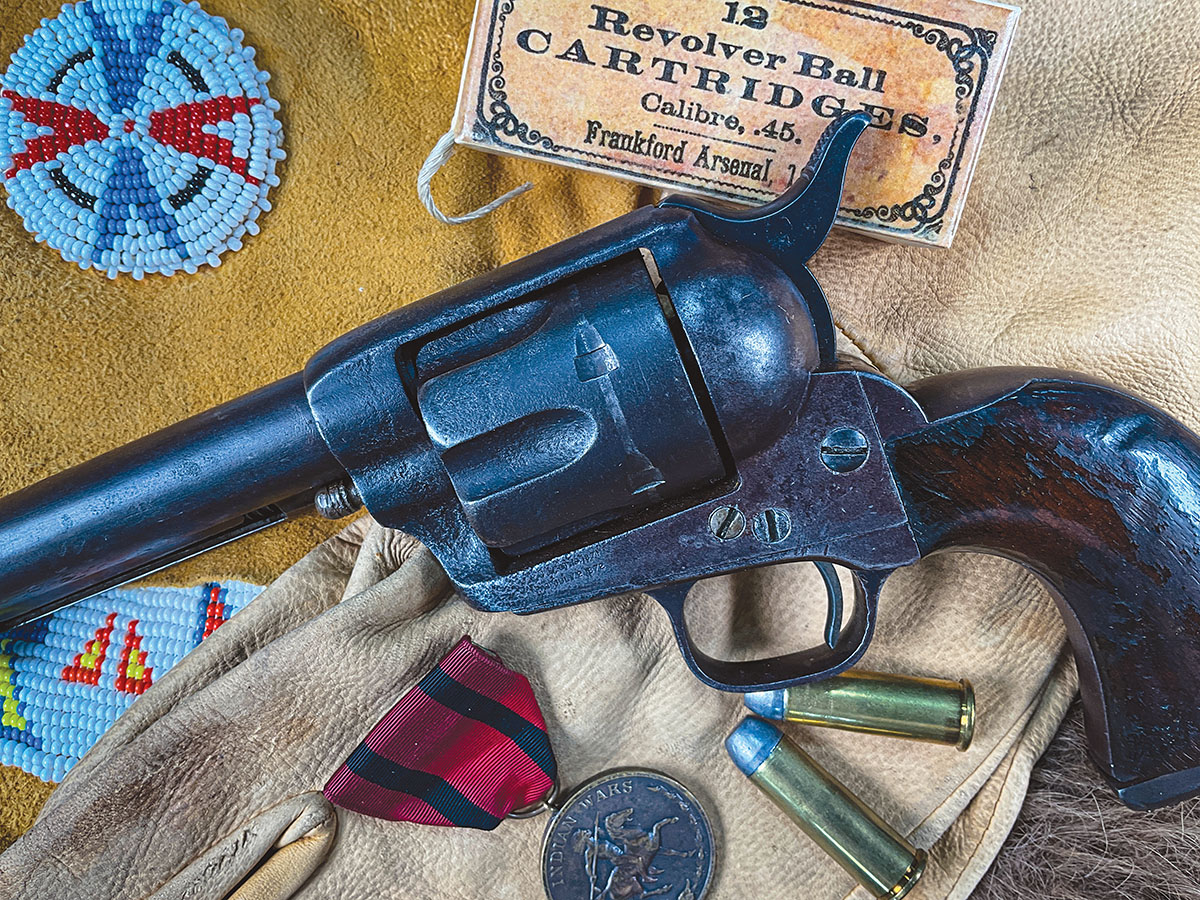
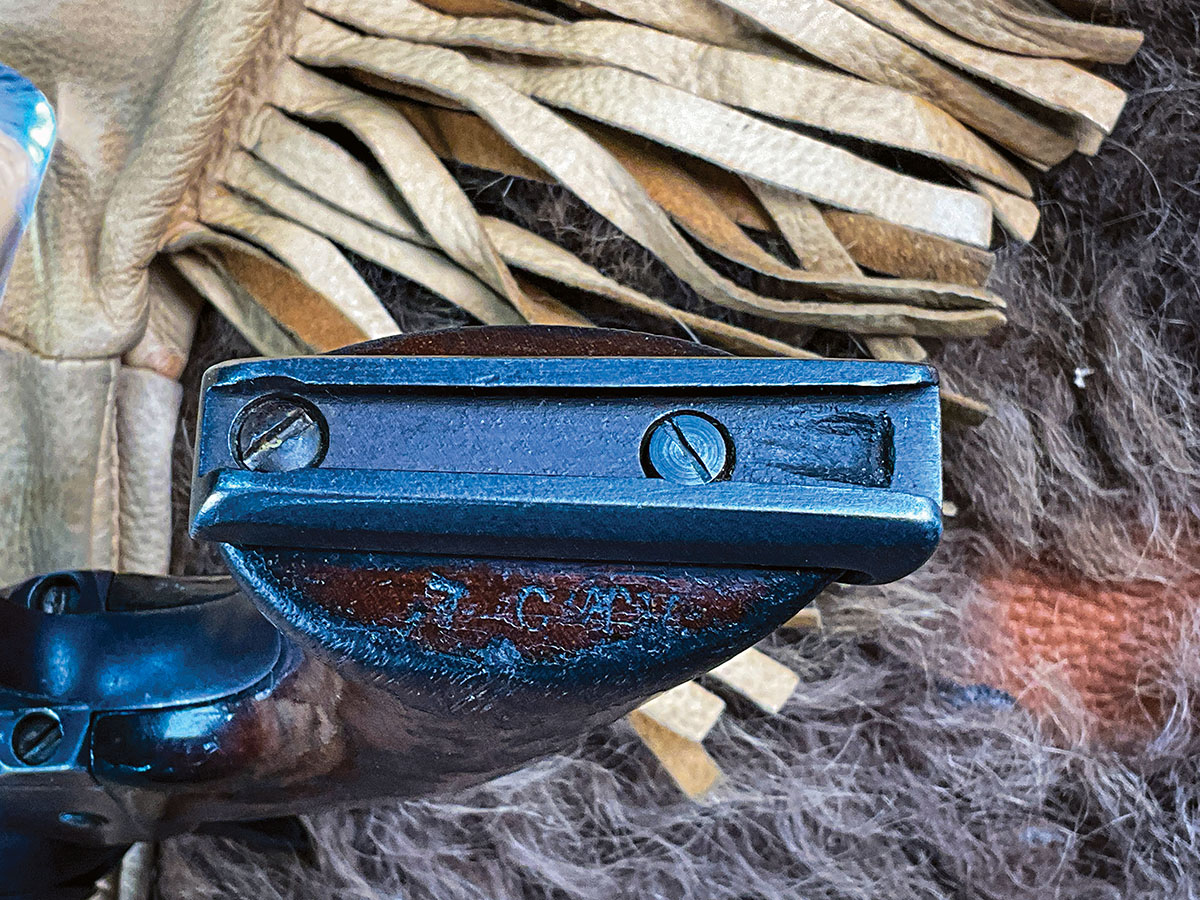
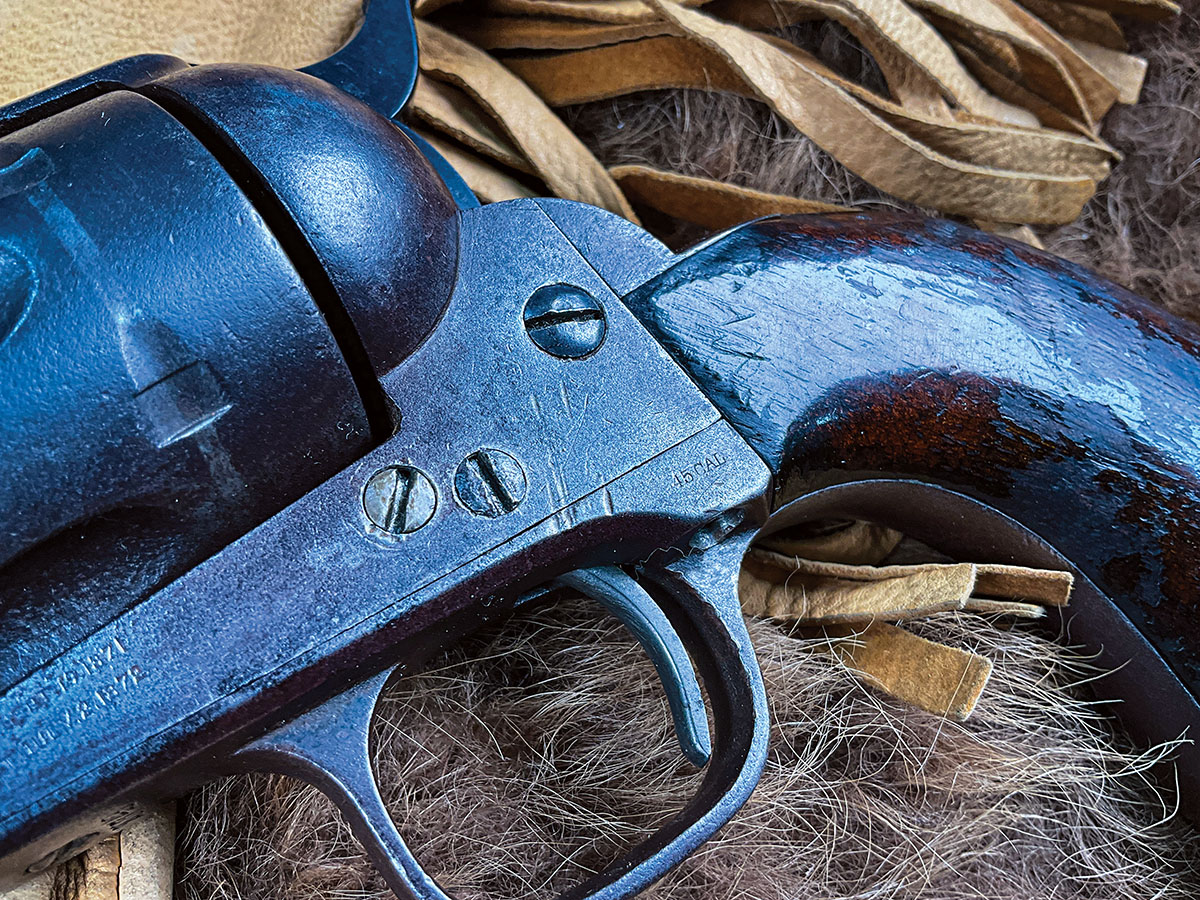
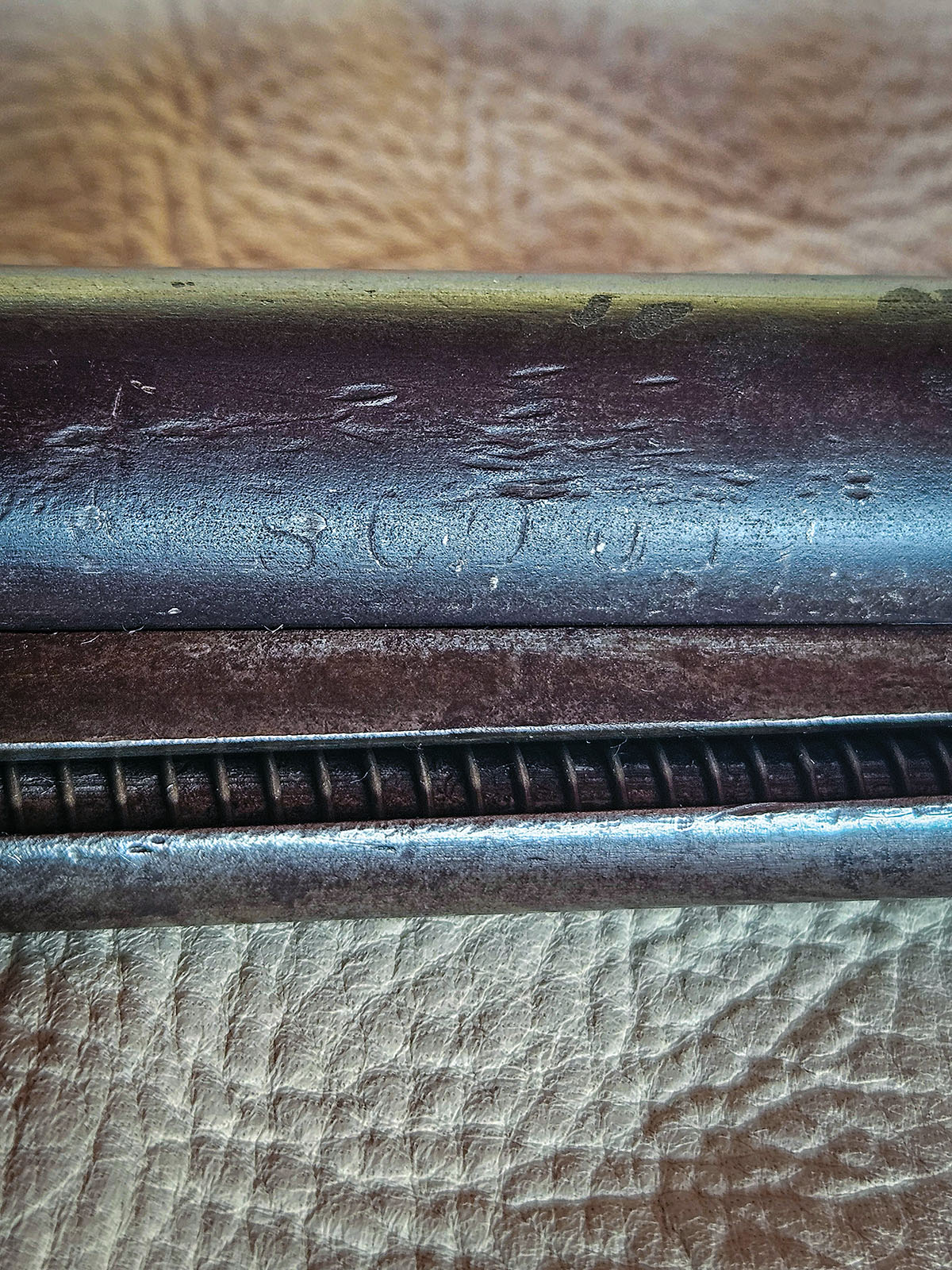
The revolver shown has seen heavy use and is not in a condition many collectors would want, as it has a replacement ejector housing and screws. Yet, a few things make this Colt worth a second look. Under the belly of the barrel is lightly stamped “SCOUT.” On the base of one grip is a faint “M BOUYER,” and the other “7 CAV.” I, like other writers and collectors before, struggled with accepting the markings as genuine, that is, until I did more research.
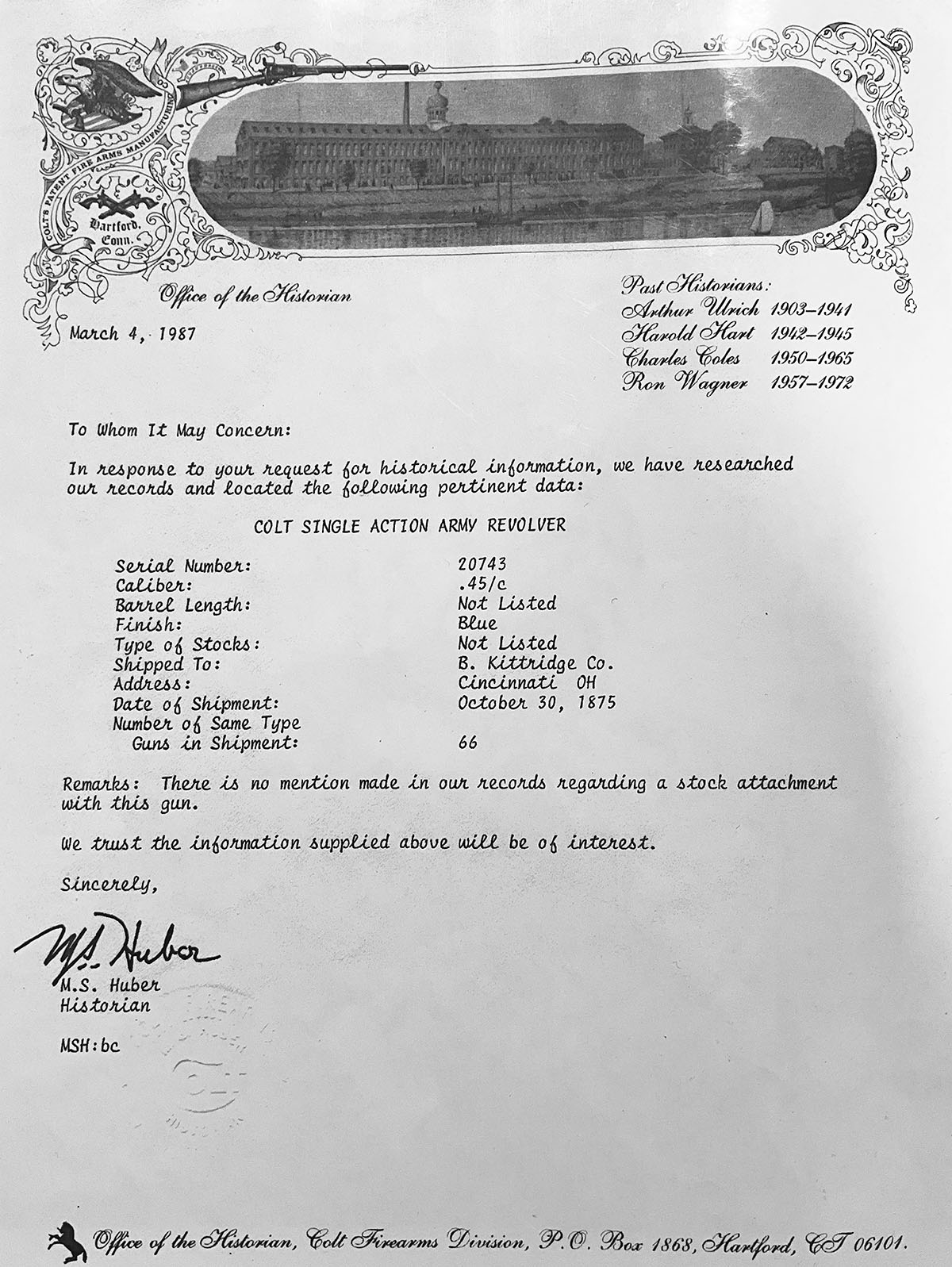
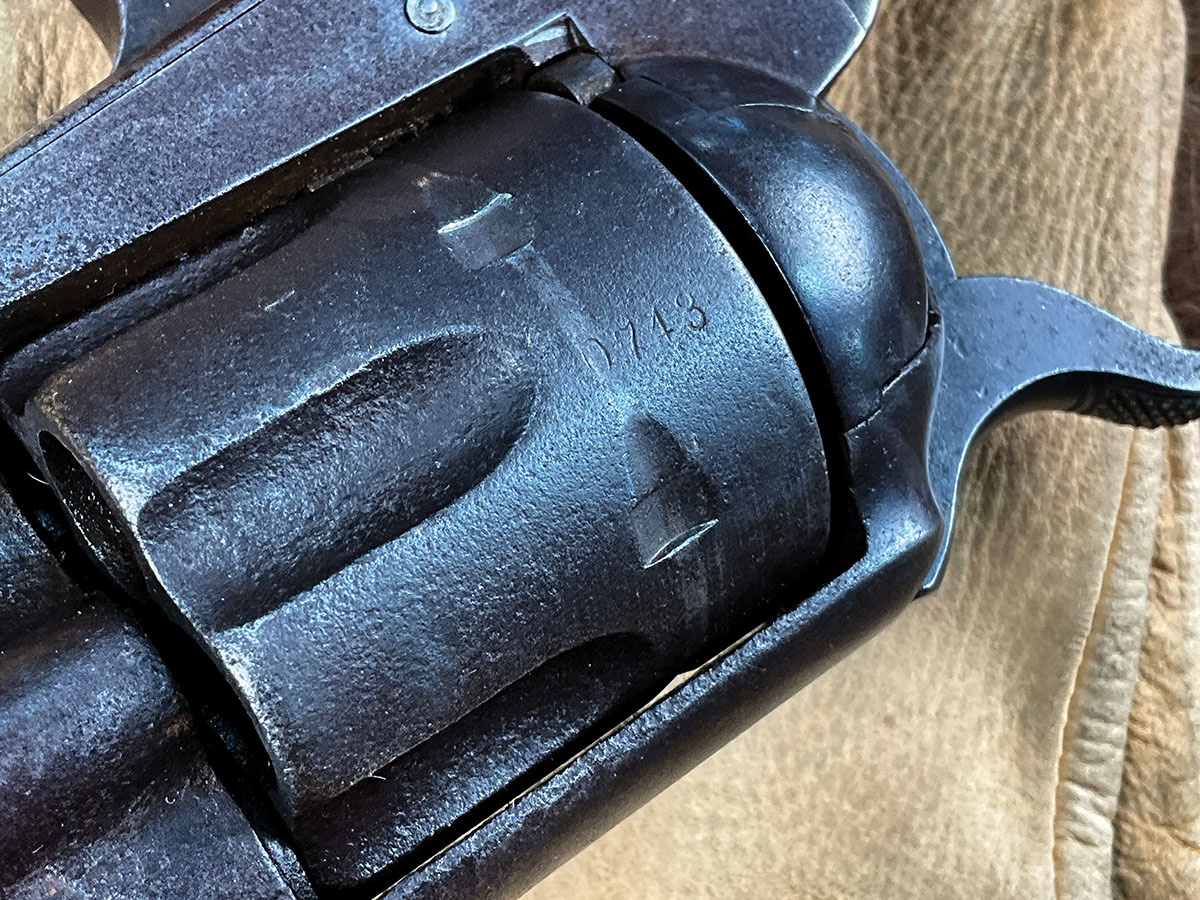
In most cases, Colt kept records of the gun’s configuration when it left the factory, including barrel length, cartridge type, finish, stock type and shipping destination. This Colt, serial number 20743, left the factory on October 30, 1875. It was one of 66 guns sent to the Adams Nickel Plating and Manufacturing Company, on their way to the B. Kittridge Company in Cincinnati, Ohio. At the time, Colt contracted its nickel plating to
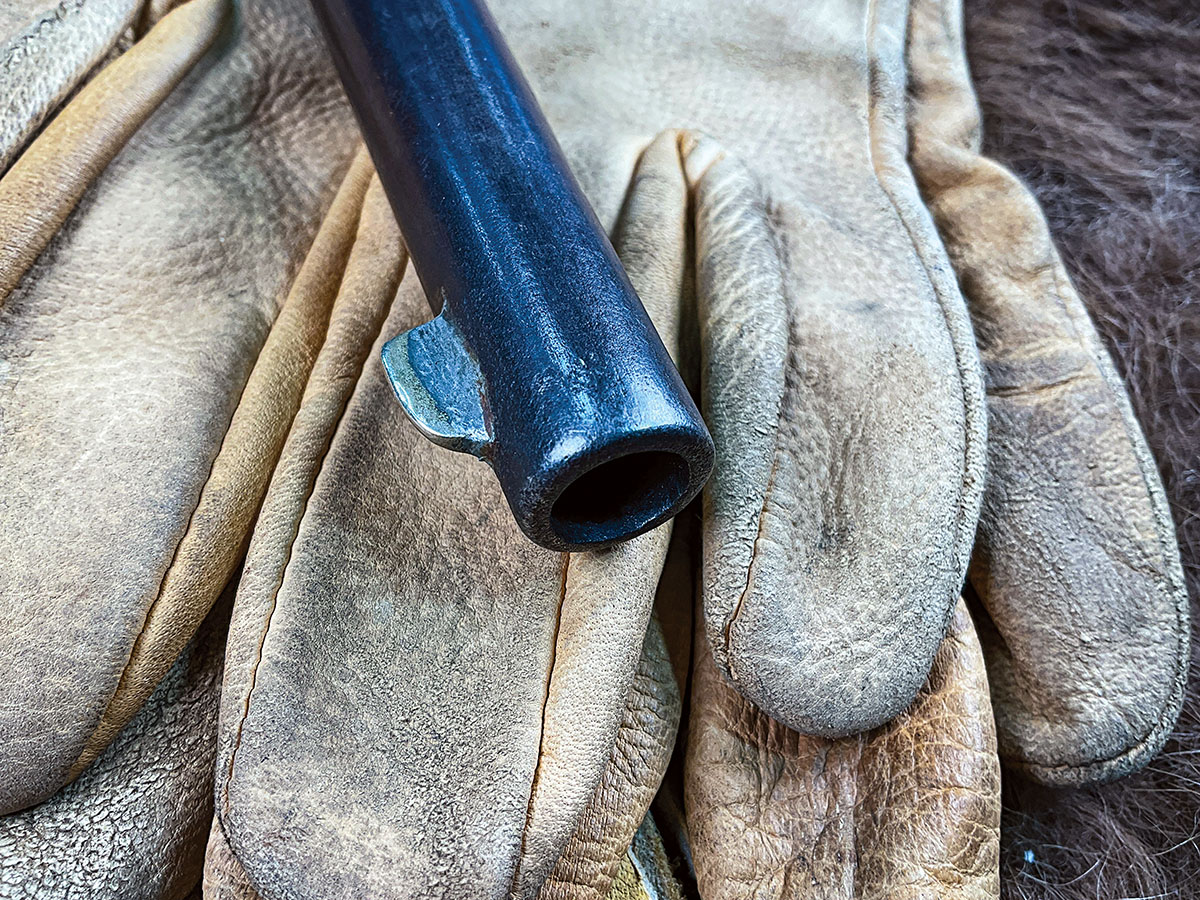
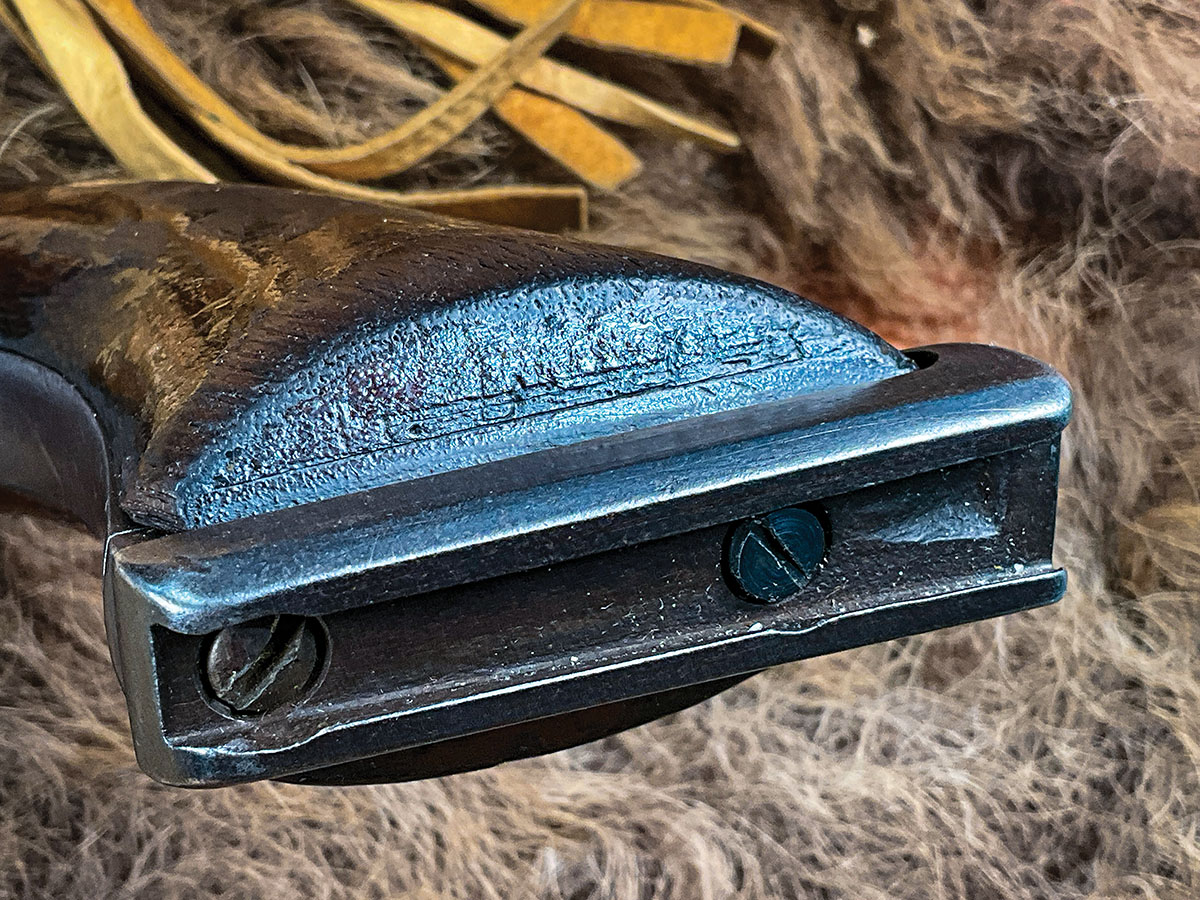
Before the shipment, the Adams Company sent correspondence to Colt indicating that they were developing an iron shoulder stock using a special dovetail attachment mounted on the backstrap grip frame of their Colt Single Action Army Revolvers.
Of the revolvers, documents show that 61 were to be nickel-plated and five were to be fitted with shoulder stocks. In correspondence from Adams Company to Colt dated November 7, 1875, it reads “Per your request, five revolvers were left blue and fitted with out shoulder stocks and attachments for scout use.” (Emphasis added.) Colt offered its own shoulder stock that mounted using an extended trigger screw through the revolver frame and a notch in the backstrap. The shoulder stock pinched the mounting points using a tension screw. If Colt was contracting work out instead of using their own product, we should assume the Adams’ version was a better design that could be quickly slid into place when needed. As this goes to print, no other example of the Adams Company fitting or stock attachment is known to exist. Removal of the fixture shows pristine bluing, indicating it has been in place from the beginning.
The 150th Anniversary of the Battle of the Little Bighorn took place on June 25, 2026. We can assume that thousands pilgrimaged to the battlefield in eastern Montana to honor those who fell on both sides of the conflict. As the wind whispered through the prairie grass and the cottonwood leaves clattered along the Little Bighorn, many silently pondered what happened that day, and a few might even have contemplated the fate of Mitch Bouyer.
Contrary to legend, not all of the 7th Cavalry died that day. Custer had split his regiment into three columns with Reno, Benteen and himself commanding. Only Custer’s command was decimated to the last man. The majority of Reno and Benteen’s men survived to tell their versions of what occurred that day. Some of the Indian scouts also survived, having been told to save themselves. It is from these accounts that we can piece together Mitch Bouyer’s fate.
After marching south most of June 22, 1876, Bouyer asked Lt. Godfrey of K Company how many Indians they expected and whether Custer could beat them. Godfrey gave a lower number than Bouyer calculated, but affirmed his belief that the 7th Calvary was ready for anything they encountered. Bouyer responded, “Well, I can tell you we are going to have a damn big fight!” Three days later, his prophecy came true.
As the regiment urgently moved towards the Indian villages, plans were made and remade. Custer refused to believe the estimate of 1,500 to 2,000 warriors awaited them. Bouyer warned him again, “General, I have been with these Indians 30 years, and this is the largest village I have ever heard of.”
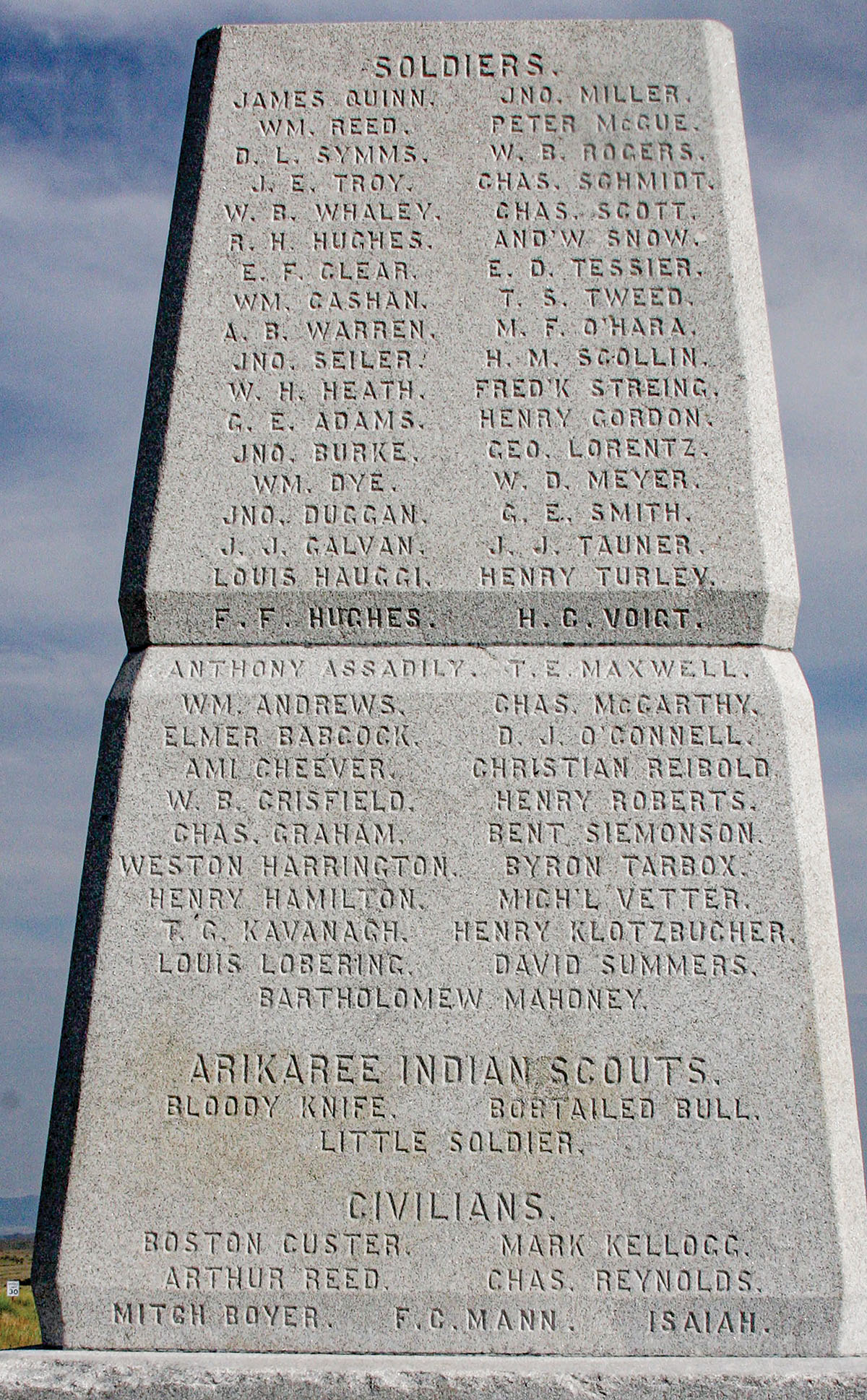
The rest of the story is history. Custer and those with him were overwhelmed by a vastly superior force. The few tidbits of Bouyer’s fate come from the testimony of Curley, a fellow Indian scout. In the attack, Bouyer was wounded but chose to stand his ground and keep fighting, urging Curley to escape and carry word of the battle to General Terry.
Later testimony by Sioux combatants claims Bouyer was found wounded but alive. For his traitorous action against the people of his mother, he was slain and thrown into the river. When Terry arrived days later, reports on Bouyer’s fate were confusing. After mutilation by the Sioux, days of bloating in the summer sun, and damage from wolves and ravens, many bodies were unrecognizable.
We can assume Bouyer’s Colt was picked up by those who killed him. How it came into the hands of a collector almost a century later is lost to time. But, in a field where speculation of a gun’s history is commonplace, this gun has a wealth of documented support and is truly a gun with a story.