Timber Creek Chassis Systems
Precision and Versatility Field Trials
feature By: Jeremiah Polacek | November, 26
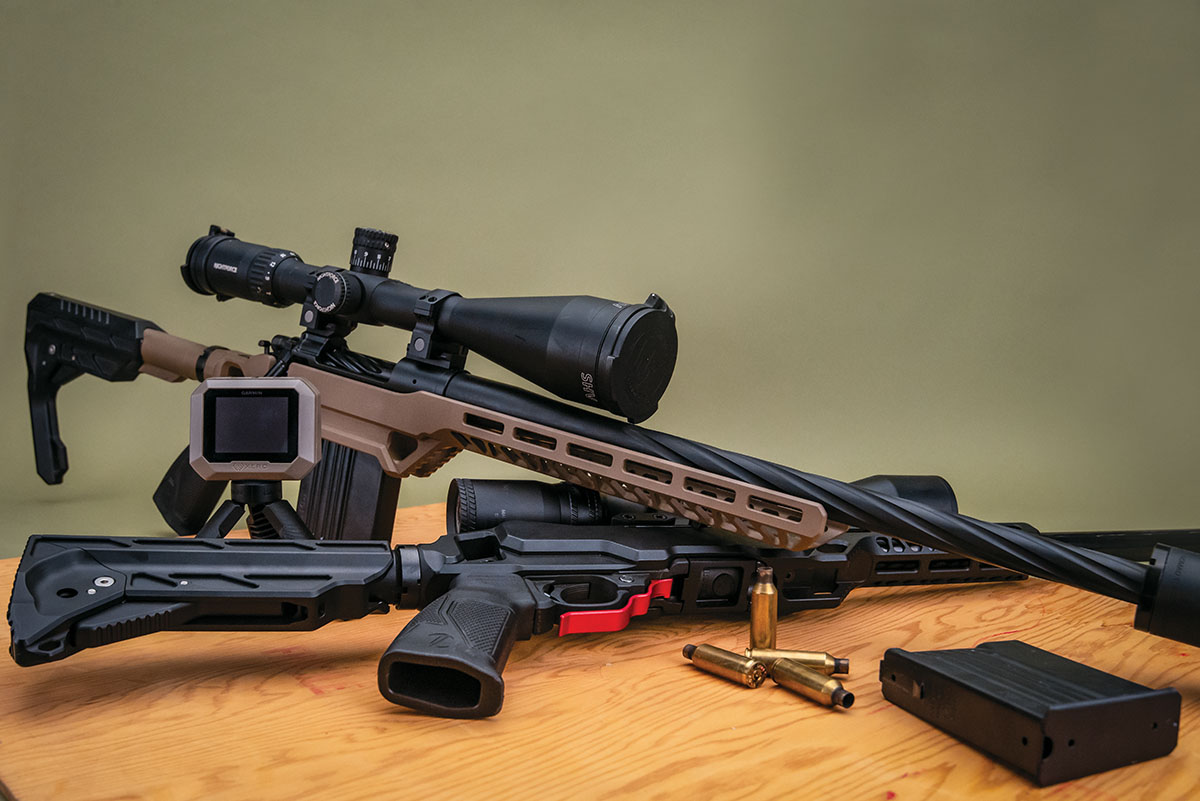
A project that has been in the works for quite some time has involved sourcing and testing the various actions, barrels and chassis systems on the market. This testing has been ongoing and this article is a direct result of a small portion of the testing conducted. The goal of these tests is to weed out the strengths and weaknesses of each of these systems and see what truly works and where. This article is on just one of the many systems available on the market today.
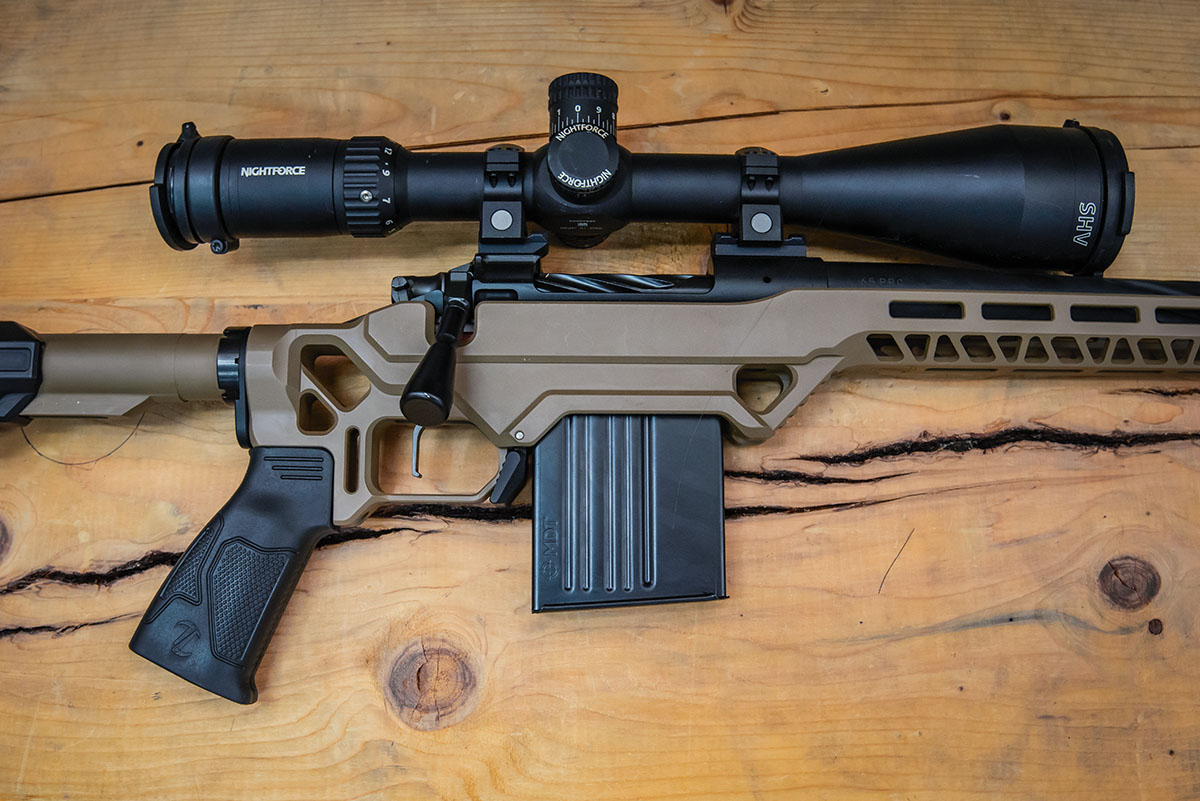
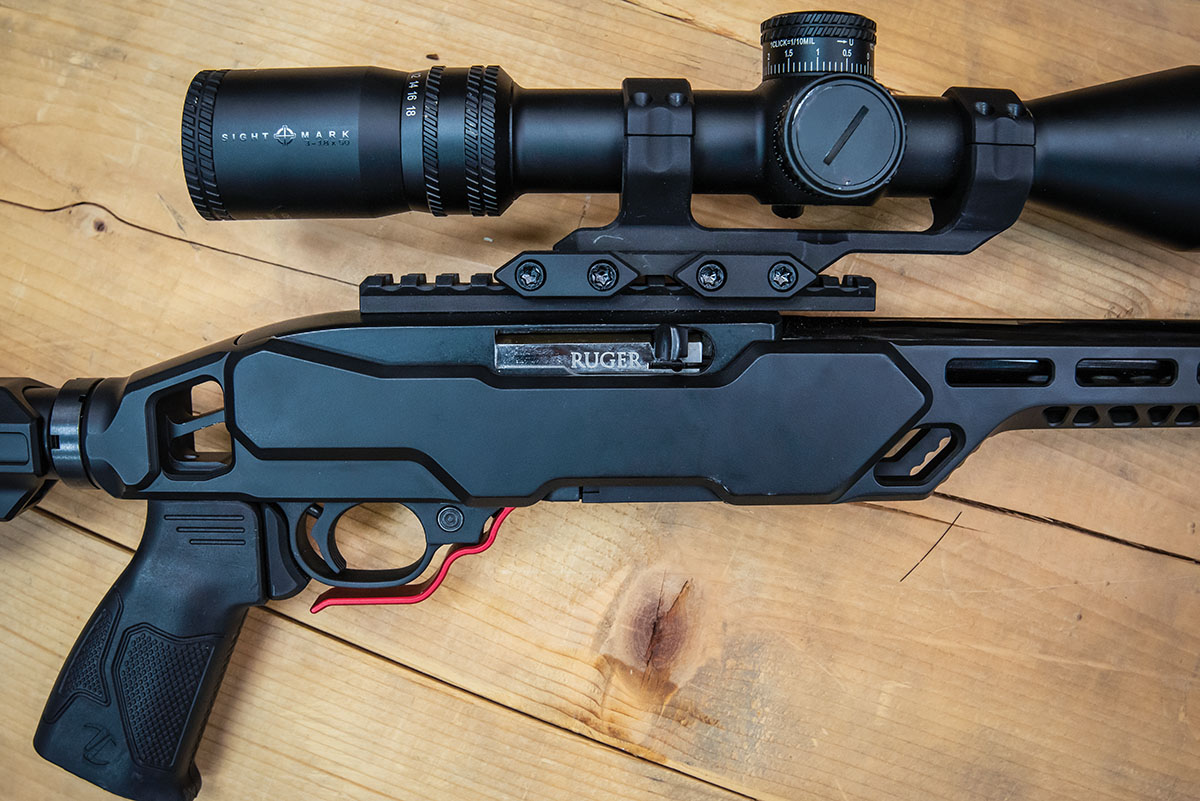
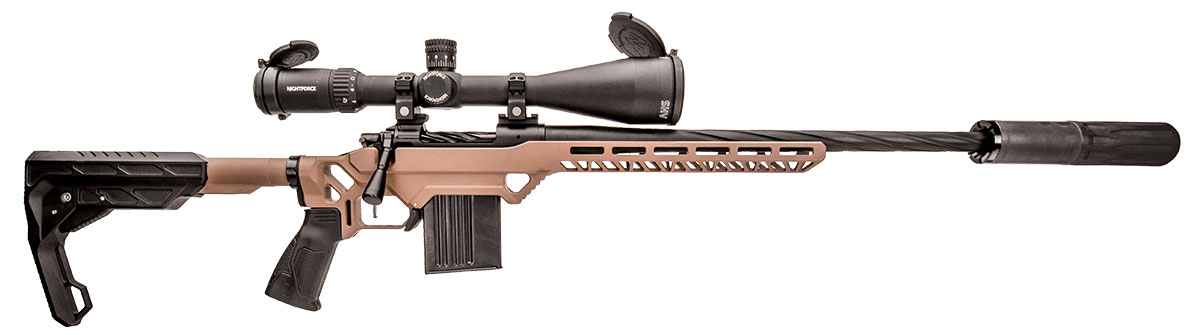
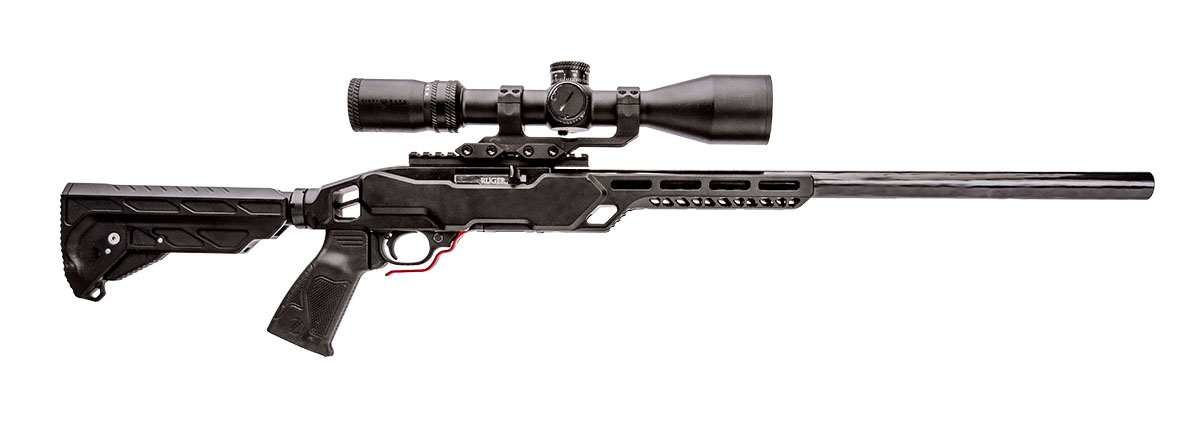
A Timber Creek Enforcer Chassis was requested, and after some time, two Enforcer Chassis arrived with their furniture installed on each. One was for a Ruger 10/22, featuring a 10/22 receiver, a 20-inch barrel and a Sightmark Citadel 3-18x 50mm optic installed. The other chassis had a Remington 700 footprint. A Mack Brothers Element short action and a 20-inch fluted barrel chambered in 6.5 PRC were already installed, with a Nightforce SHV 5-20x 50mm optic. Usually, I prefer to build these chassis systems myself, but that can also lead to headaches. I decided to use these systems as they were set up by Timber Creek and put them to the test.
The first trial was an out-of-the-frying-pan-and-into-the-fire experience as the rifles showed up just in time for an event at Gunsite. This is one of the world’s premier training facilities and offers some of the best instructors and ranges in the country. This makes it the perfect proving ground for testing rifles in field
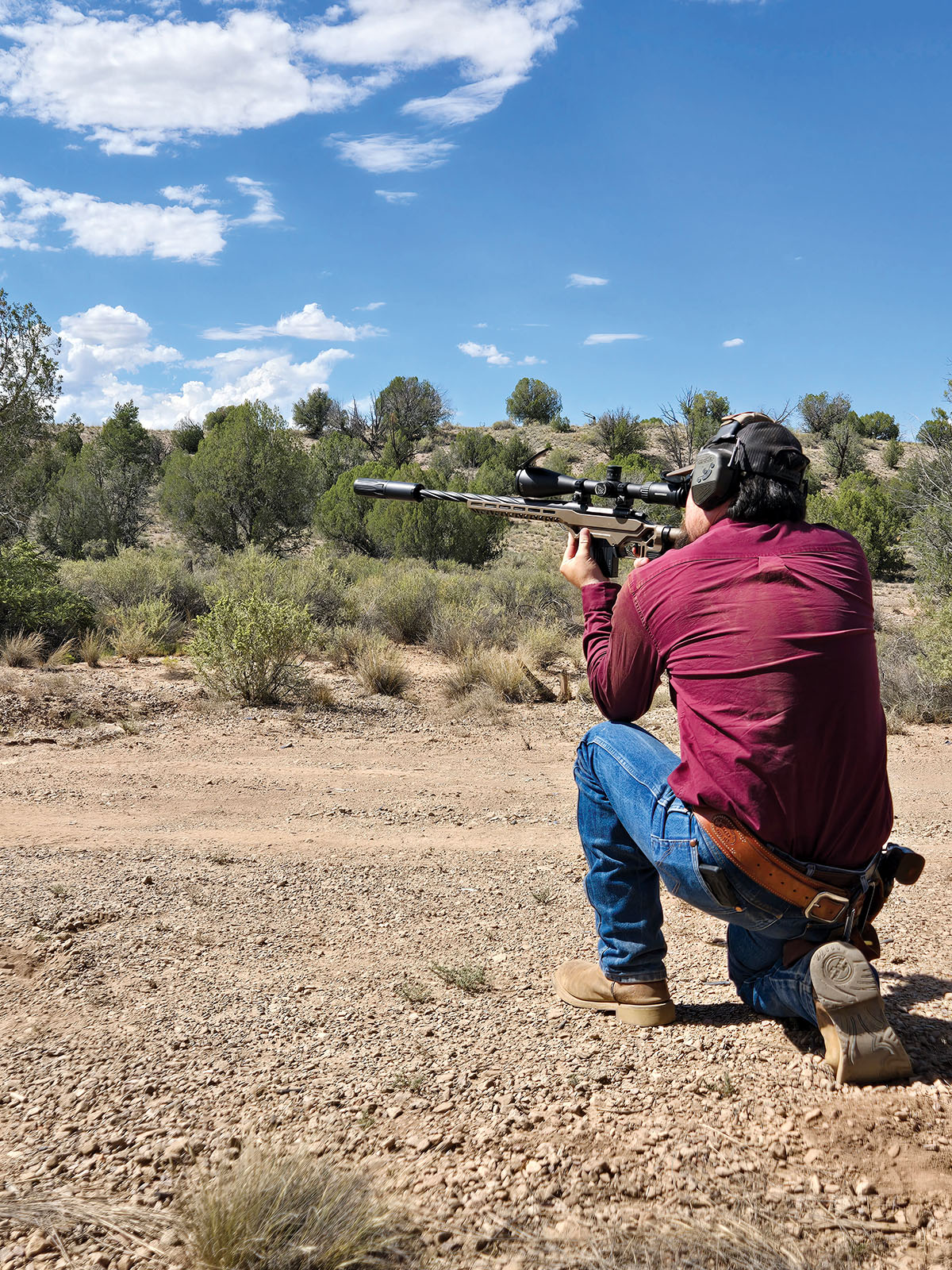
conditions and rigorous use over a short period of time. A few things were quickly noticed and addressed with the Enforcer Chassis holding the Mack Brothers action – the pistol grip loosened up while walking the military crest, engaging targets from about 100-300 yards from various field-style shooting positions. In the last few minutes of the
exercise, the AR buffer tube that holds the stock also loosened up. These were easy fixes and easily preventable but highlight the importance of testing under field conditions.
After some Loctite Blue 242 for the pistol grip screw and a torque wrench on the buffer tube, no further issues were encountered over the 4 days spent shooting at Gunsite. If it were my own personal rifle, I would have staked the castle nut as well for added security in the field. The rifle proved to be more than accurate and made many of the exercises look easy. The chassis did not bow or induce noticeable stress to the action even when forced into awkward shooting positions. So long as the nut behind the bolt did his part, the rifle connected on target with boring regularity. During the entire time at Gunsite, the rifle was run with a Dead Air Nomad Ti OTB suppressor, which made the entire experience more pleasant. The shorter length, thanks to its over-the-barrel design, made it easier to get in and out of awkward shooting positions, sometimes nestled inside a juniper tree or in confined spaces. It also made field carry more pleasant, reducing the overall length and shifting the balance point further back than with a traditional suppressor.
During the trials at Gunsite, multiple shooters used the rifle, and it fit everyone well, which is one of the greatest benefits of a chassis system. The flexibility of being able to use any AR-style stock, pistol grip, and mount accessories on the M-Lok slots gives it a big advantage in versatility over more traditional stocks. The sky is truly the limit when it comes to ease of customization with the Timber Creek Enforcer Chassis system.
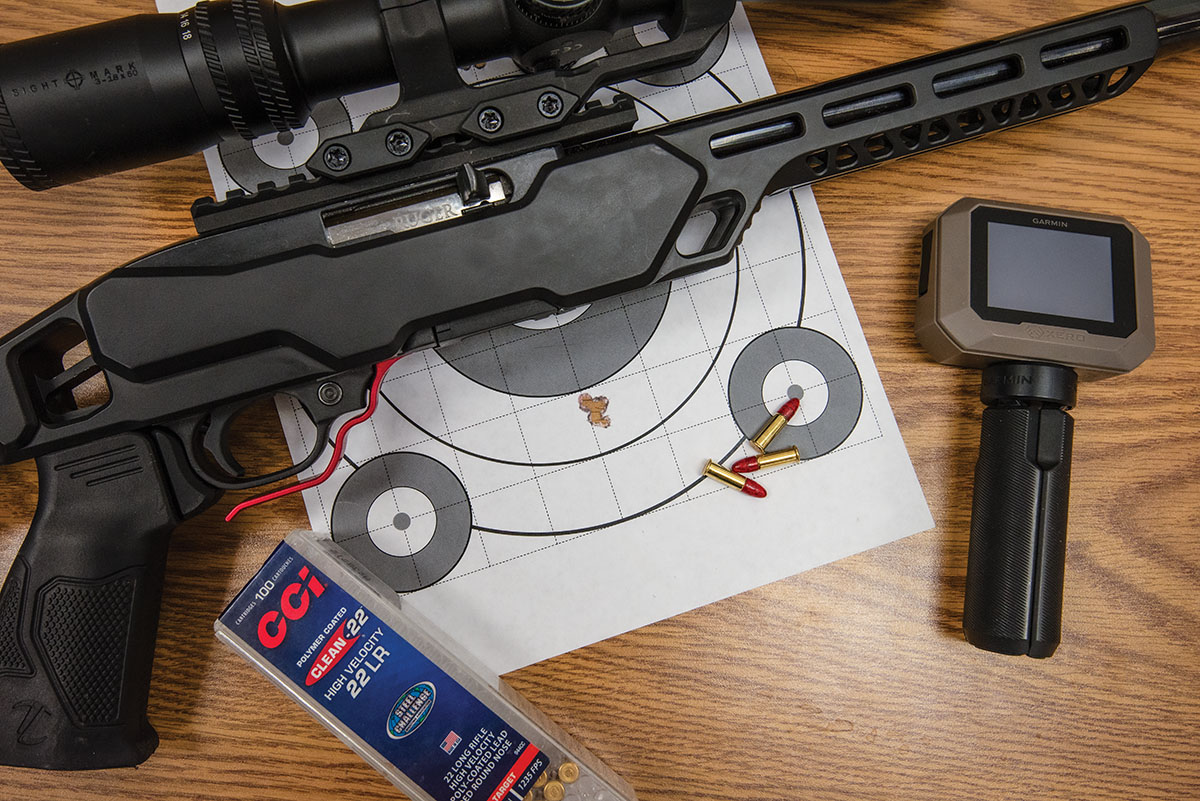
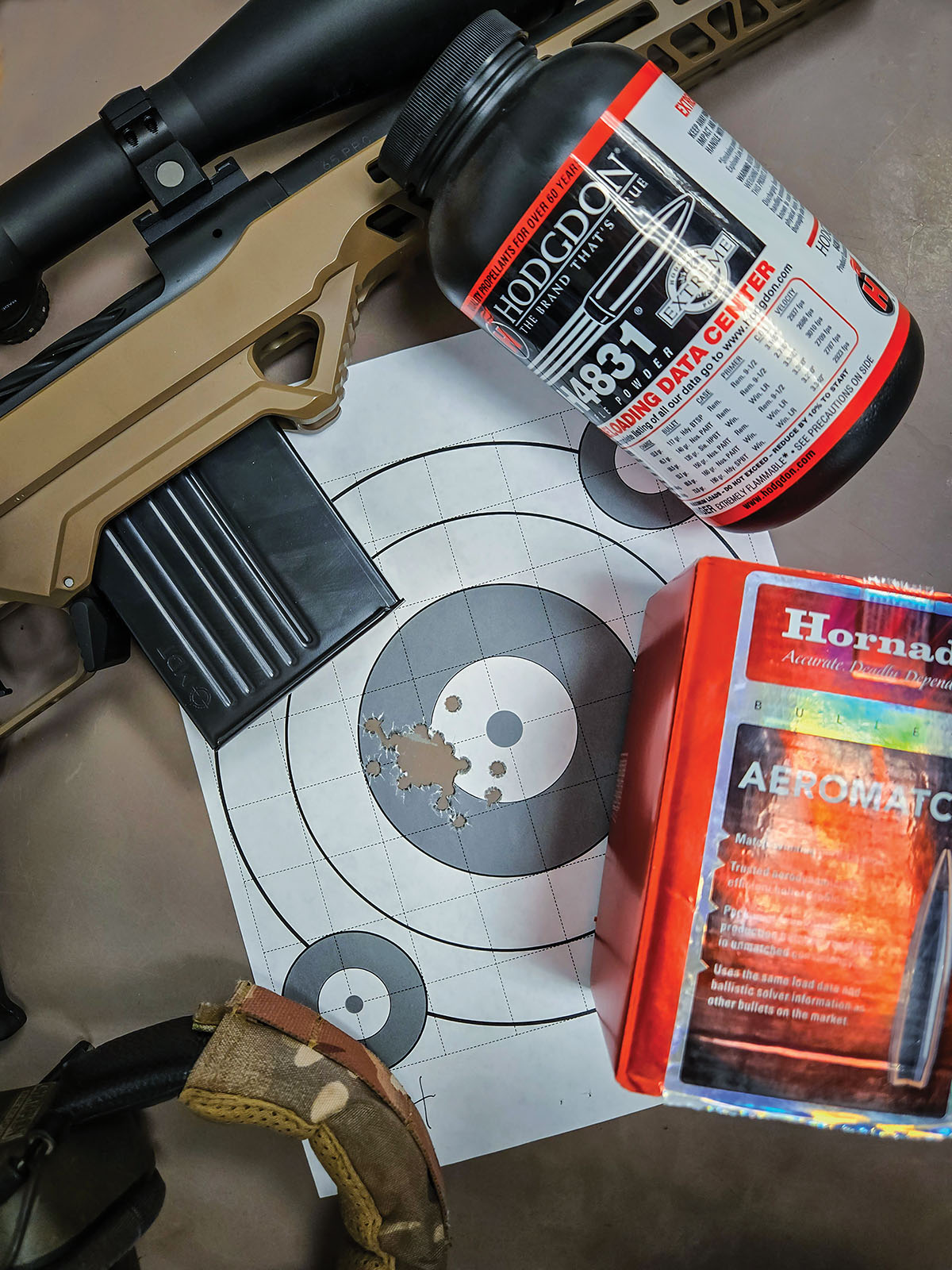
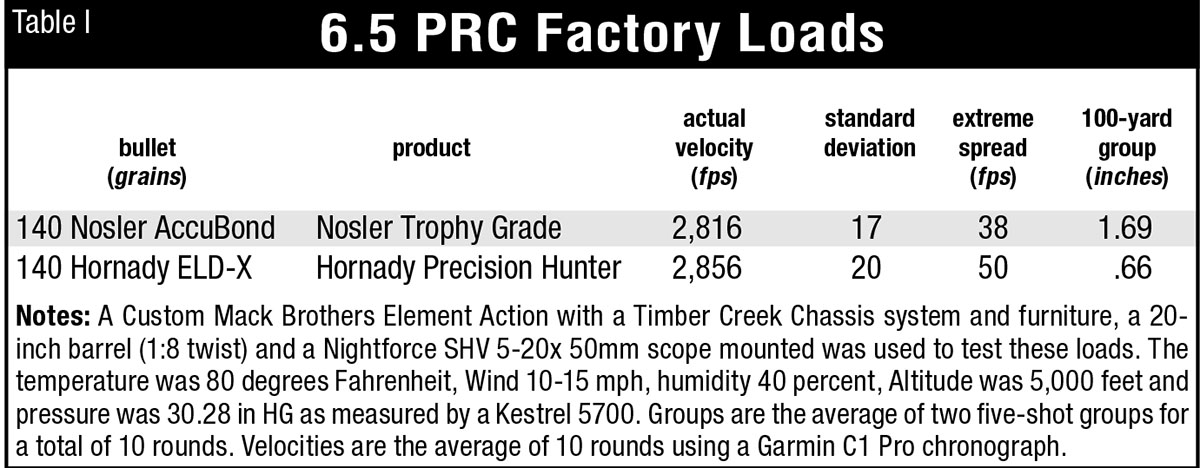
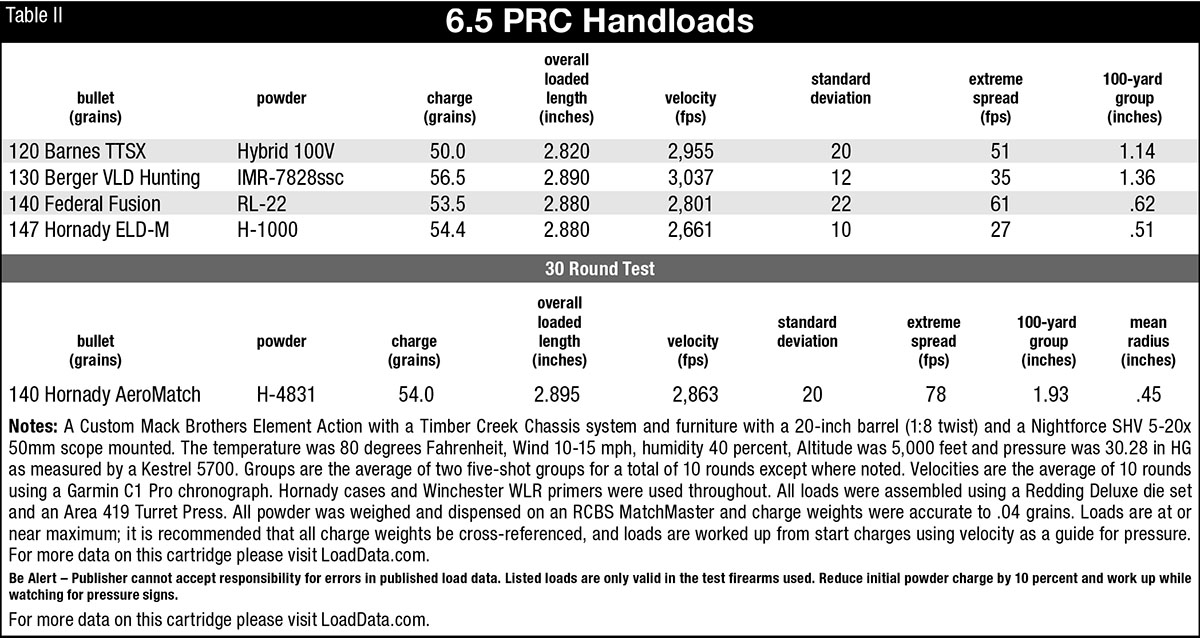
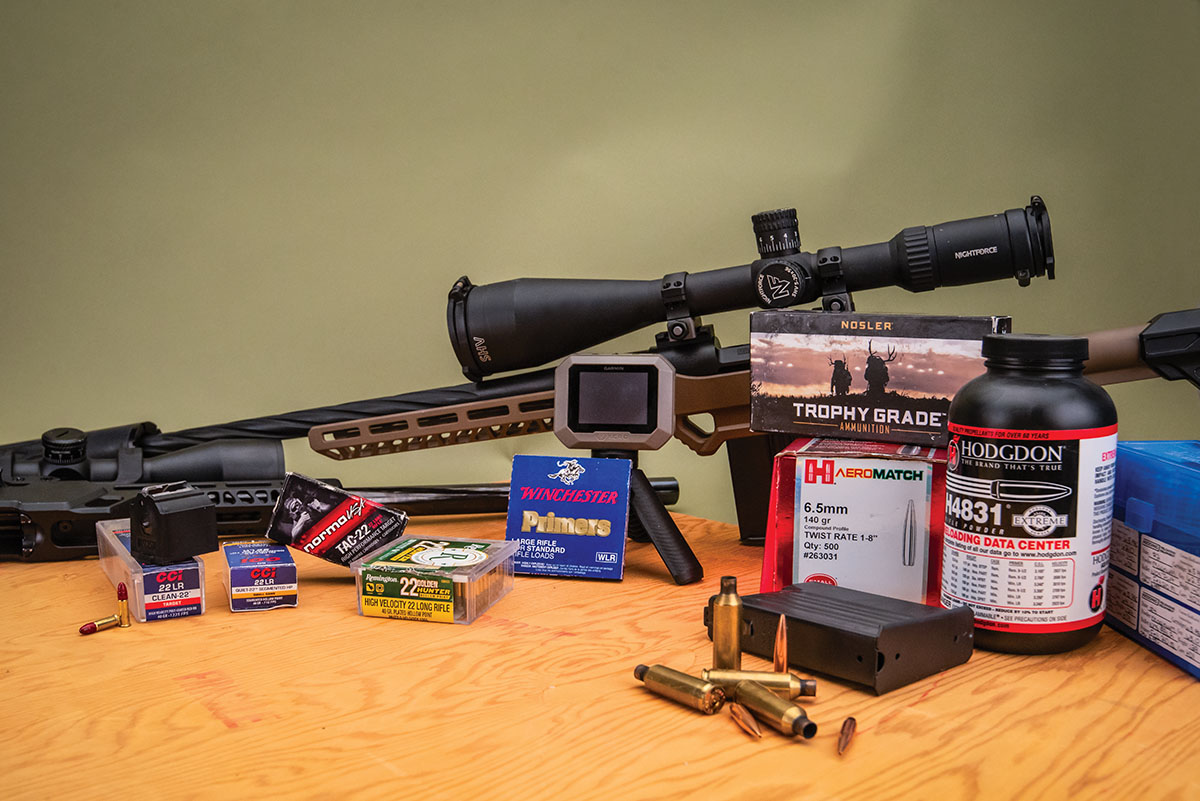
While field testing is important, precision is equally as important in a rifle system; this is where all the components of a build come together and work in unison to separate the good from the great. A target was set at 100 yards and a Thunder Beast Ultra 7 Gen 2 was threaded on the barrel for further testing. This time from a solid benchrest position, groups were carefully formed on paper using both factory loads and some select handloads. These loads were not cherry-picked from a load development, just loads that have worked well in past rifles chambered in 6.5 PRC. The results overall were very good for 10-round groups (averaged from two groups of five shots) and proved that the rifle system was capable of holding good groups.
A single 30-round group was fired on a single target at the end of testing to provide a more statistically relevant sample size. It measured just under 2 inches; part of that group size certainly has some shooter error and fatigue reflected in the final numbers, but overall it is a quite capable rifle system. The action runs extremely smoothly, and the chassis offers good balance and rides bags and barricades nicely. One grip I had while shooting was that the stock for the Remington 700 Chassis was a bit lacking for cheek weld and for riding a rear bag, as it is minimalist in design. However, thanks to the chassis’s use of an AR buffer tube, this could easily be replaced with a variety of other stocks.
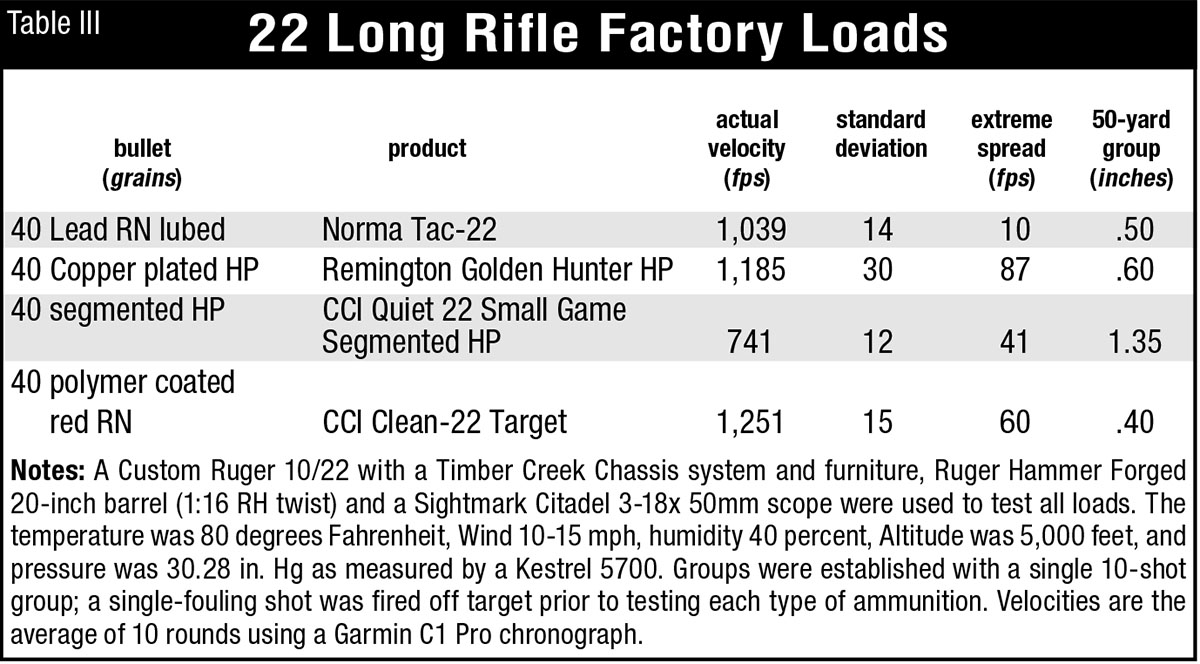
The 10/22 with the Enforcer Chassis was also subjected to accuracy testing, and the results are shown in Table III. The precision was extremely good at a distance of 25 yards and beat many of my own match rifles. The stock provided a more solid cheek weld, and over the courses at Gunsite and my own field testing, nothing loosened up. One thing that was greatly appreciated was the Extended Mag Release XL from Timber Creek. The 10/22 mag release is not the best to begin with in terms of ease of use and functionality, making the Timber Creek mag release a great addition to the rifle.
As a whole, the Enforcer Chassis worked very well and held up under rigorous use and testing and evaluation. The Enforcer is a great option at a reasonable price, offering versatility and precision. While it doesn’t have as many options as some of the more expensive options on the market, such as provisions for mounting clip-on night vision or thermal forward of your optic. It does boast of many practical features that the average end user can appreciate in the field and on the bench.