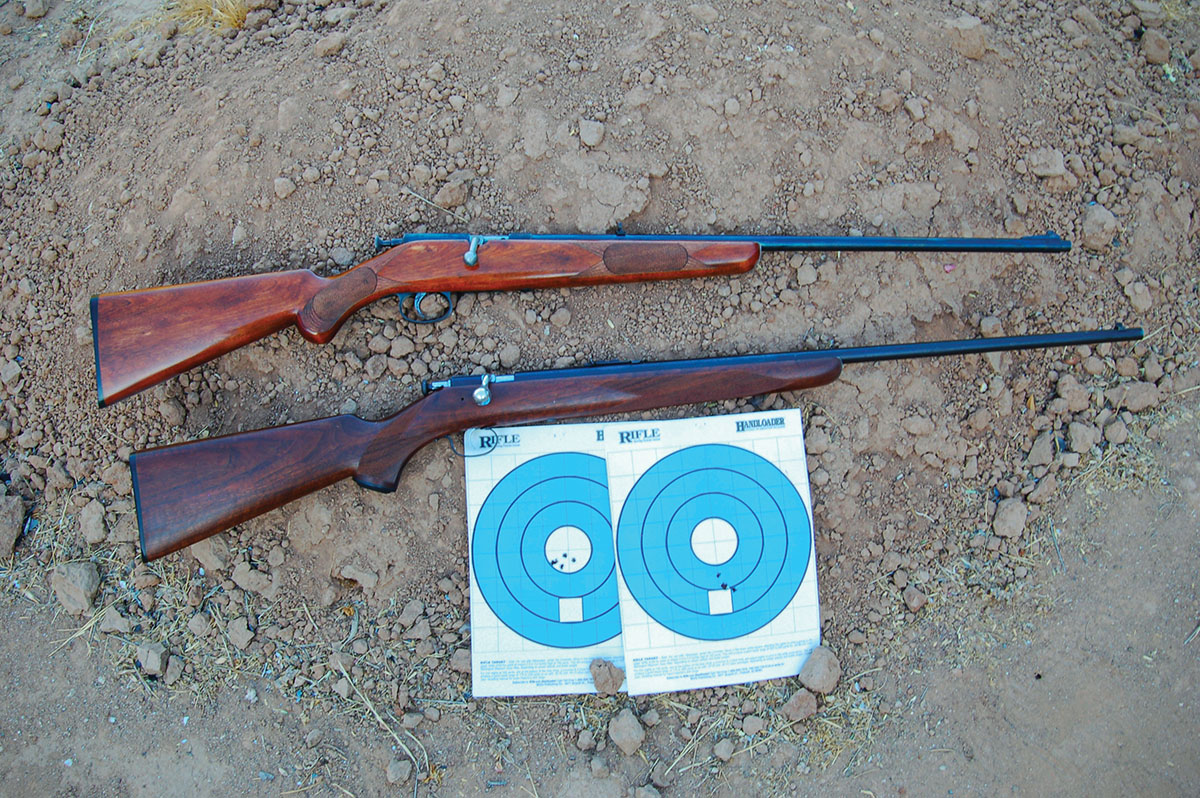
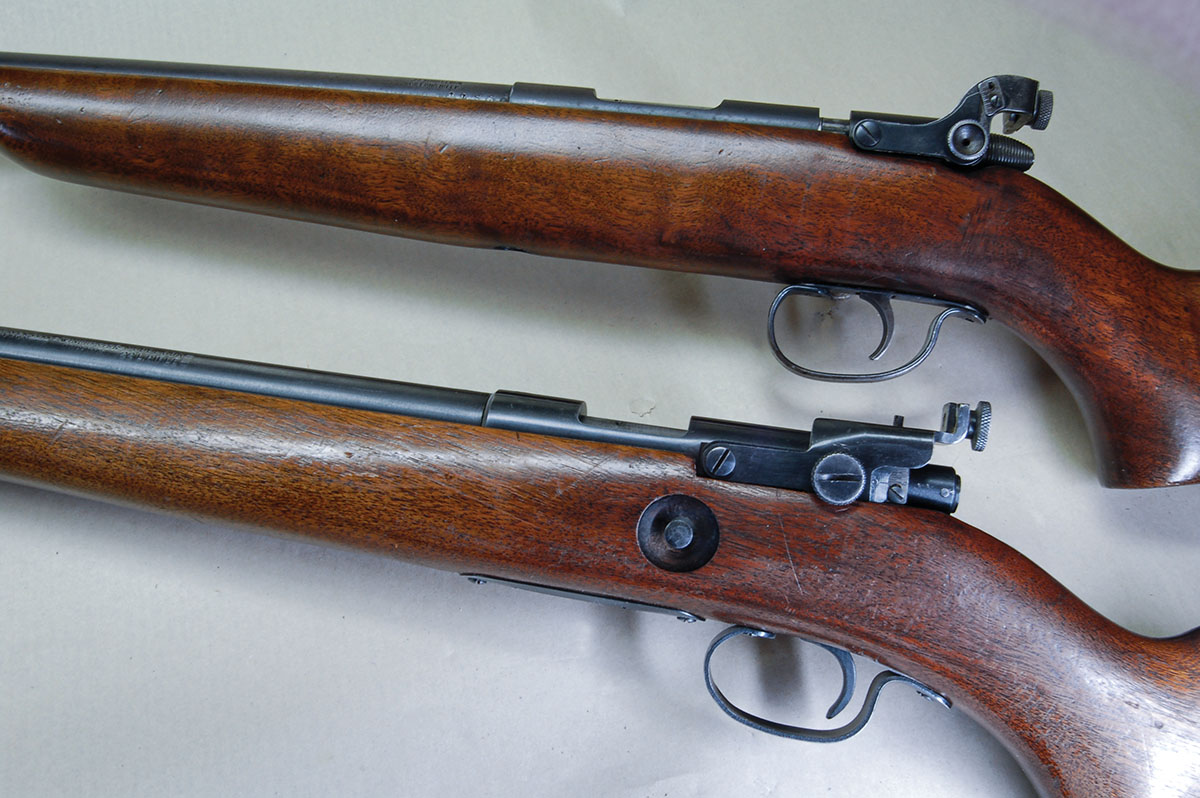
Completed project guns. A Sears, Roebuck & Co. Ranger (top) and a Winchester M67 (below) look like more expensive guns. They shoot well too, as targets from 25 yards show.
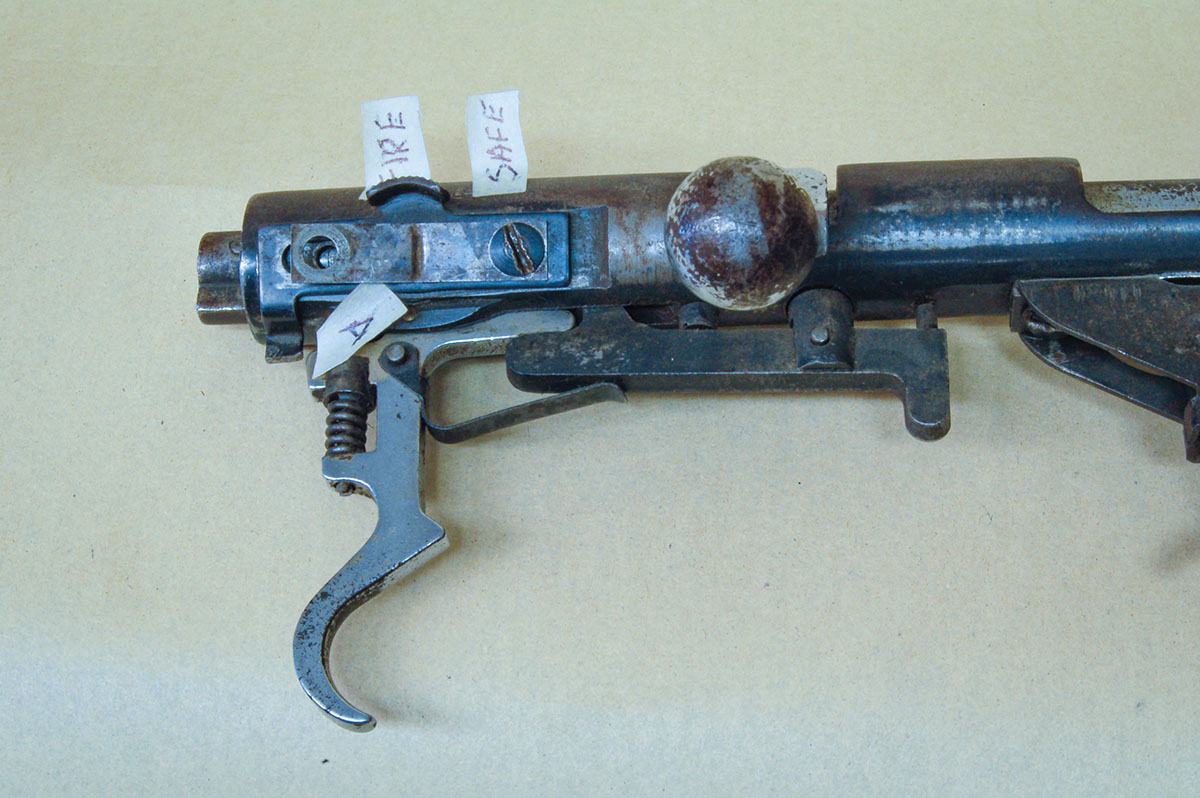
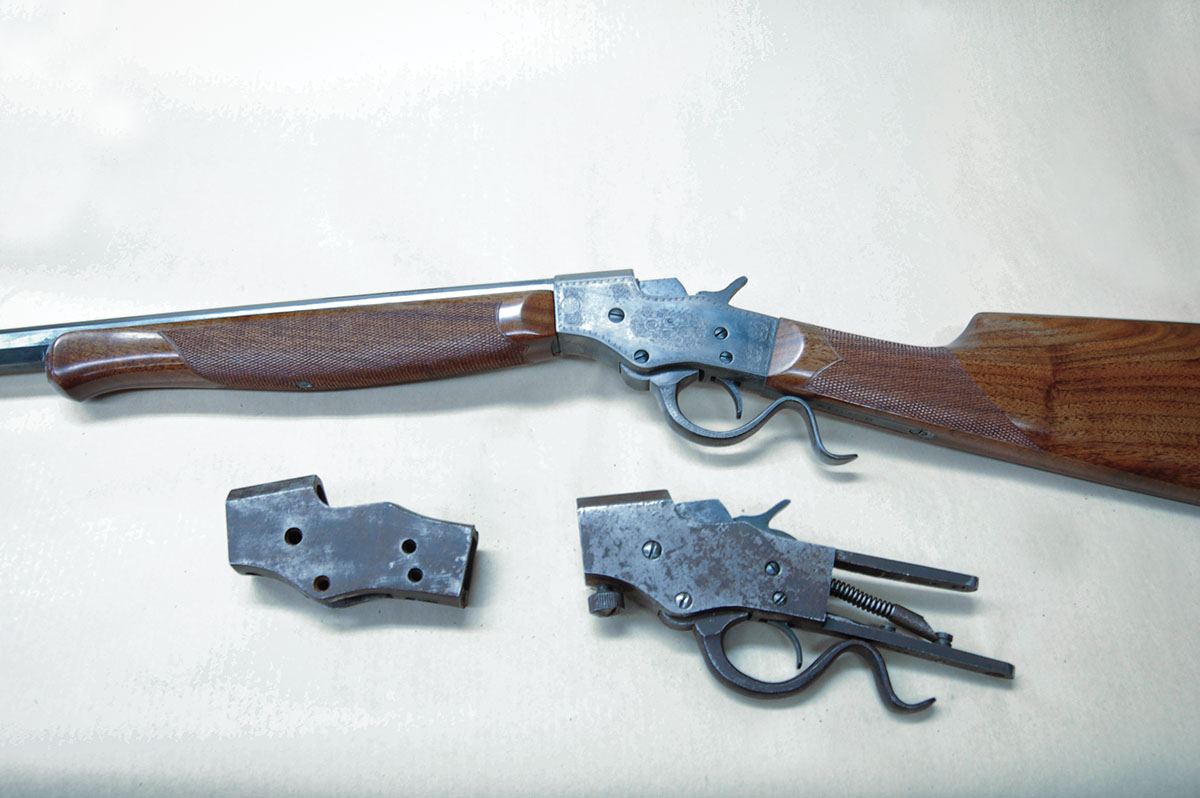
Stevens 22 safety slides forward to “Safe” and rearward to “Fire,” opposite of every other safety on the planet. It’s best to pass on these, though they can be altered by welding at point “A” (see arrow).
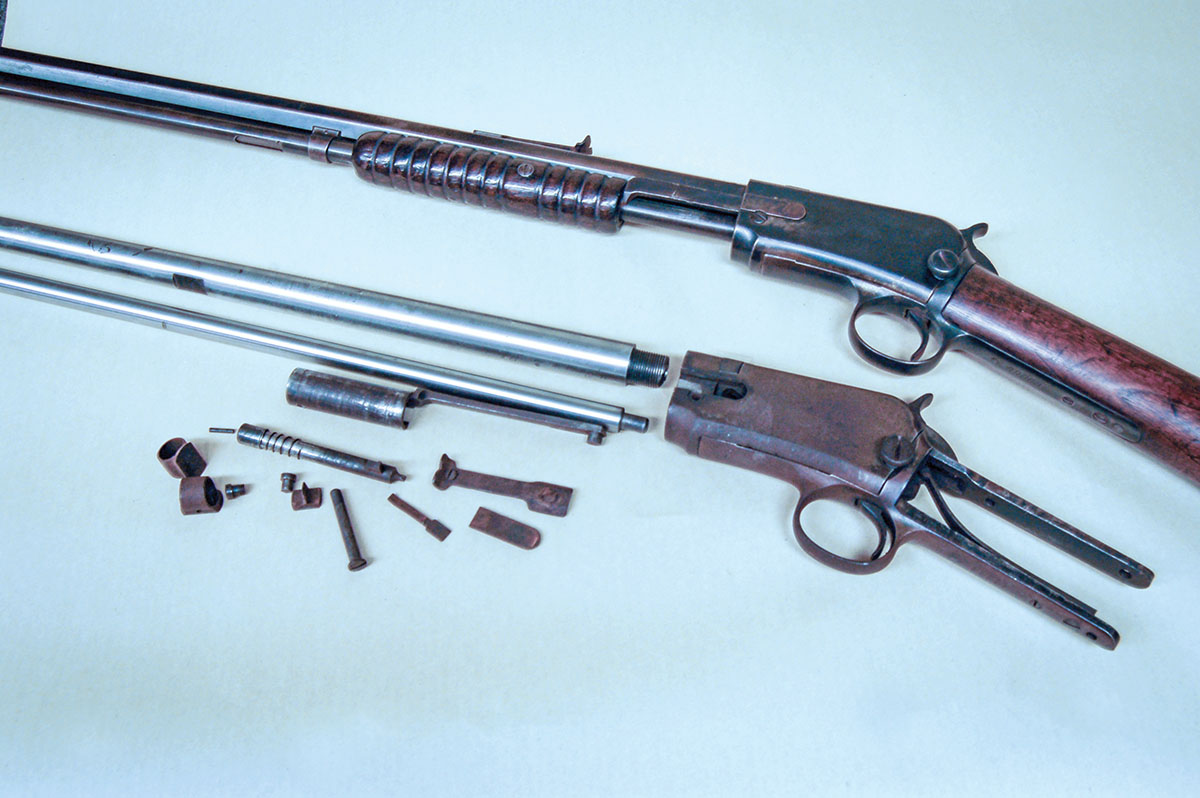
A Winchester Model 1890 (top) with the same action as the M1906 (bottom). Both are lightly rusted and won’t feed or fire – perfect project guns.
The parade of modern firearms having some type of plastic stock and composite frame, receiver, or other parts is never-ending. Those who seek out wood-and-steel rifles to play with seldom notice. To us, it’s much more fun taking a squirrel or small varmint with a solid feeling, smooth-working 22 rimfire made before about 1950 than any new ultra super max black brass-slinger. With more new shooters appearing every day, this is becoming harder to do. It’s like the old quip about land: “If you see what you want, you better grab it cause they ain’t makin’ anymore!”
When normal people look for a used gun, they want one showing little wear. This is fine if possible, but 22 collectors snap up the old guns quickly. Yet this is no problem for the gun hobbyist who is not looking for a collector’s item, but rather a project which, in this case, is a whole different animal!
There are two types of projects for preserving old 22 rimfires. The first uses a gun that has had a hard life, but no abuse. There is no factory finish
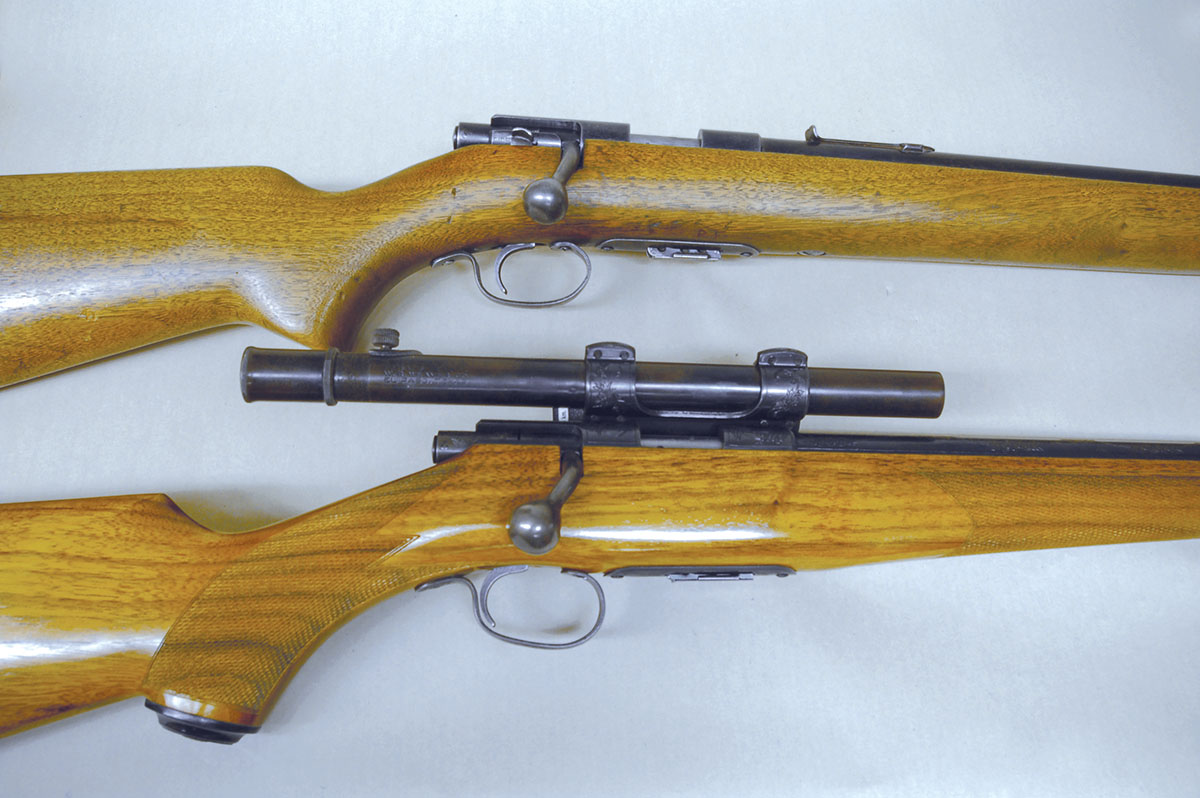
Winchester M69A (top) has a badly pitted bore and stock cut off, a project gun. The bottom M69A is completed; the Weaver M29S scope is a plus for any project. It dates from 1937.
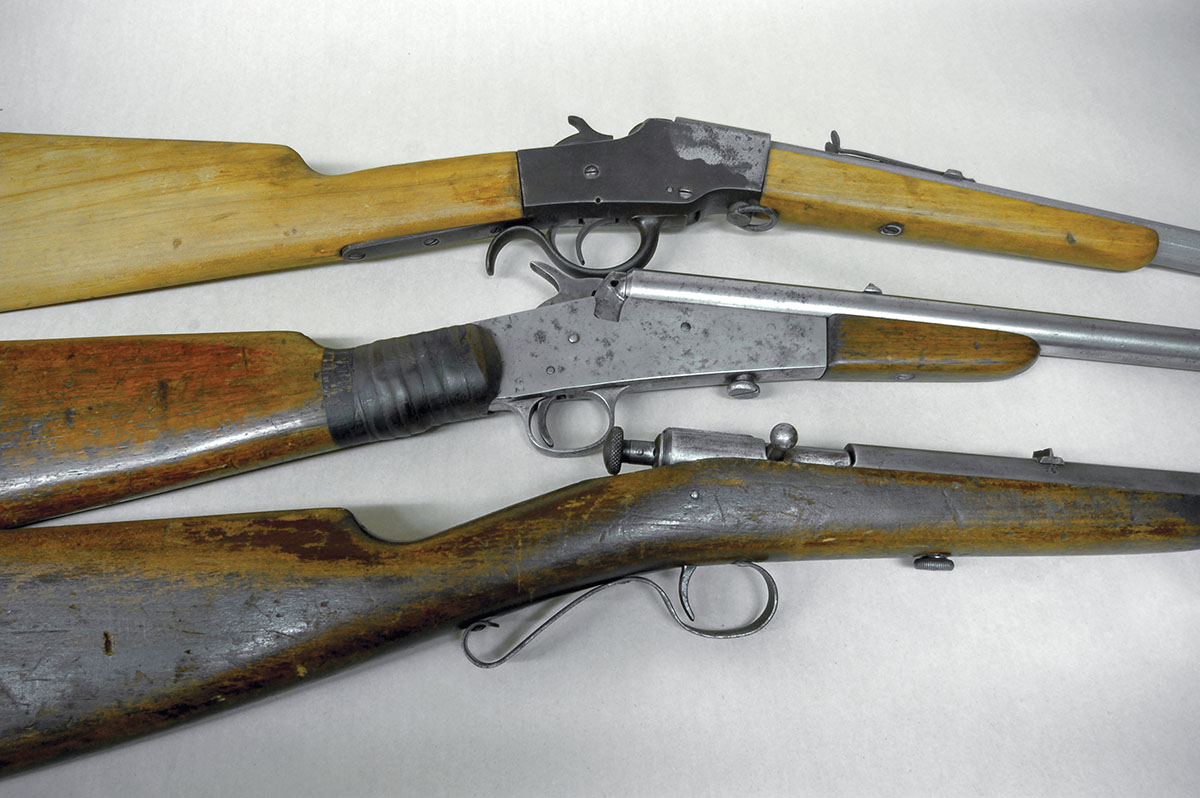
Typical old project guns with ruined bores and broken stocks (top to bottom): Hopkins & Allen, Remington No. 6 and Winchester Model 1902.
remaining, the stock is dented and scratched yet solid, and the bore is excellent. The gun has no collector value, so everything can be refinished, along with glass bedding and trigger work. Do all correctly and a better-than-new gun results.
Much more work is needed on the second type of project, the one done in this month’s column. These rifles would otherwise be sold for parts online and the barreled receiver thrown in a landfill. This is not acceptable. For almost 100 years, the 22 rimfire rifle was as much a part of growing up as the bicycle. Everyone learned to shoot with an inexpensive 22 rifle. They deserve to be preserved just like any other valued antique, to be enjoyed and used with for another hundred years.
There are four items to consider when picking a rough-conditioned old 22 for preservation: function, metal surface condition, stock condition and bore
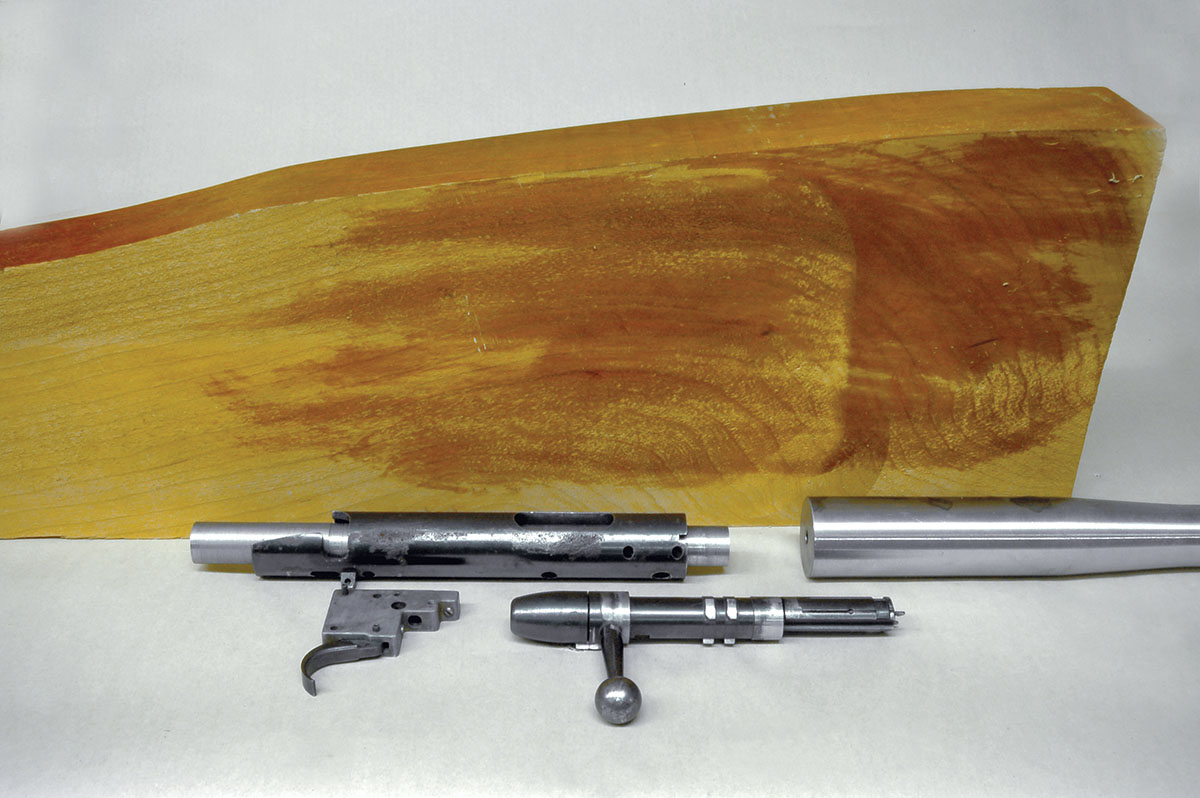
A pitted Remington M580 action will be turned on mandrel and made into rimfire metallic silhouette rifle.
condition.
For Stevens Favorite fans, here is a rifle built from a rusted action like the two below it. The receiver with the tangs cut off shows that gunfolks will buy anything gun related.
Determining function is easy for single shots and magazine-fed
repeaters. They either fire and eject, or they don’t. Magazine-fed guns may require a new magazine. The trigger may be heavy due to worn sear surfaces, but that is no problem. Recase hardening is a basic gunsmith task. The only real problem is tubular magazines. Feed parts are sheet metal stampings and will bend. Once bent by prying out a stuck cartridge, they may never be reliable again. After hours of frustration trying to correct this, consider a tip: some modern flatnosed hollowpoints will not feed reliably into the chamber from the lifter of some mechanisms. Won’t do it, period, only classic roundnose.Metal surface condition may be light grey to very fine brown rust (collectors call it “patina”, but it’s still rust). Rubbing with 0000-grade steel wool and
Stocks from project rifles that are beyond repair. These rifles would have been sold for parts if not adopted as projects.
WD-40 will stabilize the surface. Pitting, however, can’t be eliminated. The Remington M580 shown in a photo is pitted, but below the stock line where it can’t be seen. The bore was pitted and the stock broken. It seemed a shame to sell the bolt and trigger and throw the rest away. The action will make into a fine rimfire silhouette rifle.
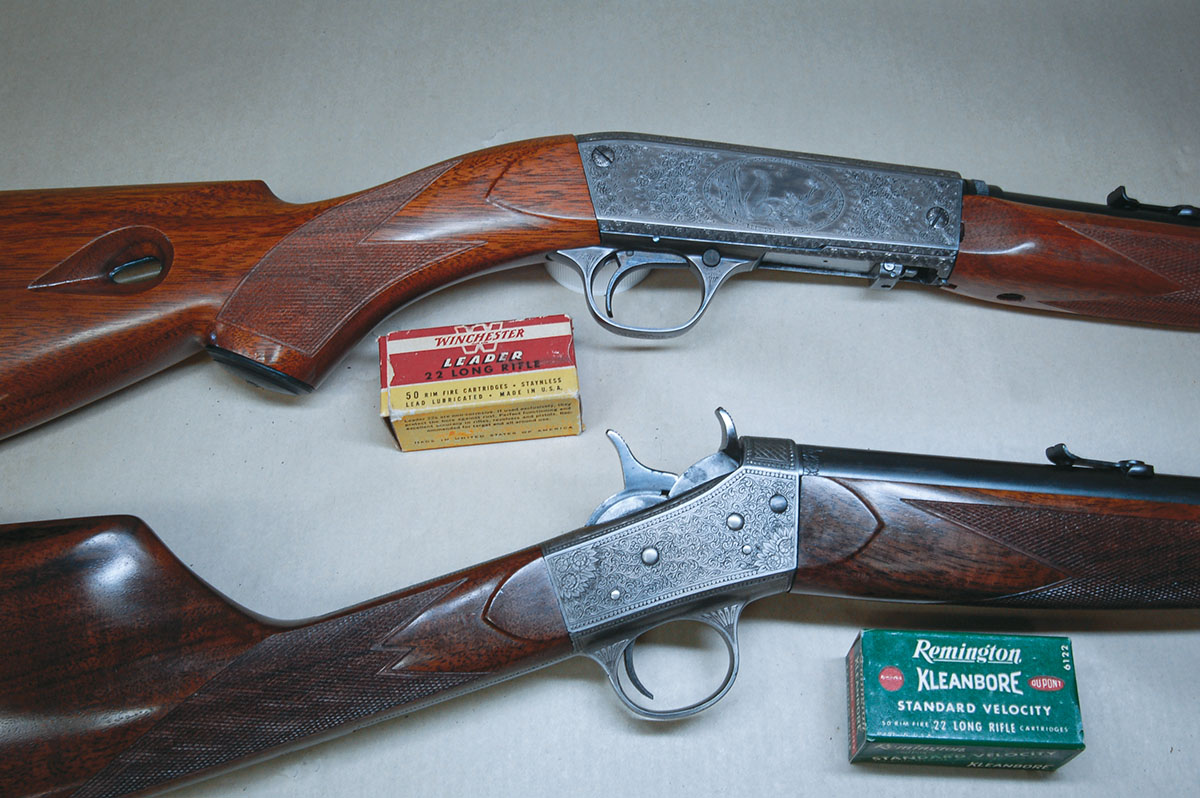
It’s easy to get carried away with projects. The M24 (top) was a standard model found with no wood in a gunsmith’s parts barrel. The Remington No. 4 (bottom) was a kids’ toy. The rifles will now survive.
Before leaving the subject of metal finish, it must be said that Brownells, Inc. sells a Belgian-type bluing solution. Only one heated water tank is needed. All the guns shown in the photos were blued using this process. It is ideal for home craftsmen who will follow directions. My adaptation of it will be covered in a future column.
Next is wood or stock condition. Since the purpose of gun work is to provide a more enjoyable pastime than watching a bunch of overpaid actors play with
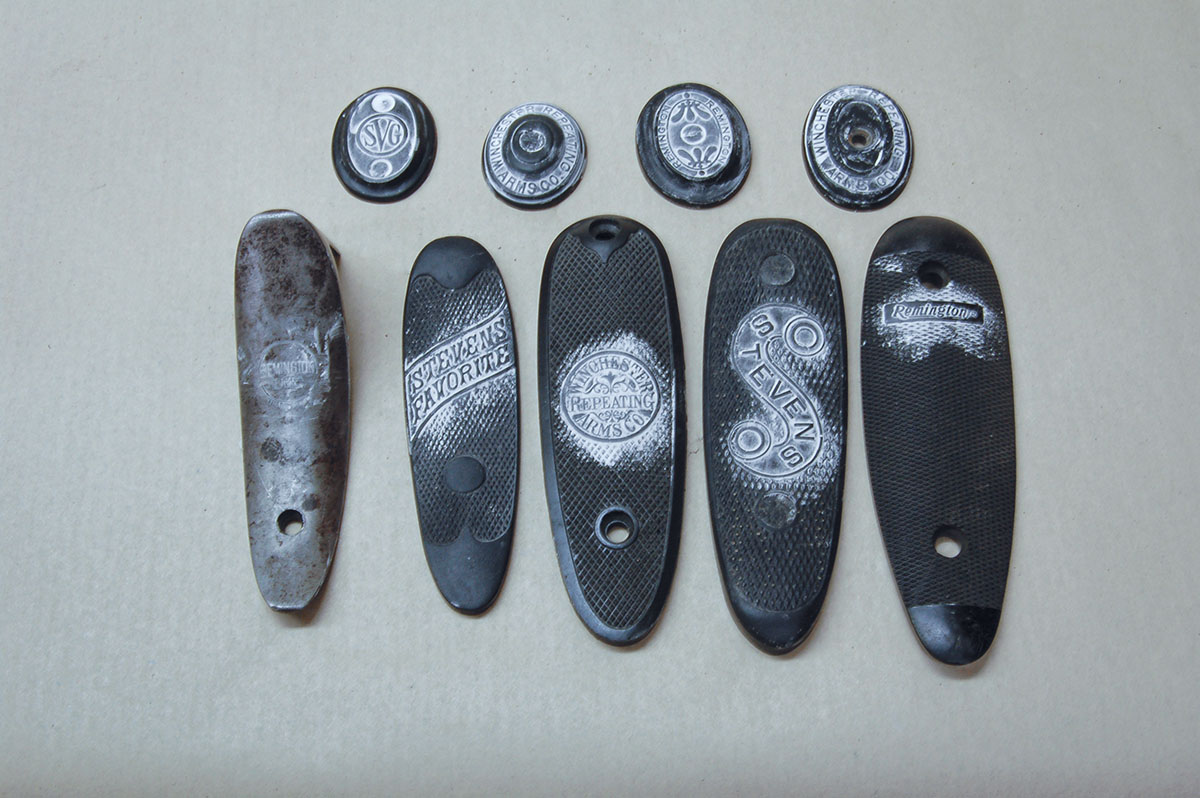
Original buttplates for projects require constant searching for at gun shows and old-line gunshops. (White filler added for clarity.)
a plastic ball, there is no reason not to replace a broken or severely damaged stock. Here is where all hobby gunfolks miss the old E.C. Bishop and Son, Inc. and Reinhart Fajen, Inc. gunstock suppliers. They sold inexpensive, machine-inlet, unfinished, factory-duplicate-shaped stocks for every American long gun ever made. Finishing was done in the home workshop. These two companies were responsible for saving millions of old guns from the scrapheap. They are gone and for no good reason. Semifinished stocks are advertised on the Internet, but not for old rimfires.
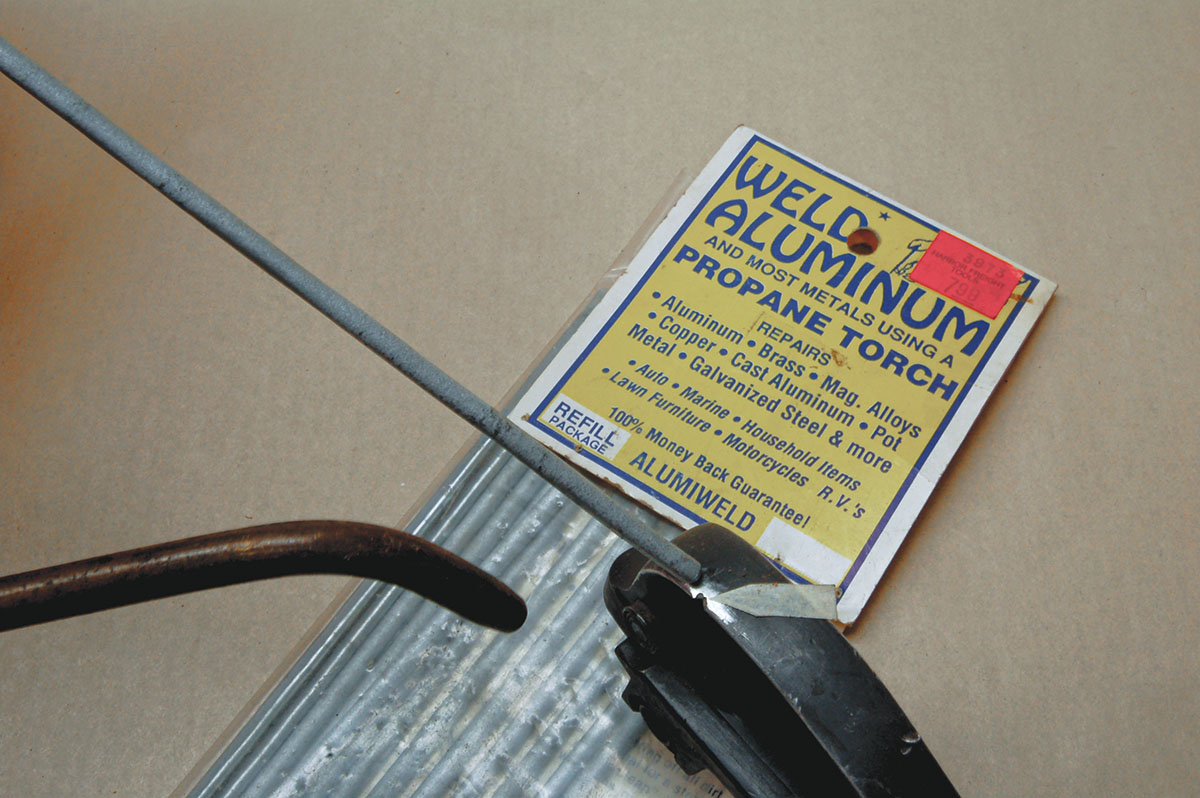
Some newer “old .22s” have aluminum trigger guards and frames. Damage from abuse (see arrow) can be repaired using product shown.
Making stocks for the old 22s is really not difficult. Any home gunsmith can do it. Two-piece stocks are easiest. The forearm requires a groove for the barrel and a hole for attaching the screw. The buttstock needs two slots for the receiver tangs and a hole for the clamping screw. Bolt guns having a one-piece stock need a groove for the barrel and receiver, a slot
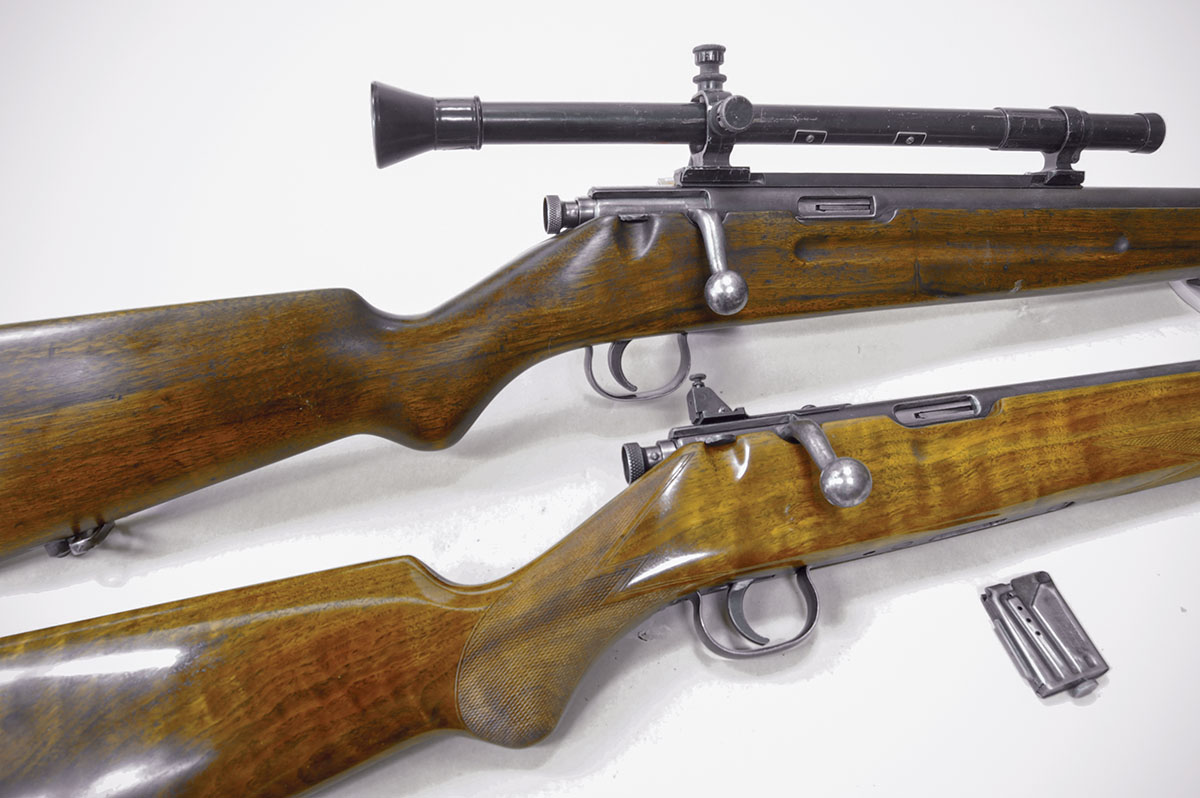
Two seldom seen project rifles. Remington M510 (top) and Winchester M69A (bottom) have no open rear sights. Instead, sheet metal aperture sights are attached to the receivers.
for the trigger and a hole for the attaching screw. Copy factory inletting. After inletting is tight (use glass bedding compound if necessary), rasp away anything that doesn’t look like a gun stock. The first job may not look like a custom job, but they soon will. All stocks for these early guns were finished using boiled linseed oil.
Finally, there is what is foremost on everyone’s mind – bore condition. It’s natural to believe that guns appearing to have been neglected for the last fifty years also have ruined bores. Fortunately, that is not always the case. Rifles that lived in the corrosive primer era (up to 1930) often had owners who knew that water neutralized the salt in corrosive primers, thus preventing rusting. Rifling can still look worn and shallow, so a good scrubbing with solvent and a brass brush can help. Sometimes the solvent will come out black for a couple of days, with very fine strands of lead appearing in the bore brush. After a while, rifling grooves look deeper.
Of course, the only way to determine a rifle’s accuracy is to shoot it. For the pre-1920 guns having small actions, short barrels and stocks that are obviously made for children, hitting a pop can every time at 30 yards should be expected with standard velocity cartridges. If not, check for muzzle wear caused by a cleaning rod (old habits die hard). Sometimes such rifles will shoot better with lower velocity rounds called “CBs” loaded in long rifle cases. Even lower velocity import ammo is not, however, a good idea because of the chance of sticking a bullet in a slightly rough bore. I know because I’ve done it.
If an old rimfire is perfect for a preservation project, but accuracy is poor, all is not lost. Drilling out the bore and installing a rifled liner will bring it back. The process is not simple, but doable in the home shop. Columns will be done in the future showing how.
It is impossible to leave the subject without mentioning telescopic sights. J. Stevens Arms Co. began manufacture about 1900, but telescopes with crosshairs were available long before this. Collectors snap up these early scopes. The ones most likely to be seen on rifles in our time frame were made by W.R. Weaver Co. in El Paso, Texas, beginning in 1930. Tens of thousands of some twenty models were made. If a Weaver scope is found properly installed on a project rifle, it deserves to be preserved too. They aren’t as bright as today’s products, but what difference does it make if they require going plinking at high noon on sunny days.
A final item doesn’t apply to pre-World War II .22s, but many made soon after. This is a method of repairing the deep gouges and missing metal often seen in aluminum receivers and trigger guards. The product is a small-diameter rod of some type of alloy that is used just like tin-lead solder, except there is no flux needed. A photo shows a package bought at Harbor Freight, where I was told it was used for repairing cracks in aluminum castings. Complete instructions are included with the product. Filled holes and gouges in aluminum trigger guards and rimfire receivers disappear when hit with a bit of black epoxy paint. Not used often, but when needed, there is nothing like it.