


Fouling Shots
The Last Pepperbox
column By: Art Merrill | December, 26
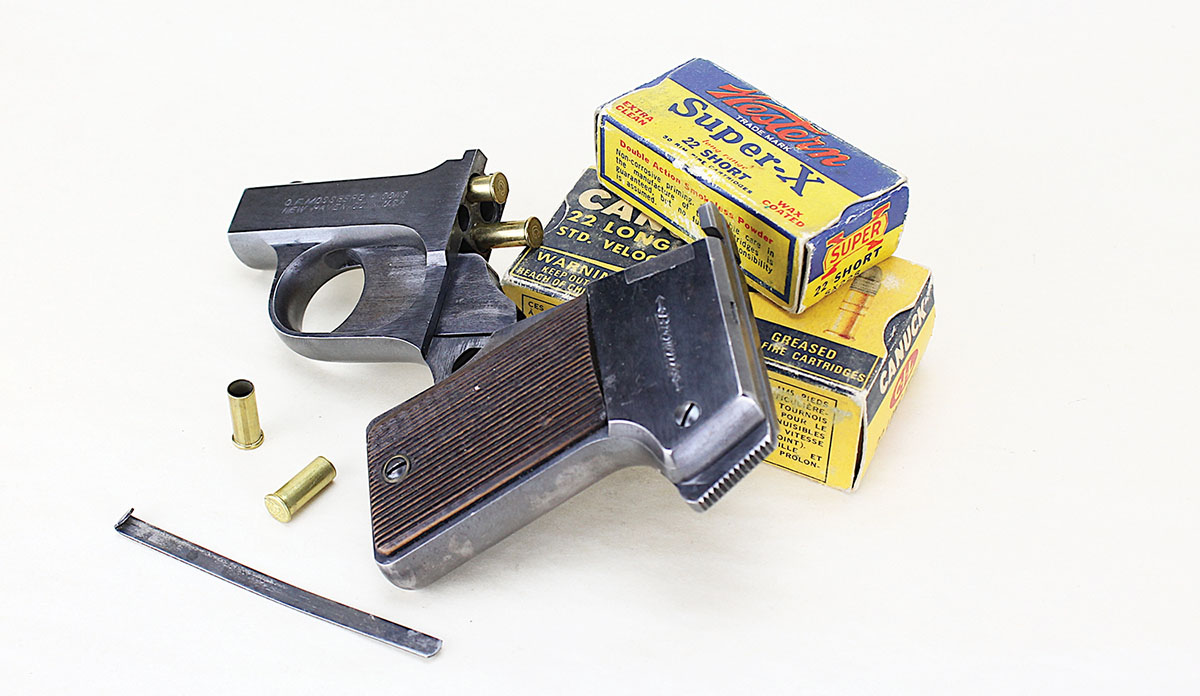
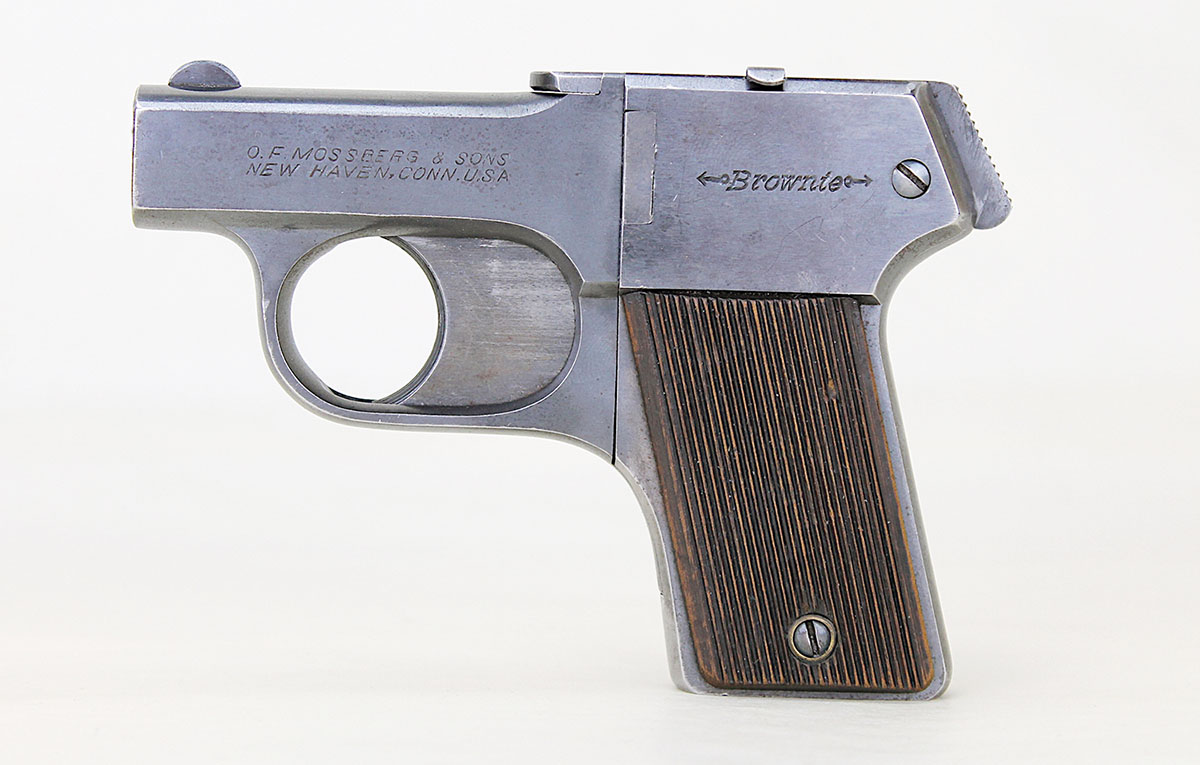
Certainly a business decision anticipated to make a profit, the best explanation for manufacturing the Brownie that occurs to me is, “There’s no accounting for what some folks thinks is reasonable.” Yet it must have profited Mossberg because the company made the pepperboxes for a dozen years, from about 1920 to 1932.
The advent of the snaphaunce and then flintlock ignition systems improved matters, and after considerable evolution, by the mid 1700s pepperboxes as we know them were appearing from various makers. The imaginative name “pepperbox” perhaps comes from the likeness of the pistol’s multiple barrels bearing a resemblance to a dining room table pepper shaker, or it may be a reference to being peppered by multiple shots. Earliest models had two, three or four barrels but later sprouted five or seven.
About 1780, a fairly practical model, which collectors call the “Nock type” after its maker, began enjoying commercial success. An existing example of this type in a private collection is a seven-barreled .33-caliber pistol measuring under nine inches in length – less than that of a modern five-inch barreled revolver. Pre-loading the muzzleloading barrels with powder and ball, and the pans with powder, sped up the rate of fire over a single-shot pistol, though the barrels had to be rotated by hand and the single steel (mounted to the barrel) raised again for subsequent shots.
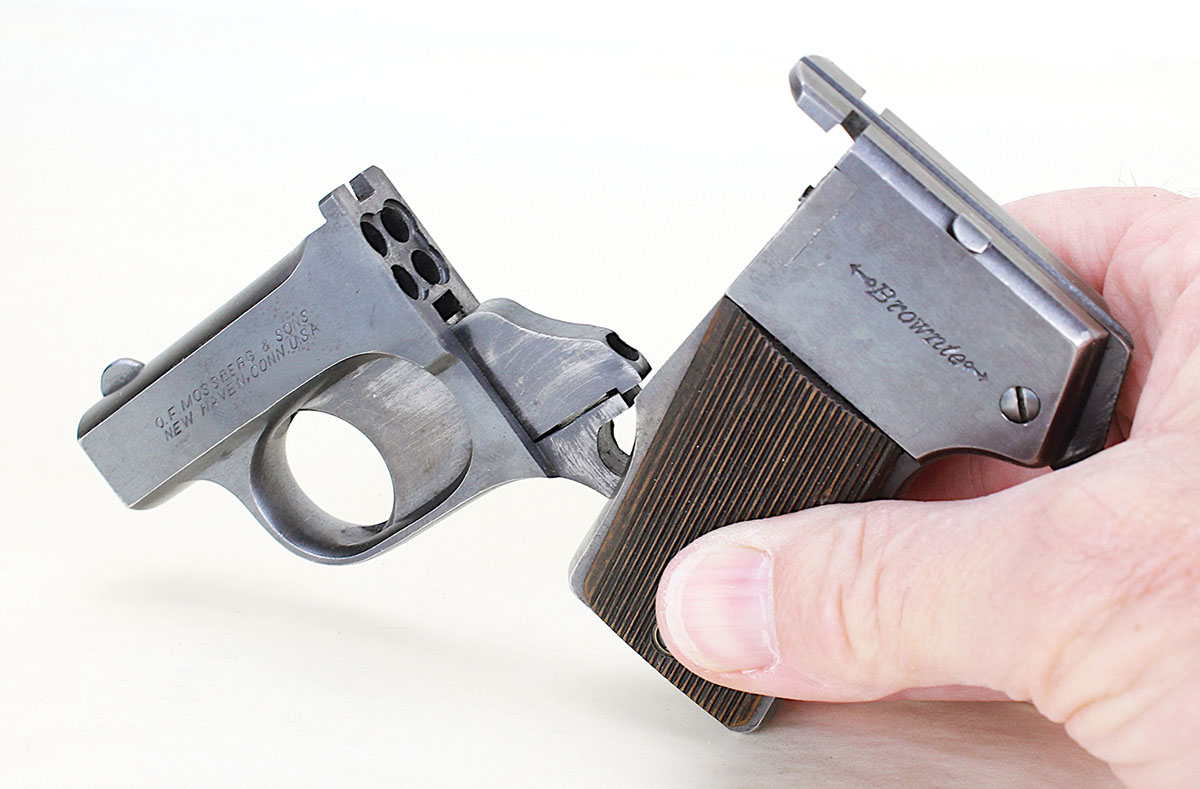
Later pepperbox barrels for metallic cartridges don’t always rotate; for loading they tip up or down, or they may slide forward. What we see most often in the later cartridge pepperboxes are fixed barrels and a rotating firing pin that automatically aligns with the next barrel upon pulling or releasing the trigger. Over several centuries, engineers seem to have exhausted every line of approach to making pepperboxes, and the pistols themselves, eclipsed by technology, exhausted their popularity by the late 1800s. Yet someone at Mossberg decided the pepperbox warranted one last hurrah, and the company applied new engineering and materials to churn out the last pepperbox, the Brownie.
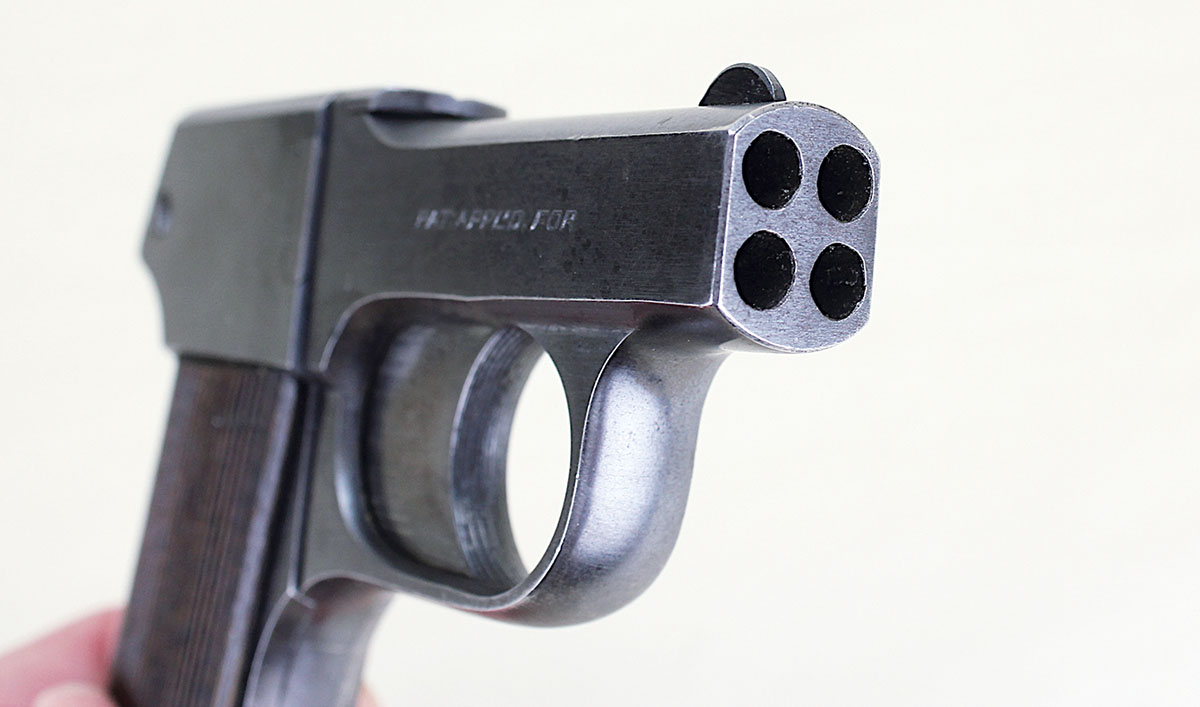
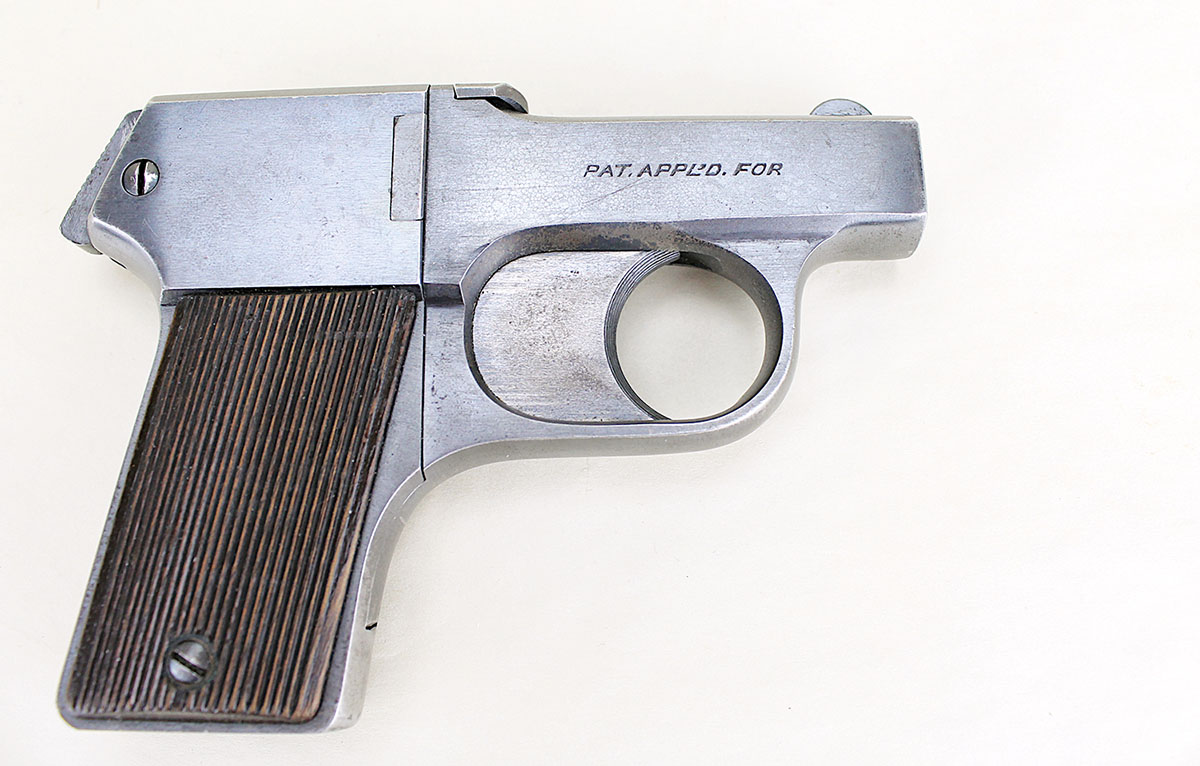
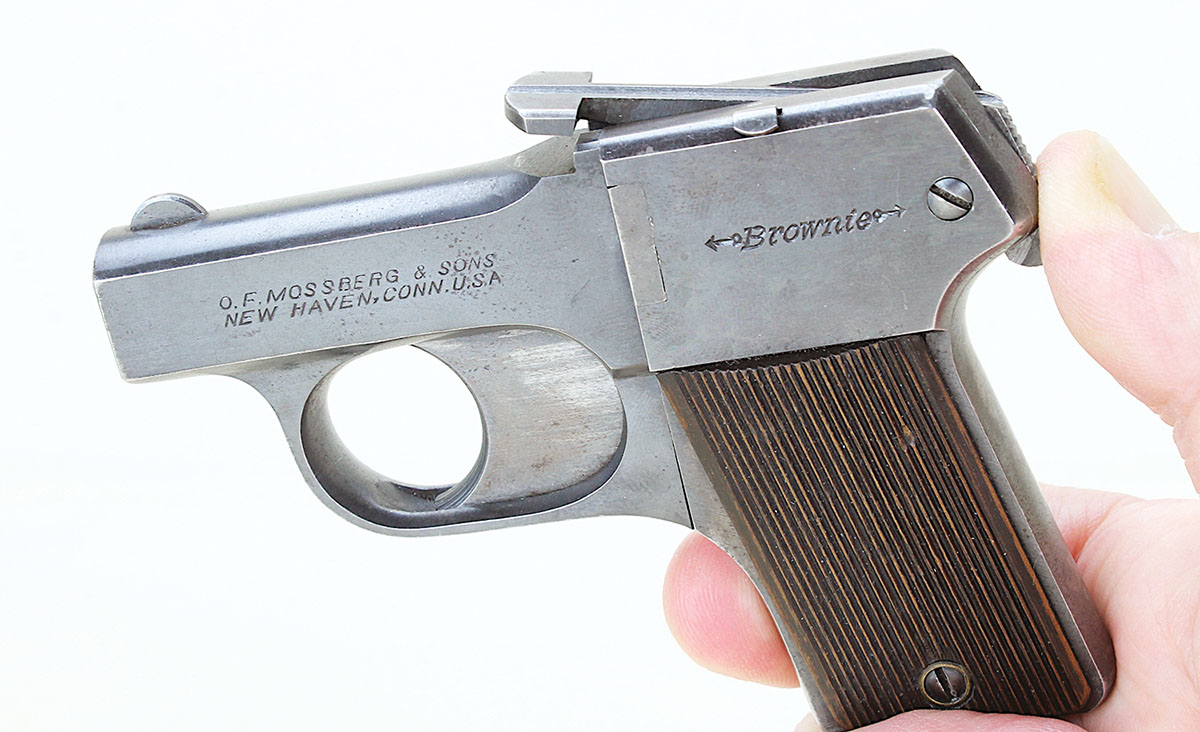
The suggestion of cheapness mentioned earlier is in the Brownie’s extraction/ejection: Mossberg completely dispensed with the complication of either extractor or ejector. Instead, after tipping the barrel assembly open, the shooter pokes a three-inch piece of flat-spring steel down the muzzles to knock empties from the chambers. When not in use, this ejector resides vertically in a tiny slot in the frame above the left grip. Collectors bemoan the absence of these ejectors today, and so many Brownies are routinely without the ejector that Brownie values are typically based on the ejectors missing rather than being present.
Sights on the Brownie are, at best, rudimentary, the rear sight being simply a groove running the length of the barrel locking lever and a tiny front sight blade that appears to be cleanly soldered or braised into place. Really, the Brownie is an up-close point-n-shoot affair rapid fire point shooting within a few feet of the target is the Brownie’s raison d’etre.
Ten Brownies recently sold online between $250 and $531; in the sellers’ photos, I saw only one with the coveted ejector. Blue Book value for a Brownie in 100-percent condition is $800, and $200 for one in 60-percent condition.
While apparently intended for concealable self-defense in the ilk of the vest pocket pistol, by the time of the Brownie the pepperbox had already been an anachronism for decades. Today pepperboxes are collector’s items and curiosities, and the Brownie may be the last of the species that’s still a safe and, given its quality construction and modern 22 Long Rifle cartridge chambering, a reasonable shooter.
A couple of years ago Standard Manufacturing introduced its double-action 22 Magnum double-barreled Thunderstruck pistol that holds eight rounds and fires both barrels simultaneously with a single pull of the trigger. Is it a pepperbox? Is it a derringer? Is it something completely different occupying its own genre? I think the latter, and so Mossberg’s Brownie remains, indeed, the Last Pepperbox.