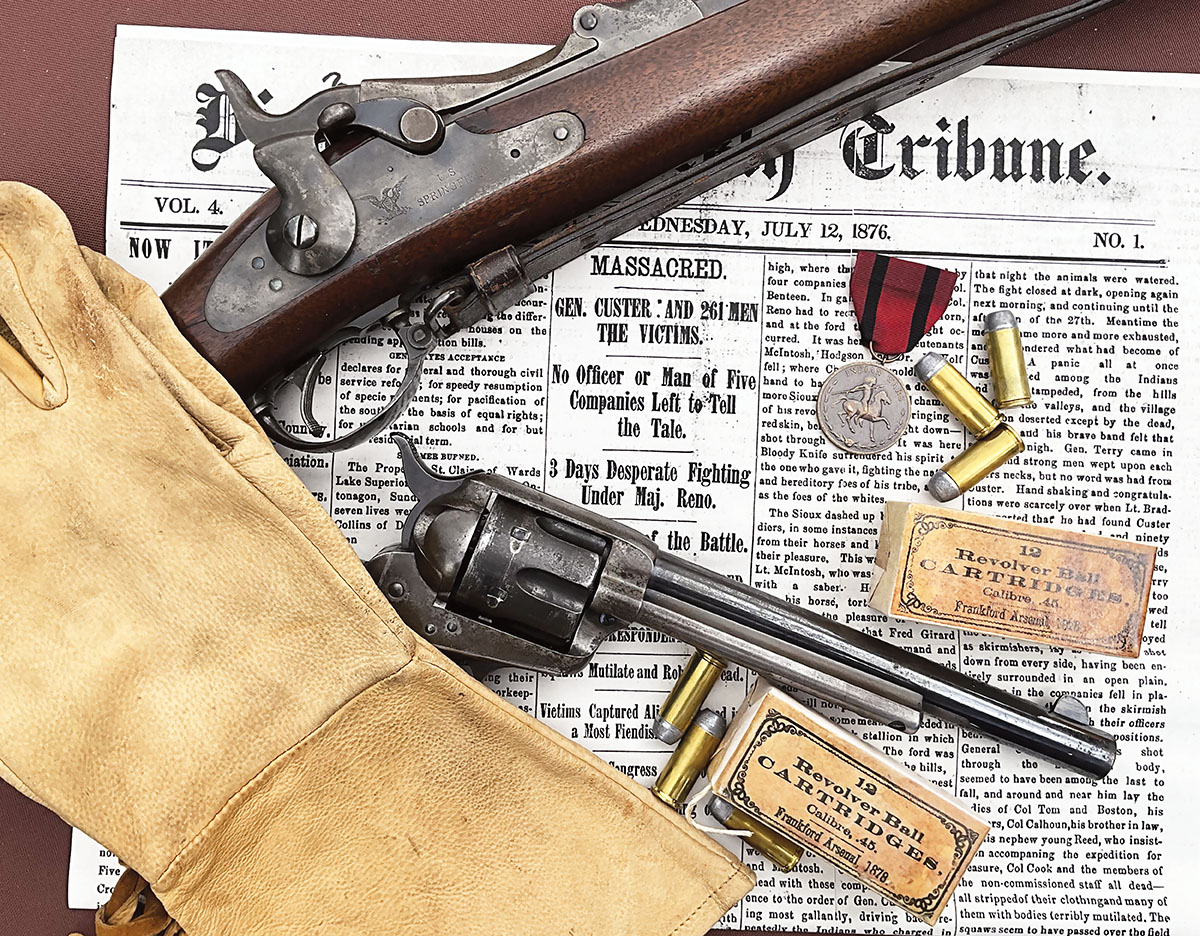
The troopers of the Seventh Cavalry were issued 1873 Springfield Armory Trapdoor carbines and Colt Single Action Army revolvers. (Photo by Alan Garbers.)
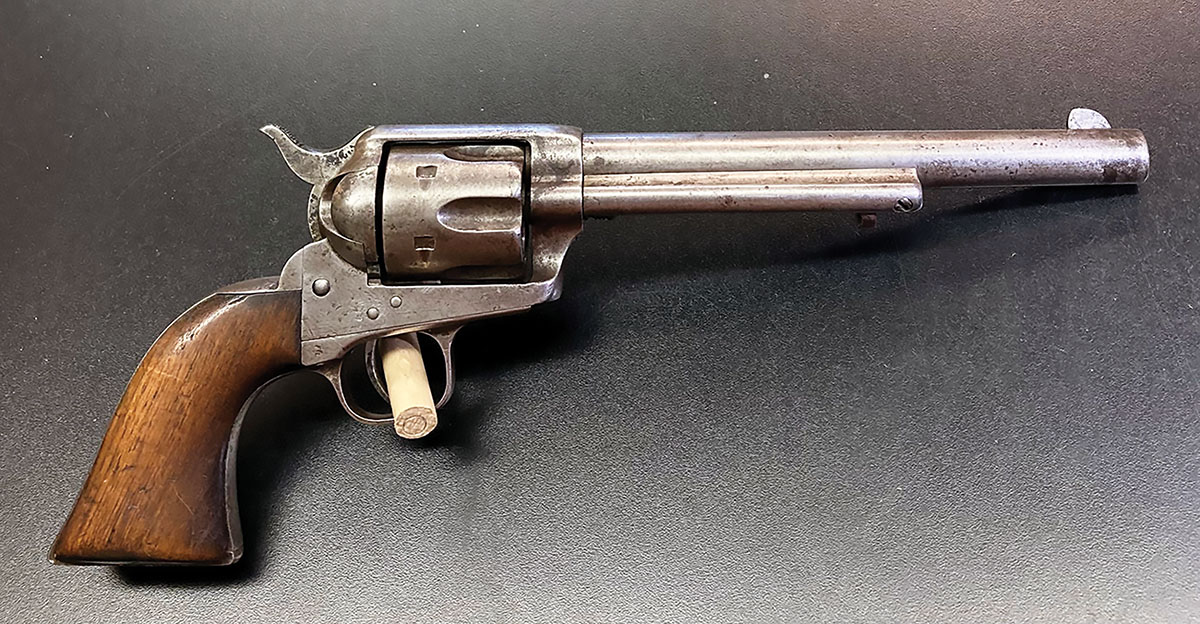
The Colt New Model Army Metallic Revolving Pistol is a familiar fixture on the Silver Screen. (Photo by Rick Sikkema.)
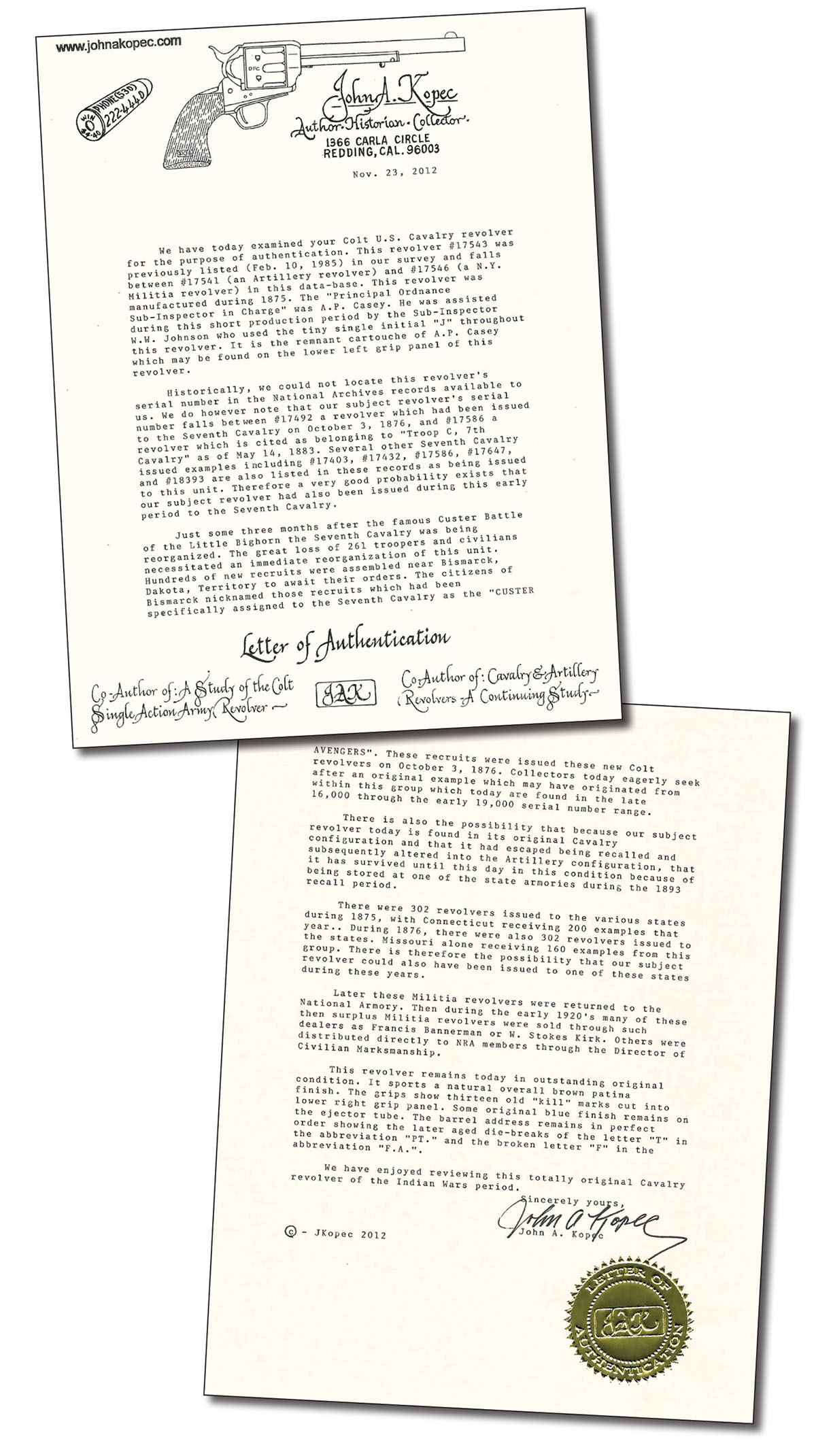
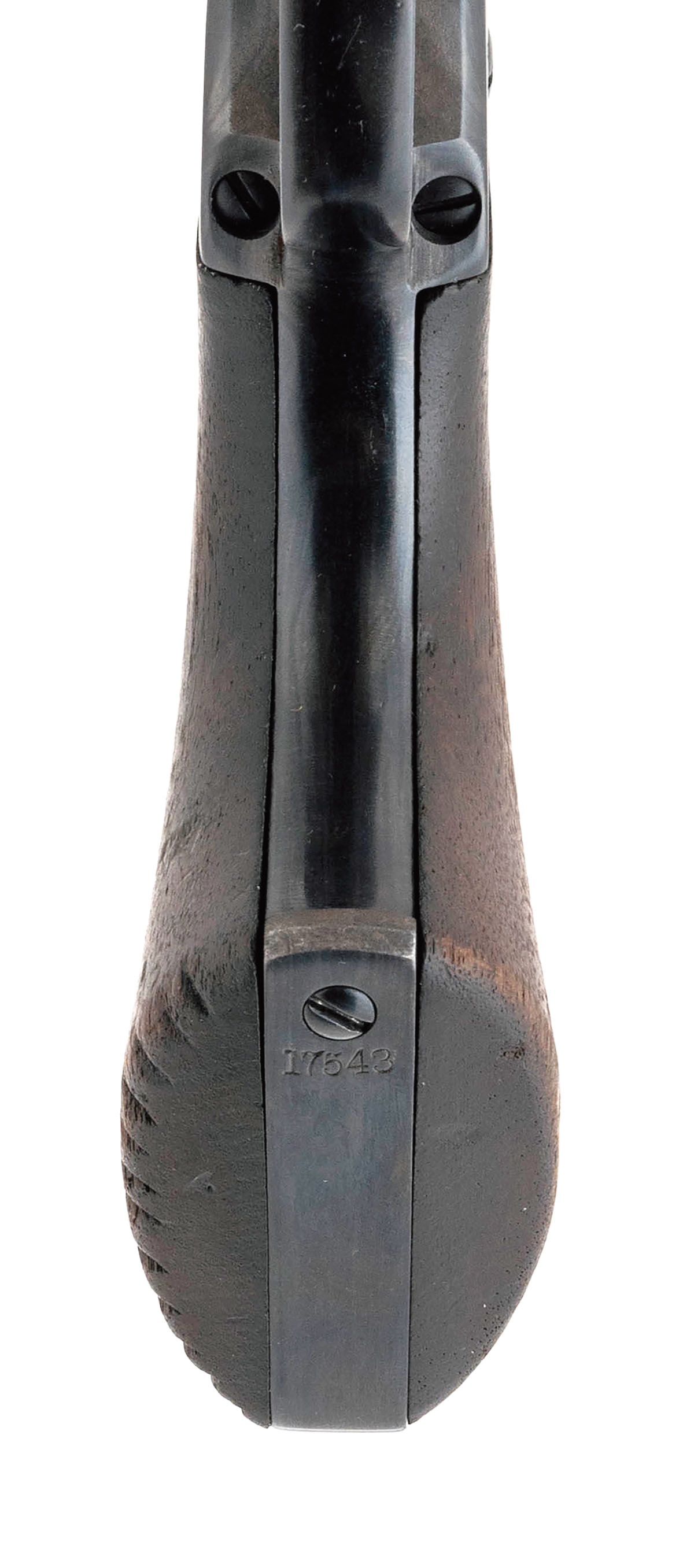
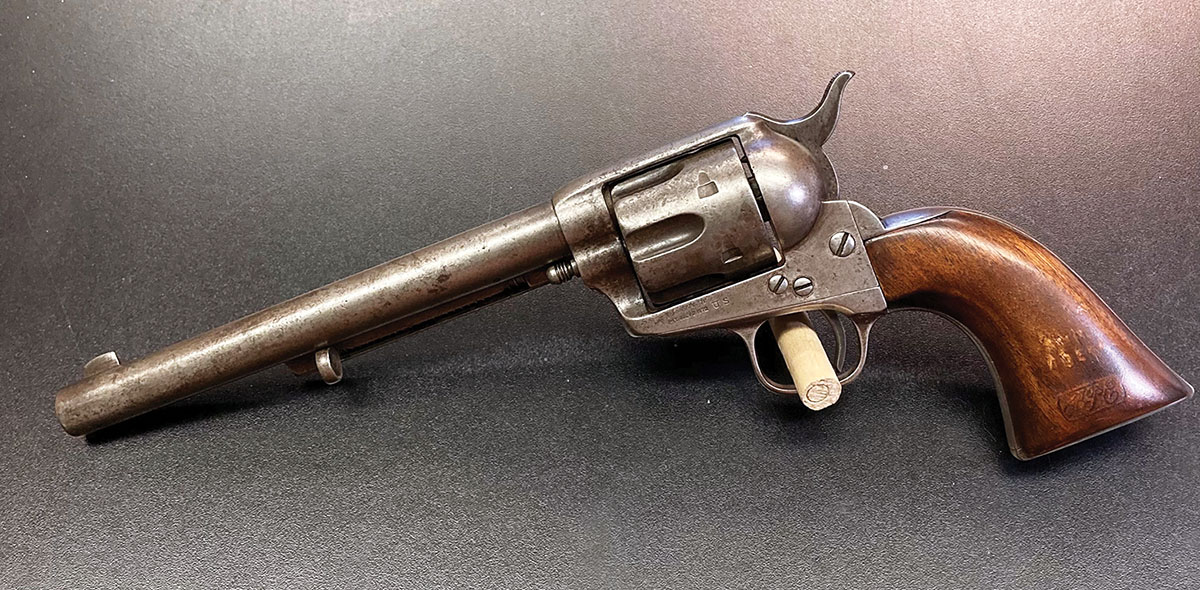
John Kopec inspected Colt 17543 and gave a great deal of potential history in his highly sought-after letter. (Photos by Jeff Hallinan at Collectors Firearms, Houston, Texas.)
The Battle of the Little Bighorn was a clash of cultures in which hundreds of heroes fell on both sides. The seemingly indomitable Lieutenant Colonel George Armstrong Custer and 237 of his men fell in combat or died from wounds in the days following. While theories differ on what happened to Custer, Major Marcus Reno’s retreat and hilltop siege were well documented. Through first-hand accounts, we know many of Reno’s troopers lost their Colt revolvers and Springfield Trapdoor rifles as their assault turned into a frenzied retreat. It was every man for himself to make it through the thick bottomland timber, across the river and up the bluffs to make a stand. Accounts tell of troopers losing their grip on their guns as their horses bucked and stumbled through the deadfalls and plunged across the river. As warriors continued harassing Reno and Captain Frederick Benteen’s hilltop battlement, other Sioux and Cheyenne wasted no time scouring the battlefield for the spoils of war, particularly scalps, firearms and ammunition.
After the battle, a tally of the Seventh Cavalry’s remaining weapons was made. According to historian John A. Kopec, nearly half the Colt Army revolvers issued to the Seventh Cavalry in 1874 were snatched by the Sioux and Cheyenne or lost in the river and thickets. Almost a month after the battle,
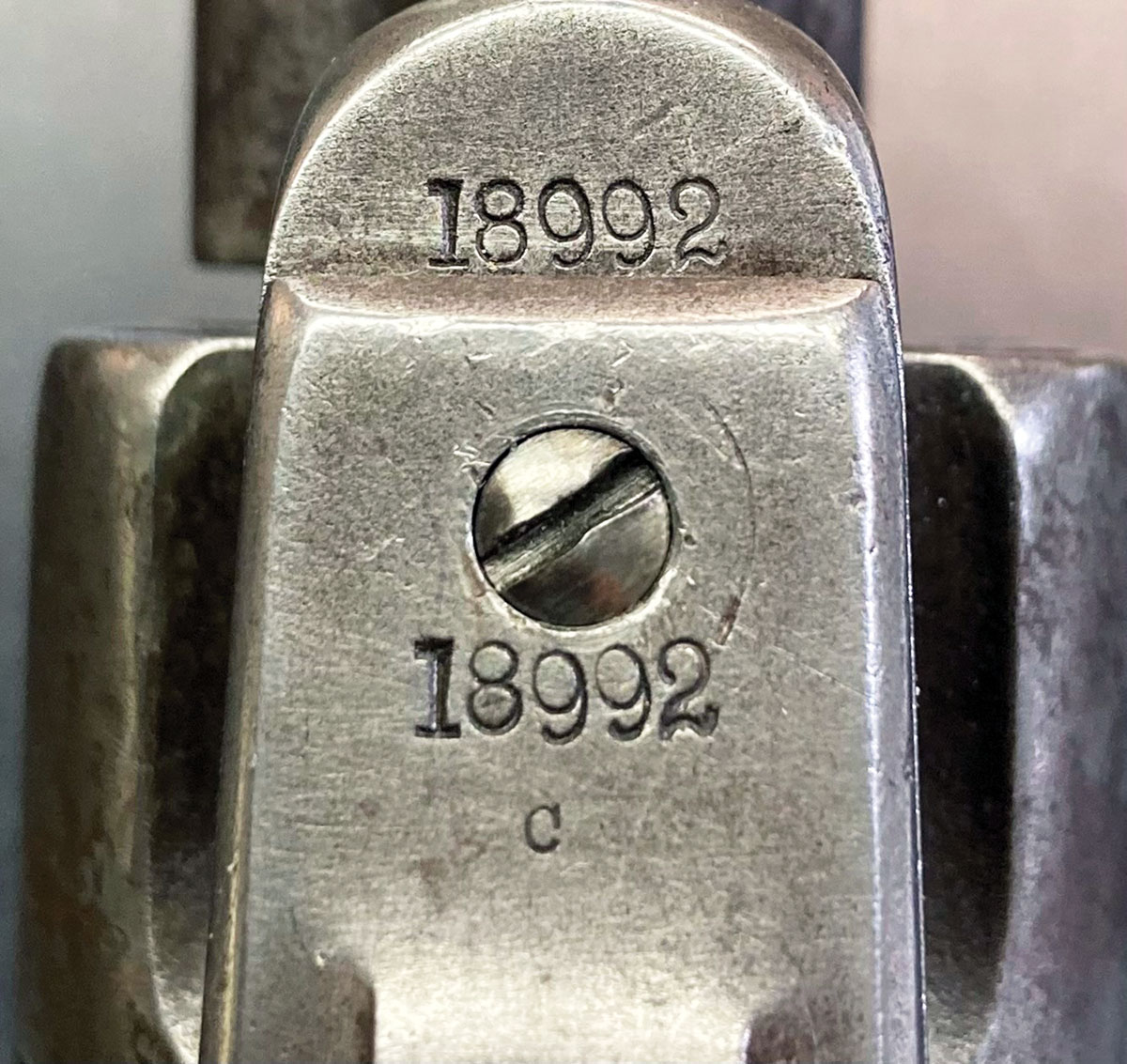
As shown by the small C, Colt SAA Serial 18992 was inspected by A.P. Casey, the Principal Ordnance Sub-Inspector in charge. (Photo by Rick Sikkema.)
Captain John S. Poland of the Sixth Infantry received intelligence estimating the Indians had obtained some 600 carbines and revolvers from the dead of Custer’s command.
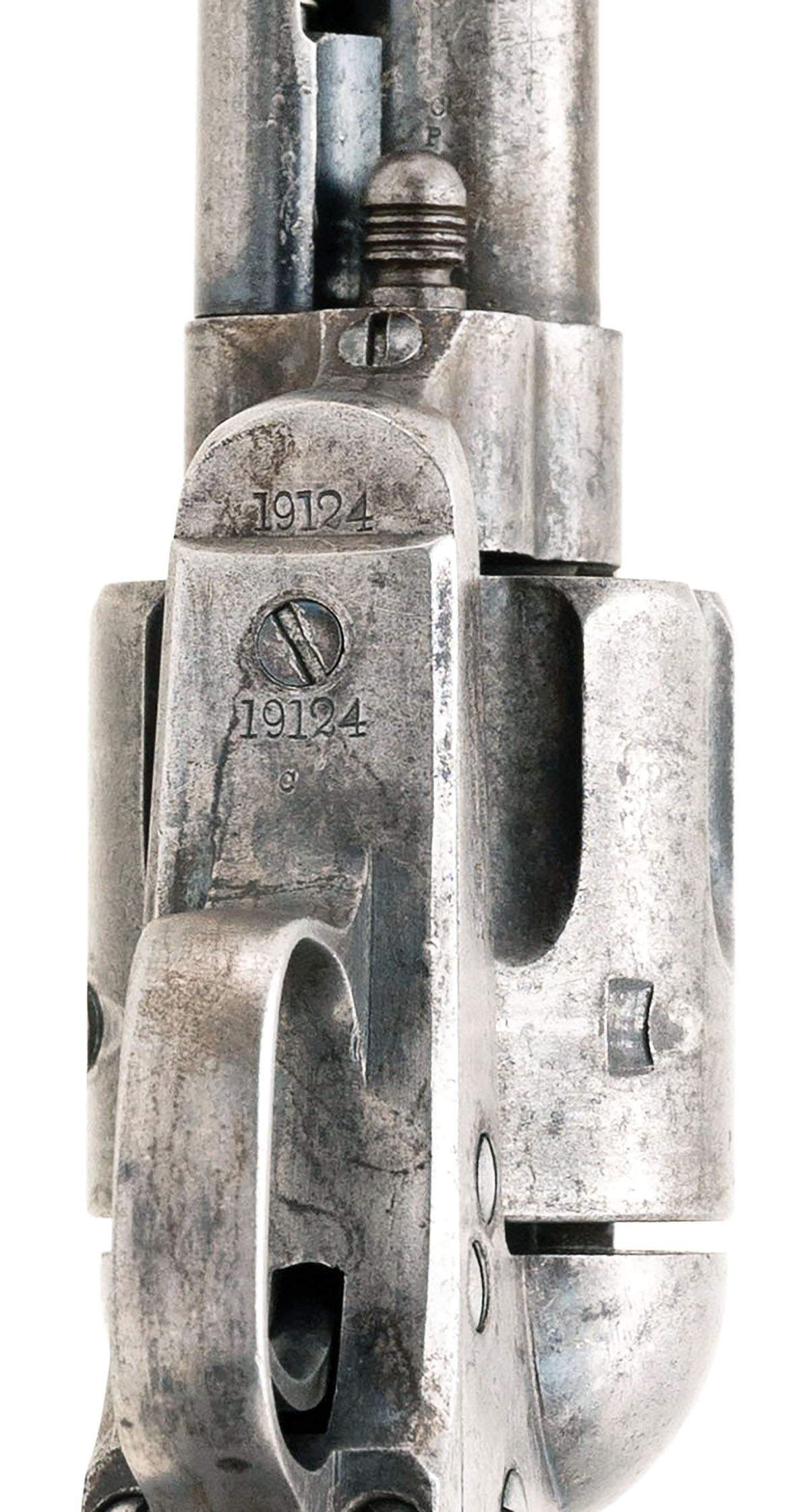
As shown by the small C, Colt SAA Serial 18992 was inspected by A.P. Casey, the Principal Ordnance Sub-Inspector in charge. (Photo by Rick Sikkema.)
The news of Custer’s defeat enraged the public, and those in the halls of Washington felt the heat. Wanting to retaliate quickly, army brass strengthened the Seventh by pulling men from other units. But even those transfers weren’t enough. Budget cuts since the end of the Civil War allowed the military ranks to fall to shamefully low levels. Congress quickly appropriated funds to bring the Seventh Cavalry up to full strength. More recruits were needed, and they came in droves. Newspapers carried stories about men swarming recruiting stations seeking glory on the battlefield. By the fall of 1876, roughly 550 green recruits were assembled in Bismarck. The city dubbed the new troopers “Custer’s Avengers.” The recruits took it as a badge of honor.
As the Seventh Cavalry was licking its wounds, a scathing letter titled Defective Arms In Indian Warfare – The Useless Revolvers of the Seventh Cavalry was published in several major newspapers. The anonymous writer condemned the Springfield Trapdoor carbine as inaccurate and troublesome when fired repeatedly in battle. The writer also claimed the slow-reloading single-action Colt was nothing more than a club after the six cartridges were spent. The writer hypothesized that if the Seventh Cavalry had been armed with the new, faster-loading Smith & Wesson Schofield revolver, already used by some cavalry units, the troopers could have fought their way back to the rest of the Seventh Cavalry.
Be that as it may, the U.S. Army needed to replace the lost weapons and procure additional carbines and revolvers to arm the additional troopers. On July 11, 1876, the Seventh requisitioned 200 Colt revolvers from the stores at the Rock Island Arsenal.
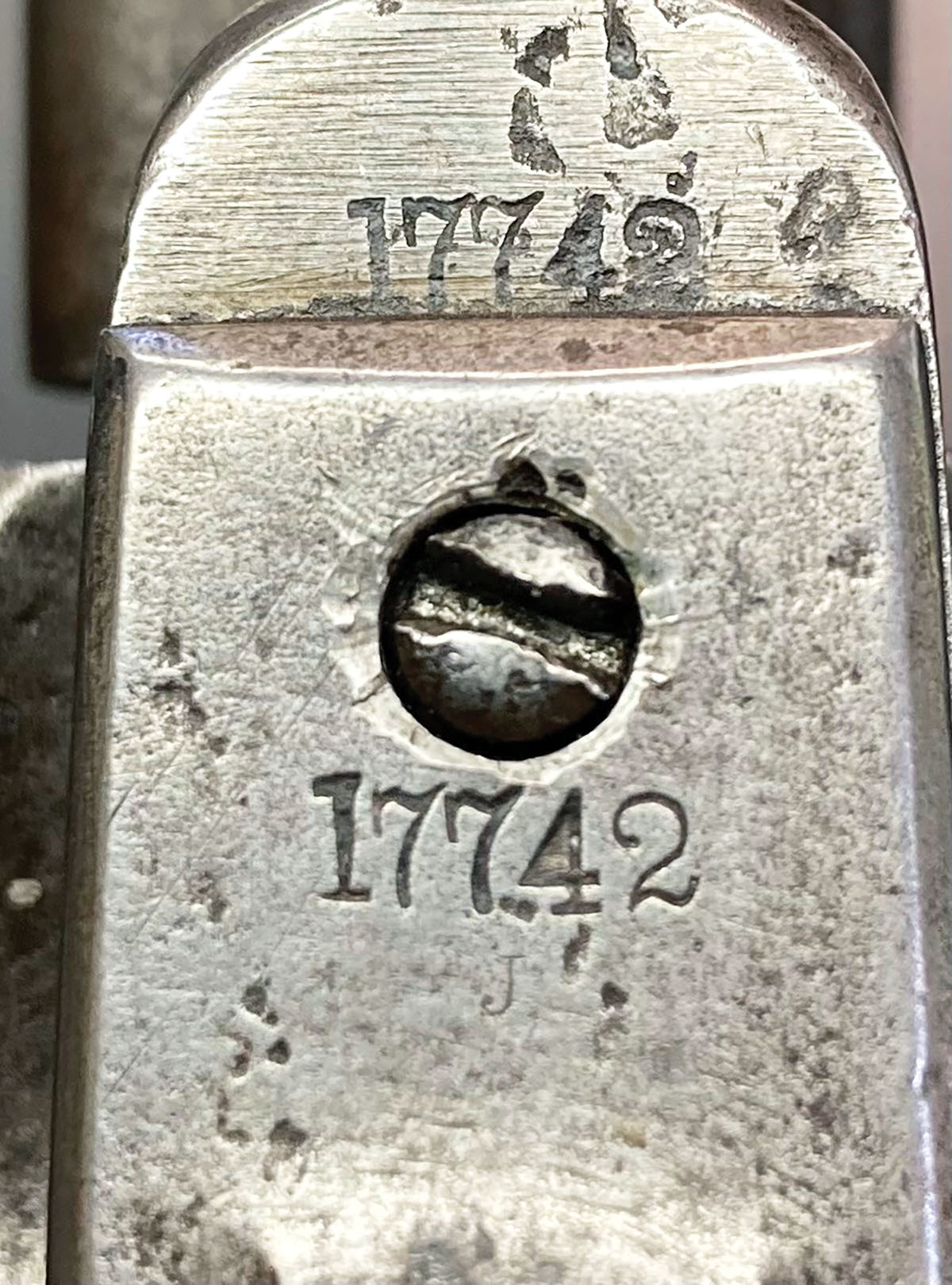
The serial number can be found at three locations on the revolver. (Photo by Rick Sikkema.)
More requisitions quickly followed to supplement the swelling ranks of the Seventh Cavalry with hundreds of carbines and pistols.
Within weeks of receiving men and weapons, the Seventh rode out to disarm the Indians at the Cheyenne and Standing Rock
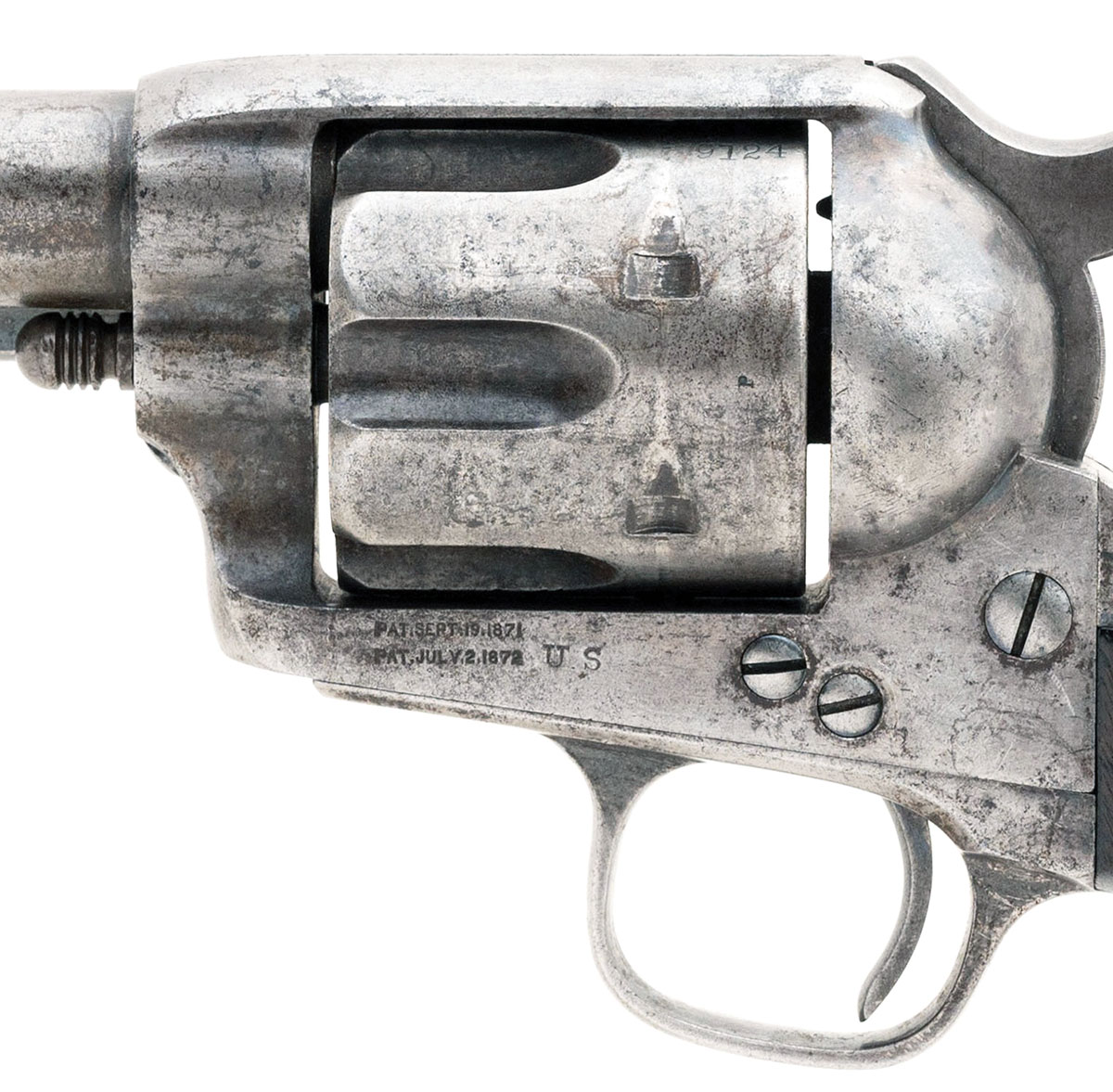
The “U.S.” stamp was the final acceptance mark by Army inspectors. (Photos by Jessica Bullock at Collectors Firearms, Houston, Texas.)
Agencies. Rumors whispered that warriors were secretly returning to the
reservation with arms taken from the battlefield, but planned to rejoin Sitting Bull. Some Seventh Cavalry recruits were concerned they didn’t have experience in warfare, and they were again outmanned five to one and outgunned, like their predecessors were with Custer. When the new Seventh Cavalry reached the agency, armed warriors were waiting. The troopers advanced with revolvers in hand, but noted the warriors had repeating rifles and undoubtedly more experience using them. Not wanting to repeat the disaster at the Little Bighorn, the Seventh Cavalry decided discretion was the better part of valor and brought their “Rodman” (three-inch ordnance rifle) and Gatling guns. The confrontation was tense, but after firing a few bursts over the warriors’ heads, the Indians were cowed into surrendering some of their more worn-out arms, hiding anything that may have been taken from the bodies of the troopers at the Little Bighorn.The Seventh Cavalry was in other minor clashes during the prolonged conflict with Native Americans, and it’s those incidents that helped determine what Colt revolvers were issued to Custer’s Avengers.
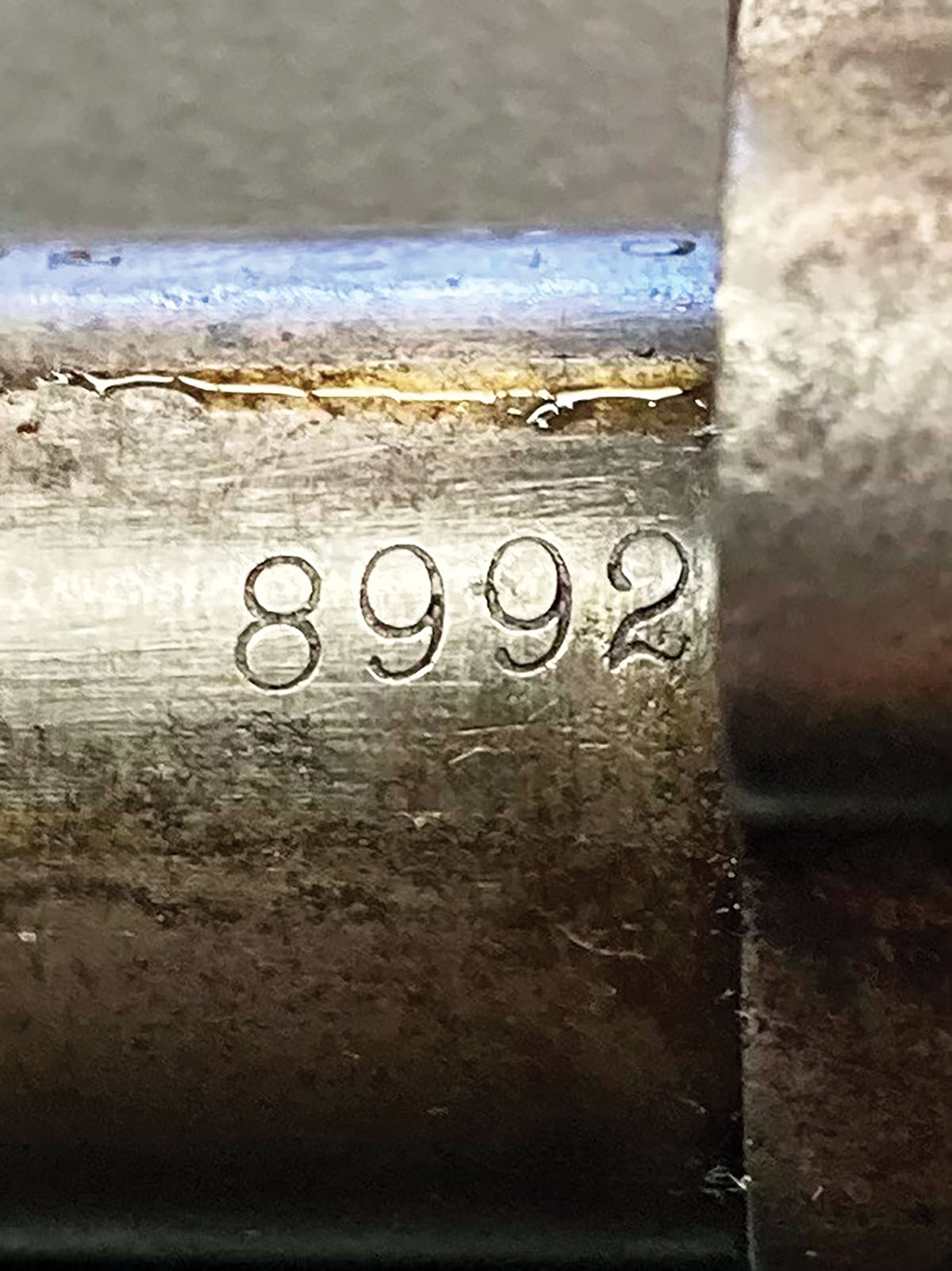
The last four digits of the serial number can be found on the belly of the barrel. (Photo by Rick Sikkema.)
At the top of any collector’s list of guns to own is the martially-marked Colt Single Action Army sold in lots to the U.S. Army during the years of Indian conflicts. If the gun’s serial number is linked to the Battle of the Little Bighorn, it sells for a premium. Colt revolvers were shipped in 1,000-gun lots. The original Colt Army revolvers issued to the Seventh Cavalry were part of Lots Five and Six, with serial numbers ranging from 4500 through 5504 and 5505 through 6516. However, what about the replacements? What were the serial numbers or the serial number range for those revolvers issued to Custer’s Avengers?
Unfortunately, the records for this era are so scant that collectors have to be detectives and follow clues backward in time.
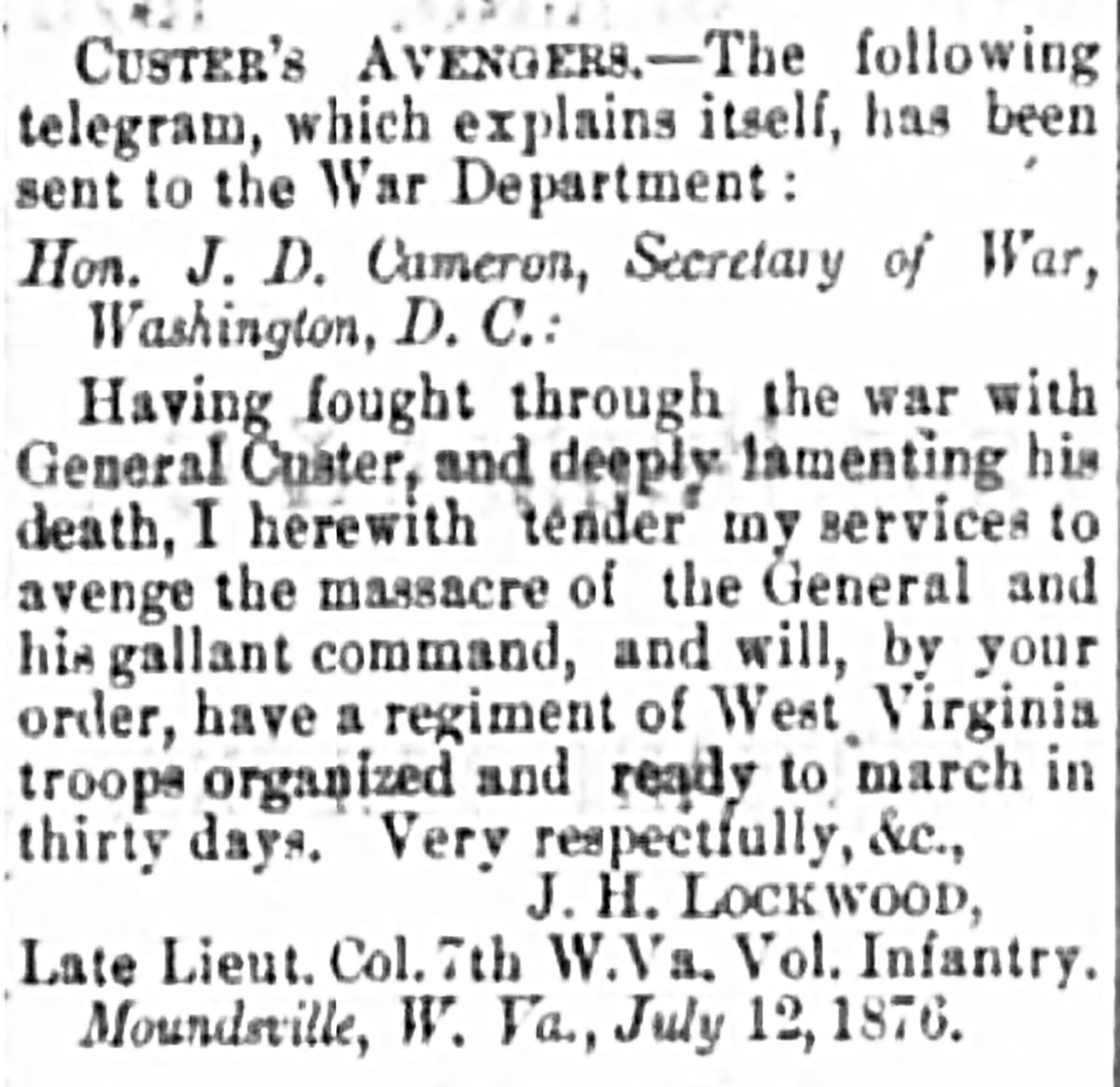
The romantic notion of avenging Custer filled the hearts and newspapers of Eastern readers.
John A. Kopec
has spent a lifetime studying the Colt SAA. From his work, we know when Colt revolver lots shipped from Colt to the Springfield Armory, then to the Rock Island Arsenal, and finally to the Seventh Cavalry. We also know what was inventoried later by the Seventh Cavalry from those lots. By assembling the serial numbers of known Seventh Cavalry revolvers, we can determine a range of serial numbers issued to Custer’s Avengers.There is only one documented Colt listed explicitly as a replacement revolver. On October 3, 1876, serial number 17492 was listed as a replacement revolver in the Seventh Cavalry ordnance records. Kopec also documented 17586 as being issued to Company C, Seventh Cavalry, on the same date. We can assume October is when many, if not all, of the new Colt revolvers were issued to Custer’s Avengers at Fort Lincoln.
Kill marks were forbidden on military weapons, so these were most likely added after it was removed from service in the early 1900s. (Photos by Jeff Hallinan at Collectors Firearms, Houston, Texas.)
A decade later, in March and July 1888, the Ordnance Department surveyed the Seventh Cavalry’s arms. More revolvers from the same lot were logged, as well as which companies they were held by: 17128 Company F, 17403 Company L, 17432 Company L, 17647 Company L, 18393 Company L, 18412 Company F, 18471 Company I, 18473 Company L, 18554 Company L, 18621 Company L, 18787 Company I, 18955 Company L, 18994 Company L, 19058 Company L, 19112 Company L and 19196 Company L.
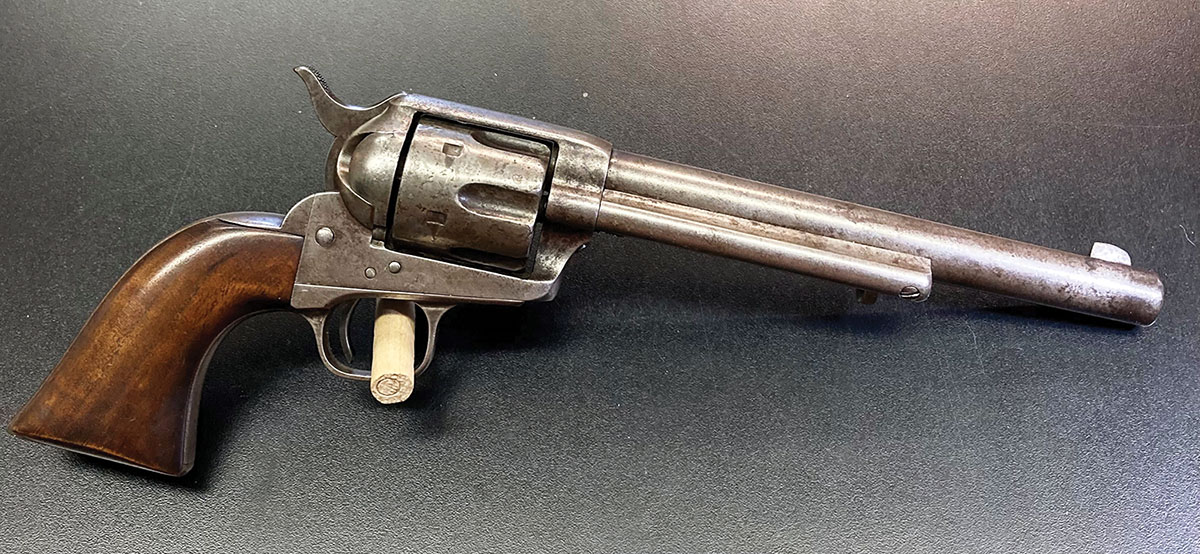
The military-contracted Colt featured a 71⁄2-inch barrel and one-piece walnut grips. (Photo by Rick Sikkema.)
On January 26, 1891, Colt serial 16850 was logged as severely damaged in a train wreck as the Seventh returned from the Battle of Wounded Knee.
In 1990, researcher Mike Blohm located the rusted remains of a Colt revolver at the 1877 Canyon Creek battlefield, where Colonel Sturgis and Seventh Cavalry Companies F, G, H, I, L and M fought to stop the Nez Perce from escaping into Canada. The rusted revolver was still loaded with six Benet primed cartridges: four 45 Colt and two 45 Schofield. Using modern metallurgical forensic techniques, the serial number was discovered to be 1737, with the last digit uncertain but thought to be “1.” Based on the serial number, Kopec surmised the Colt was likely dropped by one of the fallen troopers from Company L. The Benet-type cartridges verify the time frame.
According to Kopec, any U.S.-marked revolver in the 16850 through 19196 range should be considered a likely Custer’s Avengers Colt. Unless other ledgers or documents are found under some dark staircase or dusty attic, historians must work with this: Of the 2,346 revolvers Colt shipped in 1875 and 1876, 1,843 were shipped to the Springfield Armory to be distributed to army and state militia units, and the remainder went to the
In some cases, the military inspector’s cartouche is still visible on the walnut stocks. (Photo by Rick Sikkema.)
civilian market. Is it a guarantee that any martially-marked Colt in this range went to the Seventh Cavalry? No, but it is possible.
Many ask whether a martially-marked Colt in this range brings a premium. All things being equal, yes. An example in excellent condition recently sold for $17,500.00. But the value depends on originality, condition, wear, abuse and other factors that affect a historic gun’s desirability. A serial number alone doesn’t indicate that the military purchased it under its contract. Markings identifying a U.S. military Colt include “US” stamped on the left side of the frame, along with proof marks and inspector stamps. To add to the confusion, many Colt revolvers were sent back to the arsenal for rebuilding and barrel shortening at the end of the 1800s. Colt was contracted to rework some of them. Colt tried to keep the gun as original as possible, meaning all serial numbers matched. Those revolvers rebuilt by the U.S. arsenal were stripped, damaged parts were scrapped, and the revolvers were reassembled with no effort to keep the original parts together. Most are now a Mix Master of serial numbers.
Buying a martially-marked Colt can get expensive fast, and whenever Custer is potentially involved, the price skyrockets. Details mean the difference between a $5K and a $100K Colt, which leads to fakes and deception. Knowledge is your best defense. So, do you have a Colt that may have gone to Custer’s Avengers? It is a topic few know about, so there is a chance to find one at a price lower than what Lot Five and Six Colts sell for these days. As we all know, the hunt is half the fun!