Smith & Wesson N-Frame 357 Magnum
The Sixgun That Started the Magnum Revolution
feature By: Brian Pearce | December, 26
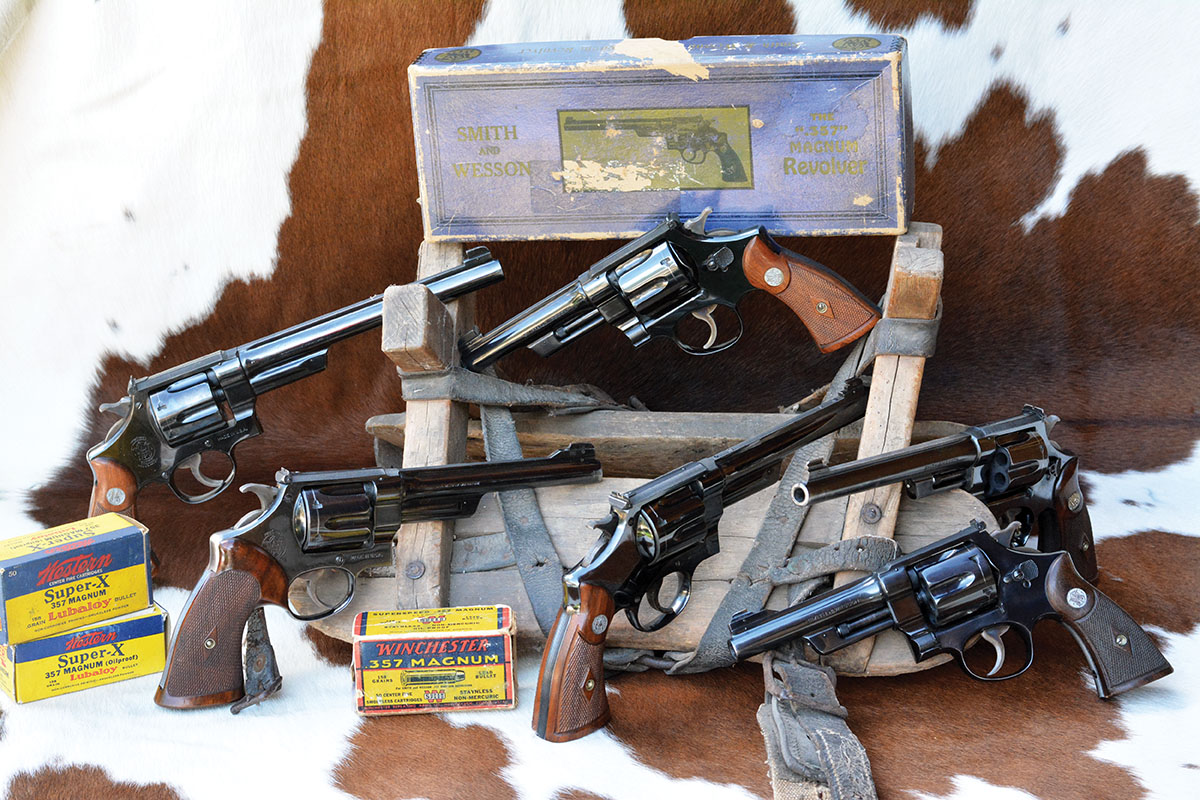
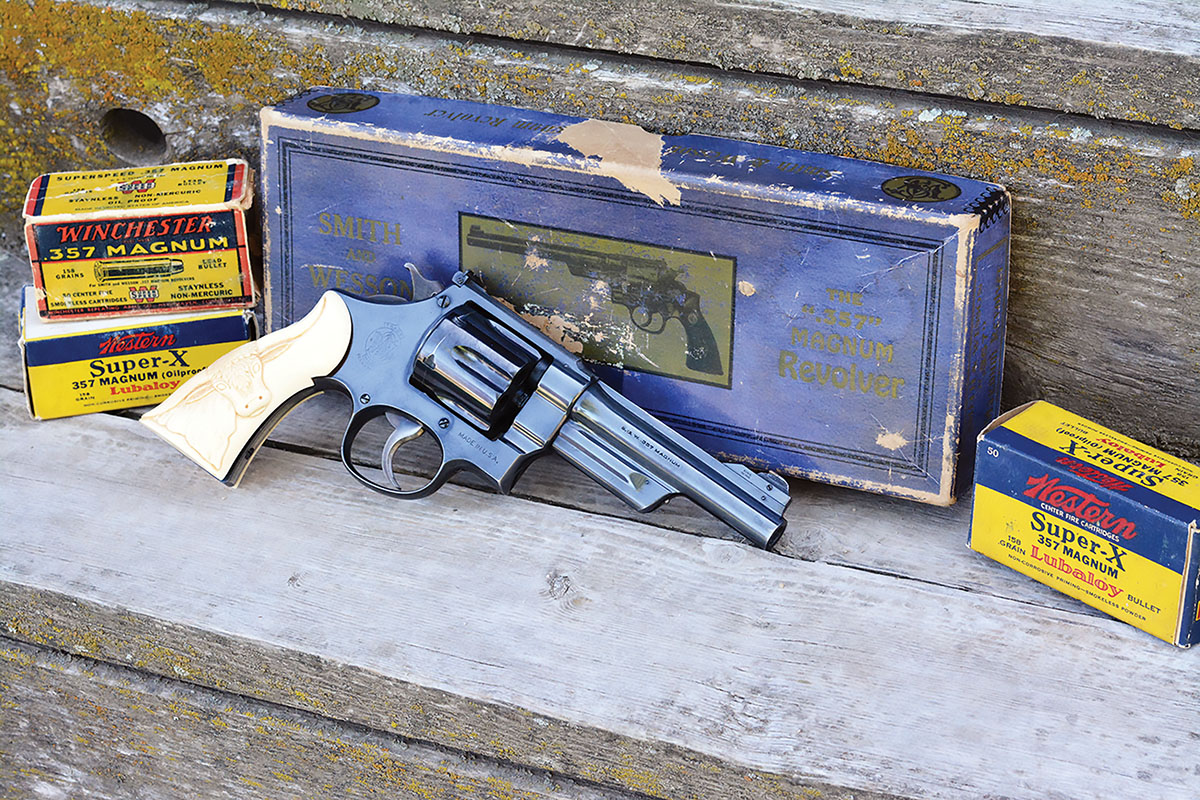
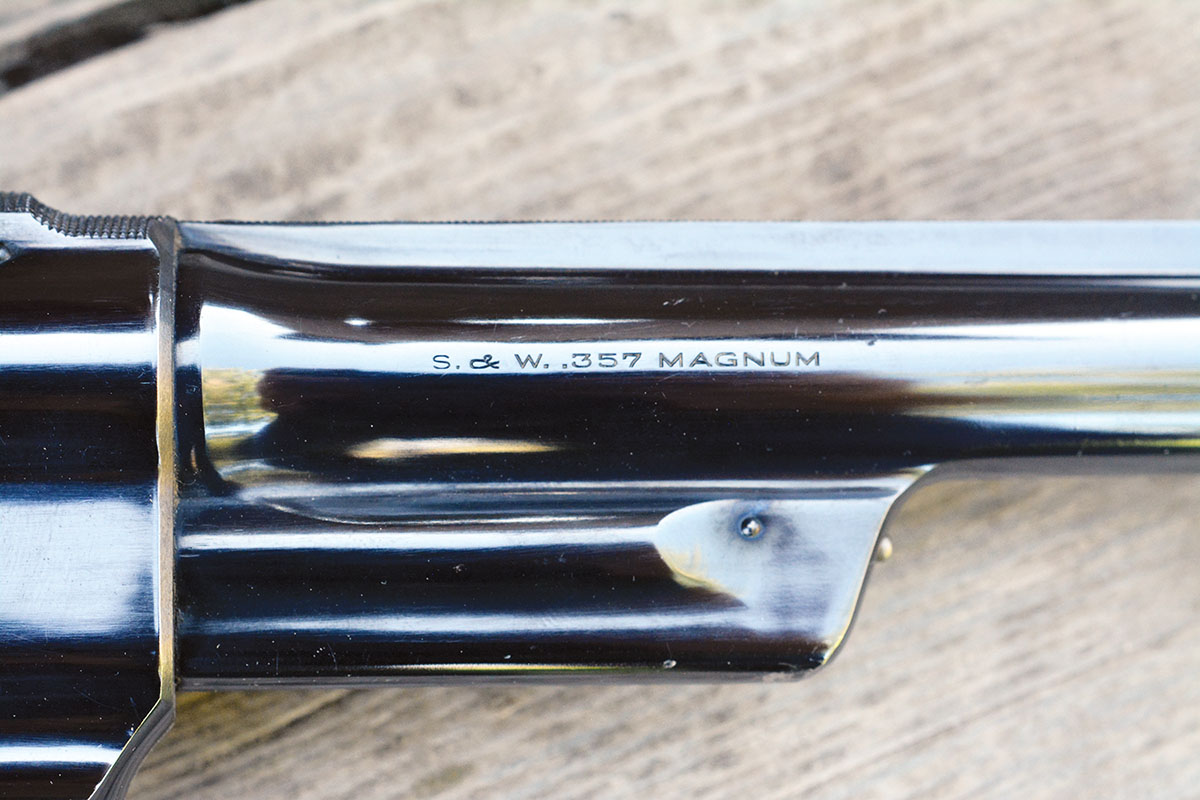
Unfortunately, the Triple Lock was expensive to manufacture and by around 1915 was replaced with the Hand Ejector Second Model that was void of the yoke lock and shrouded barrel and offered at a lower
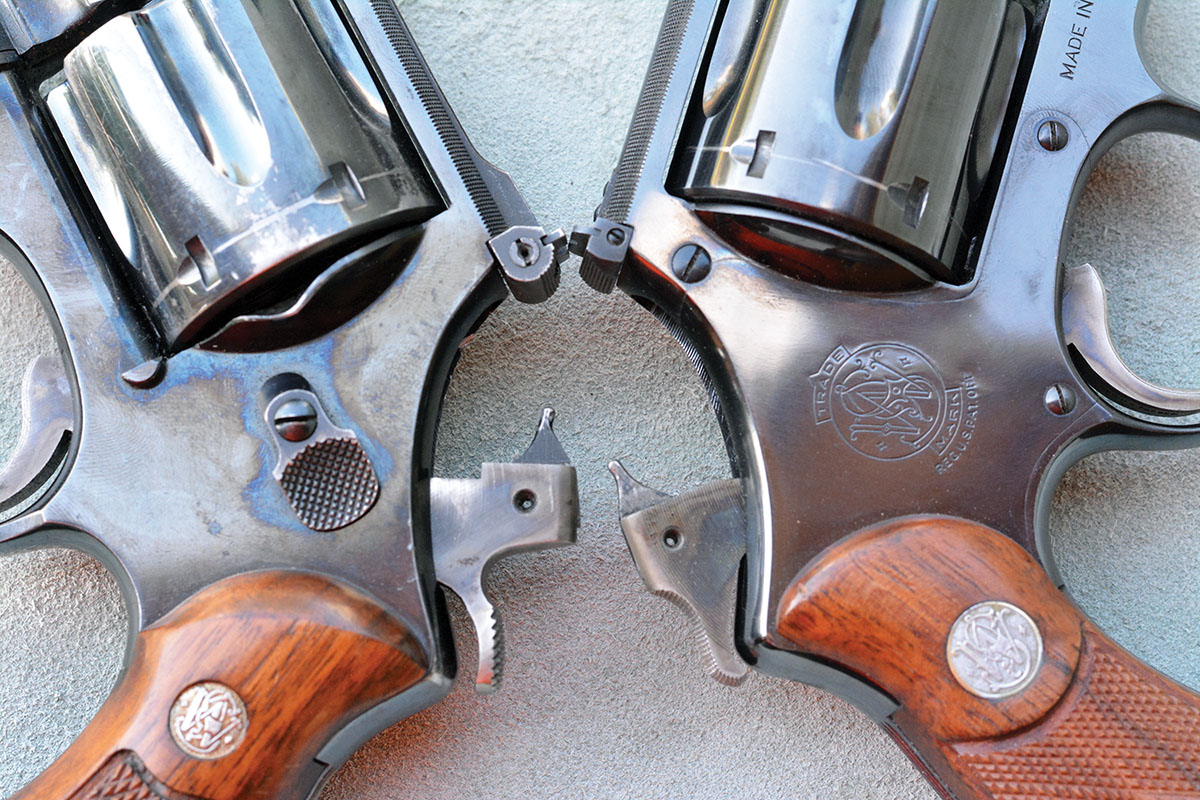
Here is where the story really starts to get interesting. Colt introduced the 38 Super in their Model 1911 in 1928 that offered some pretty impressive ballistics during that era and appealed to law enforcement that needed a service cartridge to better penetrate car bodies, etc., than the standard 38 Special load. In 1930, Smith & Wesson responded with the 38/44 Heavy Duty (fixed sight) and 38/44 Outdoorsman (target sighted) sixguns, built on the heavy 44 or N-frame and chambered for 38 Special. This was prior to the industry adopting +P designations (that occurred in 1974), but special high-pressure factory loads were developed specifically for these guns that pushed various 158-grain bullets, including metal-piercing versions, to over 1,100 feet per second (fps).
Handloaders quickly realized that these sixguns could handle much greater pressures than the 38/44 factory loads (that were limited in pressure due to the fact that those cartridges were likely to find their way into K-frame revolvers and greater pressures were certain to dismantle those guns). Two notable men, Elmer Keith and Phil Sharpe, began loading the new
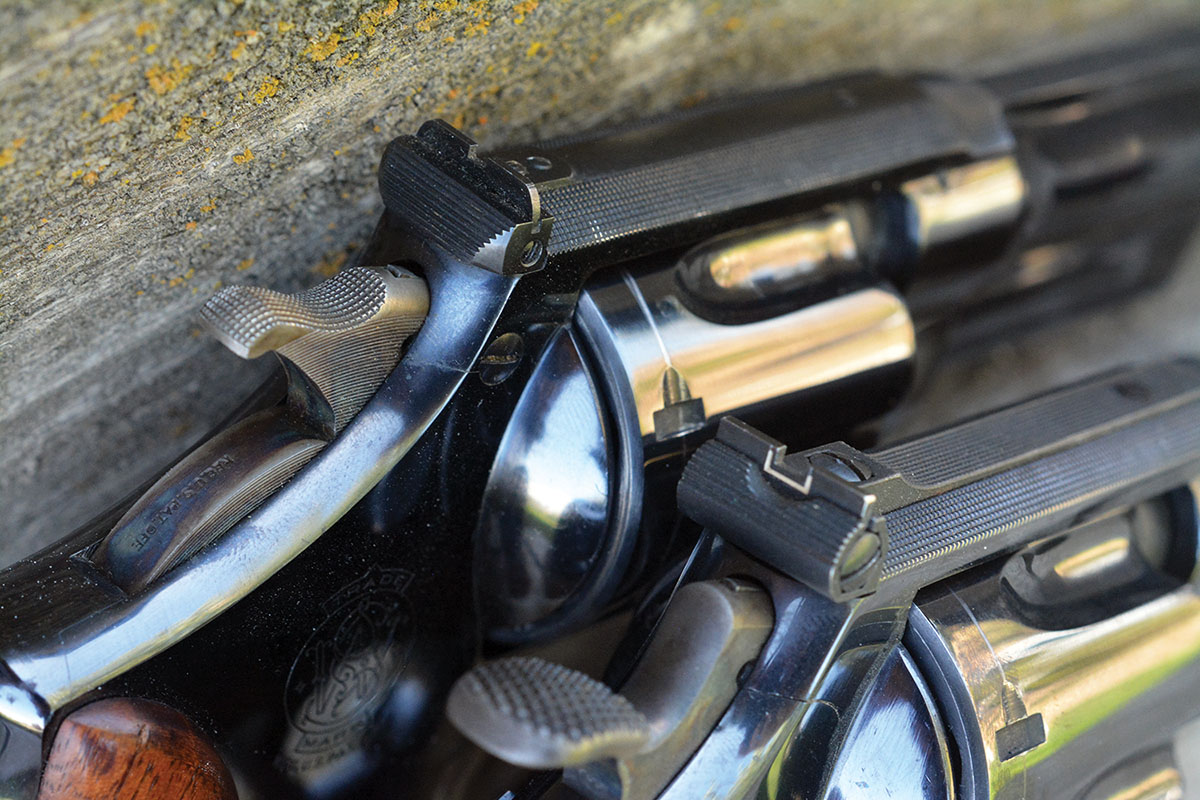
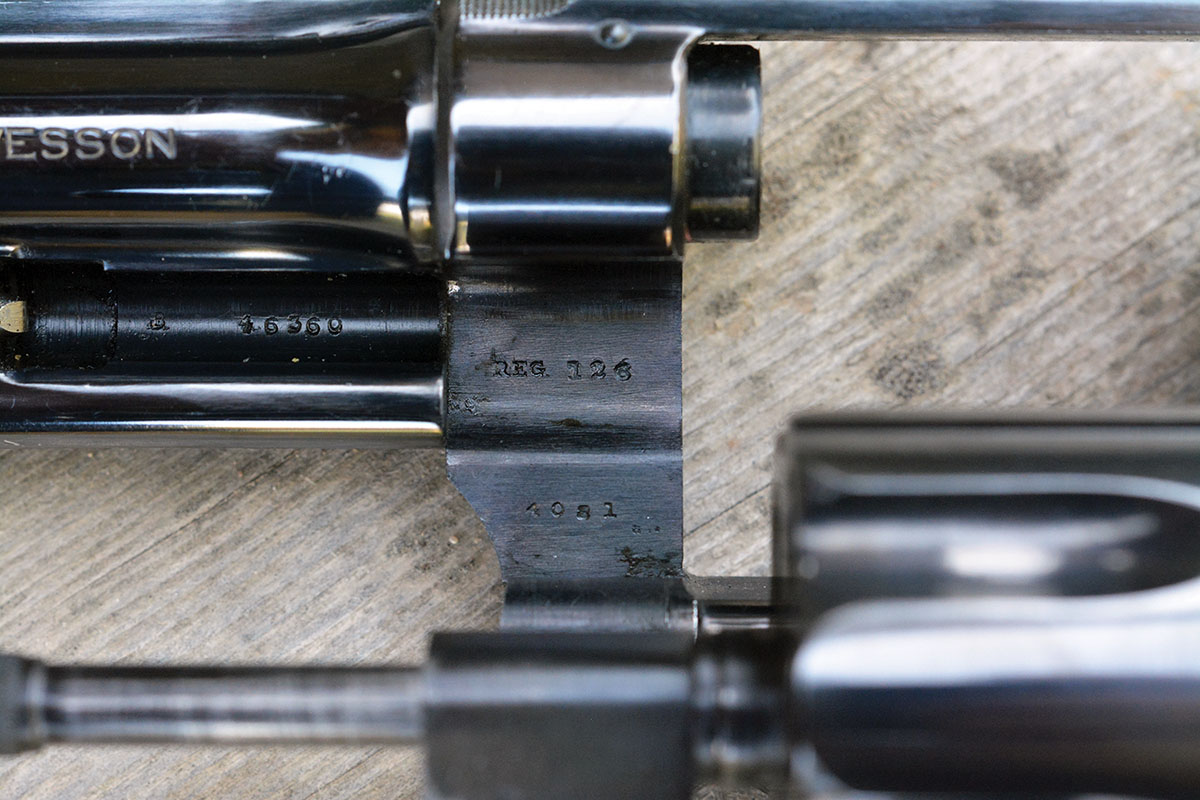
Douglas B. Wesson, the grandson of company co-founder Daniel B. Wesson, was quick to listen to Keith and Sharpe and their handloading experiments. Essentially, these three men became the driving force for the 357 to be developed, or should I say co-developed with Winchester Ammunition engineers.
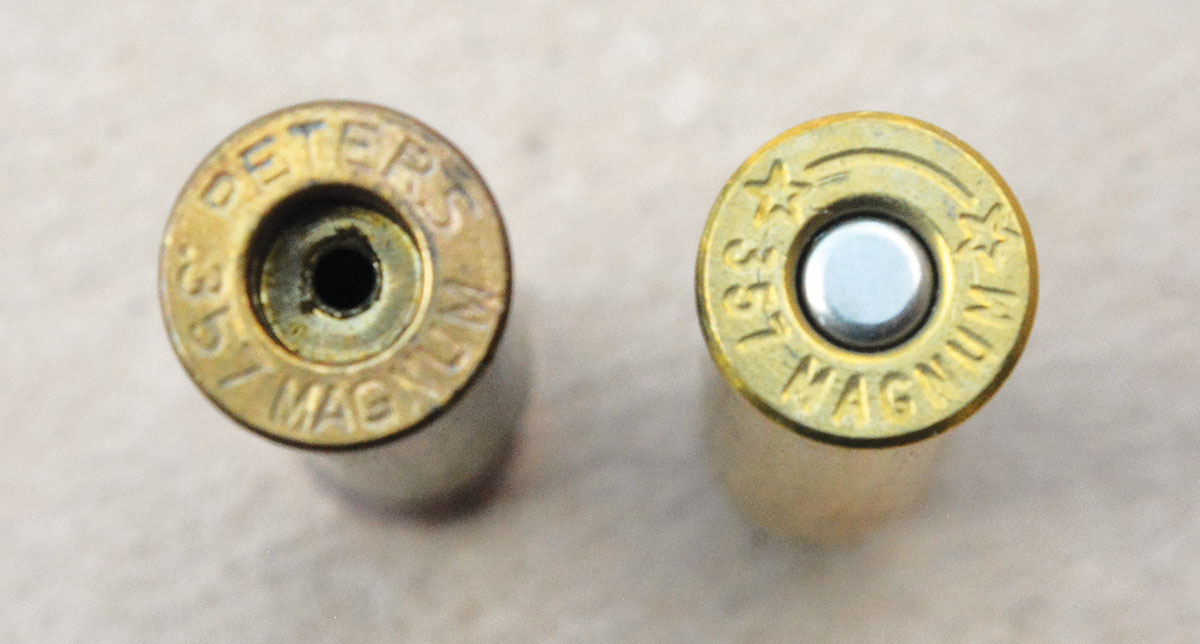
There were problems with the 38 Special case when loaded to the desired pressures and the targeted velocities that Doug Wesson wanted to reach. First, the case had to be strengthened, but also increased in length for greater powder capacity. This also served to prevent the new 357 Magnum round from accidentally (or intentionally) being chambered in a 38 Special revolver that would surely prove catastrophic in period lighter frame guns. Incidentally, early cases featured large pistol primer pockets, but that was eventually changed to small pistol primers.
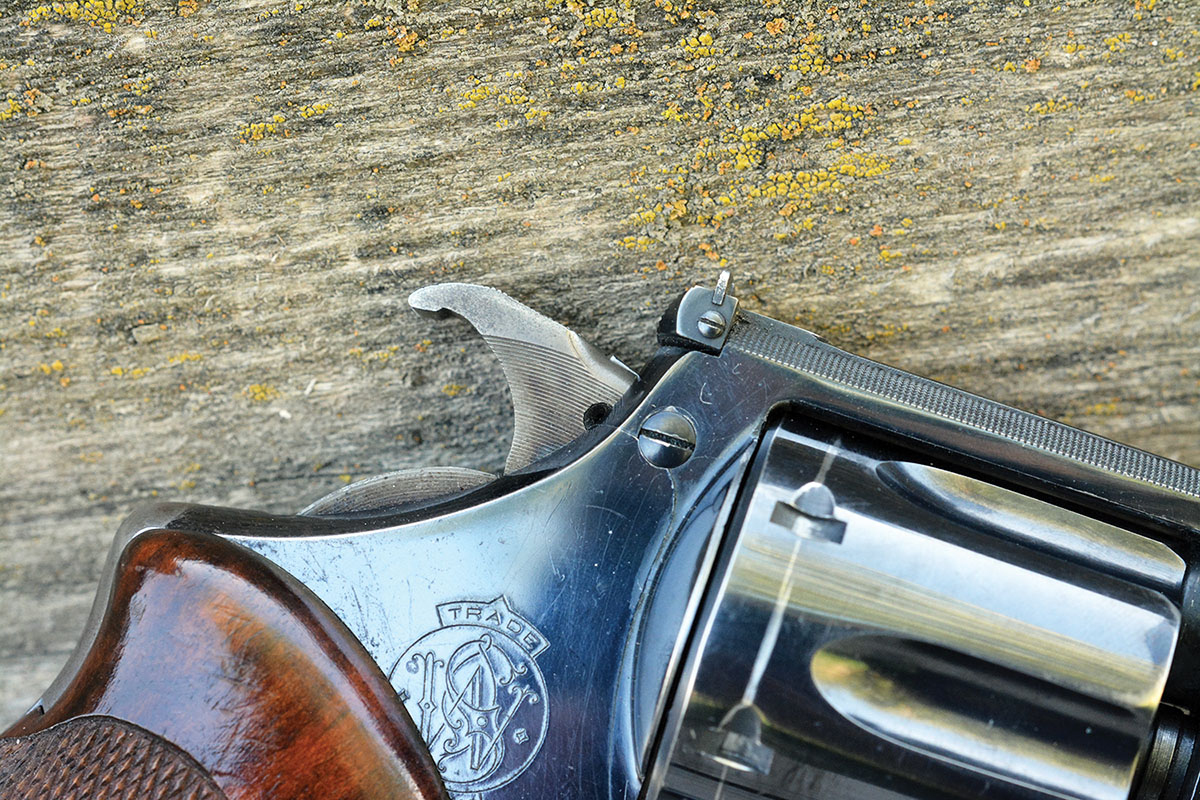
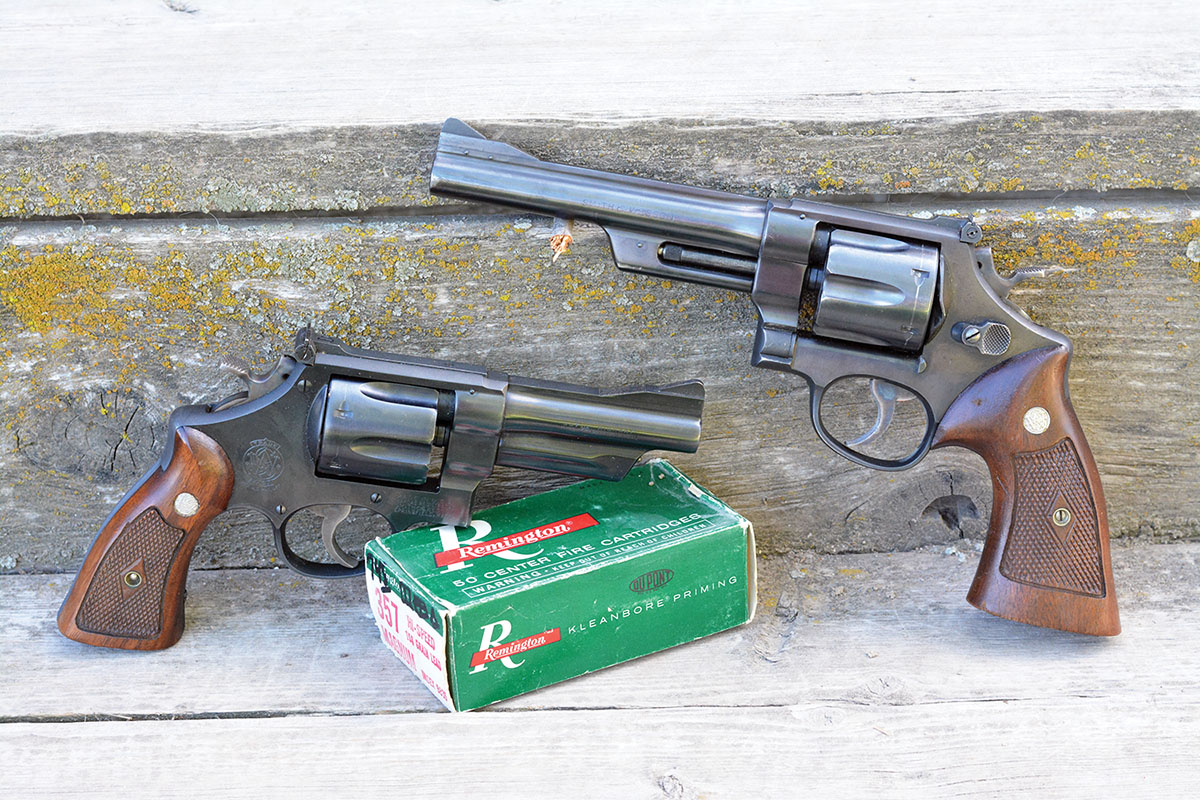
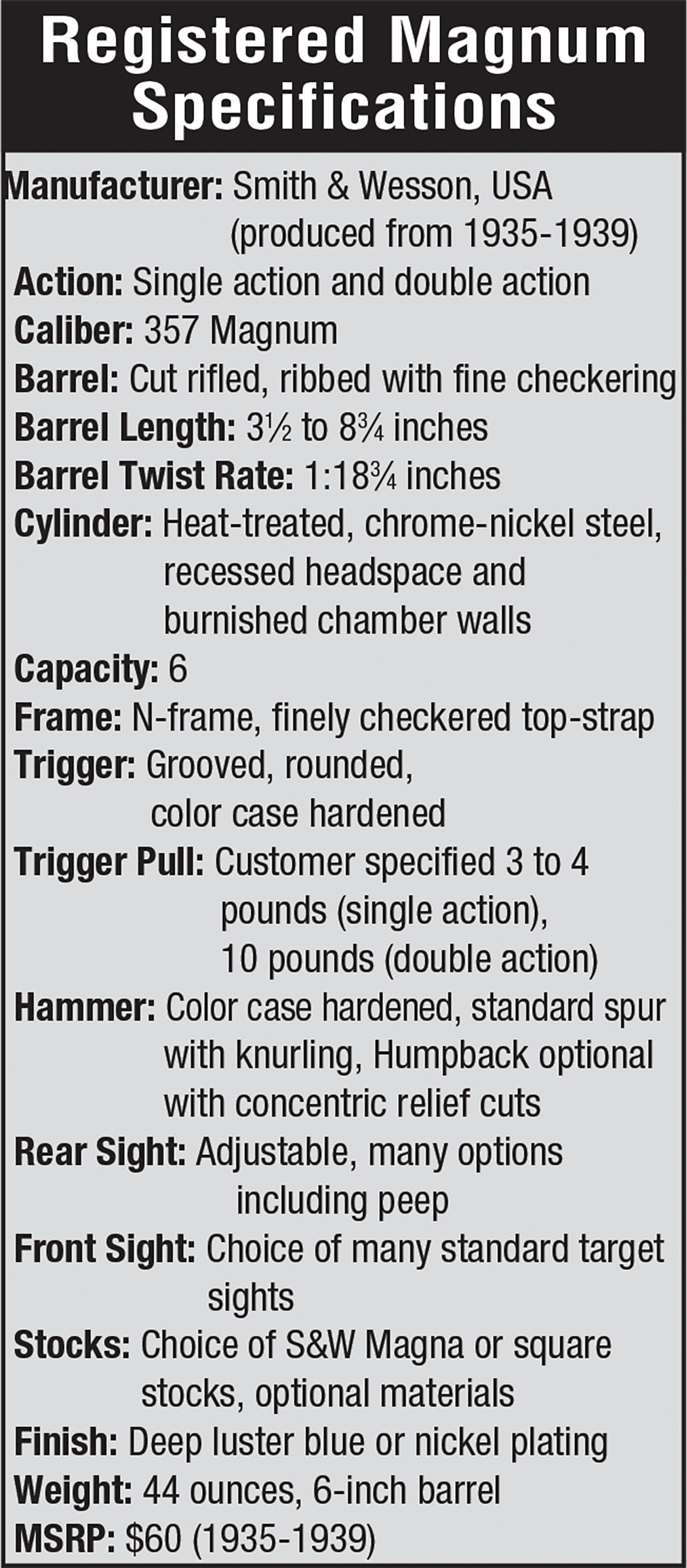
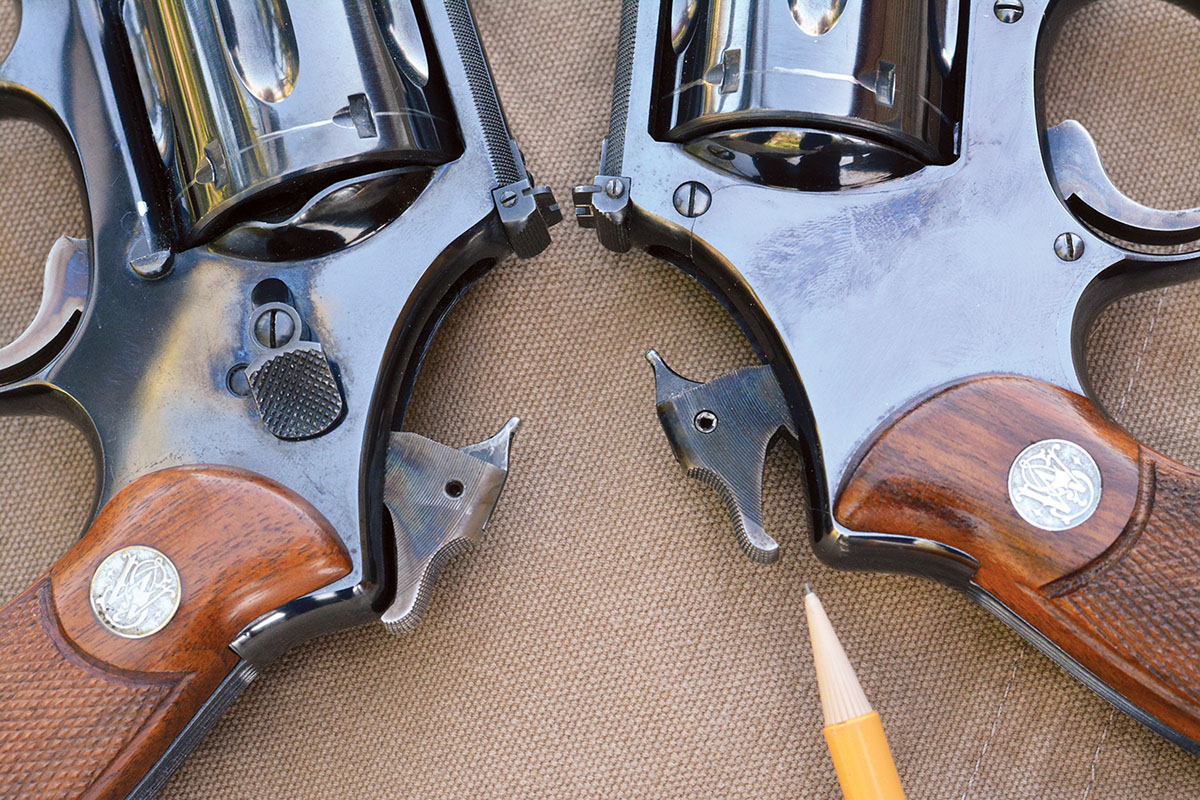
The Registered Magnums represent Smith & Wesson’s finest fit, finish and overall workmanship in the Hand Ejector series and the overall quality has never been duplicated in the decades since. For this reason, they remain highly
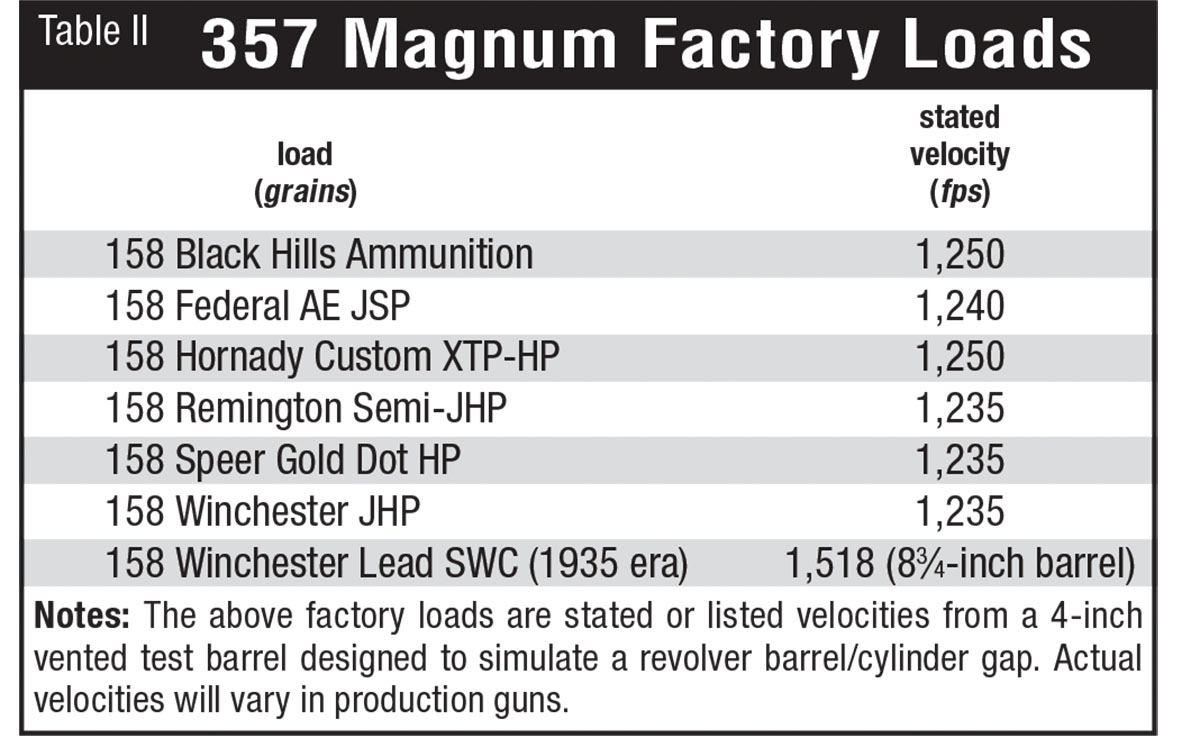
Early 357 Magnum ballistics were advertised by Smith & Wesson to push a 158-grain bullet at 1,518 fps (but other period ads list the velocity at 1,510, 1,512 and 1,515 fps) and with over 800 foot-pounds (ft-lbs) muzzle energy. The factory claimed that six-shot groups at 20 yards were always less than 1 inch when fired from a machine rest, but at 50 yards averaged 1.83 inches and at 75 yards 2.59 inches. Frankly, early factory loads were not the most accurate due to Winchester’s bullet choice, but the gun still performed well. Smith & Wesson
The first notable review of the brand new gun and cartridge came from Elmer Keith in the November 1935 issue of The American Rifleman. Keith was testing a pre-production sixgun with serial number 0362 (no Registration
Doug Wesson described himself as an eastern dude, but he traveled west to hunt big game with his personal Registered Magnum and perfectly established his personal skill with the sixgun. His record is impressive, as he took an antelope at 125 yards with a finishing shot at 200 yards. He also bagged a Wyoming bull elk at 135 yards and a moose at 100 yards, each taken with a single shot. Traveling into Canada, Wesson took a grizzly at 135 yards, again with a single shot. Smith & Wesson soon advertised these feats, but also included hunters taking an 8-foot cougar, a jaguar and a polar bear, each with a single shot.
Famous people who used the Registered Magnum are extensive, but one especially notable is General George S. Patton with gun Registration number 506 that featured a 31⁄2-inch barrel and was fitted with his trademark ivory stocks. Patton called this his “killing gun,” and he carried it alongside (as a pair) his trusty, fully engraved, silver-plated Colt SAA 45 Colt that had combat-earned notches on the ivory stocks.
During the 1930s noted exhibition shooter Ed McGivern conducted tests along with Dick Tinker, Waldo Vangsness, Walter Groff and many others, including witnesses, to determine the effective range of the 357 Magnum at distances from 200 yards and out to 600 yards. In short, using a standard man target (upper torso) and firing 150 shots, the hit ratio was over 50 percent at 600 yards. In fact, with Vangsness shooting McGivern’s personal sixgun, there were 78 hits on the man target and 37 hits on the margin of panel.
In spite of it being in the middle of the Great Depression and that the new Smith & Wesson 357 Magnum was substantially higher priced than any other gun in the product line, it sold very well and proved to be a profitable venture for Doug Wesson. More importantly, the gun and cartridge brought incredible worldwide fame and demand for Smith & Wesson guns and allowed it to compete with Colt at a completely new level.
My experience with the 357 cartridge is extensive and includes hunting, testing original and modern factory loads and developing handload data. I have used about every sixgun worth mentioning, but have a special fondness for the fine Smith & Wesson guns built on the N-frame, including the pre-World War II Registered Magnums, the post-World War II Models 27 and 28 Highway Patrolman, and the current Model 627 Stainless 8-shot variant. The Models 19 and 66 357 Magnums built on the K-frame are excellent sixguns as are the 586 and 686 L-frame series. However, the N-frame is a workhorse, features a much heavier barrel and frame and is more durable than either the K- or L-frame guns.
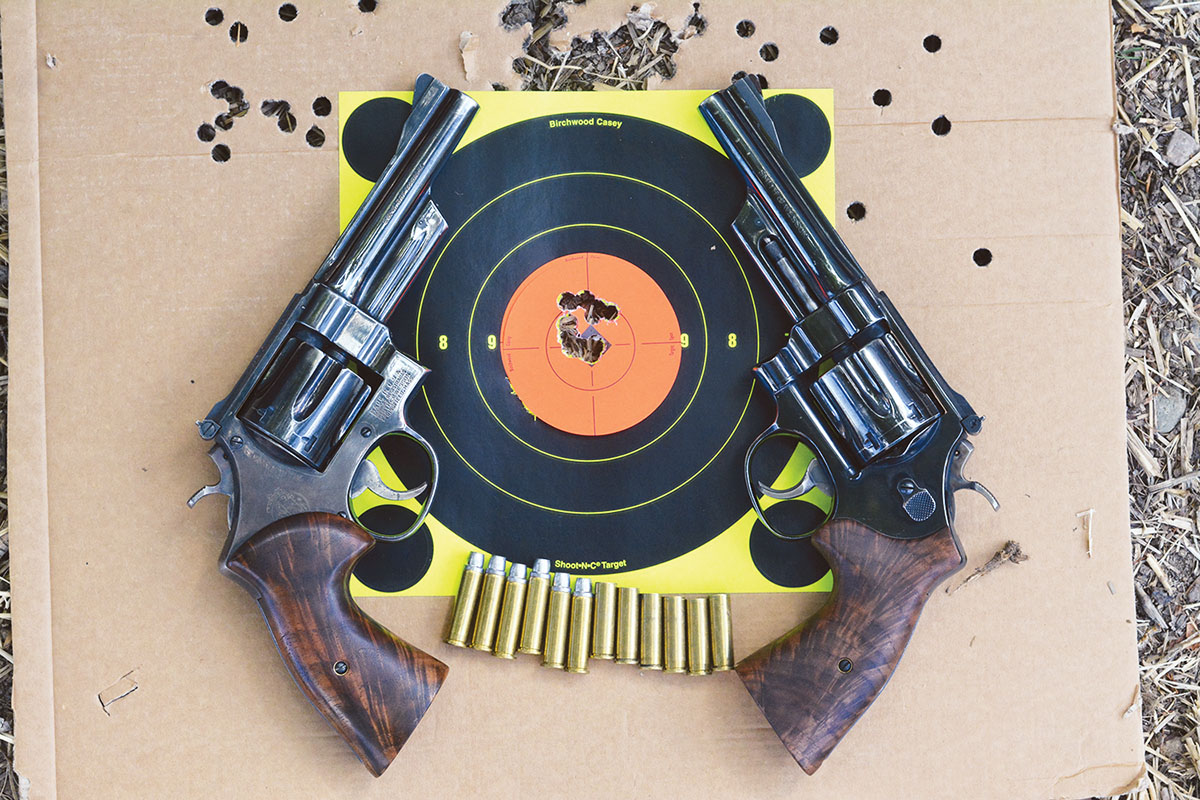
Being a hunter, N-frame 357s that I have used in the field have included standard barrel lengths from 31⁄2 to 83⁄4-inches, but there is a special fondness for the 5-inch variants that offer a near-perfect blend of balance, portability, velocity and ease of shooting. My pair of pre-Model 27s have digested tens of thousands of rounds (almost all cast bullet loads) and will still cut ragged hole groups at 25 yards if I can do my part. Their double-action pulls are smooth as butter and their single-action trigger pulls are light and crisp making them incredibly easy to shoot. I have used N-frame 357s in IHMSA competitions, but have also taken many deer, black bear, antelope, coyotes, pests and varmints. With proper loads, these fine sixguns will offer outstanding accuracy while providing unusual versatility.
It should be noted that after World War II, most U.S. firearms manufacturers were in financial difficulties, including Smith & Wesson. Most were literally on the verge of bankruptcy, and it took several years to tool up to begin producing civilian guns again. While there were a few N-frames produced from leftover pre-World War II parts from 1945 to 1950, ultimately in 1950 the new 357 Magnum was finally in production, followed by the competitively priced matte-finished Highway Patrolman in 1954 that would become the Models 27 and 28 in 1957, respectively. Both featured the new click adjustable Micro rear sight and ramp front; however, options were offered for the Model 27 including Patridge style front sight, red inserts, target trigger and hammer, Magna or target style stocks, etc.
It is noteworthy that during the pre-World War II production era, The King Gun Sight Company converted double and single action sixguns to a short action that served to decrease lock time and increase accuracy. Smith & Wesson took note and during the retooling process reengineered the lock-work of their double-action sixguns to a modern short-action design. Both have their advantages, and this shooter remains very fond of each.
Regardless, the post-World War II N-frame has been a huge success and has remained in continual production with the Model 27 Classics series that has a MSRP starting at $1,249, while the Model 627 8-shot Performance Center version lists at $1,579. While these guns have fallen under scrutiny with regard to quality and function over the past couple of decades, they are still good guns. It is hard to convey this in a few words, but having insight into all the regulations, taxes, insurance, junk lawsuits and other factors that our domestic gun manufacturers deal with, my hat is off to them for still producing guns and offering them at reasonable prices, especially when all things are considered. These guns might need some minor tuning by a professional, but generally the base gun is good.
This brings us to period factory loads, modern ammunition and handloads. To quote Smith & Wesson on the inside of a Registered Magnum box lid: “Ammunition-factory loaded, smokeless powder cartridges with plain lead bullets are recommended. S. & W. .357 Magnum cartridges are especially designed for this arm. It also chambers the .38/.44 S. & W. Special and the .38 S. & W. Special.” Space will not allow a detailed discussion, but S&W had long warned against using jacketed bullets in their revolvers to prevent excessive barrel wear and for their guns to maintain their high level of accuracy.
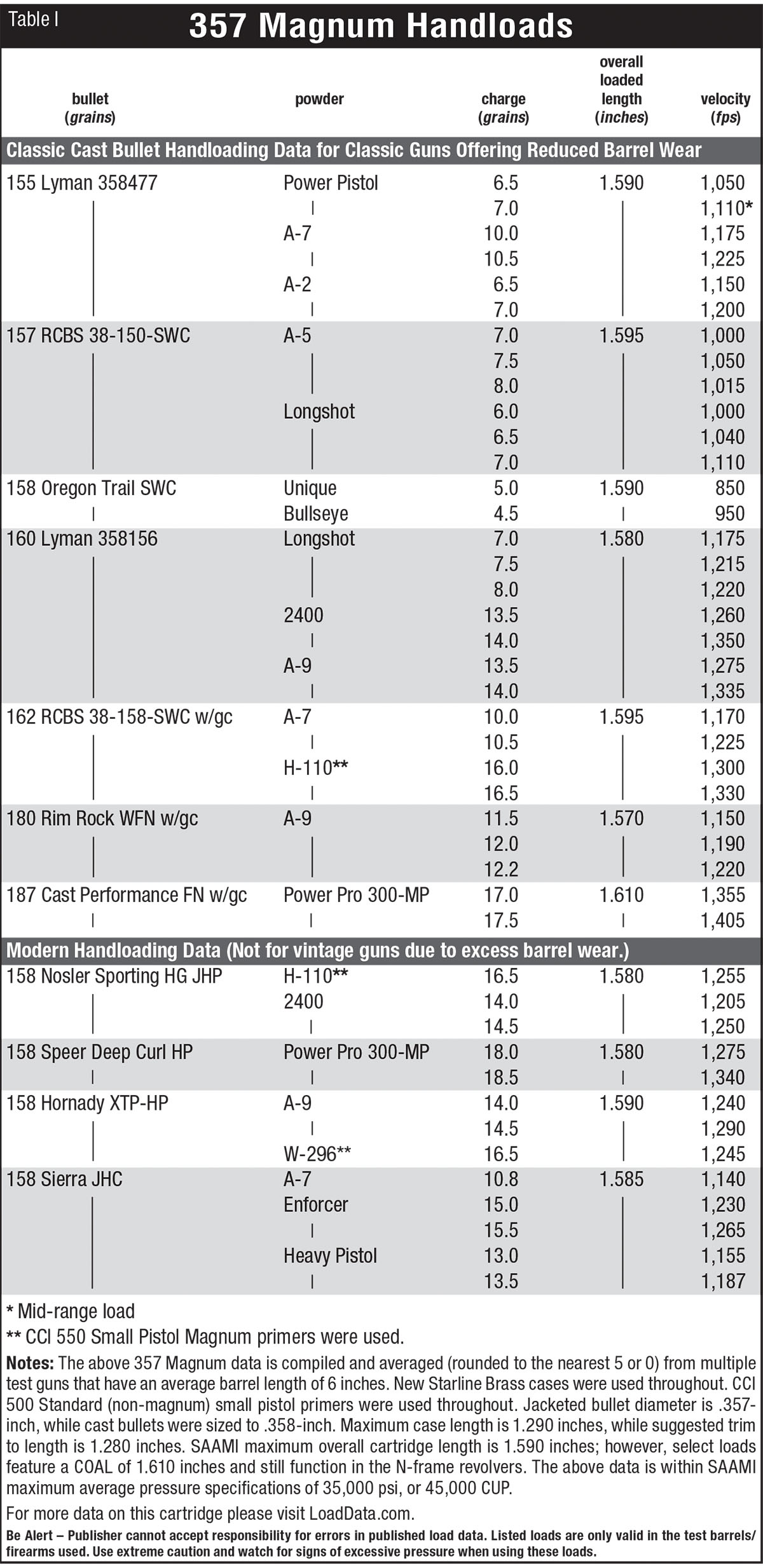
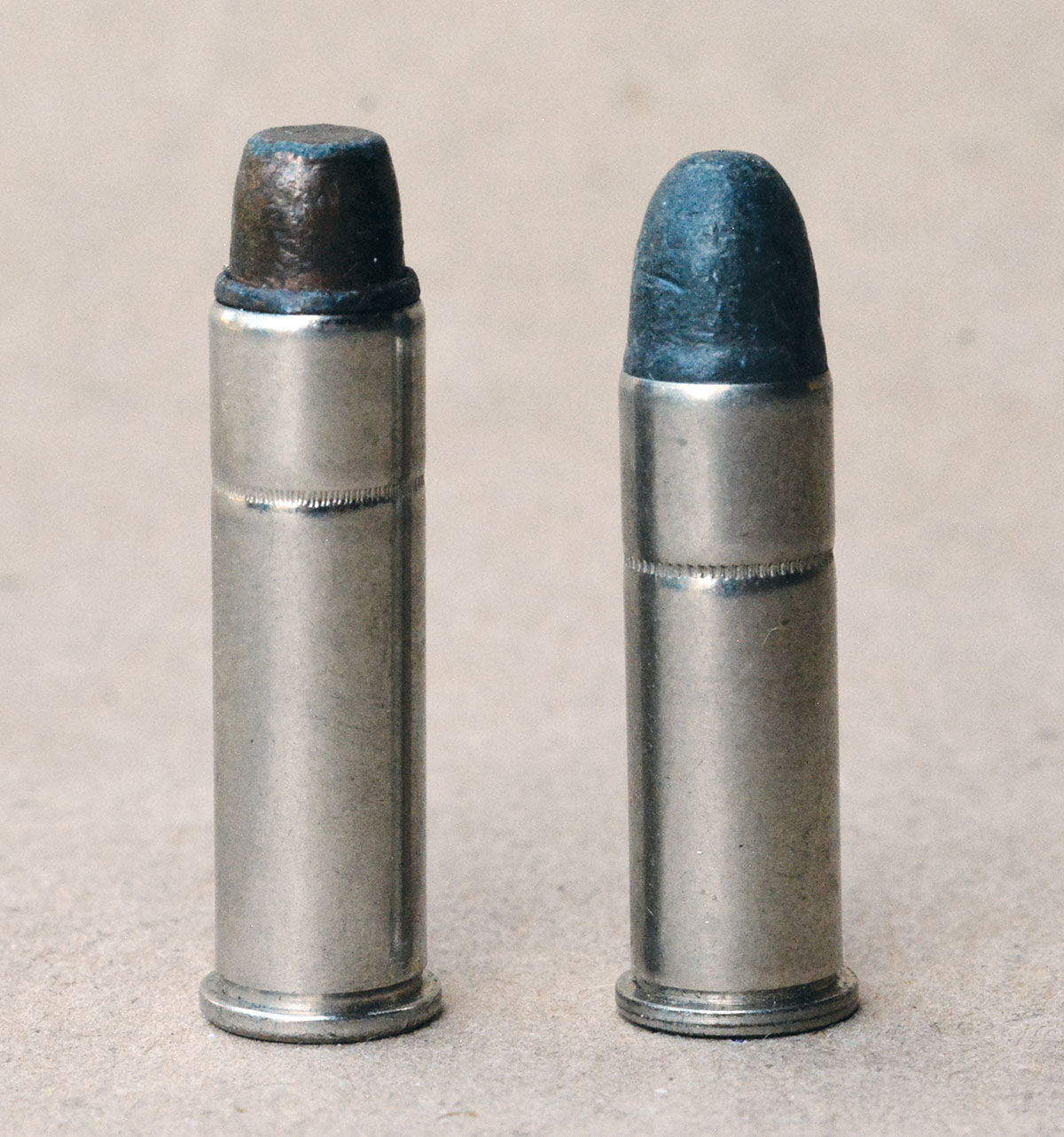
Today’s factory loads from all major ammunition companies have changed to jacketed bullets, and velocities are generally around 1,235 to 1,350 fps with 158-grain bullets. It should be noted that it is not possible to push these jacketed bullets to the same speeds as cast or lead bullets when they are all loaded to the same pressure. Nonetheless, today’s factory loads are very good as they are accurate, expand reliably and are excellent for self-defense; however, I suggest using them in modern guns only and never use them in vintage guns such as the Registered Magnums to prevent wearing out the barrel prematurely. These barrels are simply not constructed of the same steels used in modern guns, and they are literally irreplaceable. By contrast, using cast bullets will significantly extend the barrel life. This is similar to guns chambered for the 22 Long Rifle with its soft, plain lead bullets that have an expected barrel life of at least 100,000 rounds, but it is usually closer to 200,000 rounds depending on barrel steel quality. Guns that fire jacketed bullets will only have a barrel life that is a small fraction of those figures.
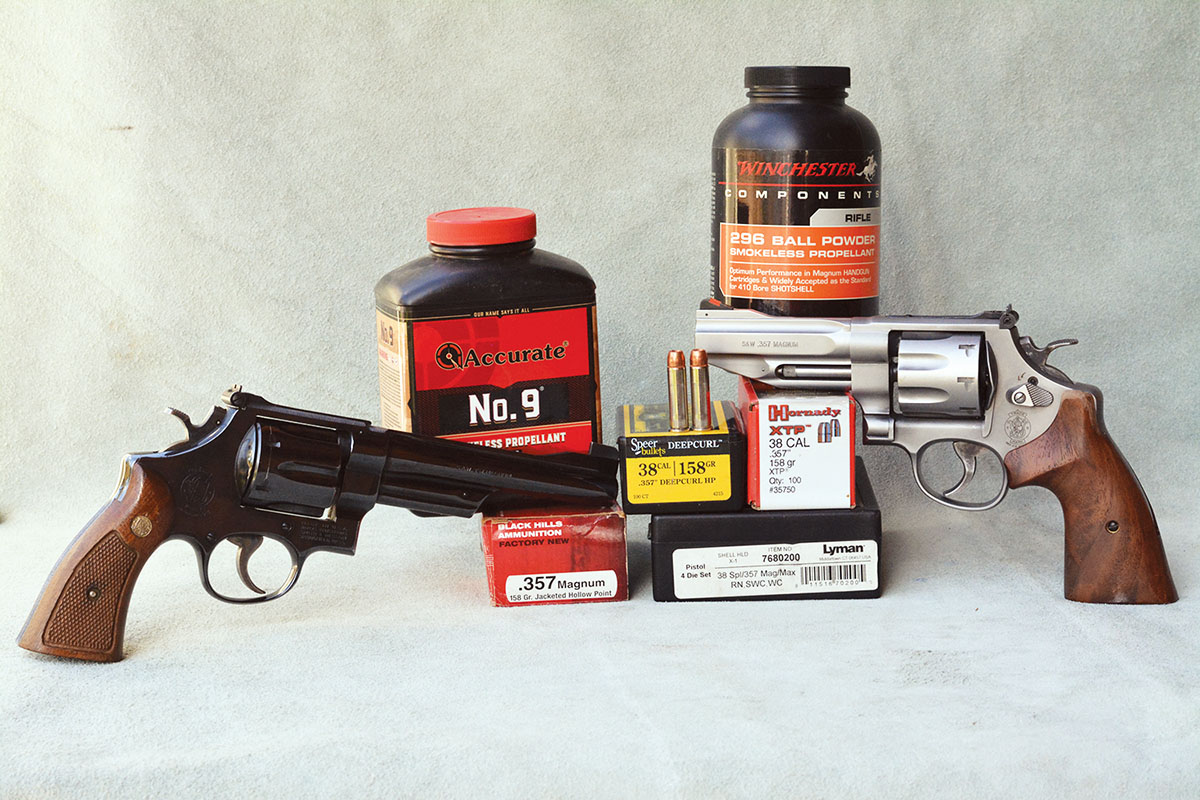
With the above thoughts in mind, I have included classic 357 Magnum handload data for period guns that contain cast bullets with a BHN of between 12 and 14. These loads do not need an apology, as they can still deliver higher velocities and equal or better accuracy when compared to today’s factory loads. They still have one other significant advantage: deep penetration! In short, they offer significantly better penetration than any jacketed hollowpoint (JHP) bullet, which becomes important for any sixgunner that takes the 357 afield for bear, elk, feral hogs or similar tough game. While JHPs, such as the Speer Deep Curl, Hornady XTP and others, can perform very well on deer sized game, heavier species will require a bullet that offers deeper penetration. I have put 160- to 173-grain cast bullets completely through black bear with excellent results. On the contrary, I have seen JHP bullets stop within just 1 to 2 inches of entry and never come close to reaching the vitals, resulting in a very angry wounded bear. For those wanting JHPs for other purposes, data has been included that is also within current SAAMI pressure guidelines of 35,000 psi.
As we rapidly approach the 100th birthday of the 357, it is doubtful that Doug Wesson, Elmer Keith, Phil Sharpe or the Winchester engineers that designed it ever expected it to enjoy such huge worldwide popularity and to be in high demand 92 years later. Clearly it is a great cartridge that offers outstanding versatility for target work, hunting, defense and recreation!