Horse Pistols
The Missouri Bushwhackers and the Colts They Carried
feature By: Gary Lewis | May, 26
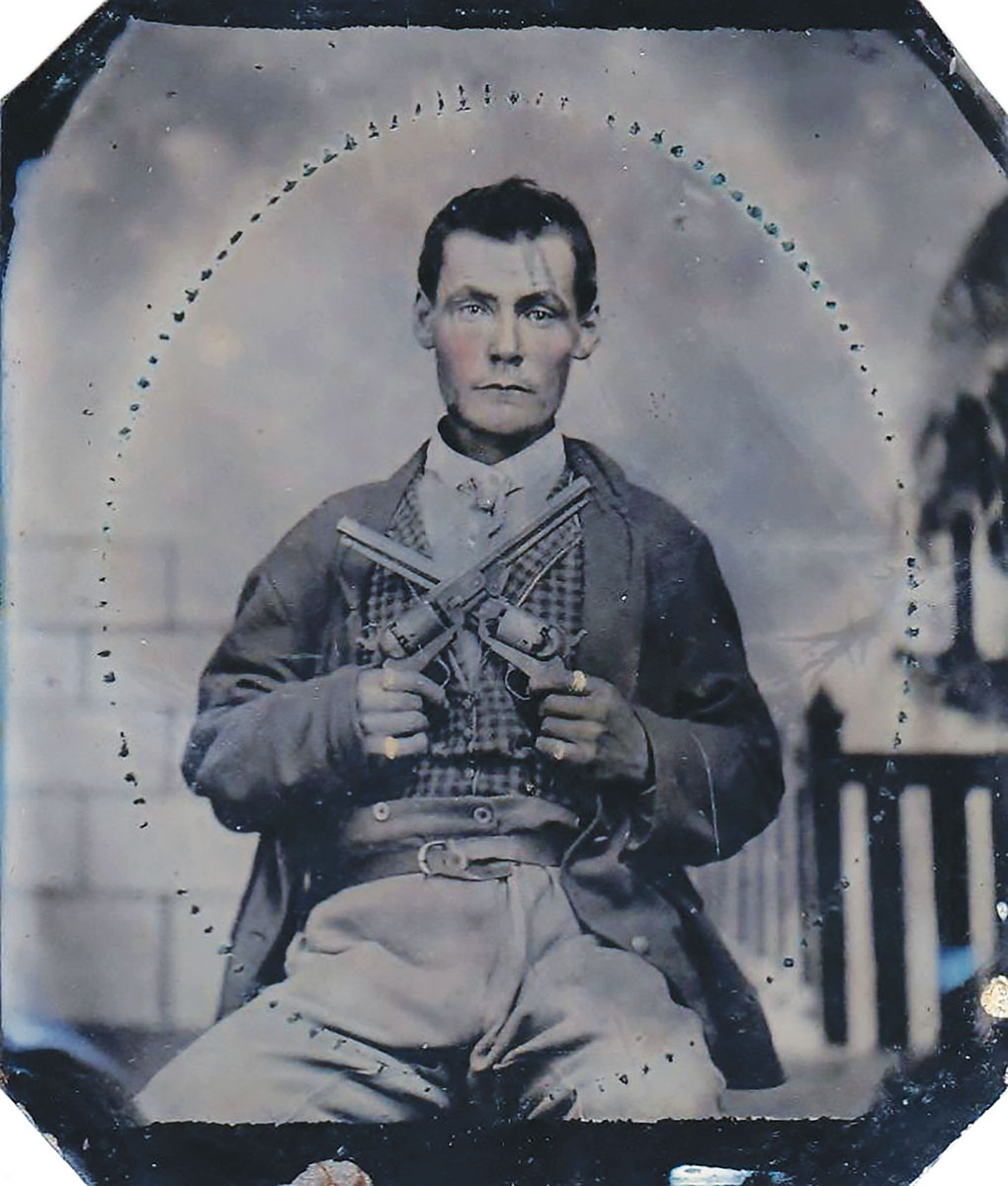
A gun in each hand and the reins in his teeth. By 1863, the partisan rangers, called the Bushwhackers, riding with William Quantrill or “Bloody Bill” Anderson, counted themselves equal to three union men each. It was not uncommon for five Bushwhackers to scatter twenty Federals like quail.
The experience of the former army soldier in 1861 was something like an outgrowth of the industrialized North, where boys went to work in factories and learned to work the factory machines. They became parts of the machine.
Southern politicians were quick to pick up on this and called northern men “wage slaves” to their factory “master.”
Newsprint irony, but it was true that when recruited into the army for either side, the boy or man had to be dehumanized to the degree where he could exist in the army machine.
Imagine for a moment, a regular army soldier, on foot, armed with the latest U.S. Model 1861 rifled musket, .58 caliber. He has learned to load, stand and shoot on command, and to load three times again in a minute. He will stand or fall in withering fire. He is marching to battle or away from it, secure for a moment that he won’t die today.
Then sweeping down out of the brush comes wild, bearded men on fast horses, the reins in their rider’s teeth, a gun blazing in each hand. Every gun can hold six rounds, and the guerrillas never seem to run out of ammunition, as they can holster a
Unlike the millions of men who volunteered to wear the blue or the grey and who marched hundreds of miles away from home, most guerrillas began their fight in their own backyards.
Their advantage lay in their knowledge of the battlefield, the support of friends and family, skill with firearms, horsemanship and access to more and better horses.
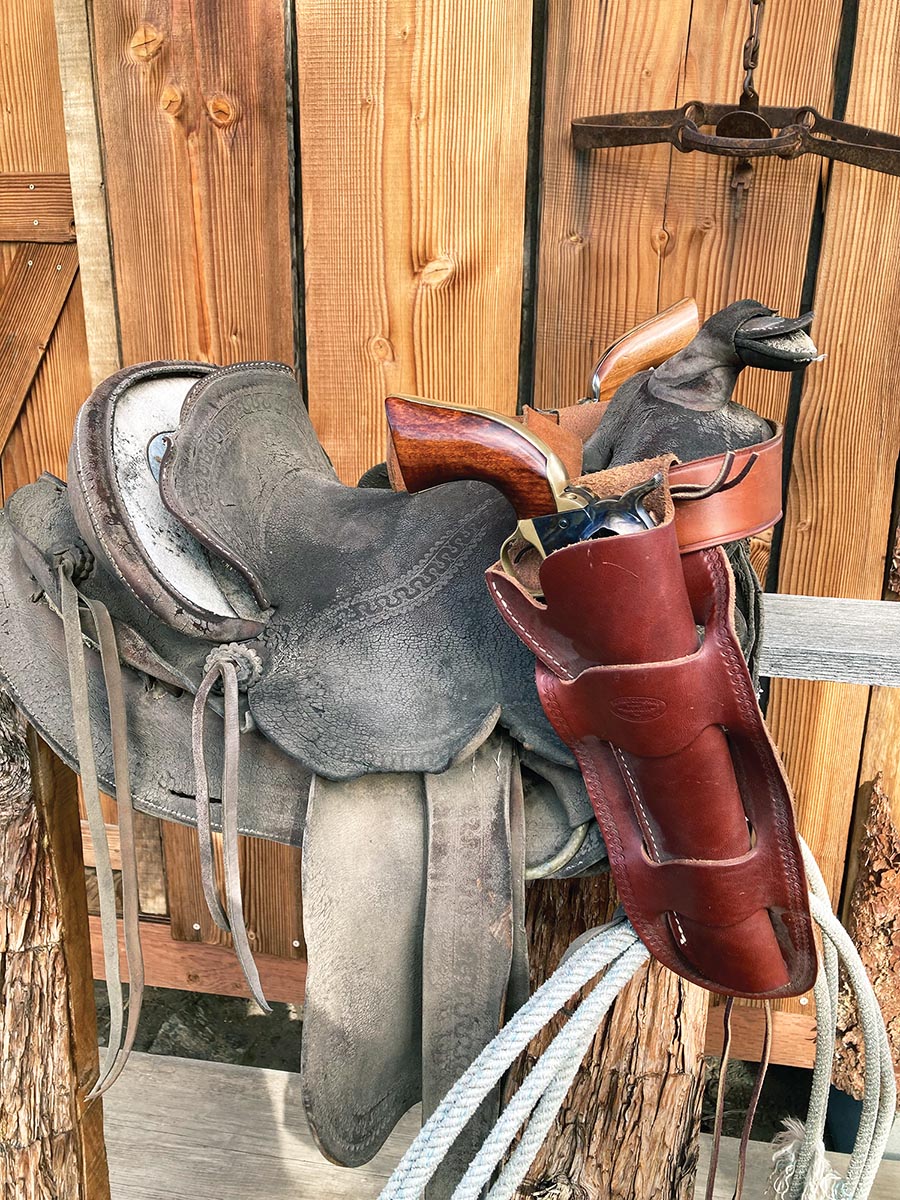
Their guns, like their horses, were extensions of themselves. They learned to shoot with either hand, both eyes open. Sometimes they shot with both hands at a full gallop. While most wore their guns in holsters, they often had another pair of revolvers in holsters mounted to their saddles and had spares and pre-loaded cylinders in saddlebags.
Their guns were often Colts, the 1851 Navy and 1860 Army, .36 caliber or .44 caliber – or southern-made copies like the Griswold & Gunnison, Leech & Rigdon, Augusta Machine Works and Columbus Firearms Manufacturing Company. Other guns in the guerrilla’s arsenal included the .44-caliber 1858 Remington, the Freeman .44, the Pettengill, Rogers & Spencer and the Butterfield. It is easy to picture a half dozen guerrillas tucked back in the Missouri brush, regrouped after a raid to trade guns they had taken from Union officers so each man could have more of the gun he favored. Cylinders, too, would have been very much in demand, for a gun could be reloaded faster by swapping out empty ones for loaded ones.
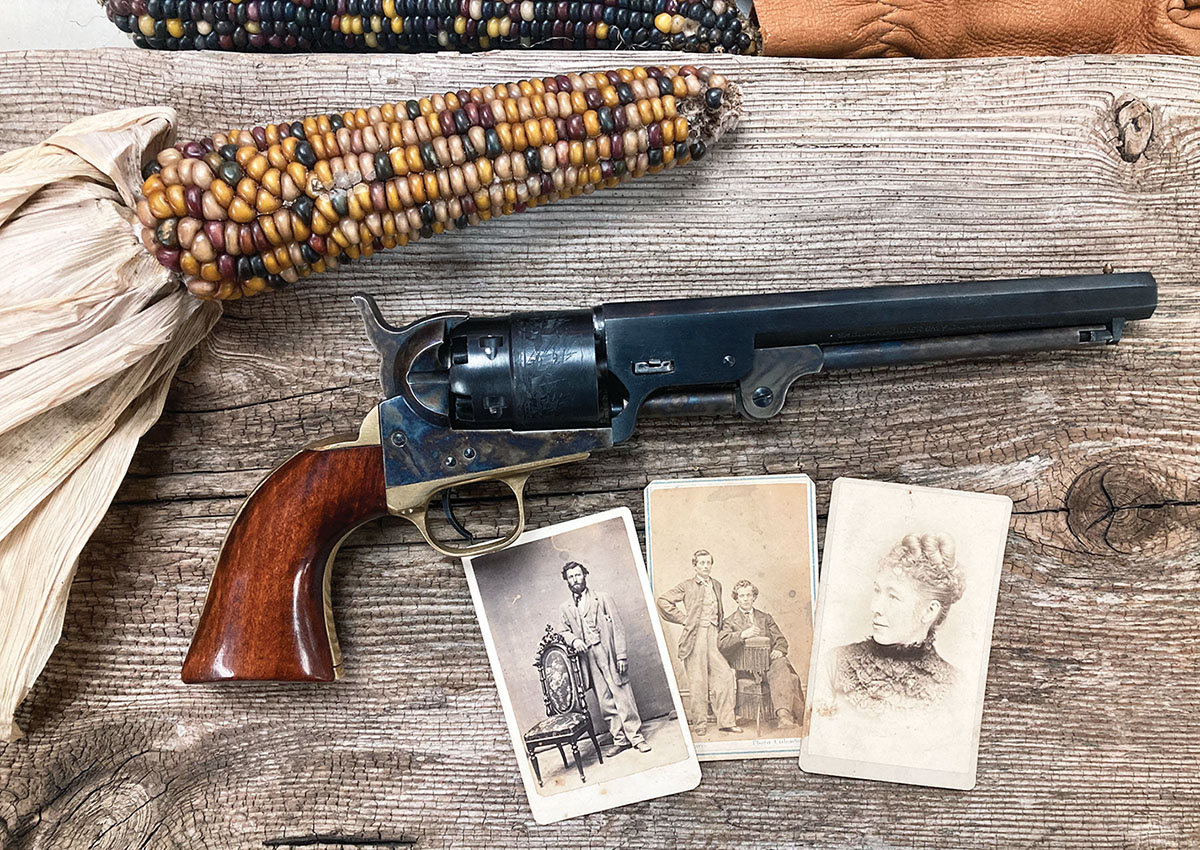
The Navy Colt
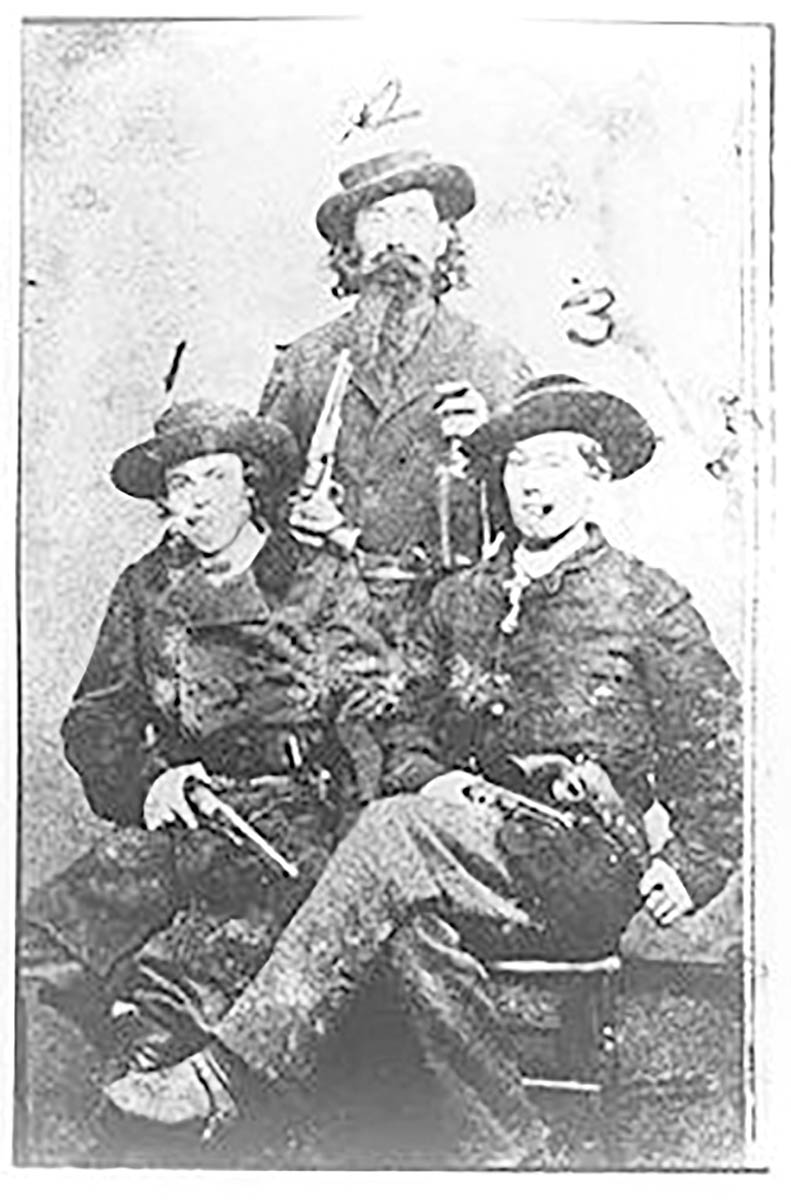
“General, our muskets with not one revolver are poor arms to fight bushwhackers with. Can we not be better armed?” So wrote a major Matlack to General Fisk after several skirmishes with the Bushwhackers.
The Colt Walker and Dragoons came first. Both guns were designed to be carried in a dual pommel rig over the saddle. Horse pistols of .44 caliber – the Walker held 60 grains while the Dragoon held 50 grains of black powder with 148-grain round balls. They shot about 1,150 and 1,000 feet per second (fps) from the 9- and 71⁄2-inch barrels.
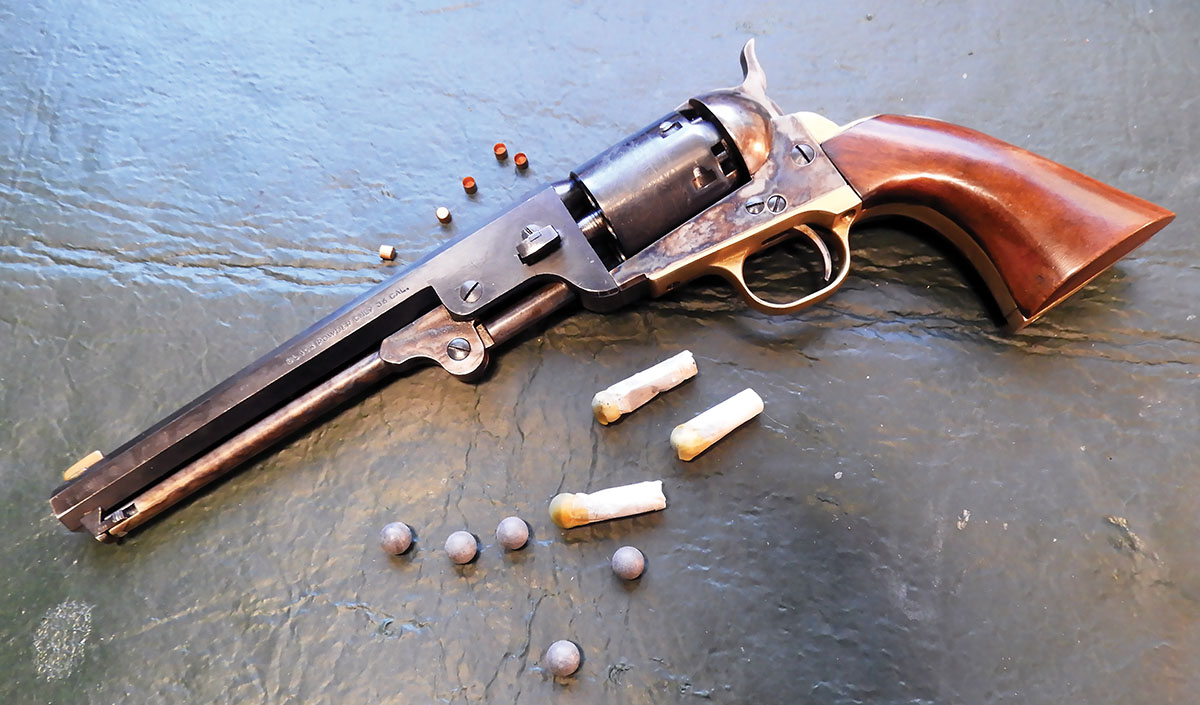
The Colt 1851 Navy became the first true gunfighter’s sixgun, but the factory marketing men called it Colt’s Revolving Belt Pistol of the .36 Caliber. It was a magnificent name, but what stuck in a person’s mind was the engraved cylinder scene of the victory of the Second Texas Navy at the battle of Campeche. Weighing in at 2.6 pounds, the Navy was a decided improvement over the 3rd Model Dragoon which weighed over 4 pounds each and could really be a drag on a man’s trousers.
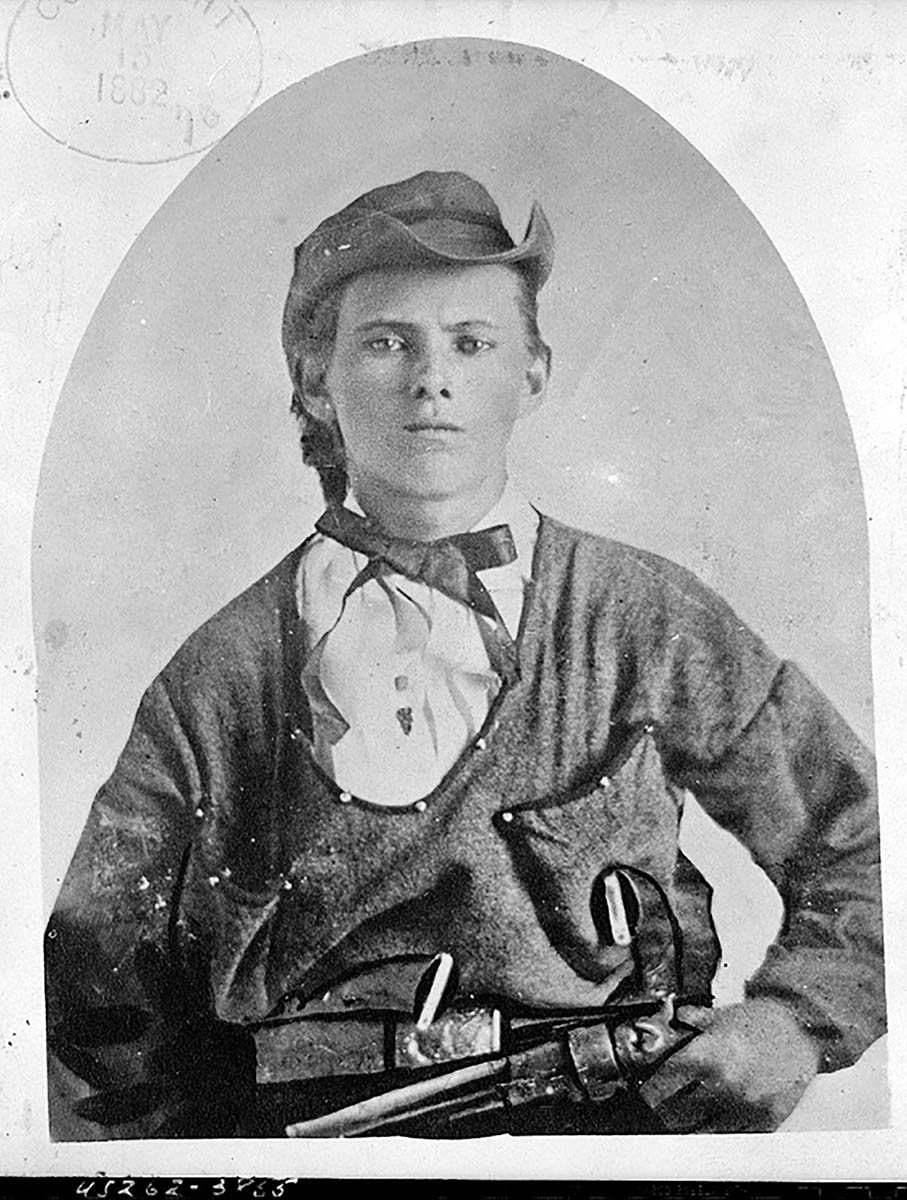
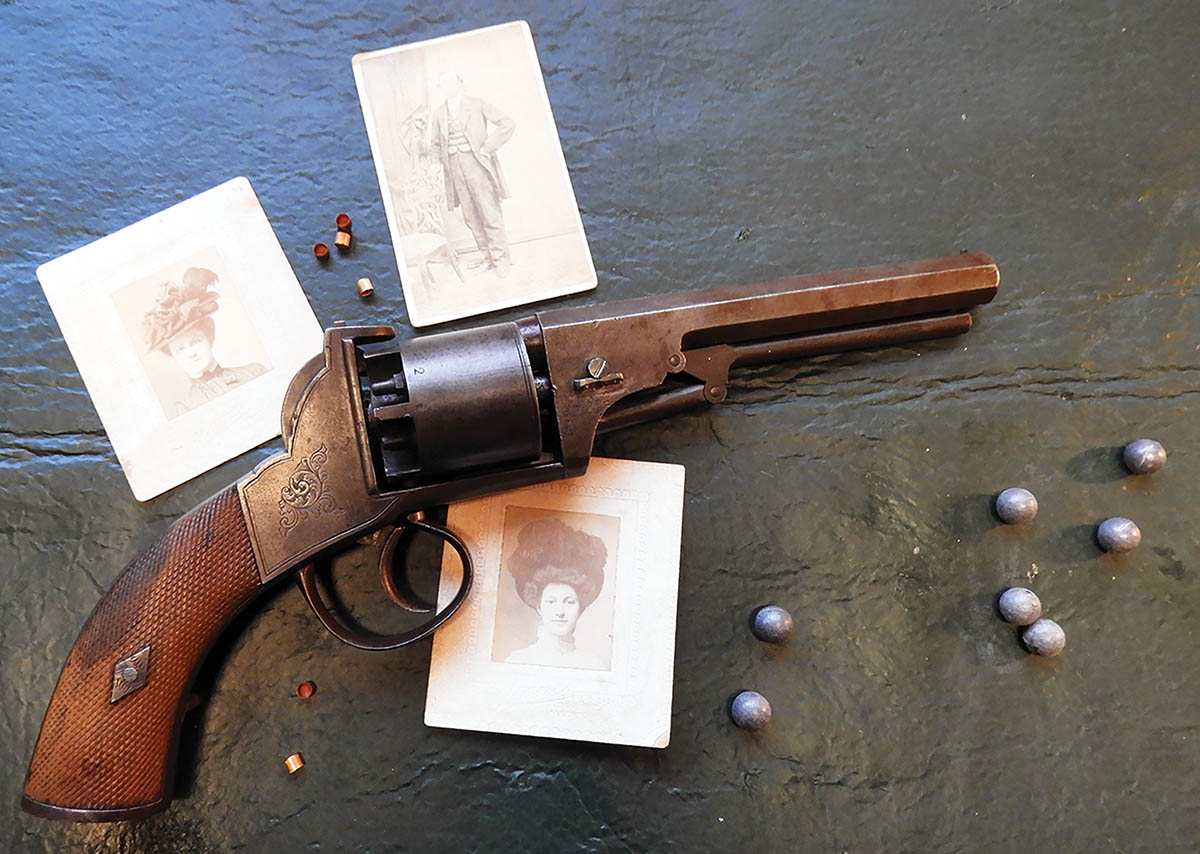
There were several firms making copies of the Colts in both the North and the South. Griswold & Gunnisonmade Colt clones, and there were a dozen other companies making revolvers at the time.
A lot of gunfighters liked the balance of the 1851. In fact, the grip frame of the 1851 was so preferred that it became the basis of the Colt Single Action Army released in 1873. However, the
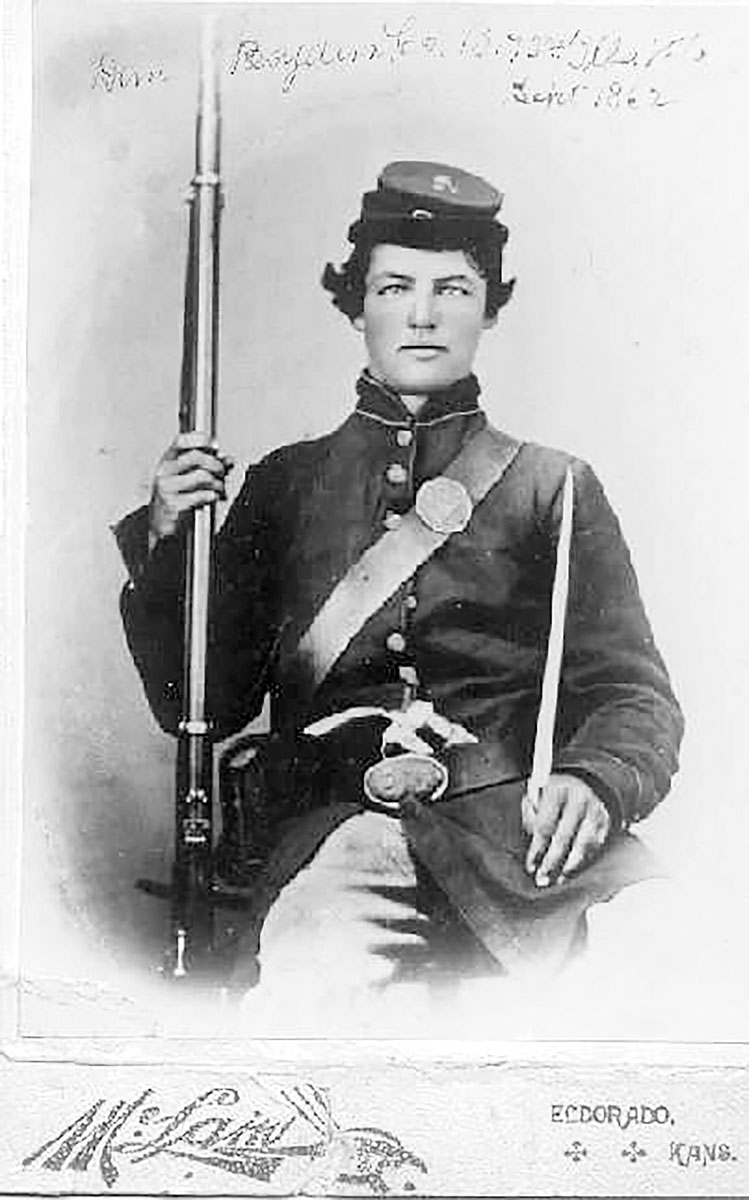
The Colt 1860 Army
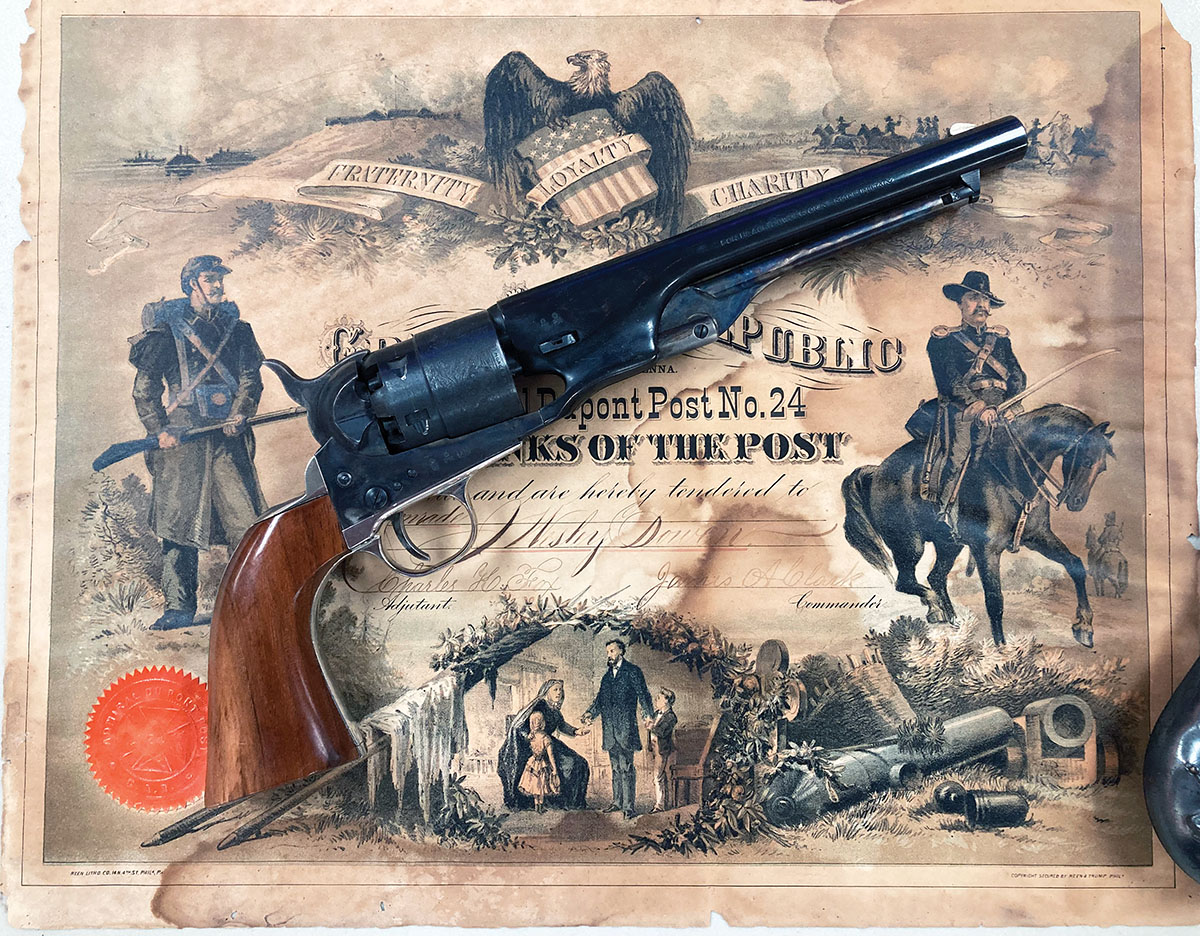
Price was not an advantage. Initially, the Colt 1860 Army cost about $20 each. If you had a $20 gold piece, you could buy one. By 1865, the price had come down to $14 or $15. Today, the original Colts are still worth about the same as one ounce of gold. This is a streamlined update of the 1851 design. The barrel is rounded, and the length is 8 inches. Overall length is 14 inches. Weight unloaded is 21⁄2 pounds, cylinder capacity is six and the projectile is a .454 lead ball or a conical bullet. The loading lever was improved by adding a timing mechanism.
Pre-packaged paper or linen cartridges could be purchased for faster reloads. The paper was soaked in potassium nitrate and then dried to increase its flammability.
In combat, the 1860 Army’s effective range was 50 to 75 yards with muzzle velocities of 750 to 900 fps and energy up to 350 foot-pounds (ft-lbs). At close range, the Colt 1860 Army had a decided advantage over a single-shot, muzzle-loading rifle.
Extra cylinders made reloads faster. In the movie Pale Rider, you can see Clint Eastwood change
cylinders while walking on a street. This would have been a common saddle move for Missouri boys like Bloody Bill Anderson, Cole Younger or Jesse James.
Horse and Rider
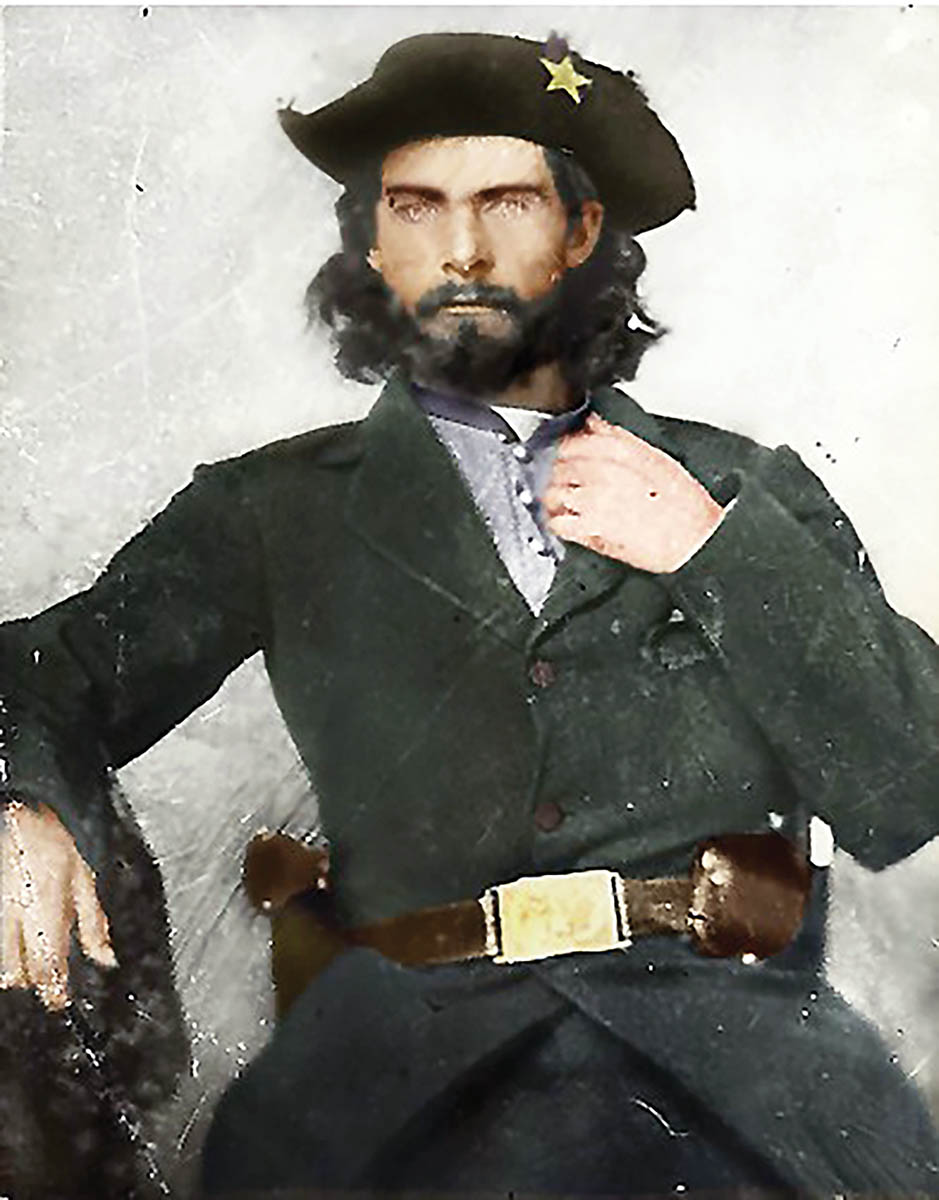
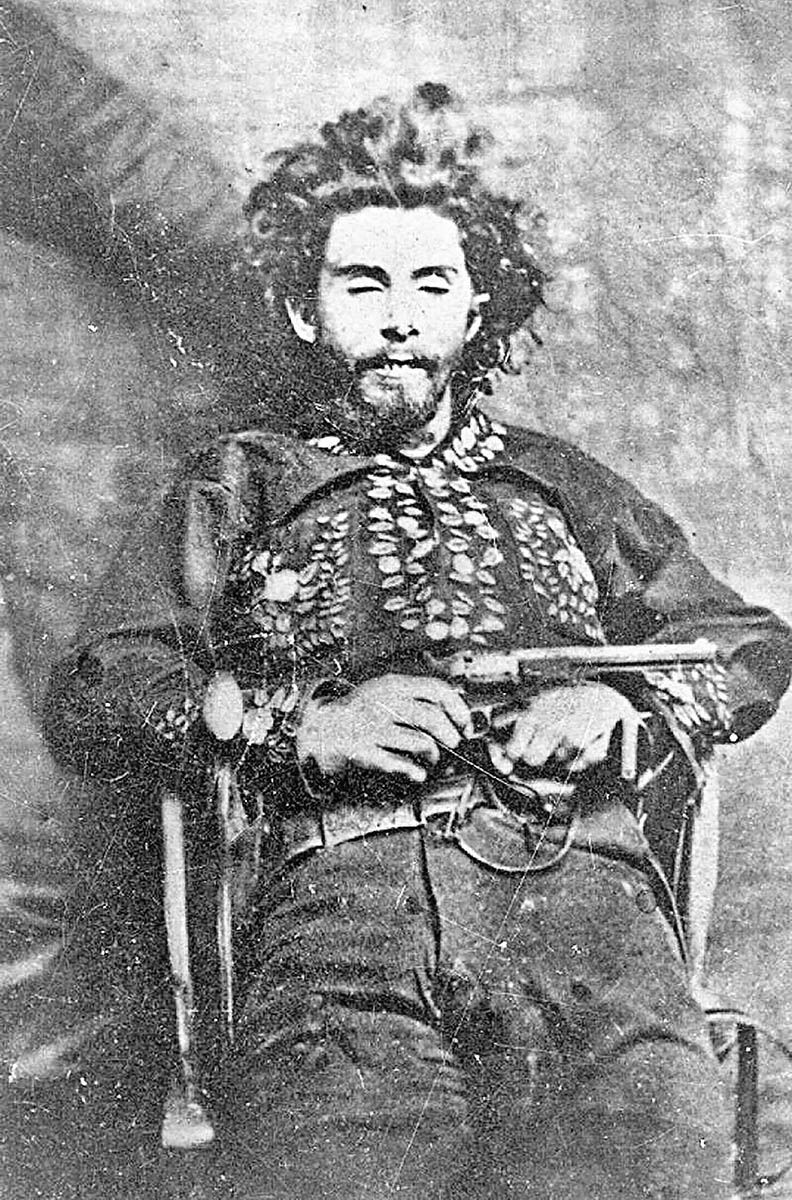
Hamp Watts was not quite 16 years old when he joined Bloody Bill Anderson’s group in the summer of 1864. Later in life, Hamp “Babe” Watts drew a picture of himself recalling the last year of the war.
The picture can be seen in the book Bushwhackers – Guerrilla Warfare,Manhood and the Household in Civil War Missouri by Joseph M. Beilein, Jr.
The horse is in motion, making a turn. Watts is wearing a hat with a turned-up brim, a bow tie at his throat, a button-up shirt and a woolen war shirt adorned with silk flowers. At his belt is a holster and in his hand a revolver. Another revolver is holstered on the saddle. Watts’ boots come to his knees, pants tucked
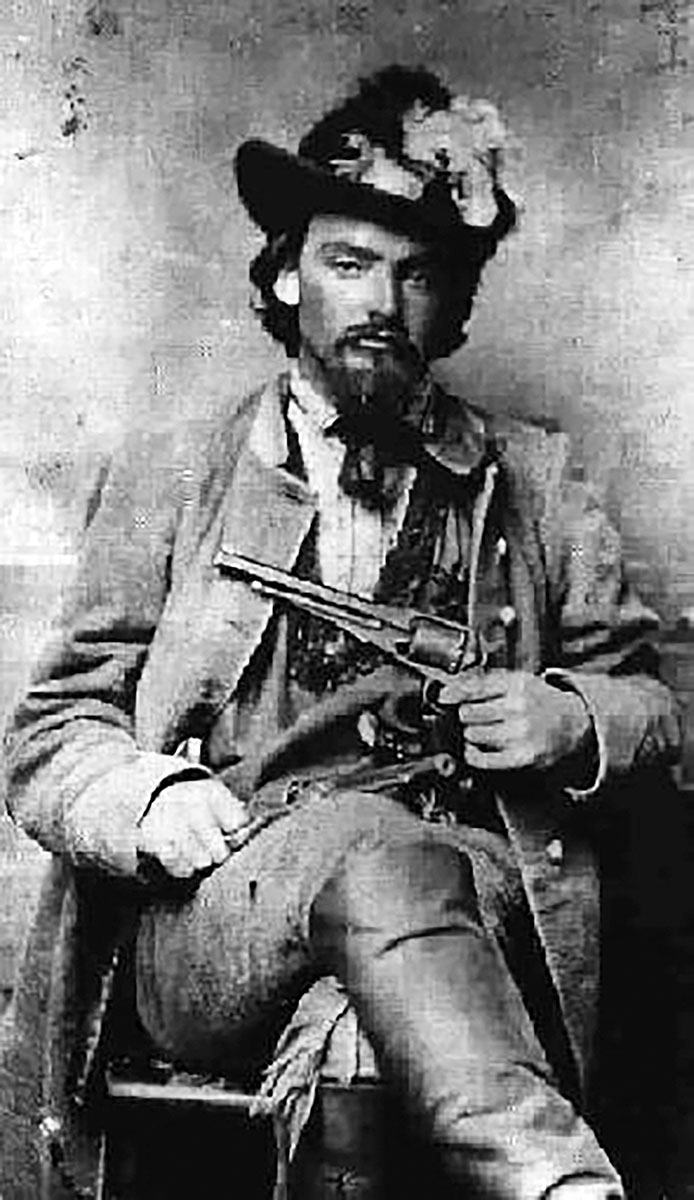
Bushwhacker saddles were better than the Federal ones too. In Missouri, German and Hungarian saddles were commonplace. Thornton Grimley was making a Spanish-style saddle in St. Louis. Coming down from the North, the McClellan saddle, which had been adopted by the War Department in 1859, was a good saddle, but it was not as comfortable as an English saddle made of pigskin and velvet or a plantation-style Kentucky rollback like Jesse James used.
When a rider was wounded, the Bushwhacker horse could find its way home. Not so the Federal horses.
With better horses, better stamina, and better saddles, the guerrillas could flat out-ride the Federals in every engagement, and then trot all the way to Texas to
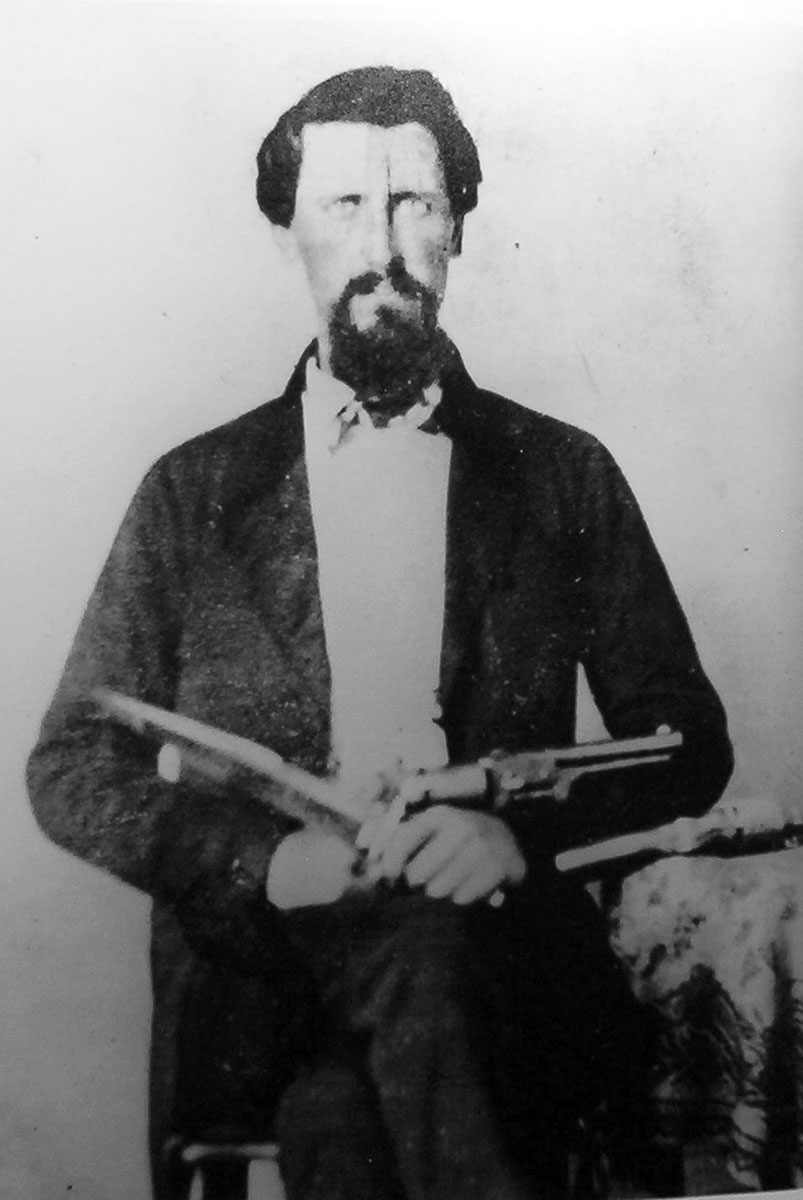
In his book Noted Guerrillas, John N. Edwards wrote of Quantrill and his type, “He was a living, breathing, aggressive, all-powerful reality – riding through the midnight, laying ambuscades by lonesome roadsides, catching marching columns by the throat, breaking in upon the flanks and tearing a suddenly surprised rear to pieces; vigilant, merciless, a terror by day and a superhuman if not supernatural thing when there was upon the earth blackness and darkness.”
At the Range
Guns come and go, but the one gun I have owned for nigh on 40 years is a .44-caliber Colt 1860 Army replica, made in Italy and imported by Lyman.
On a cloudy Saturday in November, I laid the gun on the bench at the Central Oregon Shooting Sports Association Range, east of Bend, Oregon.
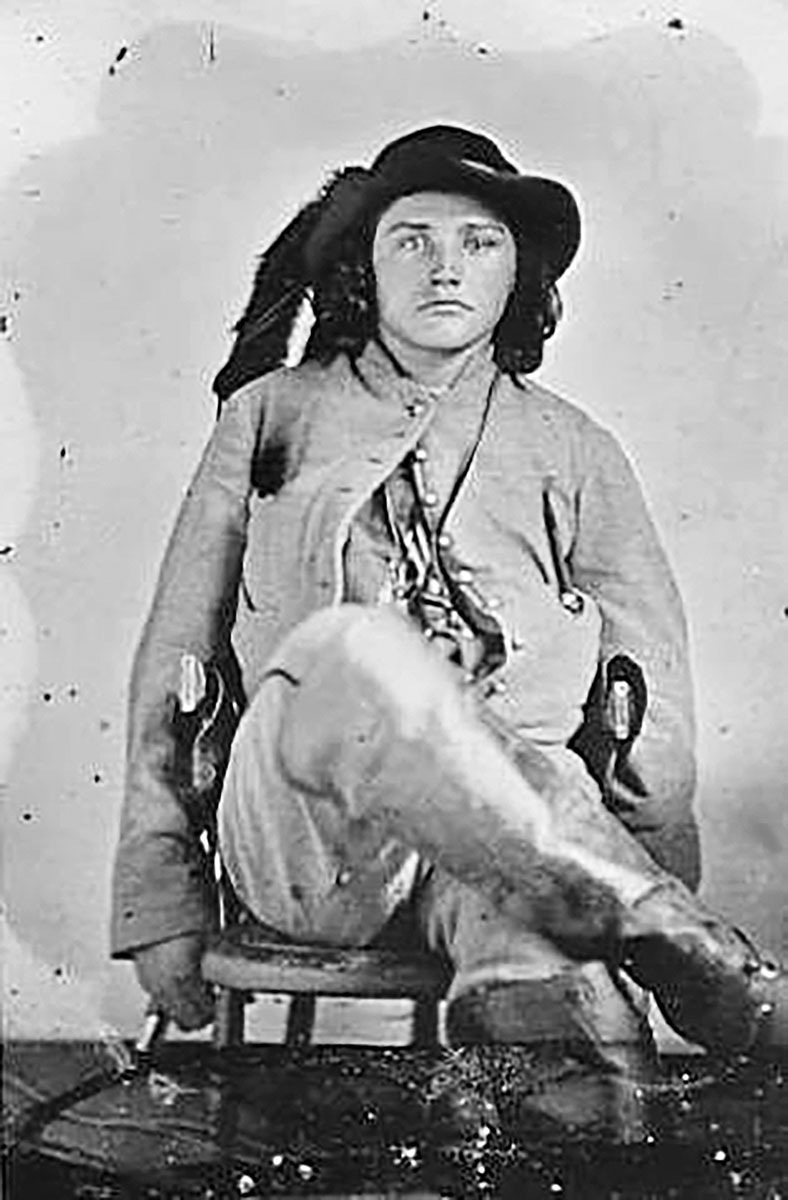
The target was placed at the 50-foot mark to start. Using a six o’clock hold and a precise trigger press, my first shot impacted five inches left of the bull, off the target.
I was properly horrified, but like a good soldier, I cocked and fired again and managed to put the next three rounds in a respectable coffee can-sized group.
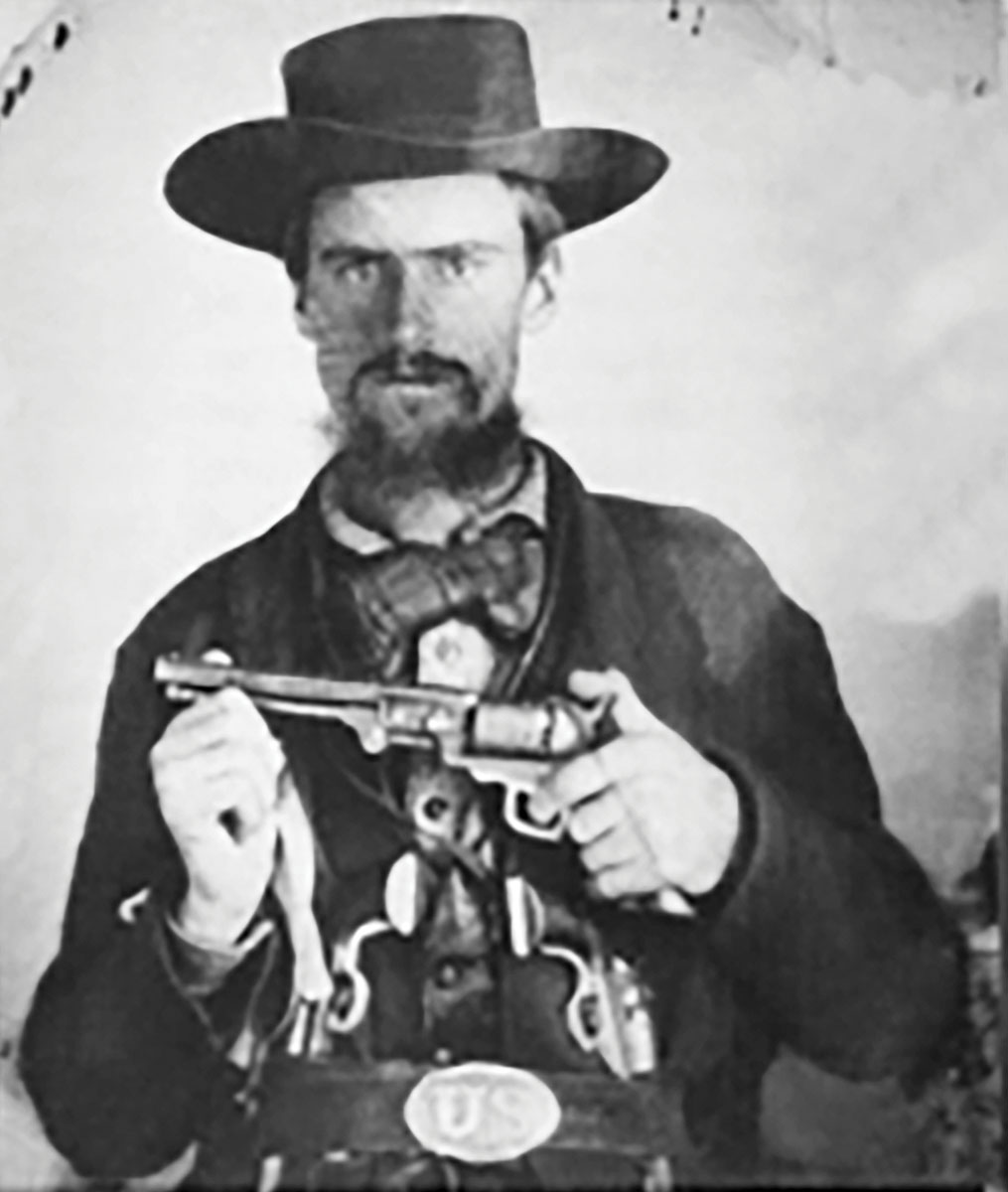
Then I moved the target to seven yards and reloaded, re-greased, properly pinched and re-capped.
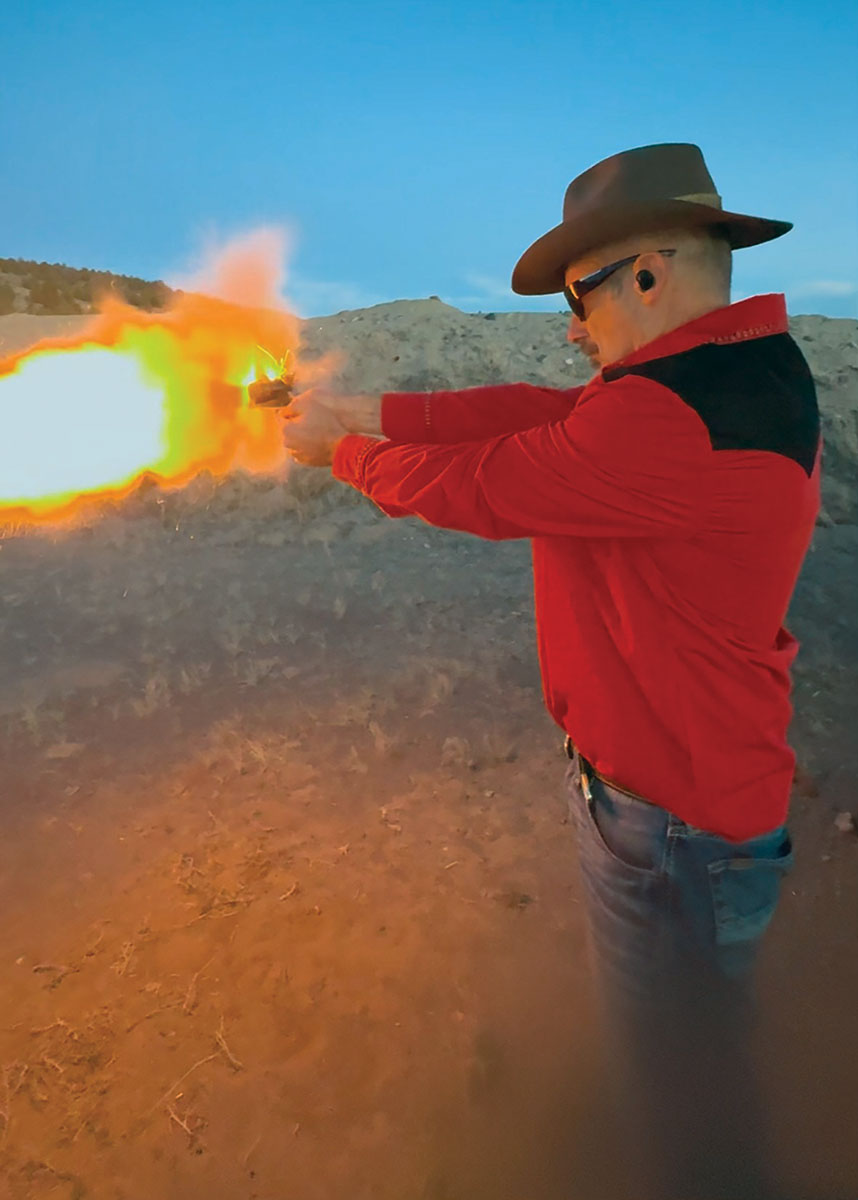
Standing, with a two-hand hold, I put two rounds two inches over the bull. On the third shot, the gun snapped. Then a fragment lodged between the hammer notch and the cylinder wall on the next rotation.
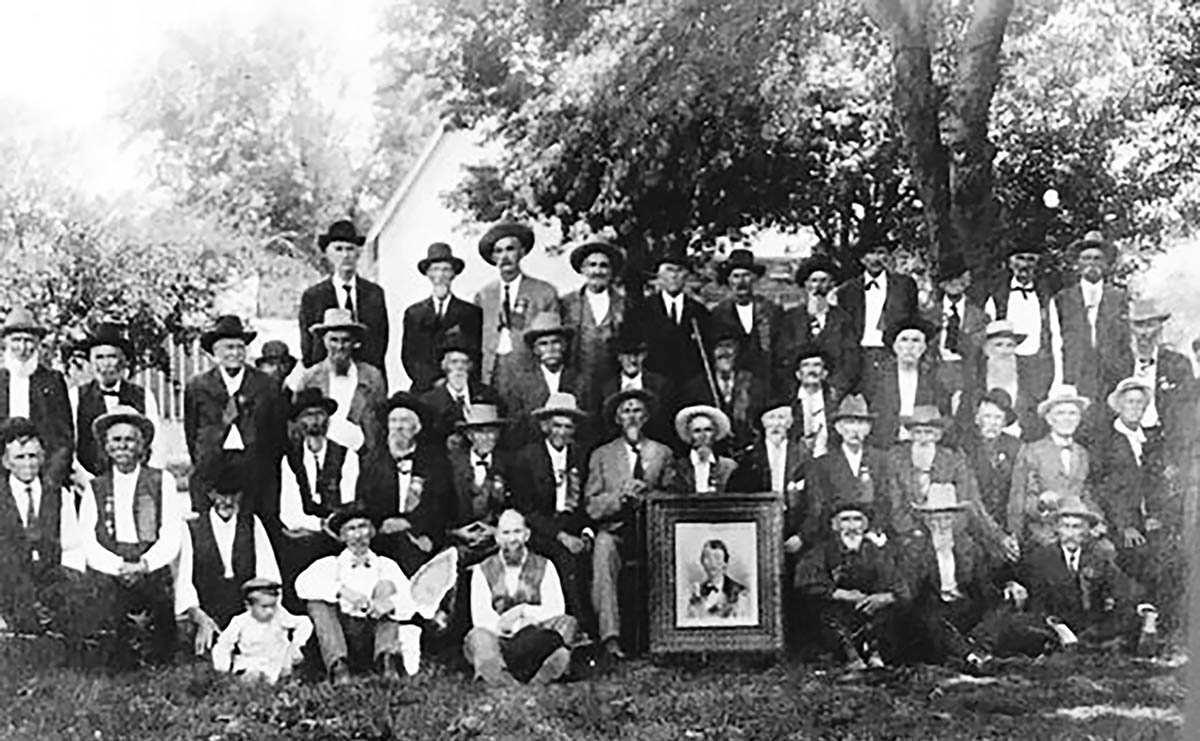
Still, given a good horse, a surprise attack and a half-dozen Colts, a bushwhacker had the advantage when his guns were blazing. When they quit, he could only wheel out of the fight to change cylinders, or dash away to Texas.