

Walnut Hill
Handgun Tales
feature By: Terry Wieland | May, 26
After 15 years writing for Rifle magazine, our mission has expanded to include handguns. This is welcome because my interest in revolvers, semiautomatics, target and dueling pistols is at least equal to rifles and shotguns.
As with rifles, however, that interest is more directed to fine guns from the past than to the latest in synthetics. Which is okay, because most other writers, it seems, want only what’s new, and that divides up the assignment nicely.
Over those 15 years, I’ve had correspondence with many readers and, while I haven’t exactly kept count, the bulk of my mail has related to an old rifle or an old cartridge. Over at the NRA, Garry James, former editor of Guns & Ammo and an antique arms expert, tells me reader interest in old guns outstrips anything else. Somewhat shamefacedly, magazine editors have said the same thing, much as they might prefer their readers to have a deep interest in and open checkbooks for whatever is the latest from advertisers who pay many of the bills.
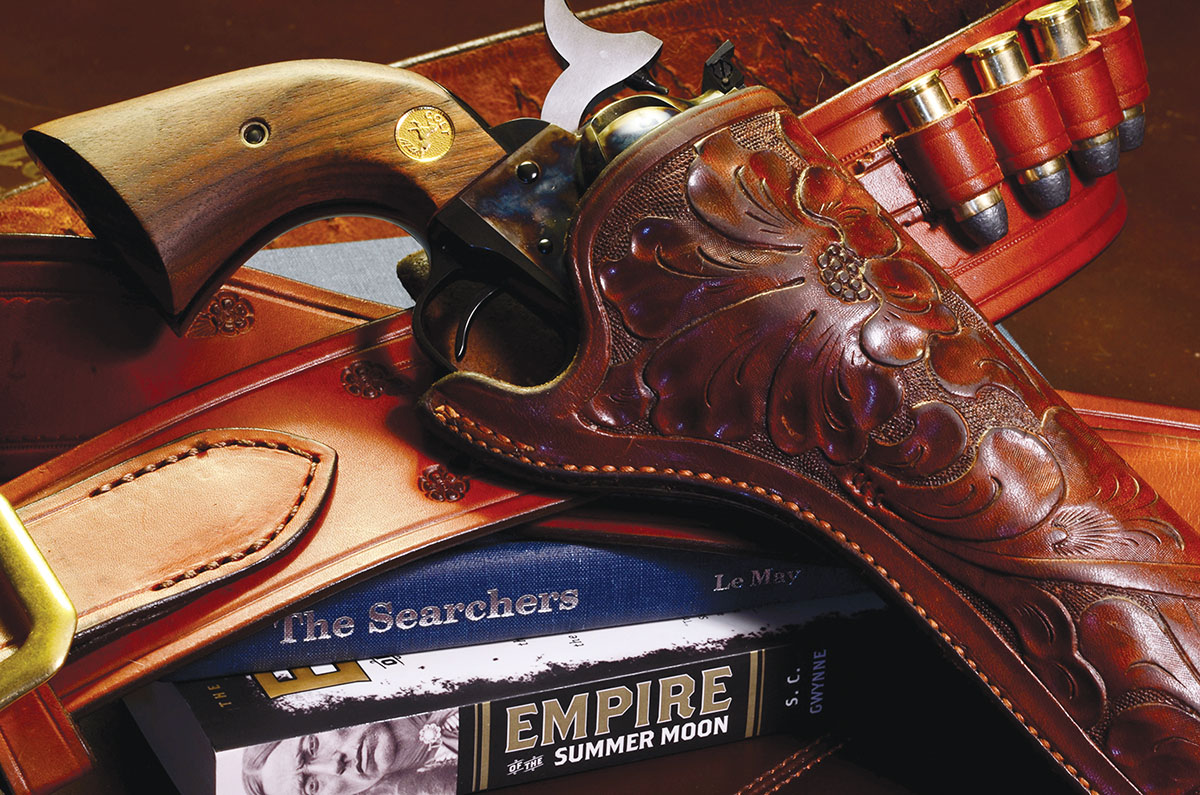
Based on this, I’m assuming our readers will be just as intrigued by a pre-war Peacemaker as they are by the latest Glock. Maybe more so.
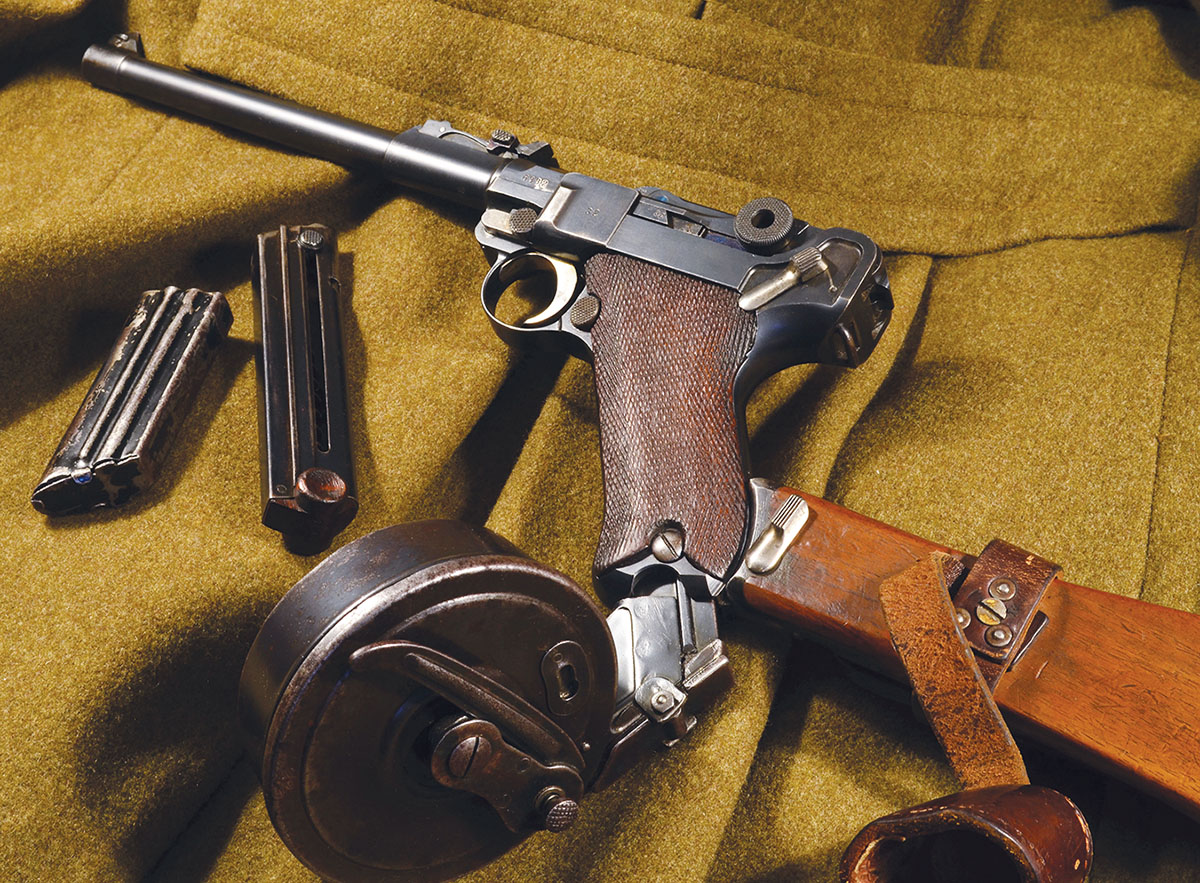
An antique arms dealer once wrote that the single most collected gun in the world was the German Luger, more even than the Colt Single Action Army (a.k.a., Peacemaker, etc.) Whether that’s still true, I can’t say, but both excite considerable interest when they come up for auction. Another highly desirable series is “the snakes:” Colt’s
Python, Cobra, Diamondback and so on. Speaking of Colt, the 1911 is right up there with thousands of dollars in value hinging on what company made it, and when and who used it.
But relative values come and go. Right now, anything American military, relating to the Second World War, Korea, or Vietnam, brings big bucks, and interest is increasing in artefacts from the Gulf War. Last December at Rock Island, an engraved, inscribed, and framed Desert Eagle presented to Gen. Norman Schwartzkopf was expected to go for $3,000 to $5,000. When the hammer came down, it brought $152,750. As I say, increasing interest.
The point of all this is that old handguns are far from passé.
You would have to look a long way to find even a modest collection of guns that does not include at least one Peacemaker, 1911, Luger or Walther P-38 that granddad brought back from the war. The owner’s interest may extend no further than that, or it could include the elusive “collector value” (which may or may not exist for many of these, but be careful when you tell them that). A few may want to shoot the old girl, and a handful may even do so on a regular basis in Cowboy Action or specialty matches for old guns.
We may not like to admit it, but there is an element of Walter Mitty in all gun collectors. When I pick up a Holland & Holland double rifle, I think Jim Corbett; a Webley-Fosbery, it’s Sam Spade; Philip Marlowe carried a Luger; a Peacemaker, well, probably Steve McQueen in The Magnificent Seven. I think that streak in us accounts for much of the fascination with guns and the history they represent.
Many newer combat simulation games, like IPSC and Cowboy Action, either use handguns exclusively or include them as part of a required battery. We should not forget, either, the wave of interest in concealed carry, which has been growing for the past 30 years and really took off during the pandemic.
At a guess, I’d bet that right now there’s more interest in handguns among the American public than either rifles or shotguns.
As a Canadian, I was severely restricted in my exposure to handguns early in life, although my interest – and I’ve traced this back carefully – began at the age of four with a water pistol patterned after the Luger. This progressed through another water pistol, a Colt Cobra lookalike, then a succession of single-action cap pistols, and finally a Daisy 200 that resembled the Colt Woodsman (sort of) and employed CO2 and BBs.
Like many of my generation, my parents and uncles fought in the war, and some brought back a few goodies. My father, in the Canadian Army, returned with a Browning Model 1922; an uncle, tailgunner in an RCAF Wellington bomber, was shot down, spent four years in a POW camp, and was released in early 1945 along with the other prisoners to make their way west through the snow, fleeing the Red Army. He found two dead German officers in a staff car by the side of the road, relieved one of his Langenhan, and it came to me as part of his gun collection.
We won’t go too deeply into the long-term effects of the plethora of westerns, both movies and TV, to which I was exposed as a child, but I’m certainly not alone in this affliction, not if the prices paid at auction for anything western are anything to go by. However, and this is a telling point, Westerns would have us believe that cowboys and cavalrymen used nothing but Colts, Winchesters and the odd Sharps. As a result, some great guns like the Smith & Wesson Schofield, the Remington revolver and Marlin lever guns bring much less.
Colts and Winchesters just have an aura, thanks largely to Hollywood. Regardless of its origin, though, the aura is definitely there. Even people who know little about guns know those names.
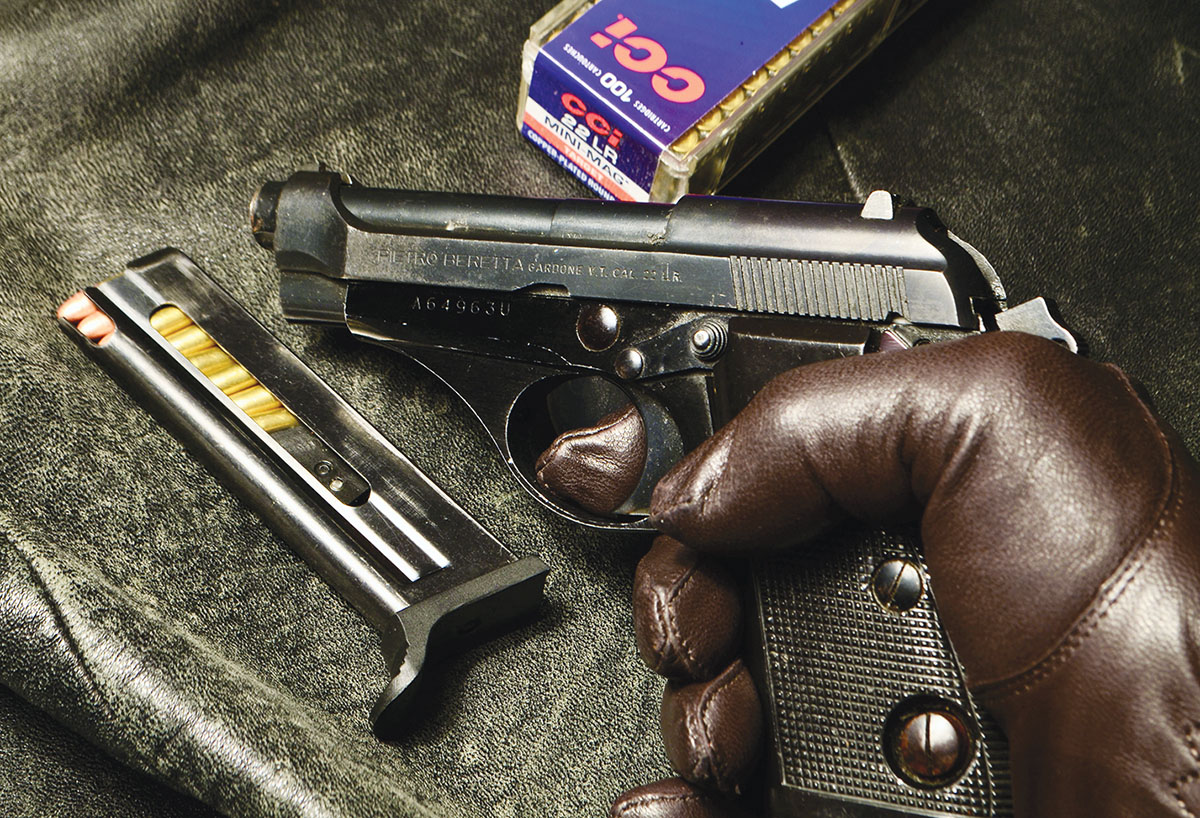
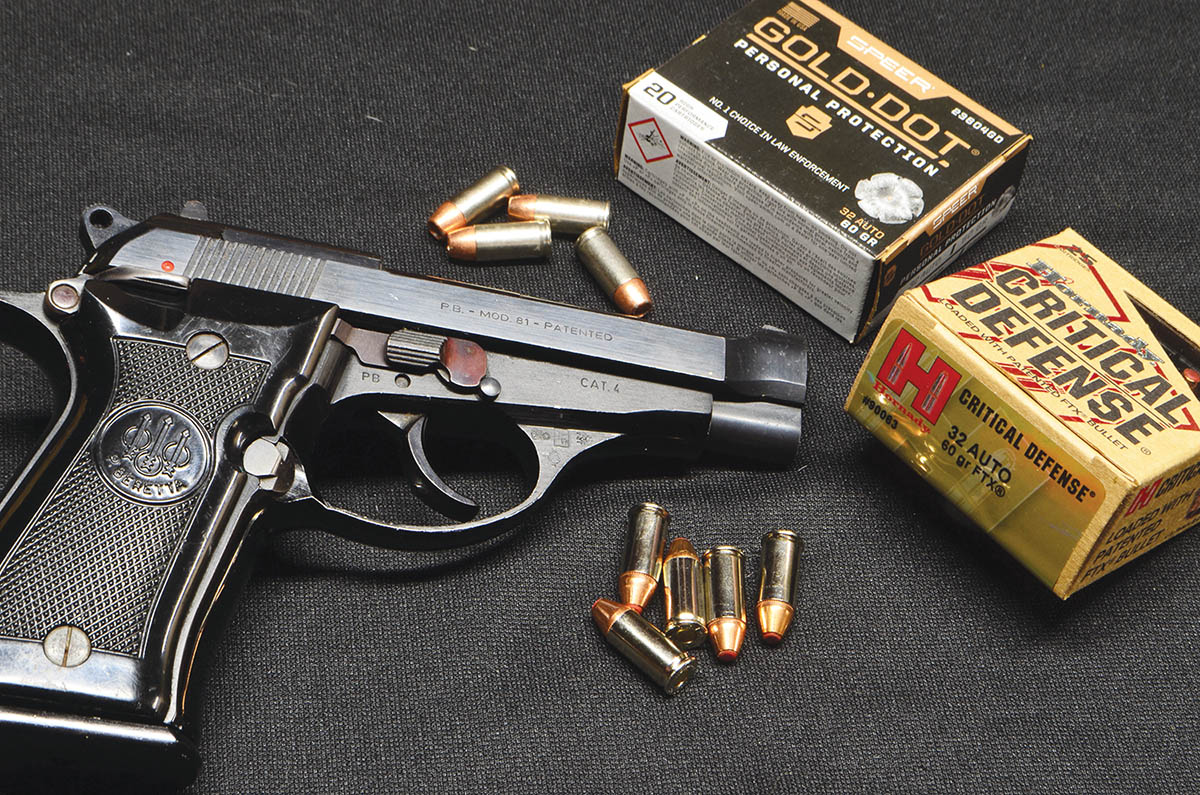
Do I have any favorites among the pistols of the last 150 years? Yes and no. At various times over the past half century, I have become enamored of Lugers, Walthers, Peacemakers, .22 target pistols old and new, S&W double actions, flintlock dueling pistols, the entire line from High Standard, the original Browning Challenger, a couple of individual Colt Woodsmen, the long line of smaller caliber Beretta semiautos, the Broomhandle Mauser (great gun!), the entire family of Colt percussion revolvers, starting with the Walker and ending with the 1860 Army and, for a while, the 1911.
About the only prominent handguns I haven’t had a fling with are the outlandish Montenegrin revolvers, the small-caliber Colt semiautomatics, and double-action Saturday Night Specials favored by ladies of the evening. Oh, wait a minute! There was one of those in my uncle’s collection, recovered from the bed of the Detroit River, and now in a drawer here somewhere.
If that is not a catholic education in the world of handguns, I’m not sure what is. Guns have come and gone (but mostly come), and I have at least one of every single type mentioned above, as well as a few that are not.
Not surprisingly, many of the older guns were chambered for obsolete cartridges with no factory ammunition, and sometimes not even brass, available. Since I have little interest in any gun I can’t shoot, handloading became a necessity sometimes simply for availability, other times for economic reasons.
Thirty-five years ago, I took up IPSC shooting in Canada, which required a four-day course and a rather demanding practical examination lasting another full day. We needed 300 rounds a day. Since I was competing with a S&W Mountain Gun, using 44 Special, it was handload or go home.
All the others in my group (which included folk singer Bruce Cockburn, “anti-war but not anti-gun”) were using 1911s, for which commercial reworked ammunition was available by the bushel. My reasoning behind the revolver was a little unusual. Two years earlier, I’d had a close call with a brown bear in Alaska and was determined, should I go back, to have a suitable handgun on my belt, and IPSC seemed like a good way to really learn to use it.
It raised a few eyebrows, but I succeeded in my goal in competition, which was never to finish dead last against all those semiautomatics, and I never did. Why? Because in every match, at least one 1911 would jam or malfunction. The S&W revolver never did, and to this day, it feels like an extension of my arm. If I favor a revolver in critical situations, now you know why.