

The All-American .25
One of the Best, and It’s (Almost) All Ours
feature By: Terry Wieland | May, 26
In my favorite J.M. Pyne story, The Madman of Gaylords Corner, author Lucian Cary arms his fictional protagonist with a .25-caliber single-shot rifle. When it’s noted that no company made such a rifle in the 1880s, Pyne replies that he made it himself.
Because Pyne was a thinly disguised Harry Pope, the famous barrelmaker, and Cary a highly respected writer, many have come to believe Pope originated the .25-caliber cartridge. He did not. The first .25-caliber centerfire was the 25-20 Single Shot, introduced by F.J. Rabbeth of the Walnut Hill shooting club around 1887.
The 25-20 SS is largely forgotten today, except for a few oddballs, like your correspondent, who possess a rifle or two of ancient vintage and undoubted charms, and go to considerable trouble to keep them shooting. Where the cartridge does have a legitimate claim to fame, however, is as the progenitor of a whole family of cartridges, the 25s, a family that’s distinctly American.
To the best of my knowledge, no other shooting nation has ever made a .25-caliber that left a mark. (England’s 256 Gibbs Magnum is actually a 6.5mm.) Purdey, Holland & Holland, W.J. Jeffery and Kynoch all made half-hearted attempts at one, with bullets ranging in diameter from .249 to .255, but that was long ago, few were made, and even
fewer are ever seen today. In 60 years of studying this stuff, I have yet to come across one.
That leaves America as the home, physical and spiritual, of the quarter-inch cartridge. It’s a family with a long and distinguished history and includes some truly outstanding performers along with more than a few ne’er-do-wells. But then, what family doesn’t? Ford created the Mustang, but it also created the Pinto.
Not to keep you hanging, what were the stars? Without question, the 25-20 Winchester (1895), 250-3000 (a.k.a. 250 Savage, 1915), 25-06 (1969) and 257 Weatherby Magnum (1944) lead the list: The first for longevity and general usefulness, the second because it was the home-run king for years, the third because everyone loves it, and the last because it’s never been surpassed as a hard-hitting long-range hunting rifle.
Of the uncontested duds, well, mostly uncontested, we have the 25 Remington (1906), 256 Winchester Magnum (1961) and 25 WSSM (2005). Each failed for reasons sufficient unto the time, and each can claim a few virtues that
were obviously unappreciated, but sometimes one must be harsh.
In between, a couple of notables will raise some eyebrows. Why not the 25-35? Because it doesn’t really fit anywhere, doesn’t do anything others don’t do better and was never widely accepted. Then there’s the 257 Roberts, whose cult of admirers included Col. Townsend Whelen. Hard to argue with him, but in a review of the 25s in the 1980s, rifle expert Jim Carmichel summed up the Roberts best: “It’s a has-been that never was.”
When I began this article, I tried to count all the 25s that have been offered in this country since 1887, and quickly lost count. Cartridges of the World lists more, it seems, with each new edition, as someone unearths an old rifle in a heretofore unsuspected caliber, or a wildcatter persuades a riflemaker (large or small) to chamber his masterpiece and it joins the ranks of the “factory” cartridges.
But let’s look at our established stars, one by one.
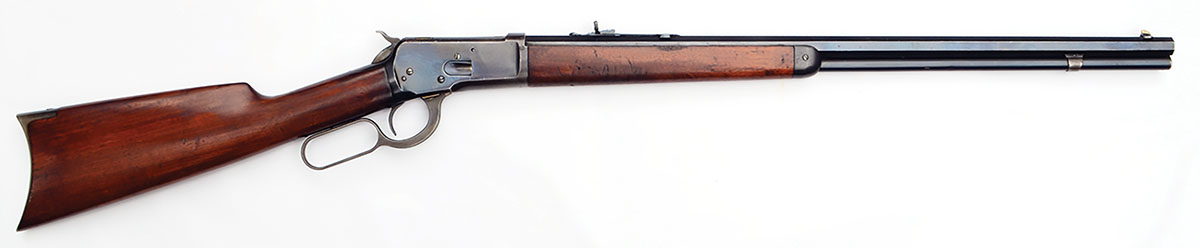
The 25-20 Winchester was so named because Winchester’s usual WCF (Winchester Center Fire) had already
been applied to the 25 WCF (25-35) in the Model 1894. There is some confusion here, but let’s go with that explanation.
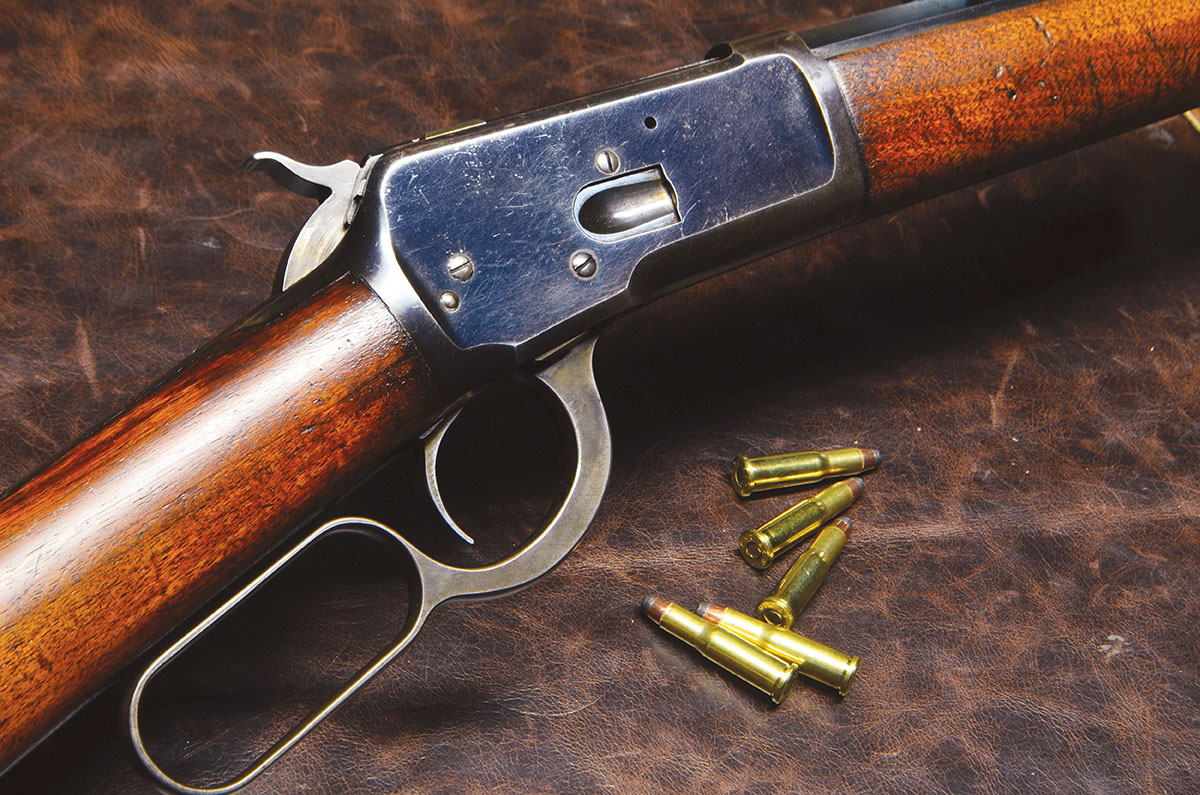
When the 25-20 came along, smokeless powder and jacketed hunting bullets were in their early stages, and the relationship among velocity, bullet weight and penetration were not well known. That’s the best I can come up with to explain why James Jordan set out deer hunting one morning in November 1914 in Wisconsin, carrying a Model 92 in 25-20, which fired an 86-grain bullet at 1,460 feet per second (fps).
That day, the 25-20 achieved immortality by killing the fabulous Jordan Buck, long-time number one in the record book, still the number one typical and, for my money, the most beautiful whitetail ever taken.
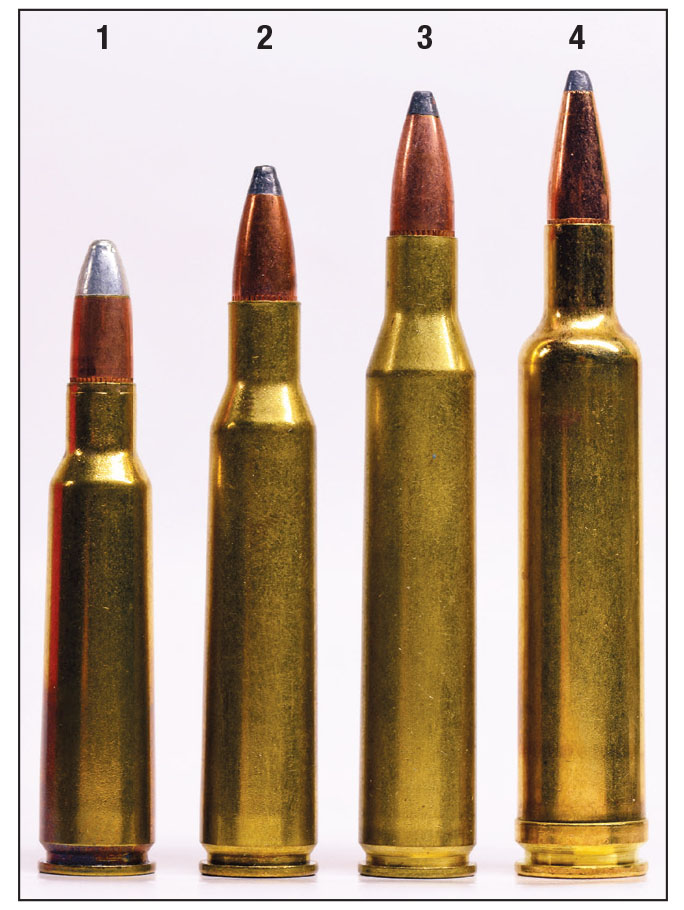
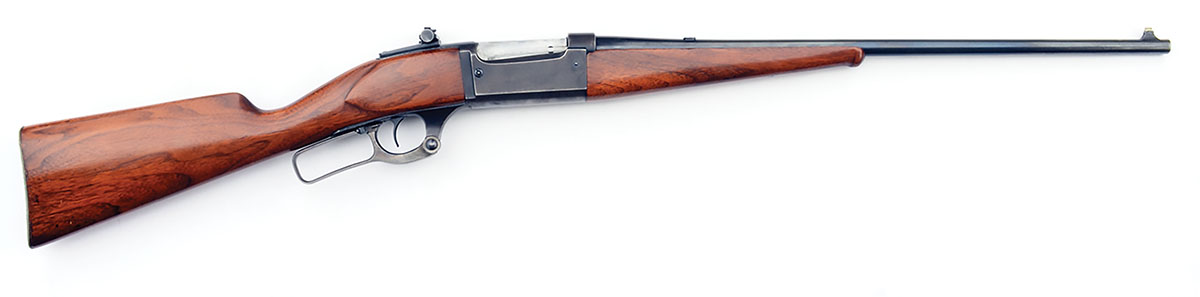
Next up is the 250-3000 (its original designation), now more commonly known as the 250 Savage. Designed for Savage by Charles Newton, it was the first American factory cartridge to achieve the goal of 3,000 fps and it did so with an 87-grain bullet. Chambered in the wonderful Savage Model 1899, the 250 became legendary.
As usual, Savage made some bizarre claims for it, but it did accompany Roy Chapman Andrews in his Asian explorations. Andrews served as the model for Indiana Jones; he reportedly killed a tiger or two with it and at least one armed brigand, along with scores of specimens for the Museum of Natural History. Through the twenties, hunting deer anywhere in North America with a 99 in 250 marked you as a serious, and probably very accomplished, hunter.
The 250 Savage was accompanied by controversy, with many believing its 87-grain bullet just too light regardless of velocity. Newton himself had recommended a 100-grain bullet. With this in mind, Ned Roberts set out to design something more powerful, and the 257 Roberts was the result. It was the 7x57 necked down and, while it achieved some fame, and gained some fans, it never made the splash he was hoping for.
Meanwhile, riflemaker A.O. Niedner had gone even further in the 1920s, necking down the 30-06. The 25-06 surpassed the Roberts in every way, and was a popular wildcat until Remington adopted it in 1969. Once it was available in the Model 700, it simply took off. By the year 2000, however, it was so widely used that many were dismissing it as boring. (Marilyn Monroe was widely popular. Was she ever boring? Methinks not.)
In the midst of this, around 1944, a ballistician and wildcatter in Kansas by the name of Roy Weatherby set out to outdo them all. He took the belted 375 H&H case, shortened it, necked it down to .257, blew it out to have near-straight walls and a double-radius shoulder and called it the 257 Weatherby.
Even with the powders available at the time, the 257 Weatherby was fabulous, launching a 115-grain bullet at 3,200 fps, a 100-grain at 3,500 fps, and an 87-grain at 3,850 fps. (These velocities are approximate, but you get the idea.)
Weatherby’s cartridge left every other .257 in the shade, and there they remained. It’s claimed the 257 was Roy Weatherby’s favorite of all his creations, although others say it was the 270. He took both to Africa, shot a lot with them, and generally made some truly outlandish claims both for their performance and the effectiveness of sheer velocity.
“It was not necessary,” he stated in an early Gun Digest (1951) article, to hit an animal anywhere vital to drop it. “A hit in the ham, the ribs, the paunch, or the shoulder” would do the trick.
Such claims for pet cartridges are nothing new, dating back to the 1850s, when James Purdey developed the “express” concept, light bullet, high velocity and continuing into today. Such claims aside, however, the 257 Weatherby is an extraordinary cartridge, capable of performance out of all proportions. It’s very large, but it demands a lot in terms of bullet weight and construction, and sufficient barrel length, to realize its potential.
Too often, the merits of cartridges are debated as if those factors simply don’t matter. They do, and to a great degree, are what set one rifle apart from another.
A 257 Weatherby with a barrel shorter than 26 inches is not going to perform well. A 25-06 gets by nicely with a 24-inch barrel in a lighter rifle, the 250 Savage is ideal at 22-inch barrel and the 25-20 as short as 20 inches.
As for range, the Weatherby is comfortable at 350 yards and the 25-20 at 125 maximum. The other two lie in between. In those terms, we can assign each to a particular class of rifle, for different styles of hunting.
Load a 257 Weatherby with a premium hunting bullet like a Swift A-Frame 120-grain, and I’ll take it elk hunting anytime. It won’t achieve Weatherby’s ideal of 3,500 fps, but it will hold together, penetrate, expand and deliver a dead elk.
For anything smaller, especially long-range speedsters like pronghorn, I don’t believe a better cartridge has ever been designed.
And the failures?

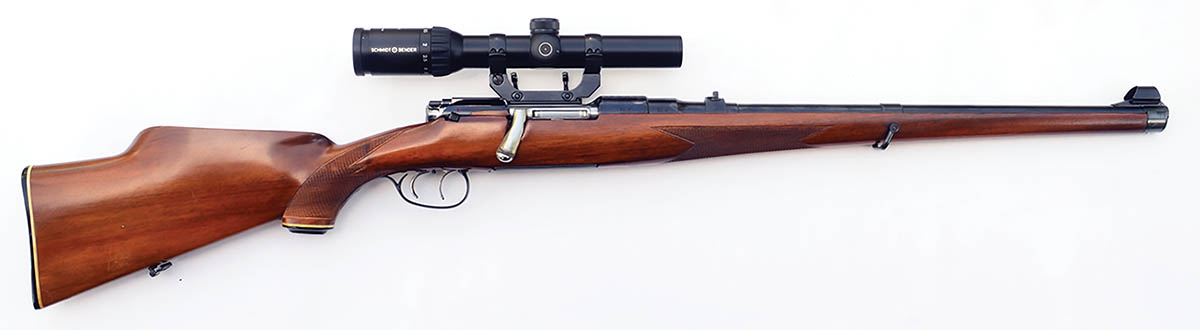
The obvious ones are the 25-35, 257 Roberts and 25 WSSM. The first had no real place, not enough oomph for big game, not enough accuracy for varmints, limited to blunt bullets because of the tubular magazine. The Roberts was really more of the same but in different ways. For much of its life it was a wildcat when custom rifles were mostly built on Mauser 98 actions, which would handle the more powerful 25-06 with ease. Once the 25-06 became factory, it was lights out. As Carmichel said, a has-been that never was.
The 25 WSSM came along in the welter of so-called “short magnums” 20 years ago. Its claim to fame was that it duplicated 25-06 ballistics but fit into an action a half-inch shorter. Underwhelming? The numbers tell the story, and making it feed was a nightmare, or so I’ve been told. It was one of the first of the breed to fall by the wayside.
It’s possible to outdo the 257 Weatherby and it was tried by necking down the full-length 300 H&H case and blowing it out. The problem is, now you need a magnum-length action, the slowest of slow-burning powders, and an even longer barrel, if you can find one, to make it all work. The result is a long, heavy rifle more suitable to sitting in a stand than carrying over the plains.
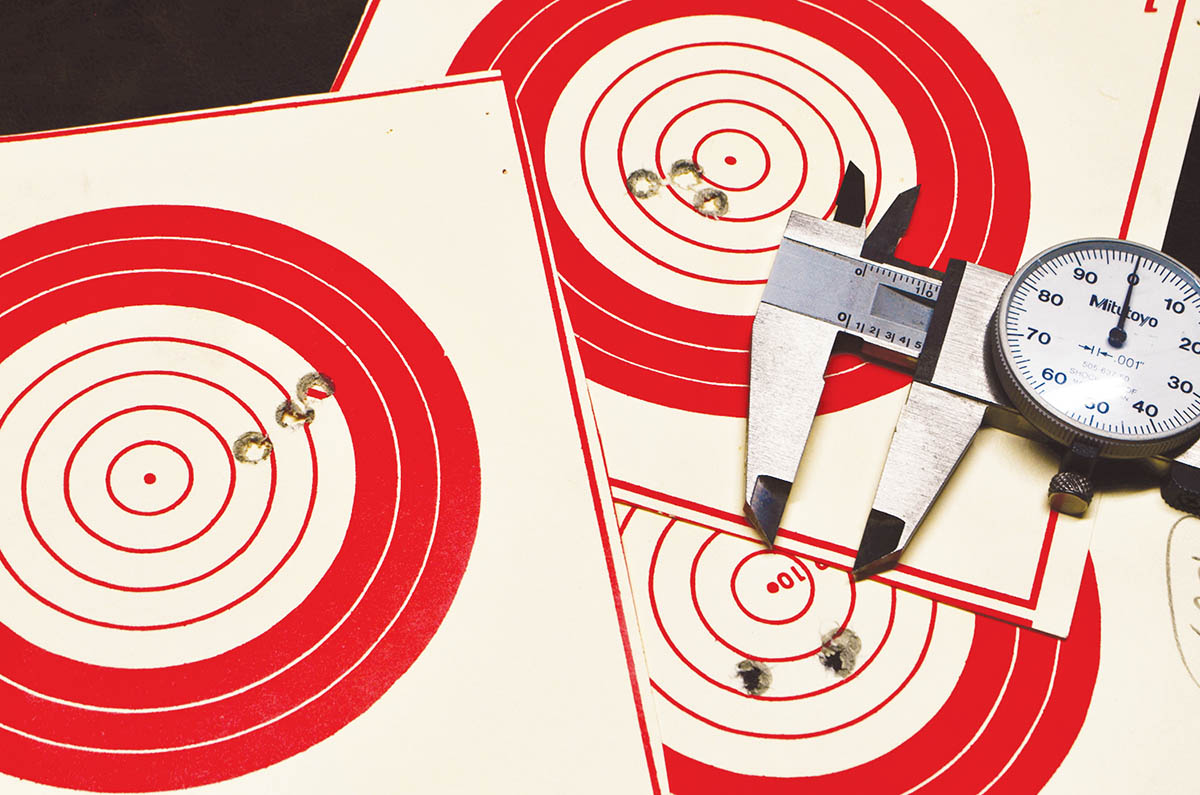
The Weatherby pushes the usability, practicality and comfort envelope without bursting through. In my life, I’ve owned three 257s: a Weatherby Safari Grade, a custom Kenny Jarrett rifle built on a Winchester Model 70 action and another Weatherby Mark V. All have delivered accuracy ranging from excellent to astonishing. When I received the first rifle, in 1989, I took it to the range and, out of the box with factory 100-grain ammunition, shot a five-shot group that measured .60 inches. Out of the box!
My Jarrett does slightly better with carefully developed handloads. It’s not as pretty as the safari grade, but I can stand the deprivation.
Recently, I’ve mentioned the 250 Savage to several folks who had never heard of it, which is a shame because it was, and is, a great little cartridge. Very likely, had it never existed, there would never have been a 270 Winchester. When the 270 came along in 1925, the 250 was the one to beat.
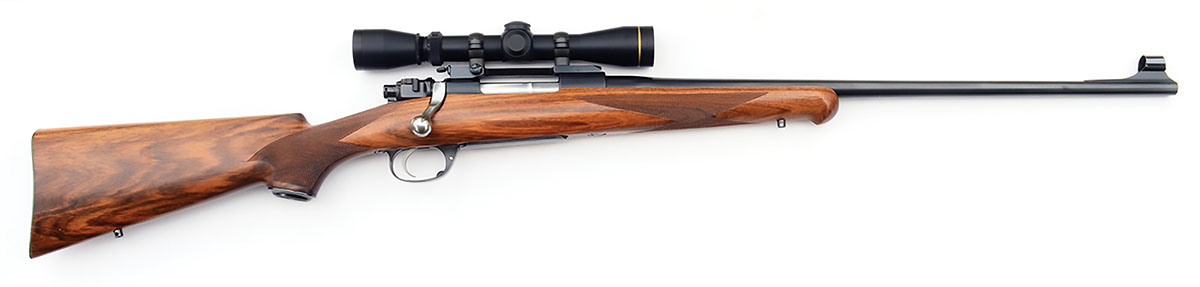
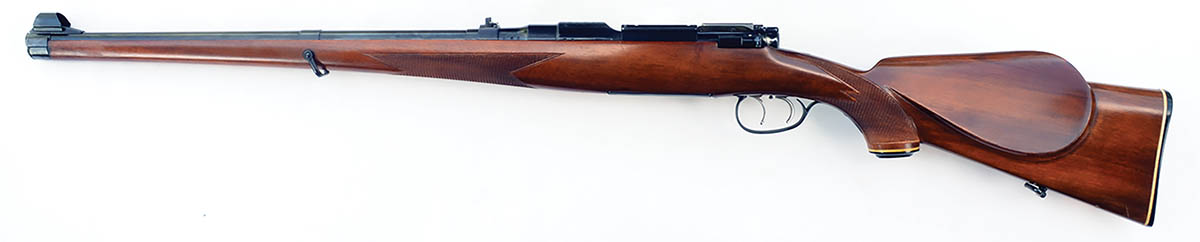
It can still outshine the 270 in one way, and that’s in a handier rifle with a shorter barrel – my Savage 99E springs to mind, suitable for prowling woods and creek bottoms. It also makes up into a delightful custom bolt rifle, built on a shorter bolt action like the Kurz Mauser. Kills ’em dead, without killing you dead, too. I used mine on an aoudad in Texas ten years back. A shot through the heart at 280 yards, and that was that, except for wrestling the goat down that life-threatening mountain.
Is the .25 caliber dead, smothered by various 6.5mm wunderkind and the current rage for long bullets and fast twists?
Apparently not. Hornady has necked down the justly famous 6.5 Creedmoor to .257, and just as I began writing this, word came of a new 25-caliber from Weatherby: The 25 RPM will fire a 133-grain Berger bullet at 3,000 fps, with a 1:7.5 twist. Essentially, an updated 257 Weatherby.
Welcome to the family. Glad to have you.