

Mostly Long Guns
6.5 and 25 Weatherby Rebated Precision Magnums
column By: Brian Pearce | May, 26
As a young boy, I was exposed to the virtues of the 264 Winchester Magnum when dad allowed friends of movie actor Lorne Greene to hunt our ranch for deer and antelope. Dad was busy running the sprawling ranch and assigned me to guide them to the areas where they could take their game. A task I was elated to do! I was impressed by the huge ball of fire at the muzzle and while my understanding of ballistics was very limited, I knew that fire breathing dragon of a cartridge was fast. Period listed velocities rated 100-grain bullets around 3,700 feet per second (fps), gave a laser-like trajectory and anchored deer and antelope reliably.
Eventually, I was old enough to obtain my own 264, and in spite of its nuances and technical shortcomings, it was a good hunting cartridge and it was fun to shoot due to its modest recoil and unusually flat trajectory. In the years since, I have tried many other 6.5s, including the wildcat 6.5mm-06, 6.5 Remington Magnum, 6.5x55mm Swedish (even taking two moose with that cartridge) and the 6.5-284 wildcat that eventually became a Norma introduction. The latter offered greater accuracy, longer barrel life and other virtues when compared to the 264, but a bit more velocity was desired. When the 260 Remington was introduced around 1997, I saw its potential as a great cartridge, but in the U.S. at that time, 6.5s were not generally popular, and unfortunately, it only enjoyed modest success. I still wanted something with higher velocity that would take advantage of the many sleek, long-range 6.5mm/.264-inch bullets.
When Hornady designed the 6.5 Creedmoor in 2007 (formally announced in 2008), it received very little press and sales were dismal, but over the next few years, when it began delivering outstanding results across target ranges, its popularity soared. It offered benchrest-type accuracy, long barrel life, outstanding efficiency and other virtues. Many began using it to hunt deer with good results. However, I lived and hunted in the west and wanted a modern 6.5 that offered higher velocity and flatter trajectory while producing similar accuracy as the Creedmoor. In short, I wanted a modern 264 cartridge for hunting mule deer, antelope and other game where shots can be long, and cartridge performance (trajectory, accuracy, and power) really matters.
While using lever-action rifles on an enjoyable antelope hunt with Hornady’s Dave Emary (the primary designer of the 6.5 Creedmoor), I discussed the need for a truly modern 6.5 specifically for hunters. We talked about ballistics and details at length, and why the 6.5-284 and 264 would never grow further in popularity. Dave knew it was a great idea, but it would need to be discussed and approved with various people at Hornady before it could become a reality.
If memory serves me correctly, Hornady announced the 6.5 Precision Rifle Cartridge (PRC) in 2018, which offers ballistics and performance much like what I envisioned. However, to be clear, I take zero credit for its design; rather, I just identified the need and encouraged Hornady to consider such a cartridge.
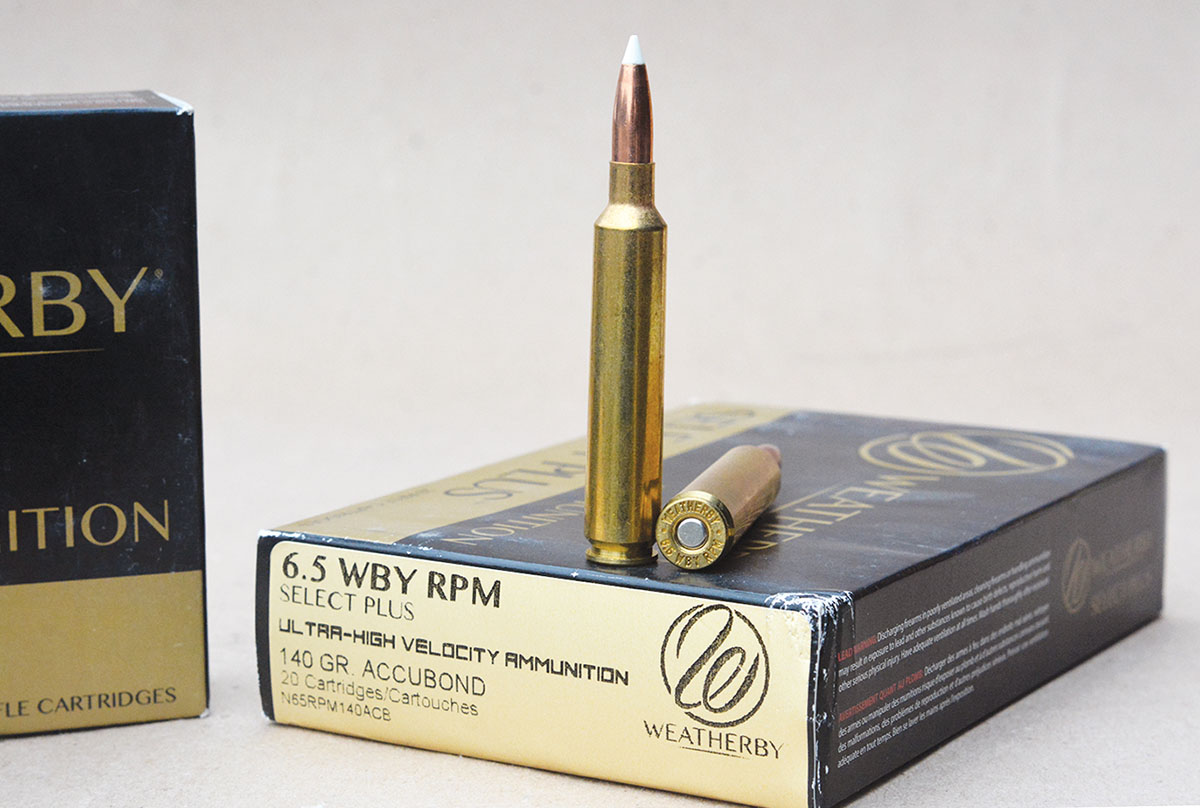
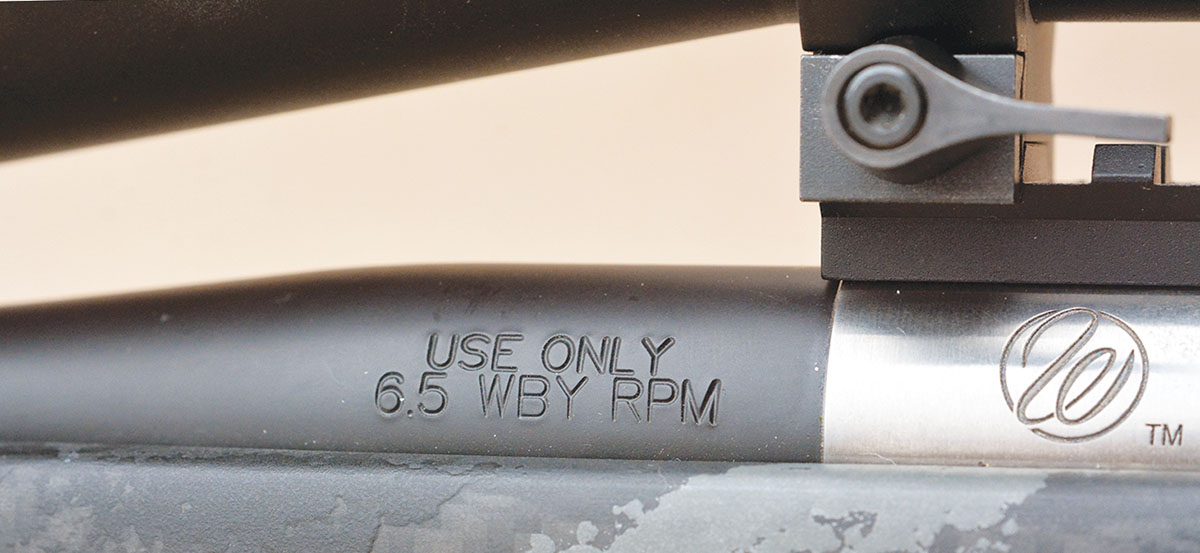
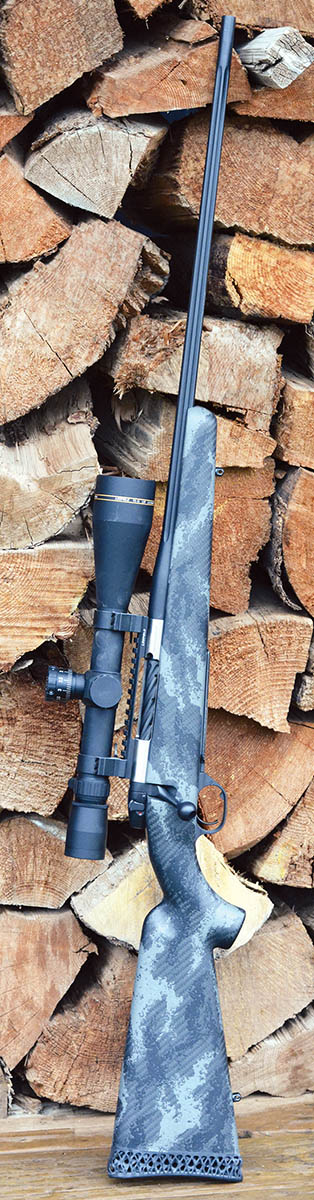
Weatherby introduced the 6.5 Rebated Precision Magnum (RPM is a catchy name) a year or so later (2019), which shared similar ballistics to the 6.5 PRC. However, it definitely has a velocity edge of at least 100 fps with identical bullets. The PRC had a significant head start and soon gained huge acceptance among hunters. Again, I take zero credit for the RPM’s design; rather, I just encouraged Weatherby to fill the cartridge void.
Recently, I was having a conversation with an old friend who said all of his hunting friends are now using rifles chambered for 6.5 PRC. He stated, “Even though I really like that round, I don’t want to buy one because everyone else has one!” So, I suggested that he consider the 6.5 RPM as a great substitute and noted that he would also pick up a bit more velocity. He said, “A what?” I explained what the RPM was,and he enthusiastically took my advice. Two weeks later, he contacted me for load data and told me how happy he was with his new Weatherby Mark V chambered in 6.5 RPM. Factory loads were giving groups of well under one inch, and his handloads were soon giving similar
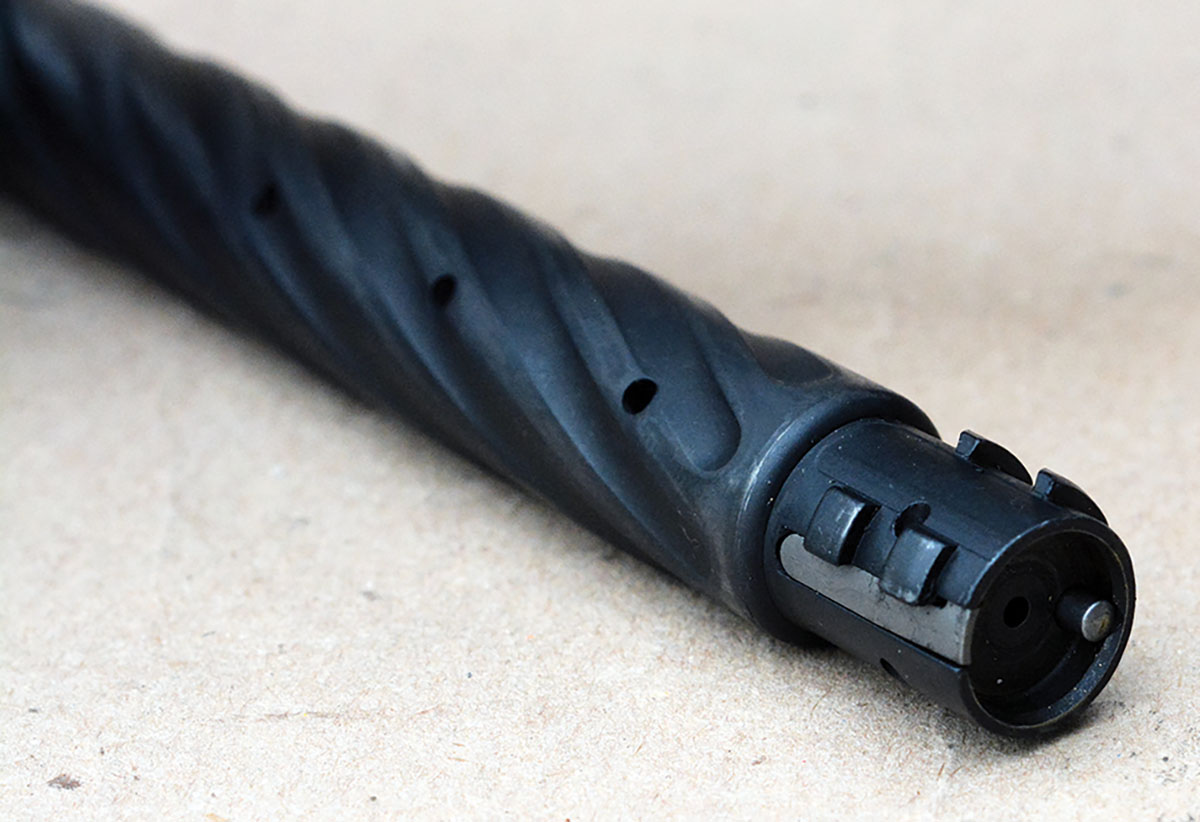
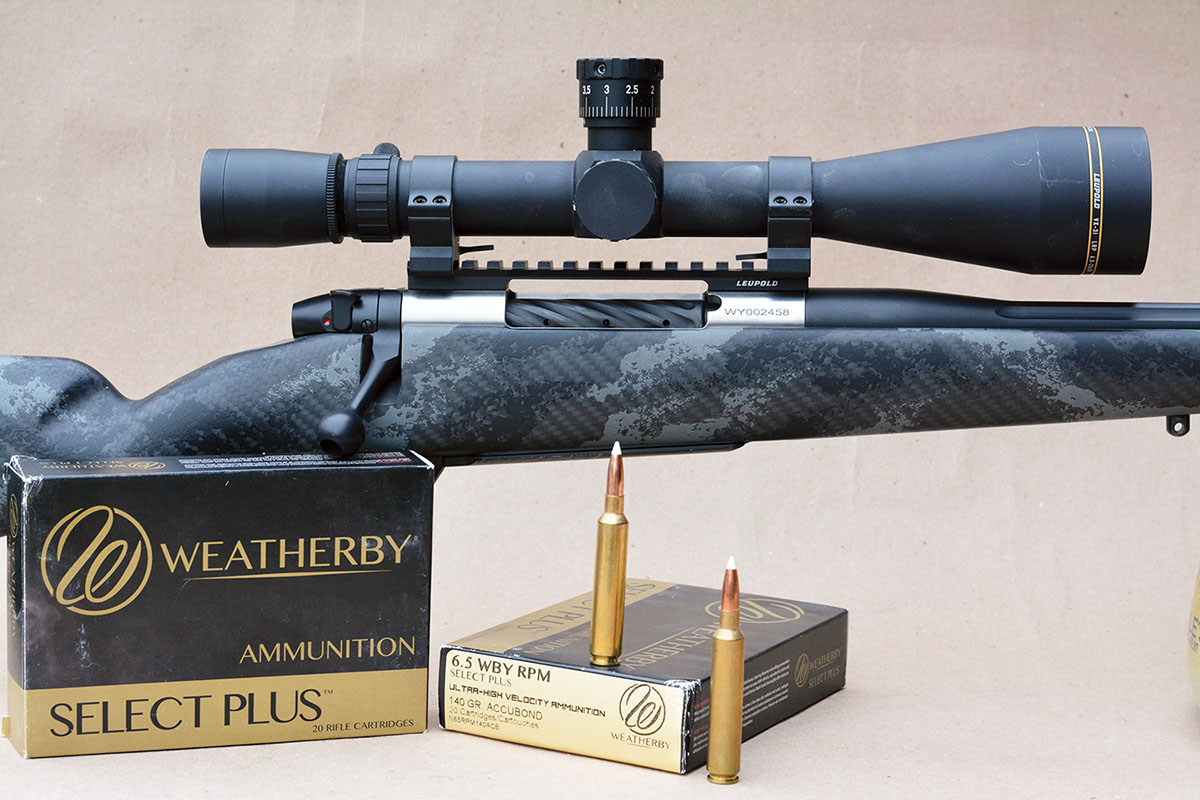
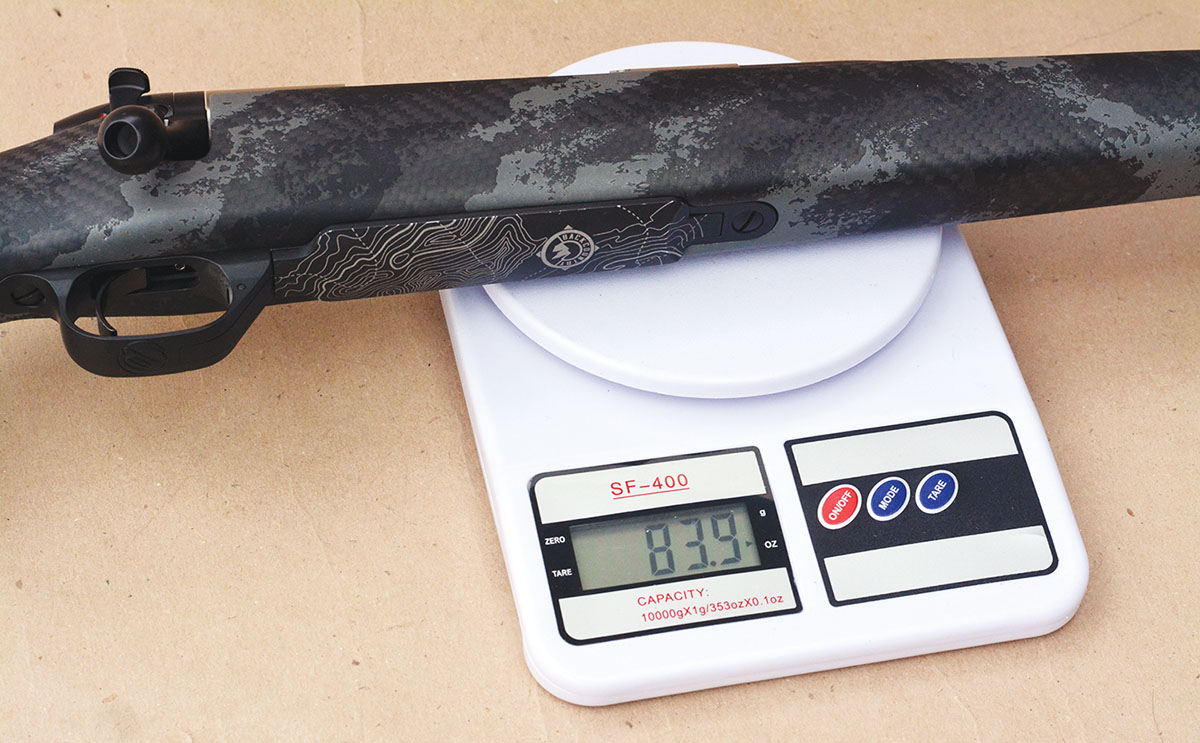
Weatherby offers the 6.5 RPM in a huge number of 6-lug Mark V rifles that include a variety of synthetic stock configurations for virtually any shooting style or position. For the traditional rifleman, it is available with a walnut stock for eye appeal that no synthetic stock can match.Traditionally, the Mark V has been a 9-lug action, houses large cartridges up to the big 460 Weatherby Magnum,and offers significant strength. However, the 6-lug version is likewise very strong, but the receiver and bolt are notably smaller in diameter, resulting in significant weight reduction. For those that want a super light factory-built rifle, the Mark V Backcountry Ti runs around 5 pounds with a 24-inch barrel.
With the new rebated case, Weatherby announced the 338 RPM(in 2022), capable of pushing a 185-grain Barnes Triple Shock X bullet to 3,100 fps or several 225-grain bullets to around 2,800 fps. This has already proven a great cartridge on moose, elk and brown bear and is available in rifle and carbine length 6-lug Mark V rifles.
New for 2026 is the 25 Weatherby RPM that features a fast 1:7.5-inch barrel twist to stabilize heavy-for-caliber bullets. Overall cartridge length is 3.340 inches, it pushes the 133-grain Berger Elite Hunter bullet (with a G1 BC of .613) at 3,000 fps! It is also factory-loaded with the 117-grain Barnes LRX (.530 BC) and 117-grain Hornady SST (.390 BC), each listed at 3,150 fps. Another very interesting factory load that is reaching 3,350 fps is the 107-grain Hammer HBC Custom (with a .510 BC).
I have not had a chance to work with the 25 RPM yet, but I will soon do a complete review within these pages. Regardless, it sounds useful and fun to this hunter!
While I still find older cartridges interesting and useful, it is exciting to see modern and improved versions offered.