

Smith & Wesson Model 16-4
A Masterpiece by Any Other Name
feature By: Terry Wieland | July, 26
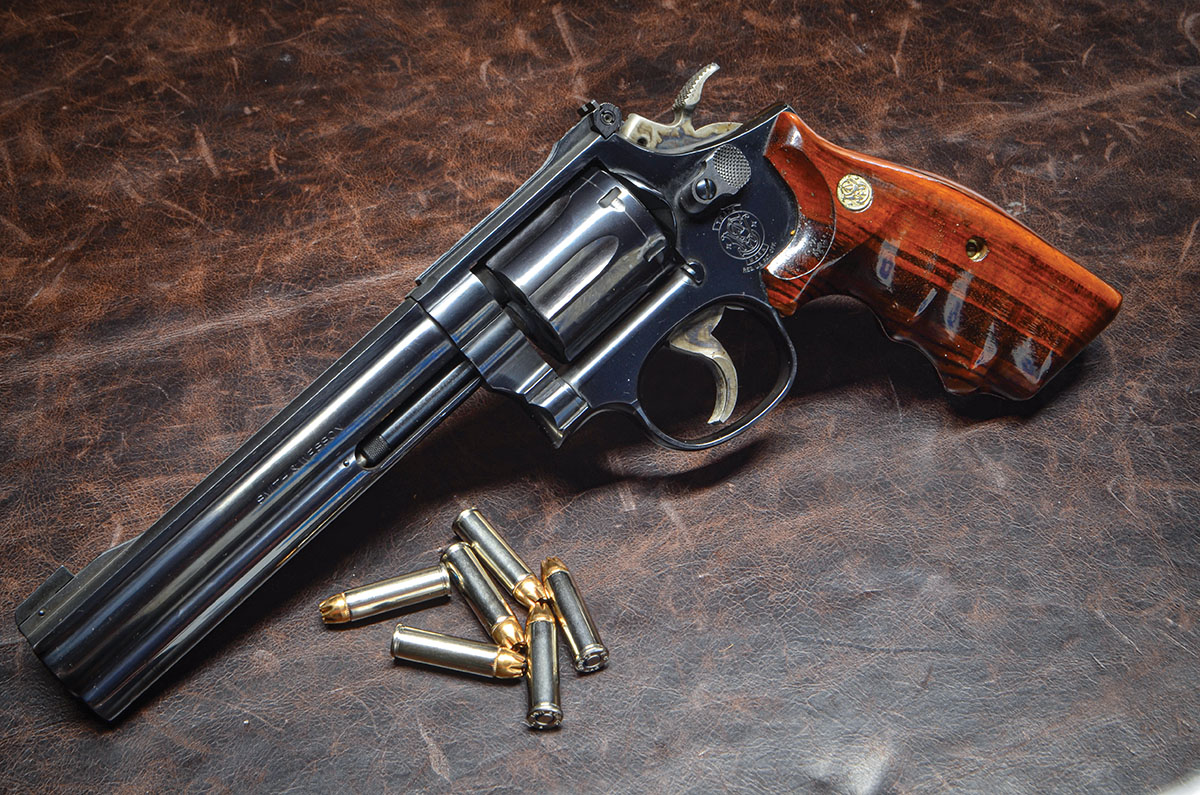
In the case of the 32 H&R mentioned above, however, had you gulped, grabbed your checkbook, and made it down to the gun shop to pick one up back in 1990, you would have made an excellent investment as well as acquiring a target revolver that was outstanding by the standards of the time, and still is.
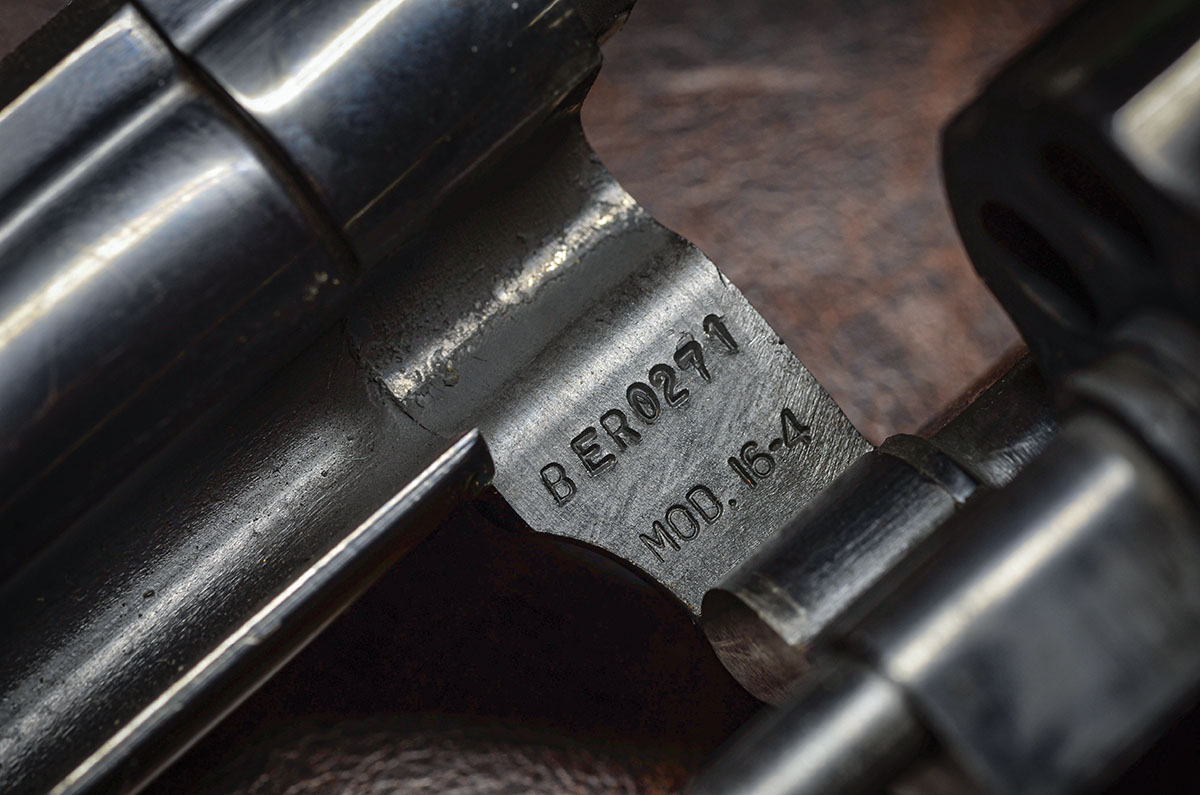
The gun in question is a Smith & Wesson (S&W) Model 16-4, produced only from 1989 to 1992, with total production estimated at 8,800. The list price in 1990 was $403. When they come up for auction, depending on configuration and condition, they usually bring in the neighborhood of $2,500.
In every respect, the 16-4 suffered. Even in its most common configuration as a target revolver, it did not gain the respect it deserved. Possibly because traditional Bullseye shooting, which required a highly accurate centerfire with minimal recoil, natural turf for the 16-4, was being shouldered aside in the public imagination by various practical-pistol disciplines. Practical pistol demanded more muscle than any .32.
Smith & Wesson’s long association with .32-caliber cartridges began in 1878, with the introduction of the 32 S&W for its new Model 11⁄2 top-break revolver. Actually, it began earlier with a 32 rimfire, but the 32 S&W was its first centerfire, and that’s what we’re concerned with.
The 32 S&W predated the 38 Special, another S&W creation, by 24 years (1902), which gives you some idea. Around the same time as the 38 Special, S&W introduced an elongated .32, which became known as the 32 S&W Long.
Neither of the .32s were a great combat round, but they fitted neatly into compact revolvers that could be carried easily inside the belt, in a pocket or in a purse. Both recoil and noise were moderate. As well, both established a fine reputation for accuracy, and over the next 50 years were chambered in multitudes of revolvers, both high and low quality, in America and Europe.
In 1947, Smith introduced the K-32 Masterpiece. This was a much larger, heavier revolver built on the .38’s K-frame. With a six-inch barrel, it weighed 38 ounces, compared to the Model 30’s 18 ounces with a four-inch. It was known as the M16, or Model 16, and was produced until 1974.
Throughout this time, .32s generally were regarded, variously, as ladies’ guns, deep-concealment back-ups and target pistols, with the K-32 Masterpiece being the final iteration.
The main knock against it was a lack of power, and it’s hard to argue. During the 1960s and 1970s, the police-standard 38 Special was being dismissed as inadequate for defense, and everyone was looking for more powerful alternatives. In this atmosphere, the 32 S&W Long was almost a joke. Compare its ballistic performance as quoted in 1965. A 98-grain bullet produced 780 feet per second (fps), 132 foot-pounds (ft-lbs) of energy. The 38 Special with a 158-grain bullet produced 855 fps and 256 ft-lbs of energy. You can understand the contempt.
Then, in 1984, Harrington & Richardson, long a producer of inexpensive .32 revolvers, teamed up with Federal to produce the 32 H&R Magnum. It was intended to give the .32 more oomph, and its original factory 85-grain jacketed load delivered 1,100 fps and 230 ft-lbs of energy. would have done so, had the actual ballistics matched the published figures. Alas, most shooters who owned a chronograph back then found that performance fell well short of that. If you were a handloader, you could do a lot better, and most buyers of 32 H&R Magnum revolvers did just that.
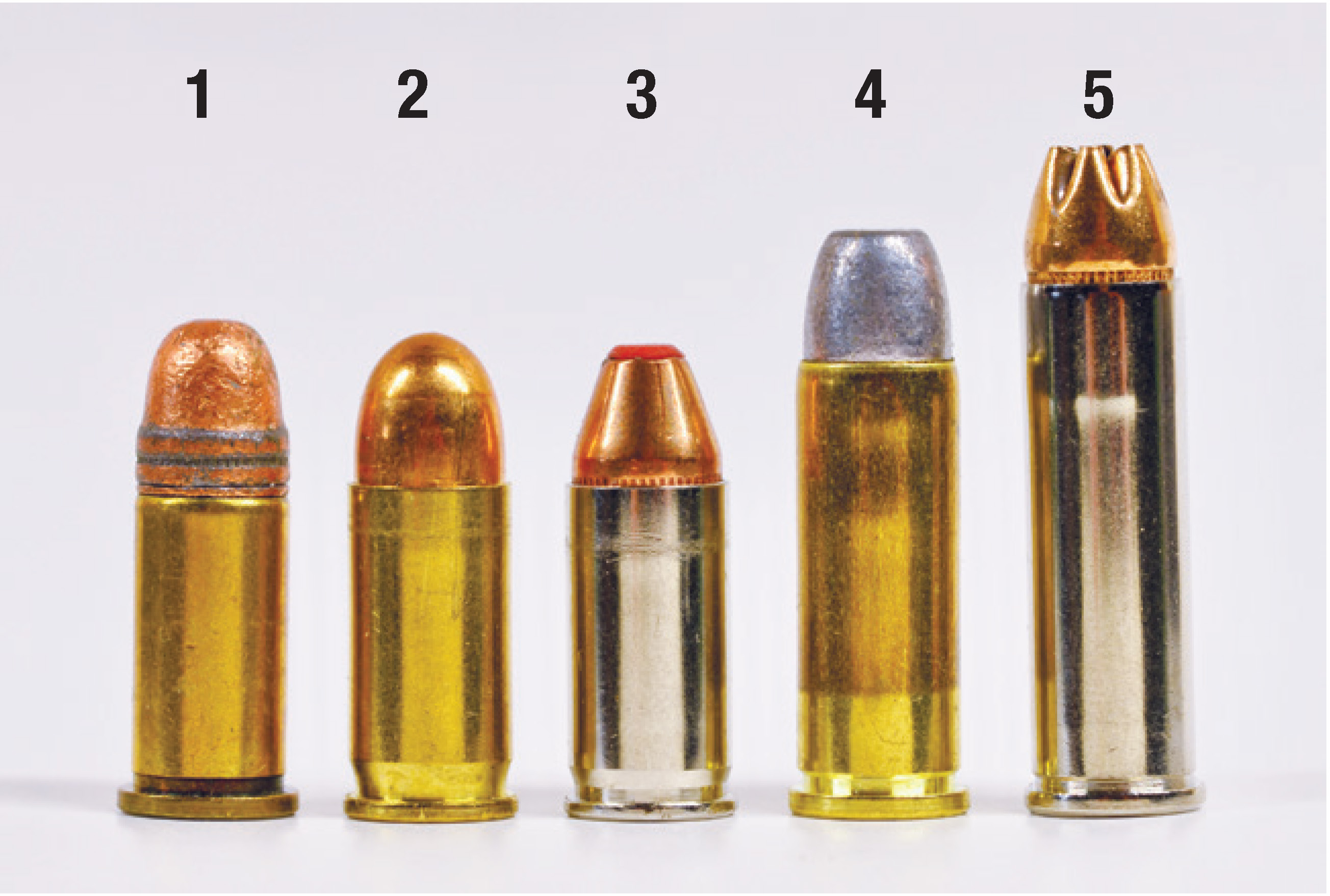
We should point out that any revolver chambered for the .32 H&R Magnum could also shoot both 32 S&W and 32 S&W Long, and in a real pinch, even 32 ACP. Why you’d want to do the latter, I can’t imagine, but I tried it, and it works. I suppose you could argue that it gives you a light alternative in a factory load, especially since 32 ACP ammunition is easier to come by than 32 S&W.
In recent years, Hornady has come out with some serious self-defense ammunition called Critical Defense. It’s available in both 32 ACP (60-grain bullet) and 32 H&R Magnum (80-grain bullet), and since both can be fired in the Model 16-4, they provide two more very useful options.
The point is, a 32 H&R Magnum revolver provides a ton of ammunition alternatives, depending on your purpose and ability to load your own.
Whether that had any influence on Smith & Wesson’s decision in the late 1980s to reintroduce, under another name, its K-32 Masterpiece is, at this point, anyone’s guess. But reintroduce it they did.
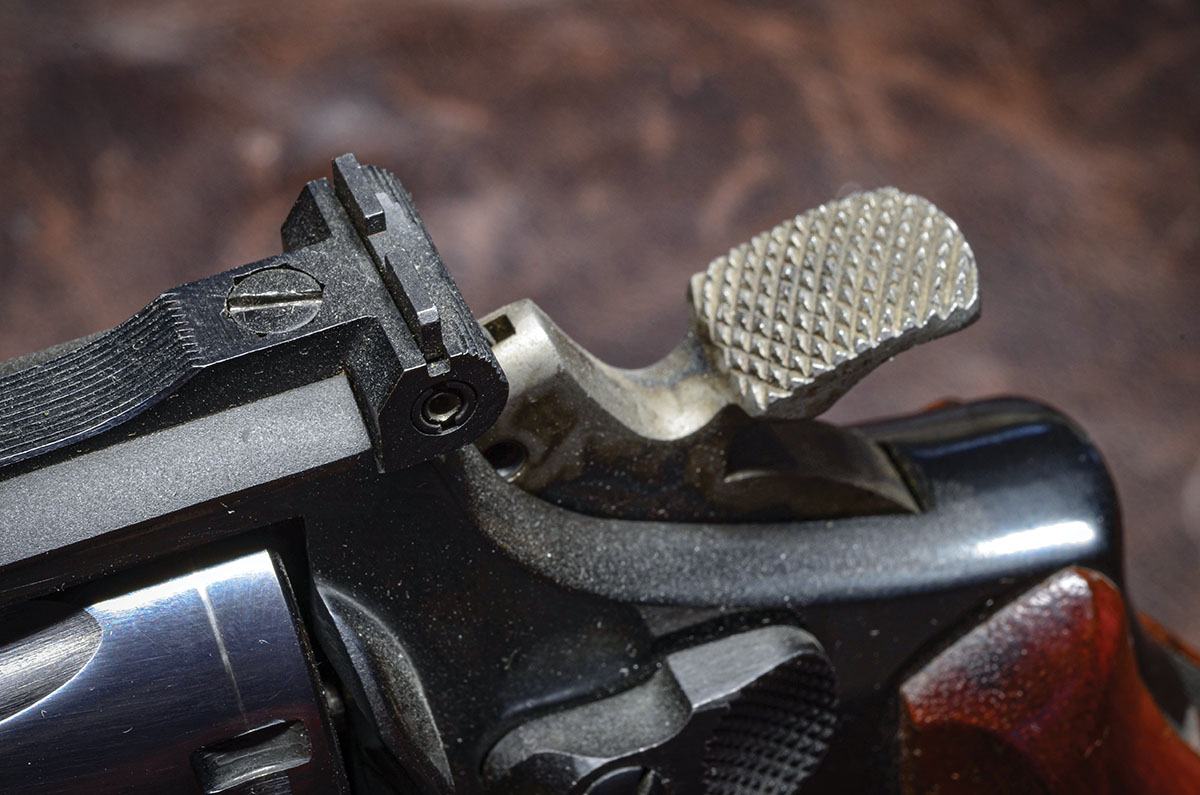
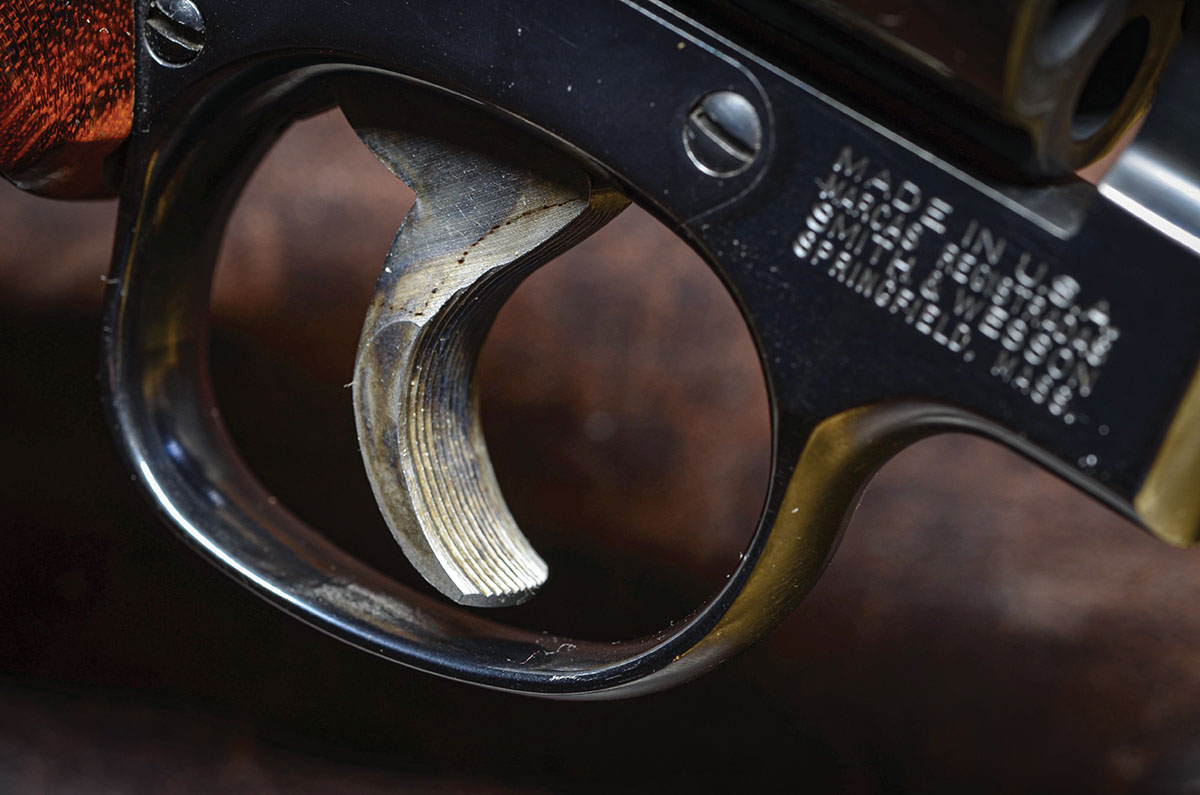
The action itself was the 16-4, being the fourth refinement of the old number 16. The two target models had half-inch-wide target hammer spurs and .400-inch target triggers. The trigger pulls, both double- and single-action, are the smoothest and lightest, from the factory that I have ever encountered.
There is no breakdown I can find as to how many of the 8,800 produced were in each of the three, but based on observations, my guess is that most were six-inch barreled target guns. (A random check on Guns International showed five, six-inch guns for sale, one four-inch, and no 83⁄8-inch.) This may mean there were very few, or it may mean their owners refuse to let go of them. One more puzzle of the used-gun market.
Although I have never handled the long one and have only seen a couple of the short versions, my lengthy association with the six-inch suggests two things.
First, it is probably the ideal configuration for a target pistol, having enough weight and enough of that weight out front to provide a very steady hold. It is, on the other hand, heavy. When I bought it, I could handle it with ease. Thirty-seven years, a serious shoulder injury and the resulting arthritis later, I have difficulty holding it for long periods, and not very steadily at that.
Second, working with a number of other handguns, I discovered that while six-inch heavy barrels may be the standard prescription for a target gun, I shoot four-inch barrels with much more consistent accuracy. It doesn’t matter what weight they are, so I suspect it has to do with a shorter sight radius, and the resulting tendency to simply trip the trigger when the picture looks about right, rather than hanging on too long, waiting for perfection.
This is a principle of target shooting that goes all the way back to Harry Pope and the great American Schützen rifles. As he pointed out, in offhand shooting, no one can pull one in the X-ring every time, and trying to do so only tires you out and results in a lower score overall. So, you do your best, with the finest equipment you can afford, pace yourself, and count on the law of averages to plant enough right in the center to put you in the winner’s circle.
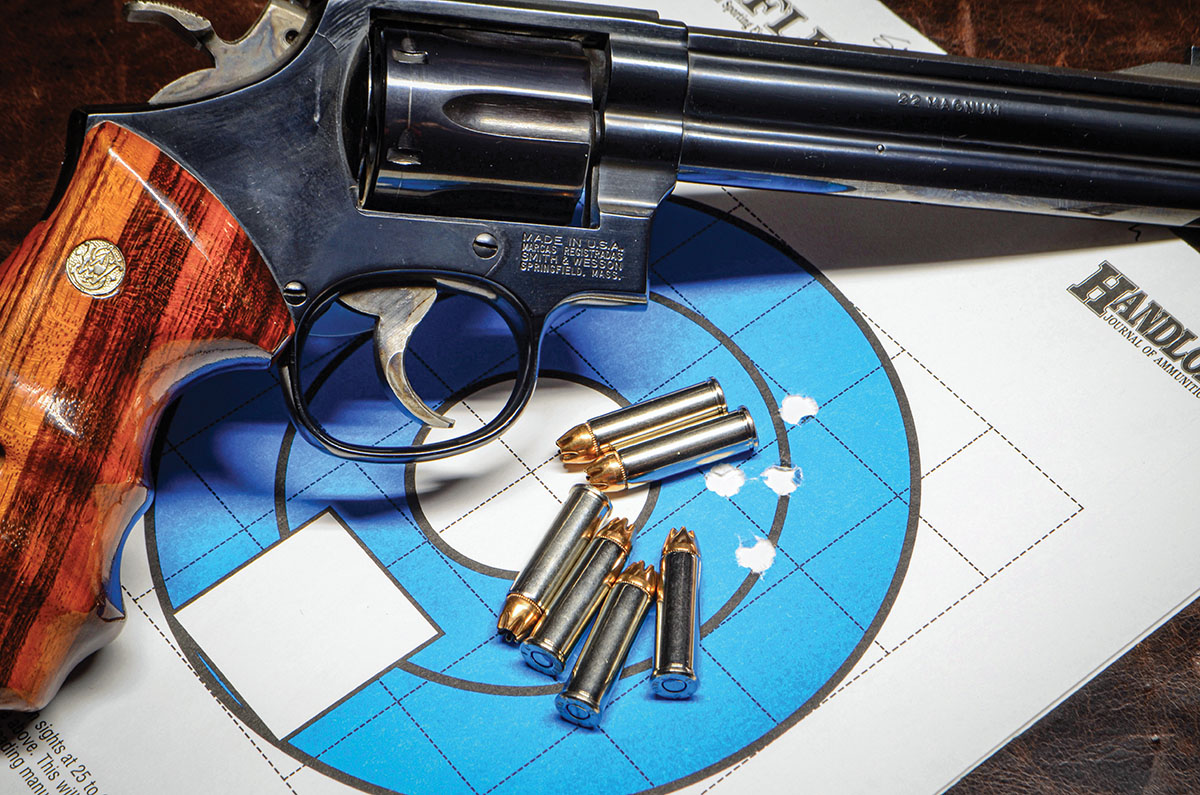
The great virtue of this vintage, classic Smith & Wesson is that it is not only fun to shoot, but it is also a pleasure to shoot. This is a quality that is fast disappearing, not only in the world of handguns, but in rifles and shotguns as well. You can still get it, of course, but you will have to pay.
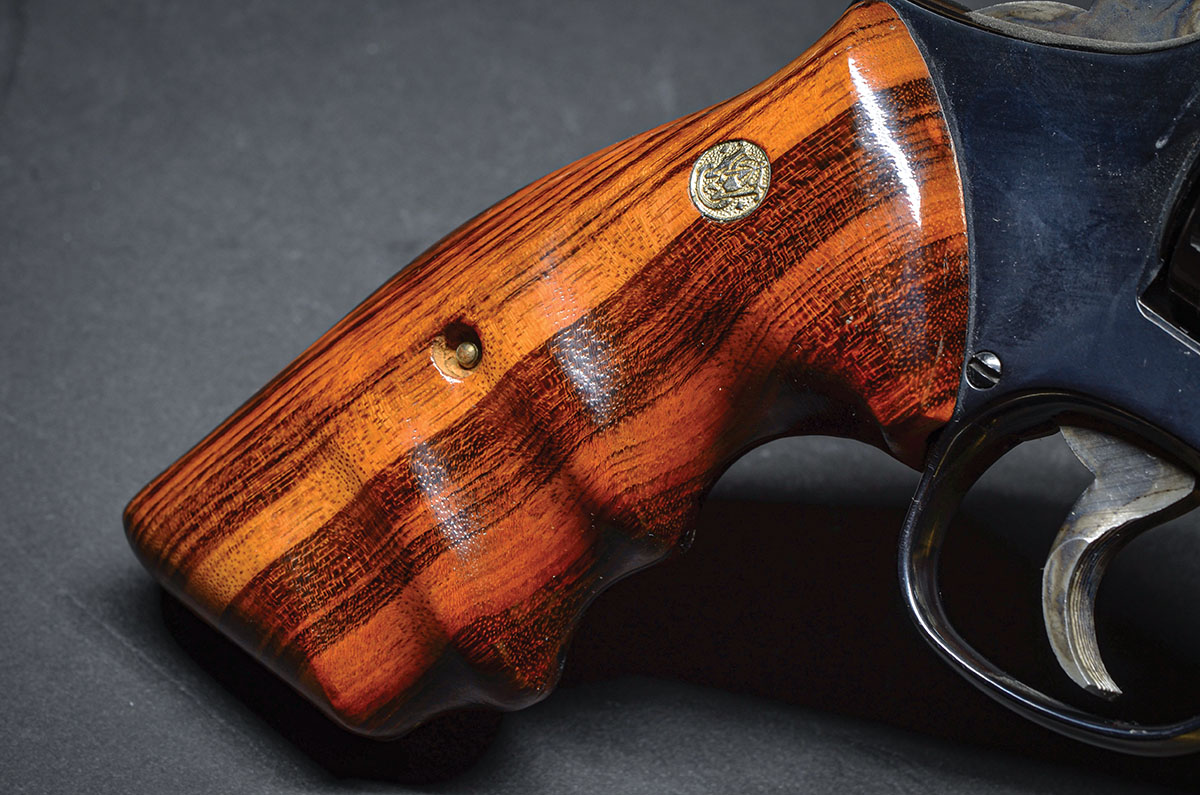
The Model 16-4, as it came from the factory, was made of carbon steel mated with beautiful wood grips, affording it a sensuality you won’t find in synthetics, alloys, or most stainless steel. Carbon steel has a slick, greasy quality to it, and parts that are carefully fitted and polished work together eagerly, almost as if they were alive.
In that way, the Model 16-4, emerging when it did, is a throwback to an earlier Smith & Wesson era. By the early 1990s, shooters were beginning to notice a real slippage in the quality of S&W guns, especially the stainless-steel semiautos. I owned several from the Model 39 and Model 59 families, and it may be significant that the only one I have today is a Model 39-2 made in the 1970s. It functions well and has a smooth action and trigger pull, both double and single.
At one point, I asked Jimmy Rea, the head of the S&W Performance Center in the 1990s, what happened to the quality, and his understandably reticent reply had to do with hand finishing, the difficulties of working with stainless steel and alloys, and an assurance that the old-time quality could still be had from the Performance Center at a price.
Having fired several Performance Center products, I can attest to how good they feel and how well they shoot. Having to go to, in effect, a custom or semi-custom gun to get the quality that used to come directly from the factory is so common in every aspect of the firearms industry today that there’s no point discussing it.
Still, this shows what an anomaly the Model 16-4 was when it appeared on the scene, like having Marilyn Monroe emerge from a flock of chorus-line rejects.
Almost 40 years later, the 16-4 is, if anything, more useful today than it was then. Advances in factory ammunition afford it a much wider range of applications – not just target shooting, but also small game (both edible and inedible) and a few practical pistol games that require a minimum power level.
In the meantime, Federal came out with an even more powerful .32, the 327 Federal and Smith & Wesson has ventured into revolvers that are bigger, smaller, heavier and lighter. I have yet to meet one, though, that feels like that classic Model 16 Full Lug. She’s a beauty.