The 35 Whelen and the Ruger M77 Hawkeye African
A Century of Proven Performance
feature By: Brian Pearce | July, 26
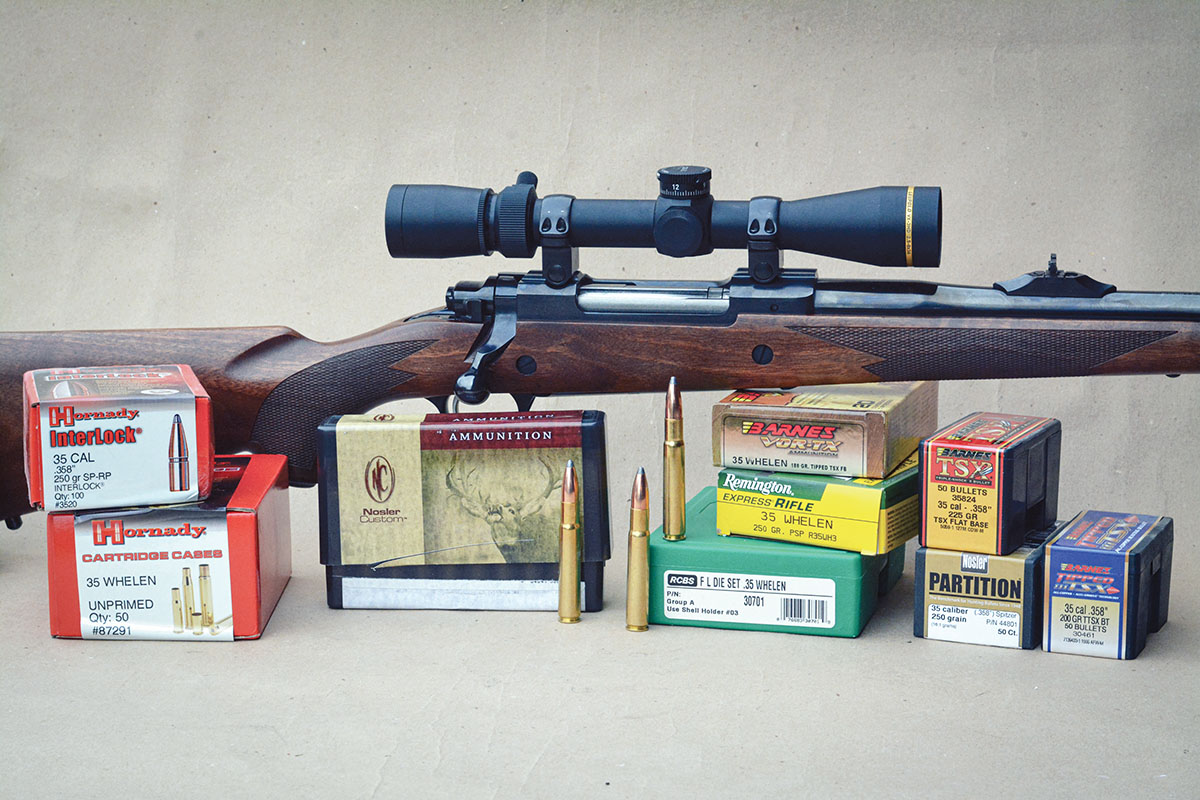
The 35 Whelen dates back to 1922 and is based on the 30-06 Springfield case necked to accept .358-inch bullets, with the most popular versions usually weighing 200 to 250 grains; however, it was originally designed for 250- to 300-grain bullets. It is a medium-bore cartridge for hunting heavy, thin-skinned game, including the great bears of the north, moose, and African plains game; applications that it has served admirably in the past century.
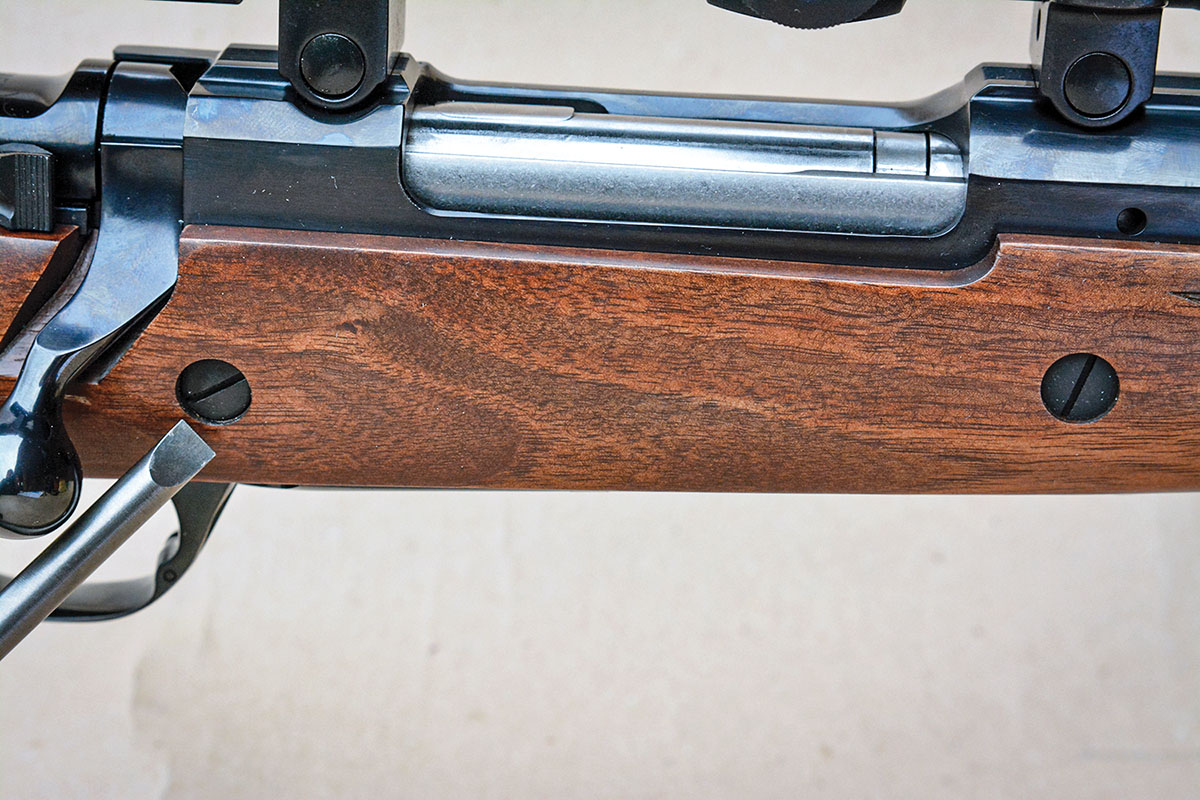
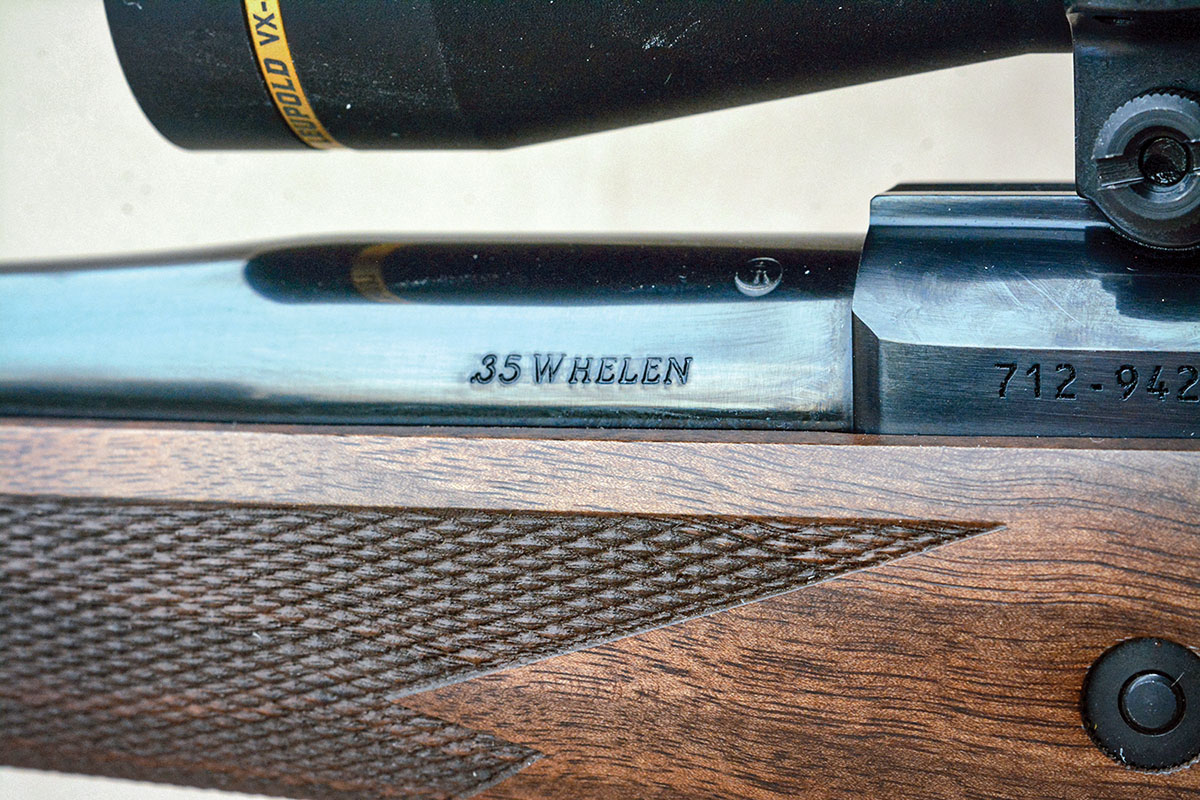
In spite of many new and more powerful medium-bore cartridges being developed, the 35 Whelen still has a dedicated following and for good reason. It offers a remarkable blend of power, efficiency and reliable performance. Furthermore, it boasts of a beltless case that feeds with ease and produces comparatively modest recoil that can be mastered by most shooters. The icing on the cake, Lipsey’s is currently offering a handsome, classic-styled Ruger M77 Hawkeye African rifle chambered in 35 Whelen, with a traditional walnut stock and open-express-style sights. While Ruger is producing rifles on a regular basis, production numbers are not large, but demand has been steady.
Colonel Townsend Whelen is often given credit for designing this cartridge; after all, it carries his name. In a 1923 article appearing in the American Rifleman, Whelen refers to the 35 Whelen as “the first cartridge that I designed.” Townsend continues in the same article that James V. Howe (toolmaker at Frankford Arsenal) “undertook… making dies, reamers, chambering tools and of chambering rifles, all in accordance with my design.”
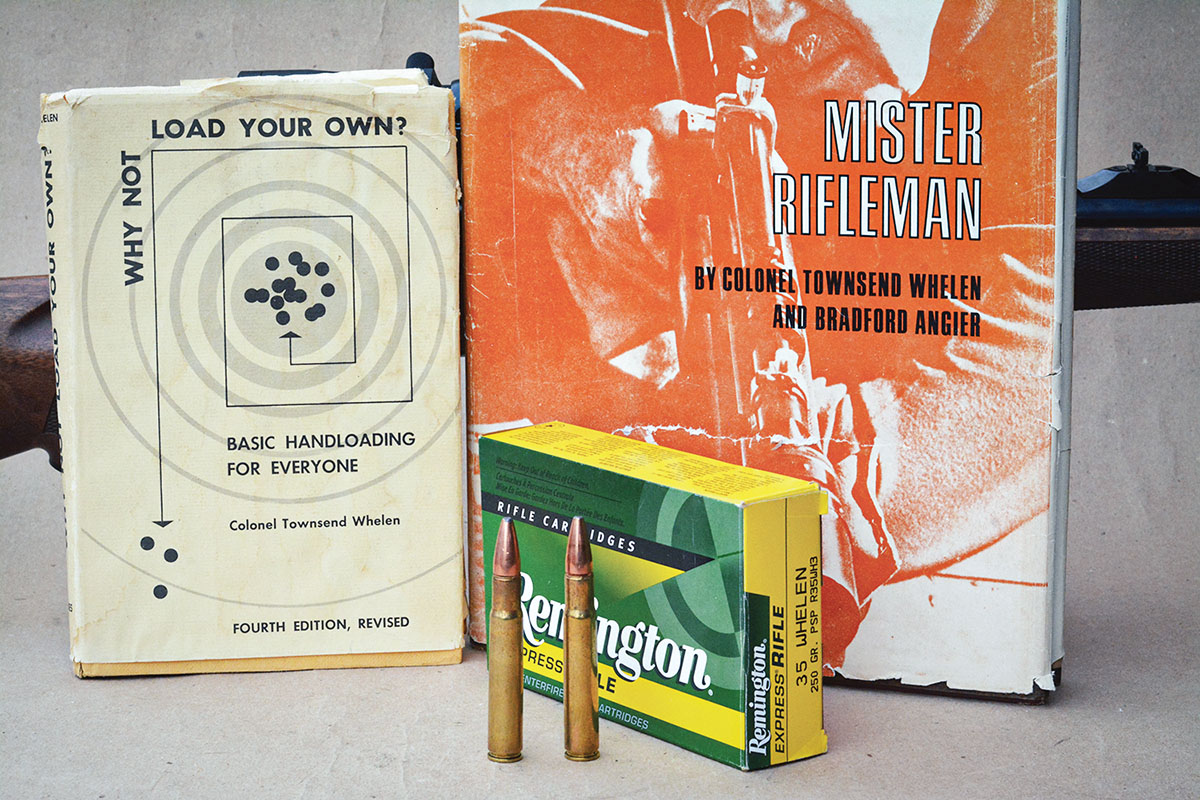
That sounds pretty cut and dried that Whelen was the designer, however, in his 1940 book, The Hunting Rifle: Design, Selection, Ballistics, Marksmanship, Whelen gives full design credit to James V. Howe (later founder of Griffin & Howe) by stating “I went on a long hunting trip in the Northwest, and when I returned, Mr. Howe showed me another cartridge (the first being the 400 Whelen) he had developed. The 30-06 case was necked to .35 caliber to use existing .35 caliber bullets. Mr. Howe asked my permission to call this cartridge the .35 Whelen, but he alone deserves credit for its development.” Furthermore, in Whelen’s 1949 book, Why Not Load Your Own, referring to the 35 Whelen, he states, “This cartridge was developed by James V. Howe in 1922, and was named for the writer, the idea being a cartridge, more powerful than the .30-06, that could be used in any bolt action suitable for the latter cartridge without alteration.”
Why are there published discrepancies regarding who actually designed the cartridge? I don’t know. I will speculate (something that I rarely do) that perhaps an overly ambitious junior editor at the American Rifleman modified Whelen’s original text and gave him credit for something that he did not do! Having written articles for more than two dozen different editors and a couple of dozen publications over the past 30-plus years, I can state that this scenario happens! Regardless, Whelen praised the cartridge and fully approved of its design.
The 35 Whelen became a popular wildcat, as many writers of that era also praised its virtues and performance, including the notable Elmer Keith, who used one to take a wounded, huge Alaskan brown bear at just a few feet as he charged. In turn, Keith praised the cartridge and its reliable performance on heavy game.
Period custom rifle builders enjoyed heavy orders for guns of this caliber; however, those numbers are relatively small. The Whelen was never industry-standardized until 1988, when Remington introduced it to the SAAMI (Sporting Arms and Ammunition Manufacturers’ Institute), and it was finally changed from wildcat status.
This raises the question: If the 35 Whelen is so good, why did it take 66 years for it to become a SAAMI standardized cartridge? My best guess puts the blame on a combination of the 375 H&H Magnum and the Great Depression. While the 375 was an English-developed medium-bore cartridge first offered in 1912, it had not gained much popularity in the U.S. However, in 1925, Western Cartridge began offering ammunition that spurred some interest, but production rifles of that caliber were not yet offered by large U.S. gun companies. Then, in 1929, all gun sales fell off sharply when the stock market crashed, and the economy failed, ushering in the Great Depression. To survive, gun companies reduced offerings and streamlined every aspect of production. Offering a new caliber was just not practical and probably would have resulted in financial loss. During the mid 1930s, Winchester announced its outstanding Model 70 rifle, and from the onset, the 375 was a standard offering along with its sister cartridge, the 300 H&H Magnum, with the latter winning the prestigious 1,000-yard Wimbledon Cup Match (by Ben Comfort) in 1935. This combination brought considerable fame to both H&H cartridges and helped popularize them. Again, rifle manufacturers could not see the need to introduce a competing medium-bore cartridge; therefore, the Whelen remained a wildcat for 66 years.
If the 35 Whelen had been adopted by the industry at the time of its development, we can only speculate that its popularity would be significantly greater today. Nonetheless, it is available in special rifle production runs, while Remington, Nosler, Hornady, Buffalo Bore and Barnes offer premium hunting loads. Handloaders enjoy a broad bullet selection that serves to increase their versatility. Incidentally, the 35 Whelen performs very well with cast bullets, adding another dimension to its versatility. For example, Whelen was a big proponent of using cast bullets for light loads in his hunting rifles that are useful for taking small game on extended wilderness hunts. Not only do cast bullets work very well for this application, but their appearance prevents them from getting mixed up with the full-power loads containing jacketed bullets.
As indicated, the 35 Whelen was originally designed for 250- to 300-grain bullets. Period big game hunters usually relied on heavy caliber bullets to obtain reliable deep penetration, and virtually all bullets were cup and core designs and performed poorly when compared to today’s remarkable hunting bullets. Some fragmented easily while others that boasted of thick jackets were known to expand minimally or not at all at longer ranges, but this lackluster bullet performance was not just limited to the 35 Whelen; as it was observed with many period bottleneck cartridges. Thankfully, those days are long gone. With today’s premium hunting bullets, lighter-weight versions (typically 200- to 225-grains) can be used that expand with ultra reliability and offer a respectable flat trajectory while still offering excellent penetration qualities on larger species. A couple of examples include the Barnes 200-grain TTSX boat-tail and the 225-grain TSX flatbase, while Nosler offers their excellent 225-grain Accubond. These bullets can all be pushed to 2,800 feet per second (fps) or more through handloading and offer a reasonably flat trajectory for easy hits at practical distances. Due to their reliable performance (deep penetration and bone-breaking ability), various 250-grain weight bullets are still a favorite for heavier species. They can easily reach 2,700 fps or more (through handloading) while offering a respectable trajectory for larger species that are rarely taken at distances that require a flatter shooting cartridge. Examples include the Hornady Interlock, Speer Hot-Core Spitzer and the grand old proven Nosler Partition. For those who may want a bit more velocity and a flatter trajectory for hunting deer-sized game in open country, the 200-grain Hornady Interlock and 200-grain Nosler Accubond are good choices that can be pushed to 2,950 to 3,000 fps.
It is noteworthy that when the 30-06 case is necked up to .35 caliber, pressures are reduced. Therefore, the 35 Whelen can push a bullet of the same weight notably faster than the 30-06 can when each is loaded to similar pressures. For example, the Whelen reaches 3,200 fps with 180-grain bullets, 3,000 fps with 200-grain bullets, or 2,850 fps with 220- or 225-grain bullets. By comparison, the 30-06 is generally listed to push a 180-grain at 2,700 fps, a 200-grain at 2,550 fps or a 220-grain at 2,410 fps.
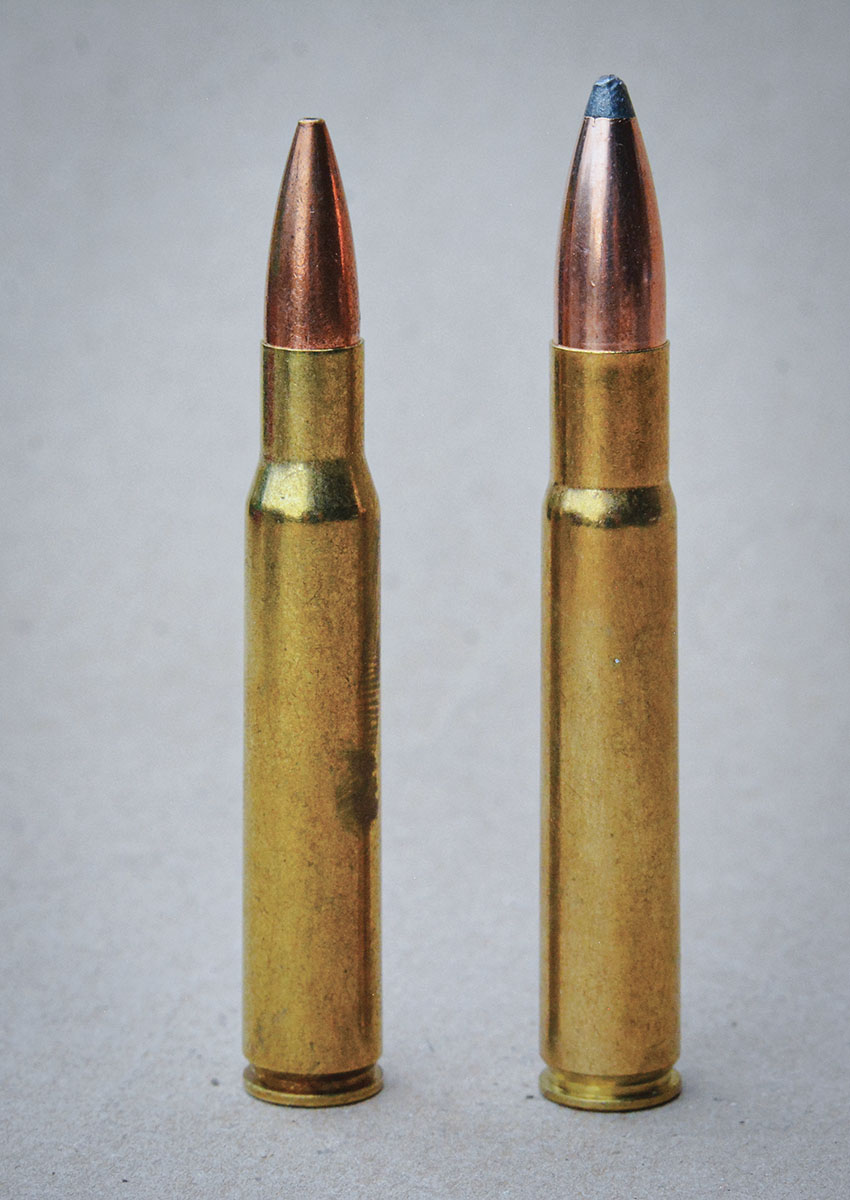
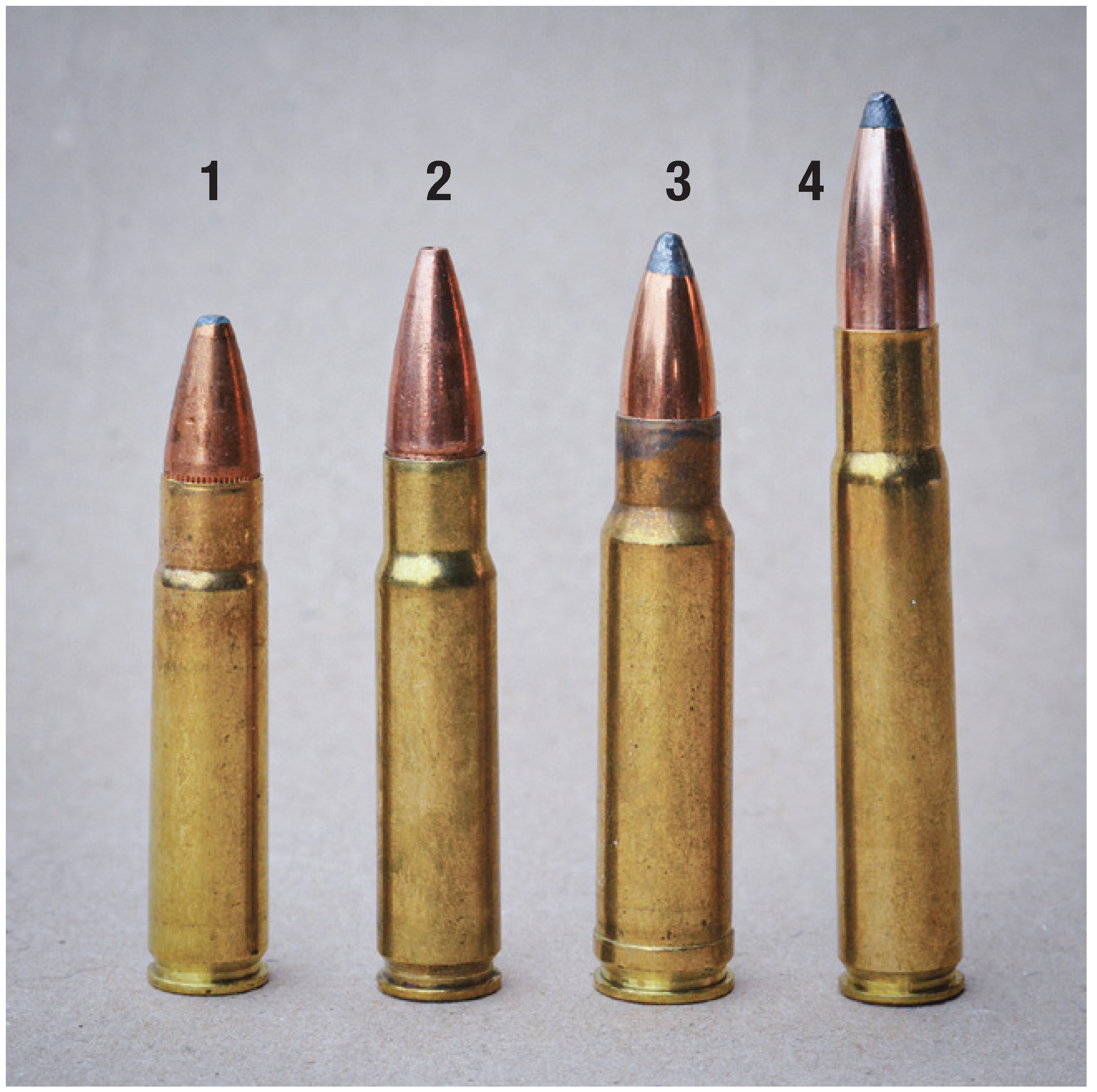
Often, when creating a new cartridge, designers move the shoulder of the parent case, change the shoulder angle, or make small or sometimes even significant changes in the process. In the case of the 35 Whelen, the 30-06 is simply necked up to accept .358-inch bullets. The case length is the same at 2.494 inches, as well as the shoulder angle at 17 degrees, 30 inches. Industry maximum pressures are established at 52,000 copper units of pressure (CUP) or 62,000 pounds per square inch (psi), which are actually a bit higher than the 30-06 listed at 50,000 CUP and 60,000 psi. Our most popular .35-caliber rifle cartridge is probably the 35 Remington, which offers notably greater punch than the 30-30 Winchester and similar cartridges, but is not in the same power league as the Whelen. The 358 Winchester (based on a necked-up 308 Winchester case) has enjoyed flickering popularity for decades, but it performs on game way above its paper ballistics indicate, and is a great cartridge in its own right – but falls short of the Whelen. The 358 Norma Magnum is a very good cartridge, but it offers greater recoil, increased muzzle report and, being based on the belted magnum case, may not feed as smoothly, and rifles will have a reduced magazine capacity. A cartridge that is often compared to the 35 Whelen is the 350 Remington Magnum (2.800-inch cartridge overall length) that is based on the belted case and designed for short-action (308 Winchester length) rifles. While it is a good cartridge, it does not feed as smoothly and has the previously noted reduced magazine capacity. The 35 Whelen will outperform the 350 Magnum (in spite of Remington factory loads listing the 350 with a 100-fps advantage with each using 200-grain bullets). In my testing, the 35 Whelen will give at least an extra 100 fps greater velocity when loaded with the same bullet weights. Another more significant cartridge compared to the 35 Whelen includes the 375 H&H Magnum, which is a truly great round in its own right.
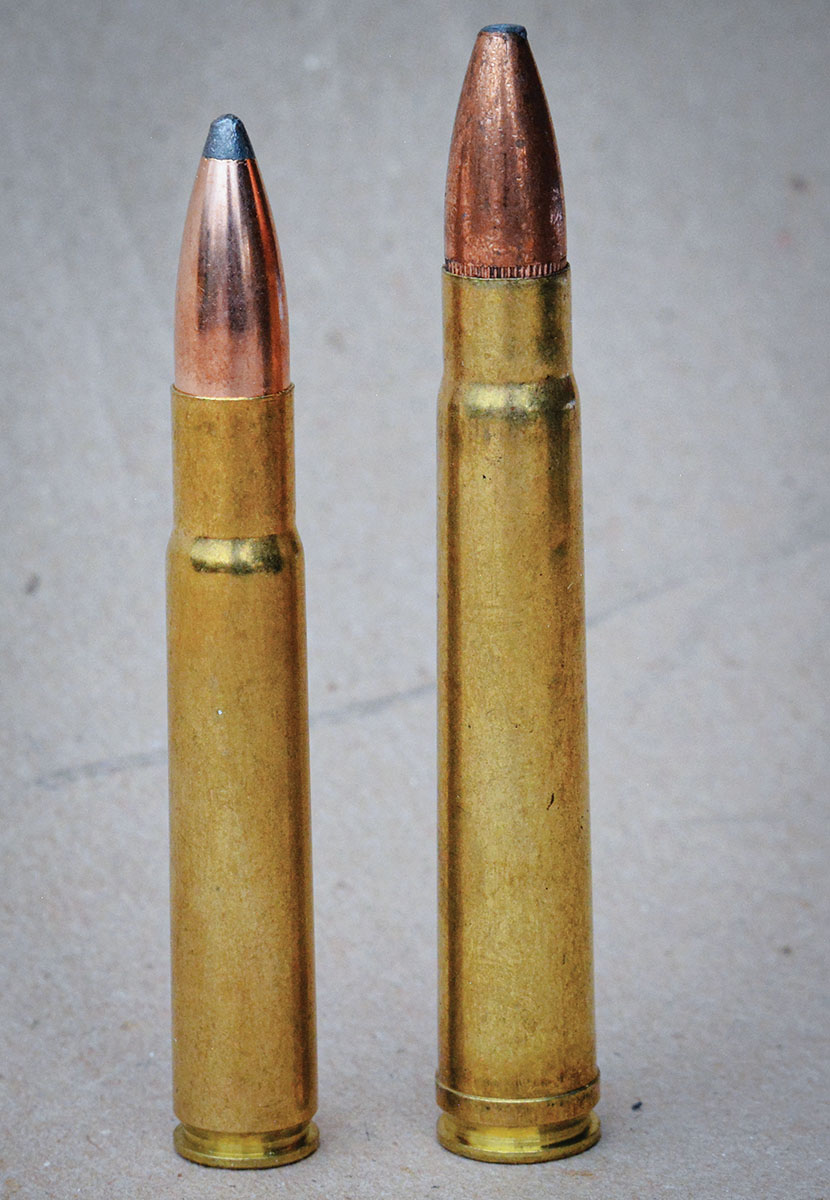
Standard ballistics list a 270-grain JSP bullet at around 2,690 fps, or a 300-grain at 2,500 to 2,550 fps. When the 270-grain 375 load is compared to the 35 Whelen with a 250-grain at 2,700 fps, it is just 20 grains lighter, but with the same velocity, and both bullets share a similar sectional density. While it is approaching the power of the 375, this performance is housed in a beltless case, feeding is flawless, it works in a standard 3.340-inch action (as opposed to the H&H’s at 3.600 inches), magazine rifles generally hold at least 1 and often 2 more cartridges, and it utilizes considerably less powder, resulting in reduced muzzle report.
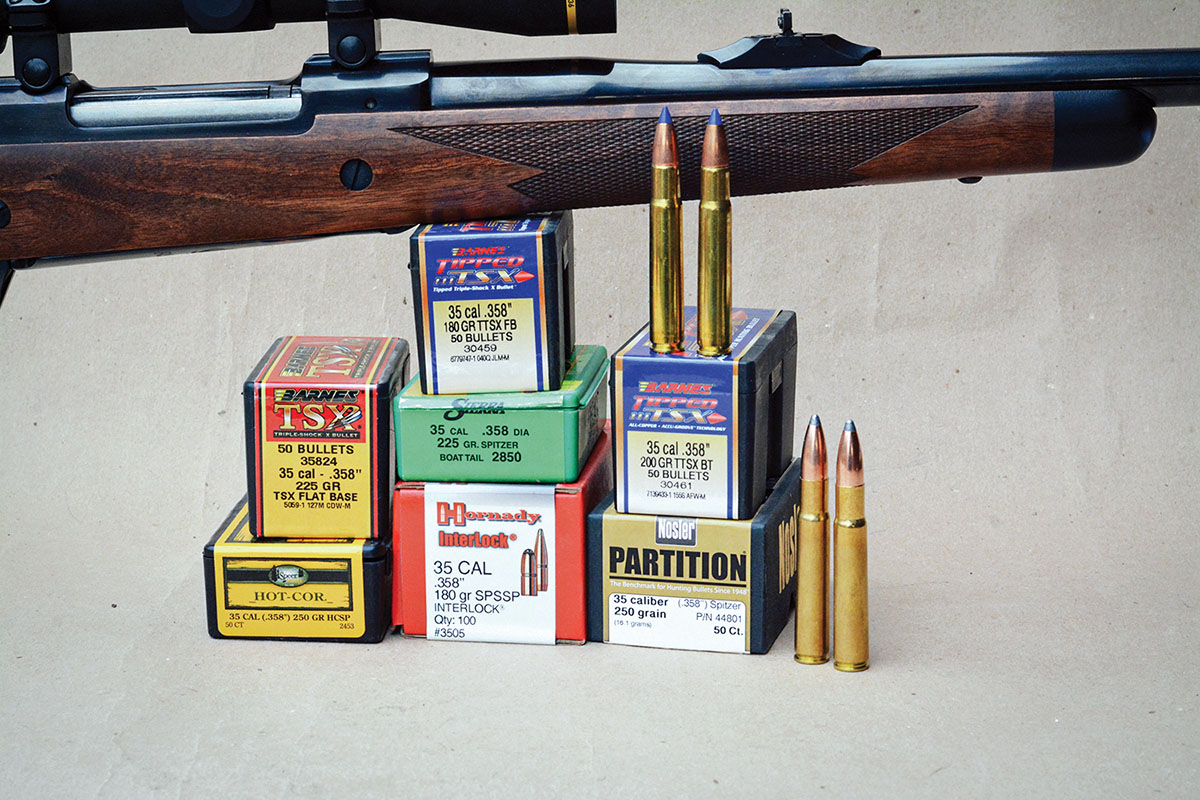
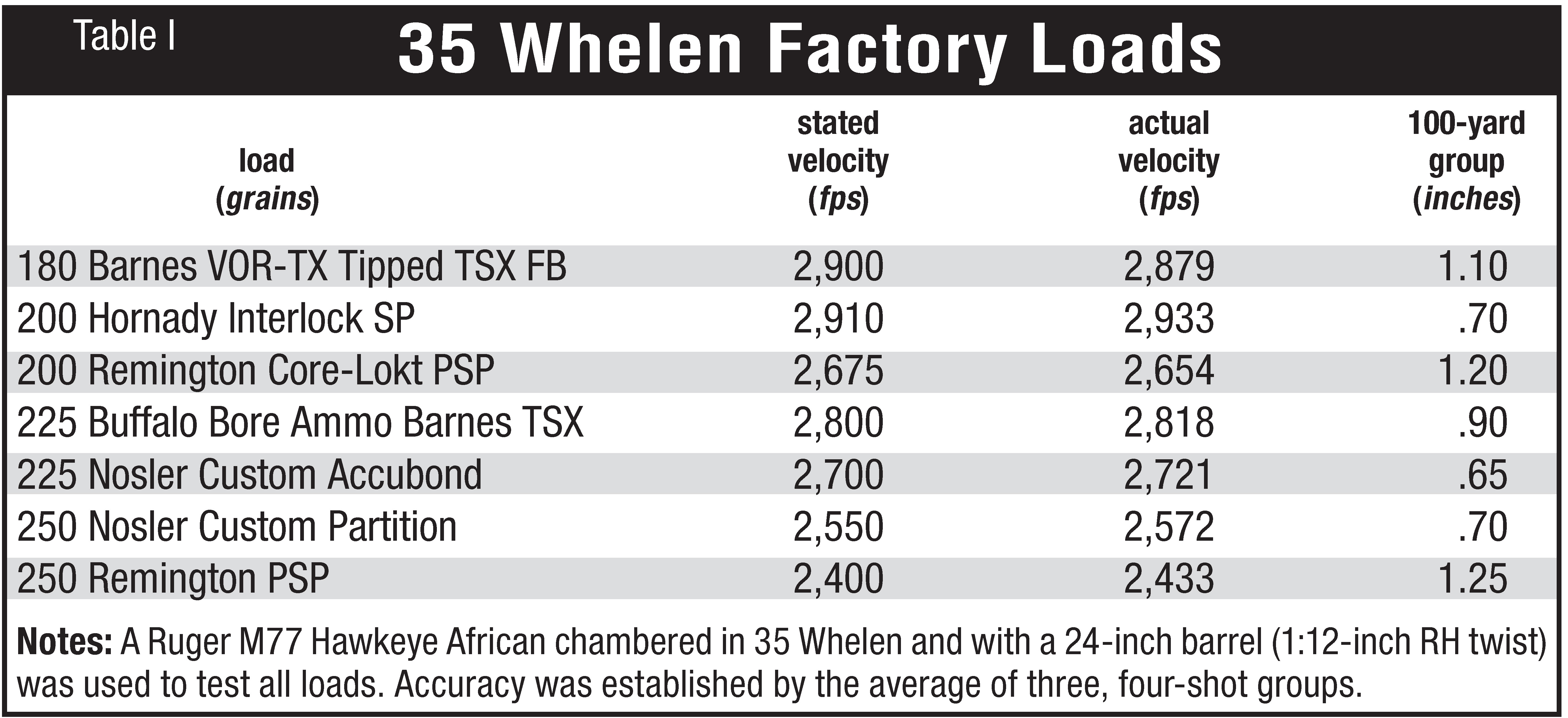
Factory load selection is reasonable with offerings for any practical application. Remington lists a 200-grain Core-Lokt PSP at 2,675 fps, or a 250-grain at 2,400 fps (both being well below what handloaders can achieve while staying within pressure guidelines, and producing notably less velocity than loads offered by other companies). Hornady offers a 200-grain Interlock SP at 2,910 fps. Nosler Custom lists a 225-grain Accubond at 2,700 fps, which performs very well on all deer species, including elk and moose, and has a practical trajectory that is very similar to the 30-06 when it is loaded with 180-grain bullets. Buffalo Bore offers a 225-grain Barnes TSX at 2800 fps, or a 225-grain Spitzer BT at the same velocity. Barnes produces the VOR-TX line with various TSX bullets.
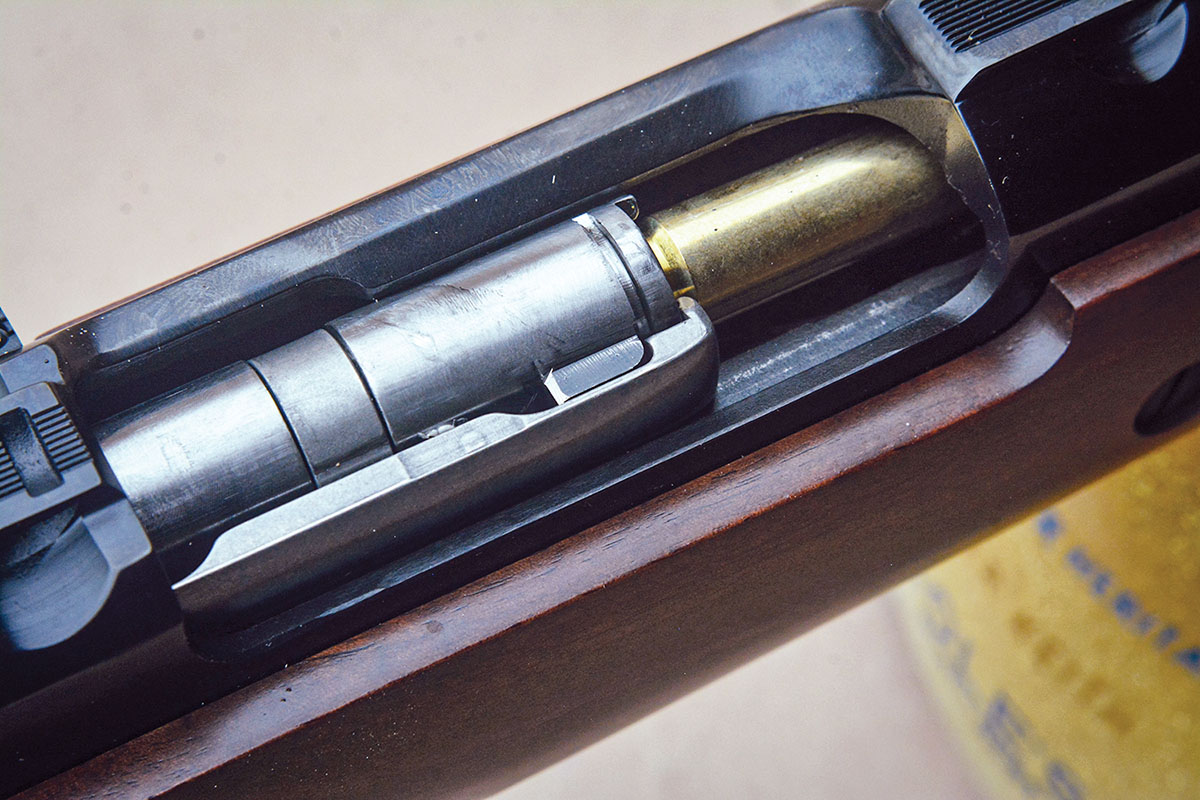
In past issues of Rifle magazine, I have reviewed the Ruger M77 rifle series several times, so I will be brief today. The original M77 was introduced in 1968 and was a good rifle at a modest price. It featured a cast receiver, one-piece bolt, and bolt handle constructed of 4140 chrome-moly steel that has proven incredibly strong. The gas system receives very high marks for shooter protection. The rifle competed favorably with the Winchester Model 70 and Remington Model 700 rifles (with its name coming from the two 7s in those models). However, it was a push feed action and needed a couple of other improvements that occurred in 1989 with the introduction of the M77 Mark II with a control-round feed action, one-piece stainless steel bolt, 3-position wing style safety, improved trigger design, positive magazine latch and release, and features Ruger manufactured cold hammer forged barrels. The M77 Hawkeye (new 2007) was essentially the same as the Mark II; however, it boasted of a trimmer stock with improved checkering pattern, steel bottom metal and a new LC6 trigger for a lighter out-of-the-box pull. The M77 has proven to offer outstanding reliability, durability and is accurate and rugged like a tank!
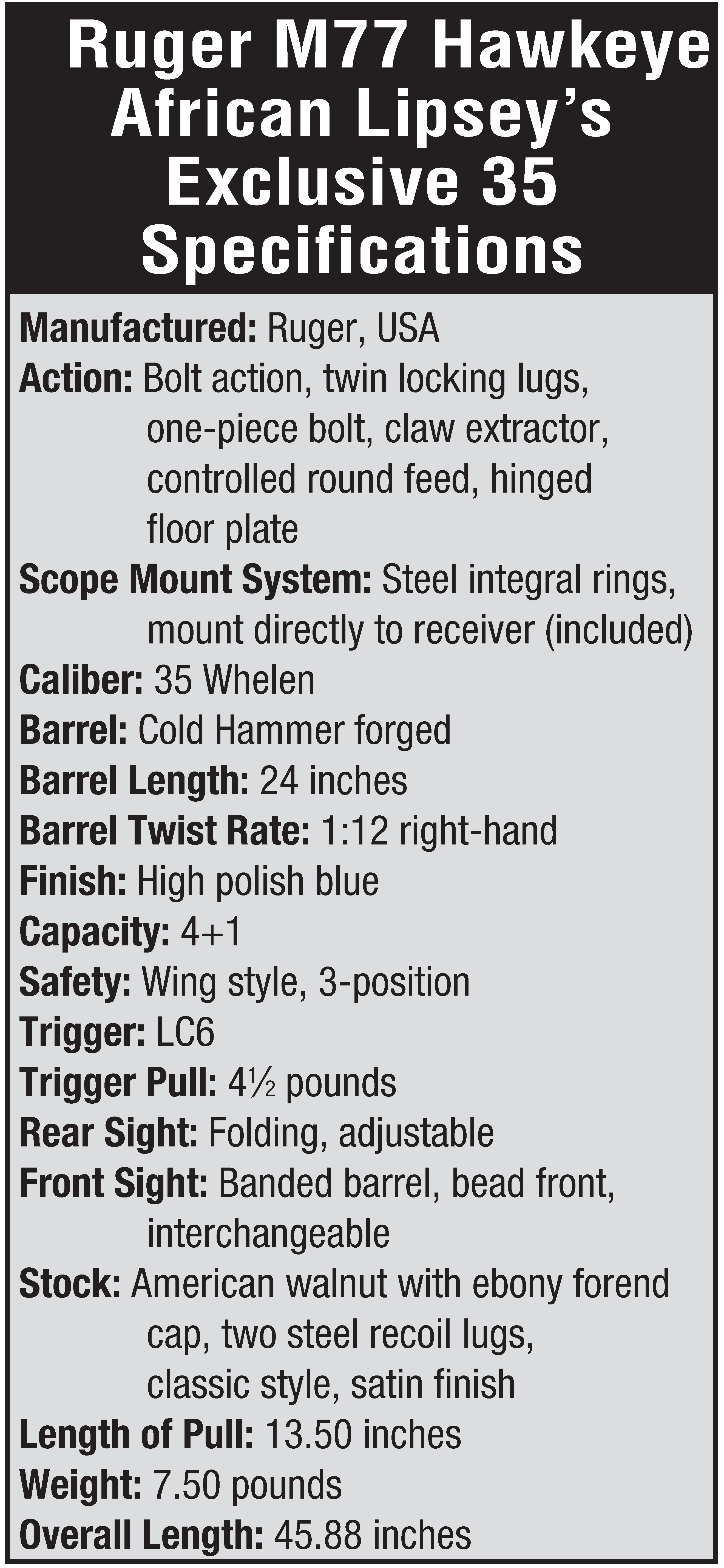
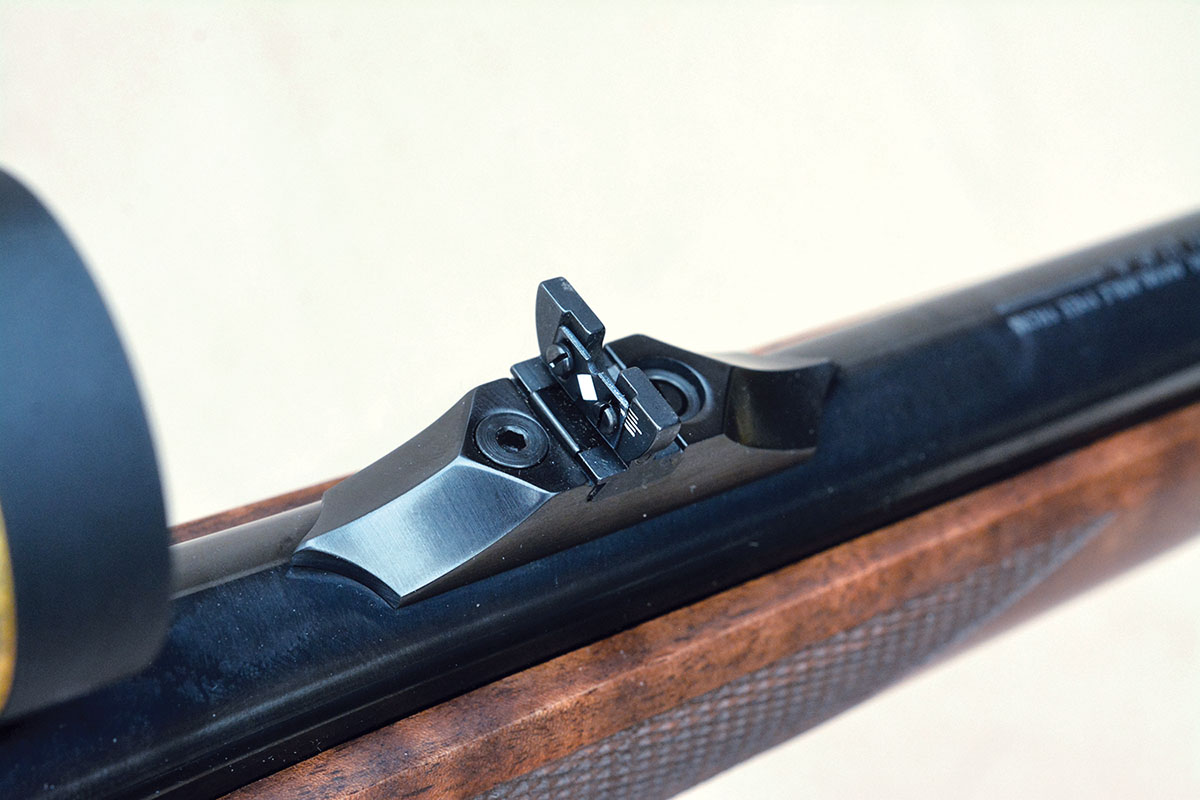
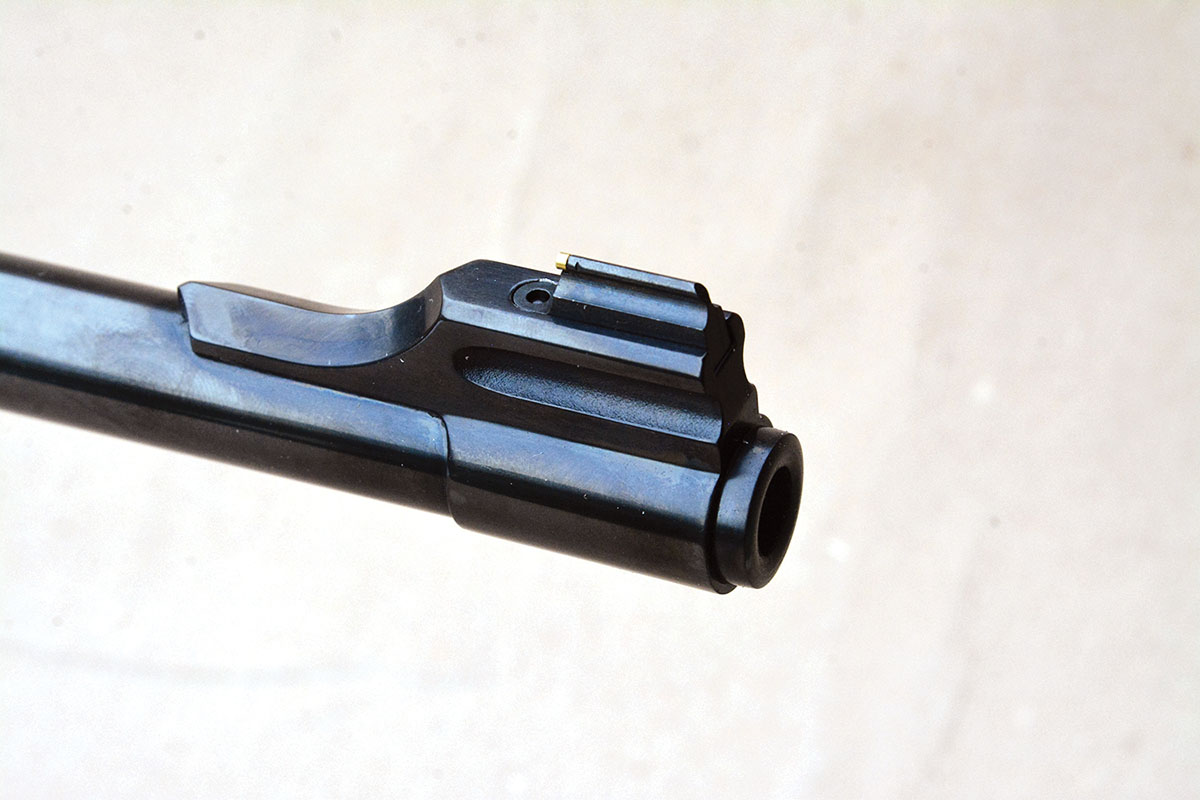
Today’s M77 Hawkeye African 35 Whelen features a classic style, American walnut stock with cut checkering accented with a black ebony forend cap and low gloss satin finish. There are two steel recoil lugs to help prevent the stock from splitting, while a red rubber recoil pad is standard, along with a barrel-mounted front sling swivel. Open sights are standard, and the banded front is not only handsome but houses an interchangeable front sight system. The barrel is 24 inches, and all steel parts are finished in a high-polish blue. Naturally, it comes with the steel Ruger integral rings that are about as strong as it gets for securing the scope to the receiver. In short, it’s a very attractive rifle that offers outstanding reliability.
Unfortunately, there are a couple of items for which Ruger must be taken to task. First, the action is not as smooth as previous M77 Hawkeye rifles; it is almost gritty. By working the action a few hundred times and firing around 300 rounds for this review, the action smoothed up considerably. I realize that Ruger is trying to get these rifles out the door at a modest cost; however, I would be happy to pay a little extra to have the bolt and receiver factory hand-lapped. On the plus side, function and feeding were flawless.
The trigger broke a bit heavy at 41⁄2-pounds, but at least the pull was crisp. Ruger could ship these rifles with a 21⁄2 pound pull right out of the box and still use the same trigger design. I don’t believe this is a liability factor. For example, by comparison, the Ruger American and American II rifles are coming from the factory with sub-3-pound trigger pulls, or even less. Ruger should address this issue and make it a better out-of-the-box, field-ready rifle.
Scope choices are almost personal; however, one of my favorites for a medium bore rifle is the Leupold VX-3HD 2.5-8x36 CDS-ZL, which is an improved and updated version of the VX-3 2.5-8x36mm that dates back to the middle 1970s. In addition to being highly proven in the field and known for its outstanding, almost never-failing design and construction, it features finger-click adjustments, a 1-inch tube to keep weight down and to accommodate low-profile mounting. Leupold’s upgraded Elite Optical System offers outstanding light transmission in low light conditions, but also reduces glare in harsh light conditions. The power ring features a lug that allows quick adjustments in the field, even when wearing gloves. When the scope is set on 2.5x power, it works extremely well when hunting in brush and timber, where shots must be taken fast. The 8x power setting is plenty of magnification for taking game at any reasonable distance that the 35 Whelen will be used in open country. For shooters that might want to dial, the CDS Zero Lock dial stays locked. With a retail price of $599, this USA-manufactured scope is a bargain!
After firing 20 rounds and cleaning the bore between each shot to help facilitate barrel break-in, followed by sighting in, the rifle was checked for accuracy using factory loads from Barnes, Buffalo Bore, Hornady, Nosler Custom and Remington. As can be seen in the accompanying table, 4-shot groups (fired at 100 yards) with a 3-group average, the rifle proved accurate, with groups ranging from .65 to 1.25 inches (naturally rounded figures). The Nosler 225-grain Accubond load (2,721 fps) was the most accurate and is an excellent choice for all-around hunting.
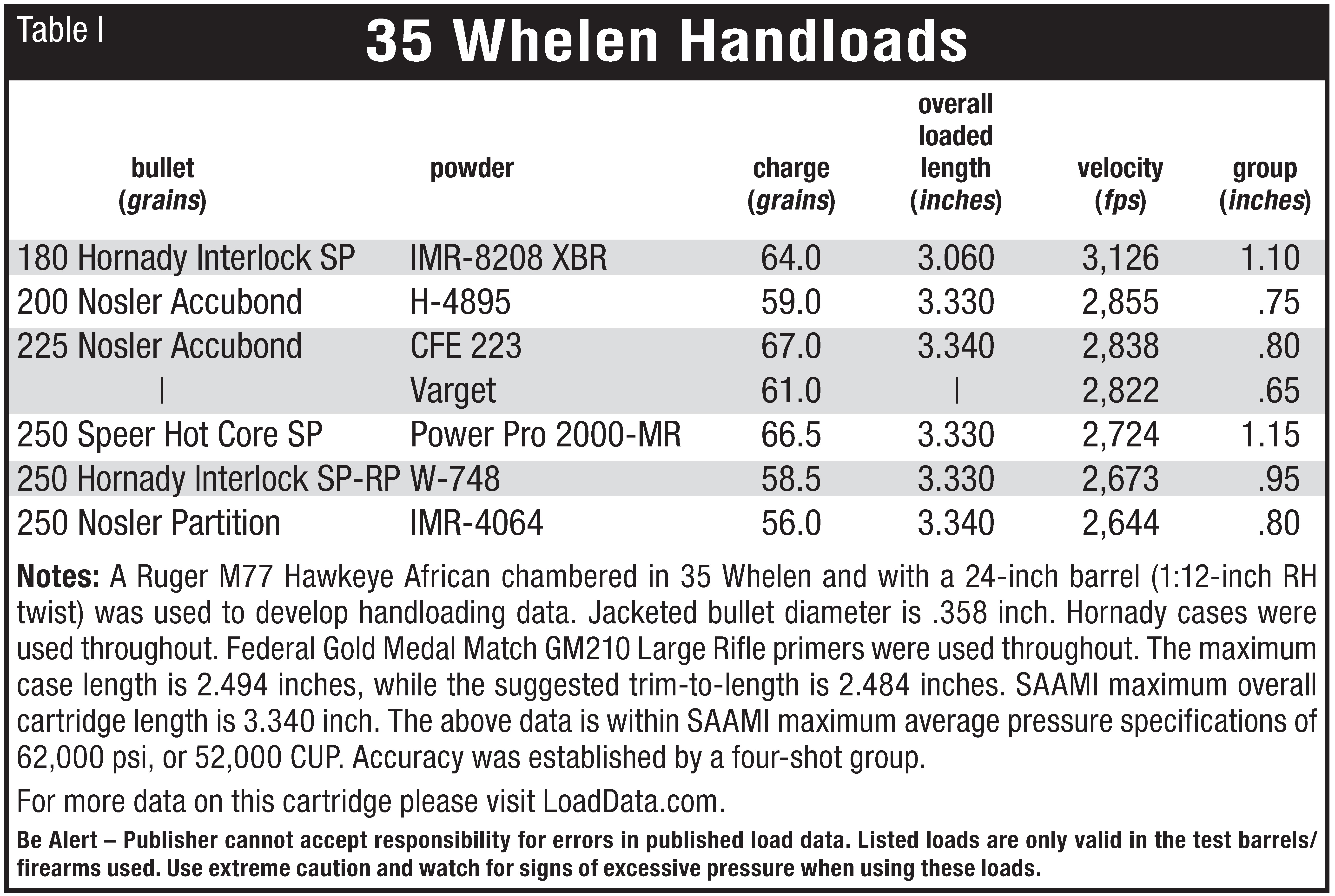
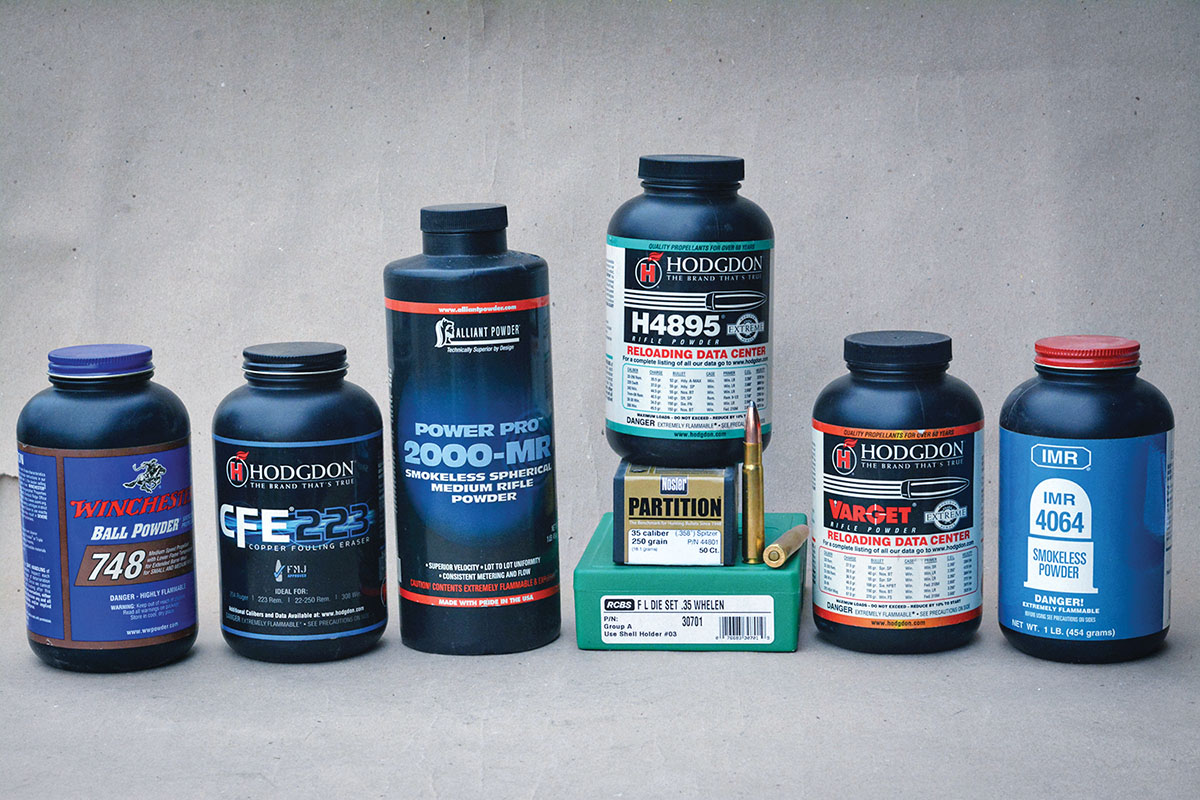
Moving on to handloads, I set out to improve ballistics and more or less duplicate factory load accuracy. In other words, the focus was on powder choices for best velocities, while bullets were not seated to correspond with the leade for top accuracy. Hornady cases were selected and primed with Federal 210 Gold Medal Match primers. The Whelen thrives on medium burn rate powders such as IMR-4064, IMR-8208 XBR, Hodgdon Varget, CFE 223, H-4895, Winchester W-748 and Alliant Power Pro 2000-MR. As can be seen in the accompanying chart, the 225-grain Nosler Accubond reached over 2,800 fps with CFE 223 and Varget, while the 250-grain Speer Hot Core SP reached over 2,700 fps using Alliant Power Pro 2000-MR. All handload data is within the SAAMI maximum average pressure of 62,000 psi.
There are a couple of items that handloaders should be aware of. There is considerable published Whelen data from 50 or 75 years ago or more, which is excessive in pressure. The point being, don’t use old data. The second item is that some cases will have a rather indistinct (or short) shoulder that fails to provide positive headspace control and can cause misfires. I have run into this problem with Remington and Barnes factory loads when used in Remington 700 and (previously tested) Ruger M77 rifles as well as a vintage custom Sedgley Springfield. Once cases are fired, the shoulder is properly positioned, and cases can be full-length sized to offer positive headspace control.
There are many better long-range cartridges, but as indicated, when hunting larger species such as moose, the great bears of the North and most African plains game, shots are almost always within 300 yards and more often, less than 200-yard distances that the Whelen handles with ease. In fact, many experienced brown bear guides will not let clients shoot much past 100 yards because they want a reasonable assurance that the bullet will hit vitally, which helps them avoid following up an angry, wounded bear in the willows and alders. While this might sound exciting and adventurous, it is a really good way to get hurt or worse. Regardless, the 35 Whelen is a grand old cartridge that hits harder and is much better than its paper ballistics suggest.