Login


Wolfe Publishing Group
    Menu

    Winchester XPR Hunting Rifle

    An American Legend Reimagined

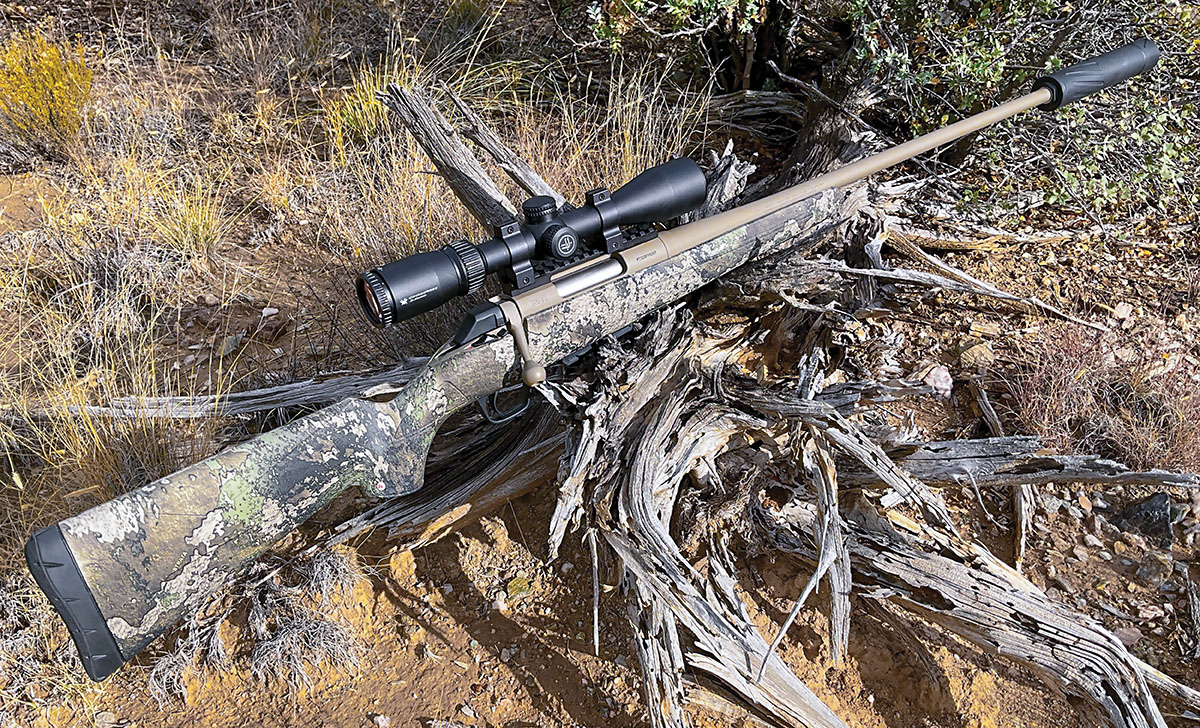
    The Winchester XPR is truly a western hunting rifle.
    The Winchester XPR is truly a western hunting rifle.

    I have a problem. I suffer from FOMO. For those unfamiliar with modern acronyms, FOMO stands for “Fear of Missing Out.” While my Winchester Model 70 has filled the freezer again and again, the introduction of the Winchester 6.8 Western cartridge triggered a surge of anxiety. Was my faithful Winchester 270 obsolete? Would pronghorn and mule deer laugh off the smack of my handloads? It took months of rationalizing, but I finally came to terms with the idea that, while some modern cartridges outperform it, the Winchester 270 is still capable of delivering magnum-like performance. FOMO crisis averted!
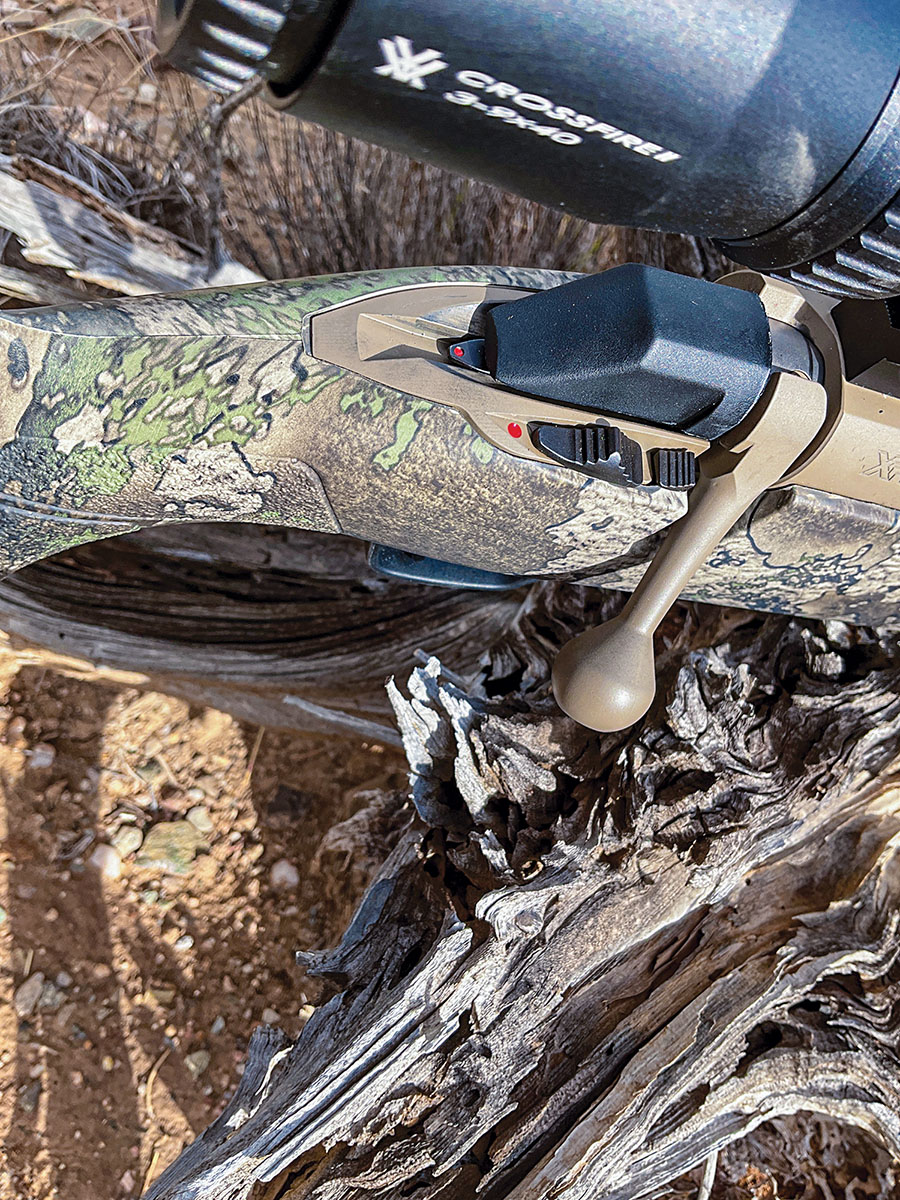
    A safety tab pops out from under the bolt shroud when the hammer is cocked.
    A safety tab pops out from under the bolt shroud when the hammer is cocked.
    Then, at a local Rocky Mountain Elk Foundation banquet, a Winchester XPR rifle chambered in 6.8 Western was in the raffle. My eye started twitching, a cold sweat formed on my brow, and my hands trembled as I dumped all my raffle tickets in the bucket and mumbled a quick prayer. I don’t know if it was the prayer or the eighty raffle tickets, but I won the rifle!

    After the excitement faded, I started researching just what I had won. The name Winchester evokes a proud heritage, and over the last 160 years, they have earned a reputation as the “Rifleman’s Rifle,” with the Model 70 being the pinnacle of quality.
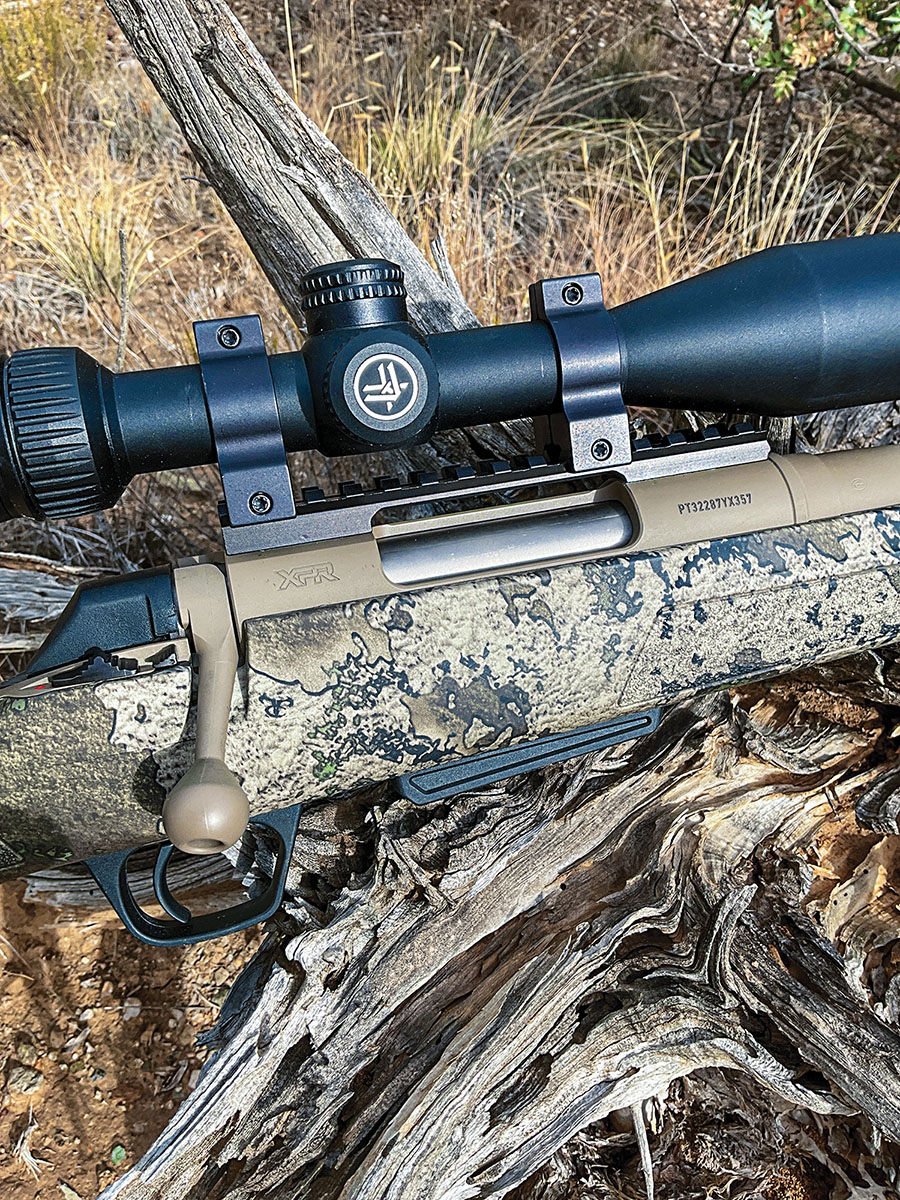
    The EGW Picatinny rail provides more scope mounting options.
    The EGW Picatinny rail provides more scope mounting options.
    Over the last 20 years, manufacturing methods, machining techniques and space-age materials have changed the landscape of the hunting rifle market, while bullet construction and powder development have pushed cartridge capabilities beyond the comprehension of many hunters, resulting in outstanding game-killing capability at an economical price. 

    In 2015, Winchester premiered their XPR rifle. Winchester engineers eliminated labor-intensive machining while designing components and coatings that combine into an accurate, easy-to-maintain hunting rifle. While I couldn’t find an exact definition for XPR, we can guess it stands for Xtreme Precision Rifle. 

    Since I am familiar with my Model 70, I was curious to see how the Winchester XRP differed. The deep blue luster of the receiver and barrel has been replaced with Winchester’s version of Cerakote. The rich warmth of walnut is now a weatherproof synthetic stock that is impervious to humidity changes. The original Model 70 had a machined flat-bottom receiver with an integral recoil lug. The XRP has a round receiver, which is easier and cheaper to machine and inherently concentric, which is known to improve accuracy. Some will argue that a flat-bottom receiver provides better accuracy. That would depend on many factors. I had an expensive rifle with a flat-bottom receiver, which easily was the most inaccurate rifle I have ever had the displeasure to own. On the other hand, many target rifle platforms use a round receiver. A Remington 700 that I owned (and should have kept) gave sub-MOA accuracy and was used by a friend to take a Boone & Crocket pronghorn buck in New Mexico.
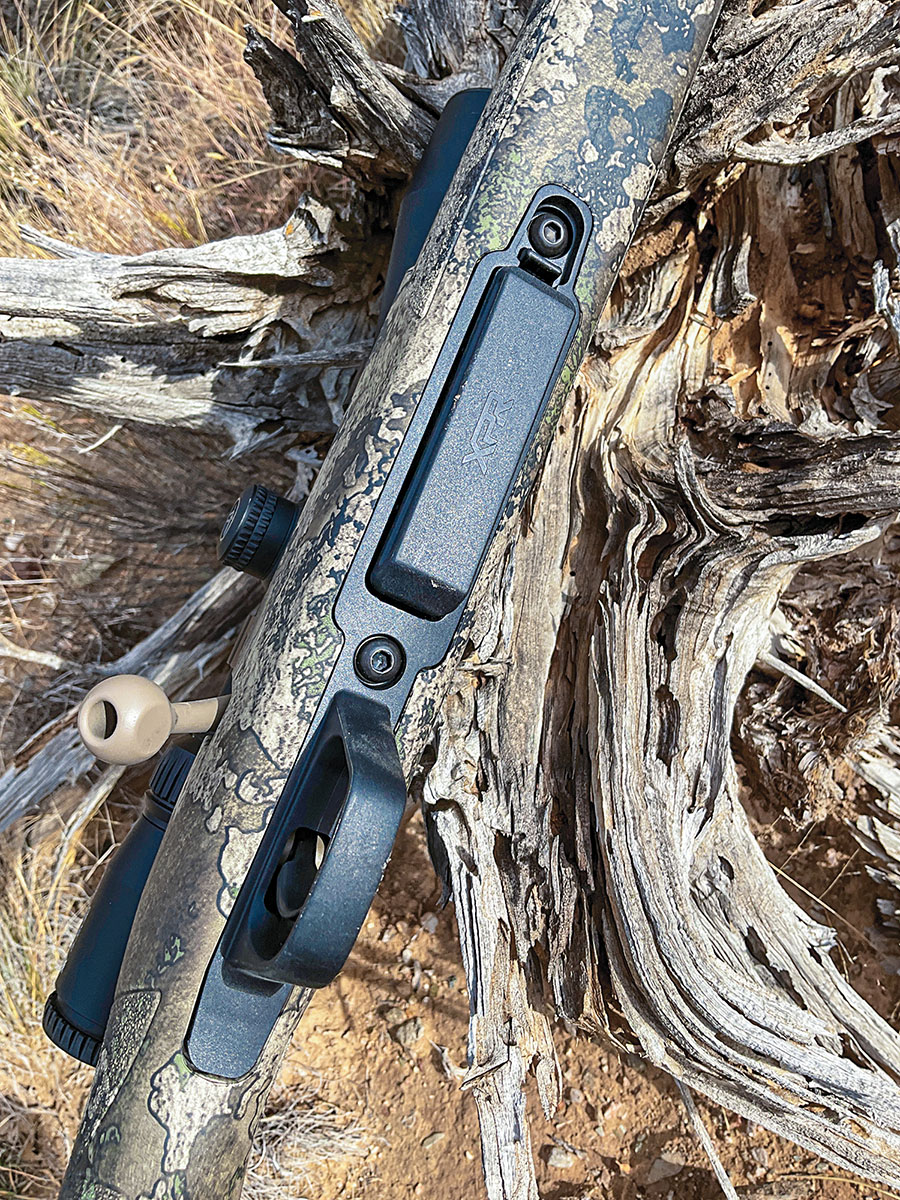
    The low magazine profile eliminates hang-ups when going through heavy brush. The  trigger guard and magazine well are made  from high-impact plastic.
    The low magazine profile eliminates hang-ups when going through heavy brush. The trigger guard and magazine well are made from high-impact plastic.
    Most round receivers utilize a large barrel lug sandwiched between the barrel and the receiver. The engineers at Winchester took the XPR in a different direction by embedding a metal lug in the stock that mates to a shallow keyway in the receiver.

    The receiver’s profile and barrel nut harken back to that of older Savage rifles, which are known for their accuracy. The oversized bolt follows a trend I see across many manufacturers. The larger-diameter bolt is stronger and flexes less under the extreme bolt thrust of modern high-pressure cartridges. The 60-degree throw means faster bolt cycle times and more clearance for a wider range of scopes. Like higher-priced rifles, the XPR bolt-locking system uses three large lugs to spread the bolt thrust over a larger area. The XPR uses a push-feed system, common on most hunting rifles on the market. The exterior surface of the bolt is treated with a nickel-Teflon compound, making it corrosion-resistant and slick. The bolt can be field-stripped without special tools, which could save a hunt of a lifetime during freezing rain or wet snow.

    As an added safety feature, a small red-dotted tab pops out from the rear of the bolt shroud to indicate the hammer is cocked.
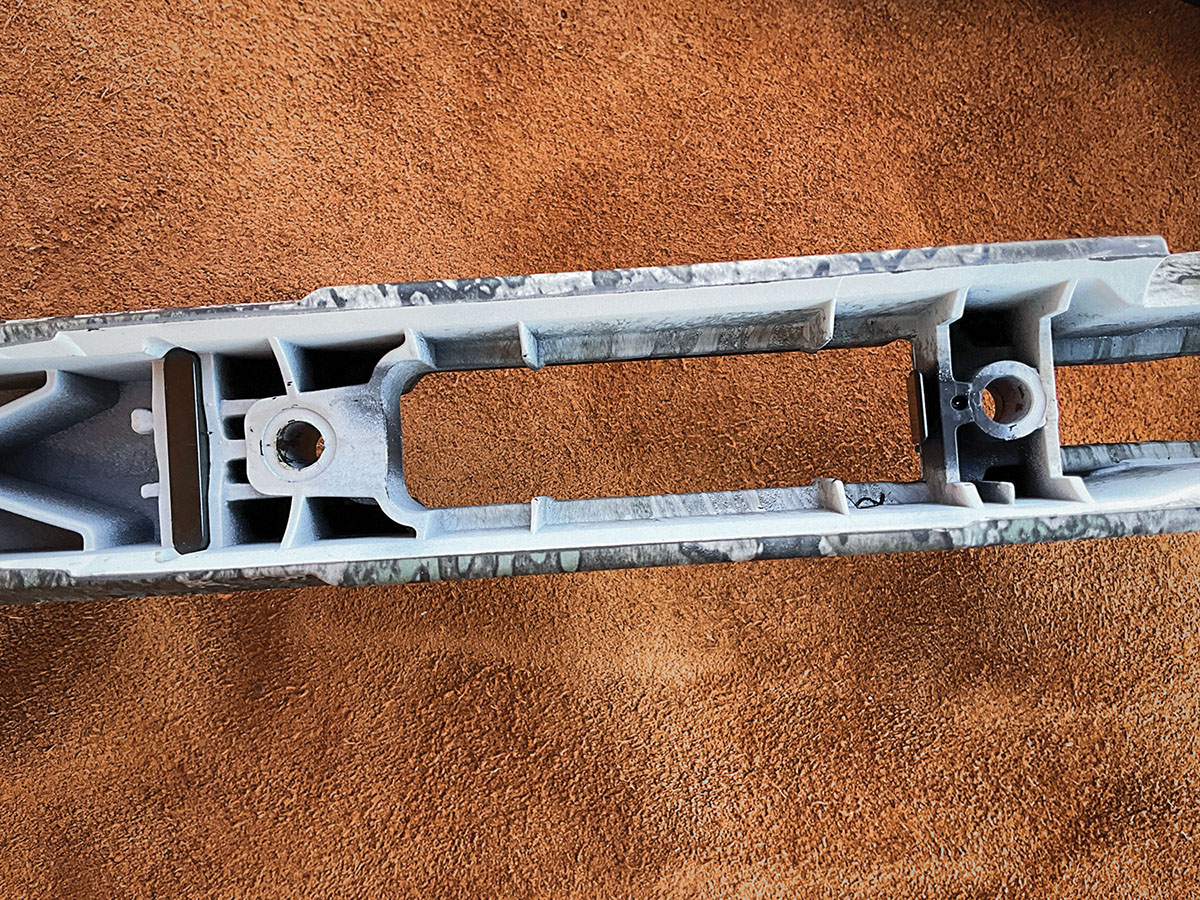
    The recoil lug embedded in the stock fits tightly into a slot in the receiver  to prevent rearward movement. Two plastic pillars maintain the proper receiver-to-stock interface.
    The recoil lug embedded in the stock fits tightly into a slot in the receiver to prevent rearward movement. Two plastic pillars maintain the proper receiver-to-stock interface.
    The thumb-operated two-position safety is on the right of the receiver. Forward to fire, rear is safe. Just forward of the safety is a button that allows the action to be opened while the safety is on. On the left side is the bolt release, which enables the bolt to be removed from the receiver for cleaning or transport.

    The trigger of the original Model 70 was renowned for its simplicity and reliability. Admittedly, I assumed the trigger on the XPR would be a downgrade. I was wrong. On most firearms, I familiarize myself with the creep and travel as I load the trigger with finger pressure. The Winchester MOA trigger has no perceptible creep or travel. I press the trigger, and it breaks like glass. I have rifles costing three times what the XPR retails for, and the MOA trigger breaks more cleanly than they do. The trigger is adjustable by removing the action from the stock. The rifle came set to 3.5 pounds, but I wanted to go a little lighter. But, in doing so, the trigger became unstable and tripped with casual handling of the gun. I adjusted the screw back to the factory setting, and that’s where it will stay. Admittedly, now that I am used to the trigger, I wouldn’t want it any lighter. No aftermarket triggers are currently available. Contrary to what some claim, the Timney Winchester 70 MOA trigger will not work in the XPR series.
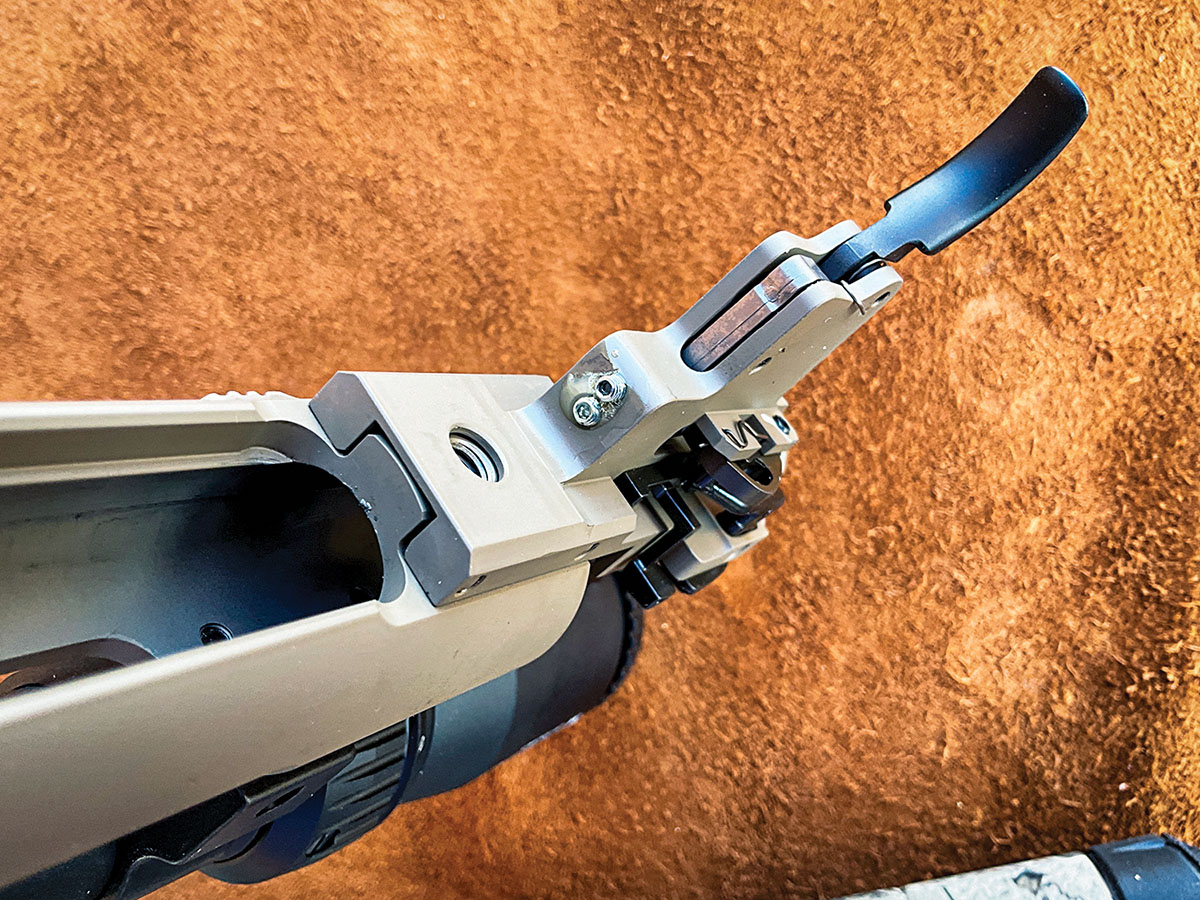
    The Winchester MOA trigger is permanently attached to the receiver and has two adjustments: one for trigger overtravel, the other for trigger weight.
    The Winchester MOA trigger is permanently attached to the receiver and has two adjustments: one for trigger overtravel, the other for trigger weight.
    The barrel is marked “Imported by BACO, (Browning Arms Company), Morgan, Utah. Made in Portugal by Browning Viana.” If we are to believe Internet rumors, Bergara makes some or all of the barrels for the XPR. If true, this is a positive thing, as they are known for quality and precision. Many custom rifle builders use Bergara barrels. 

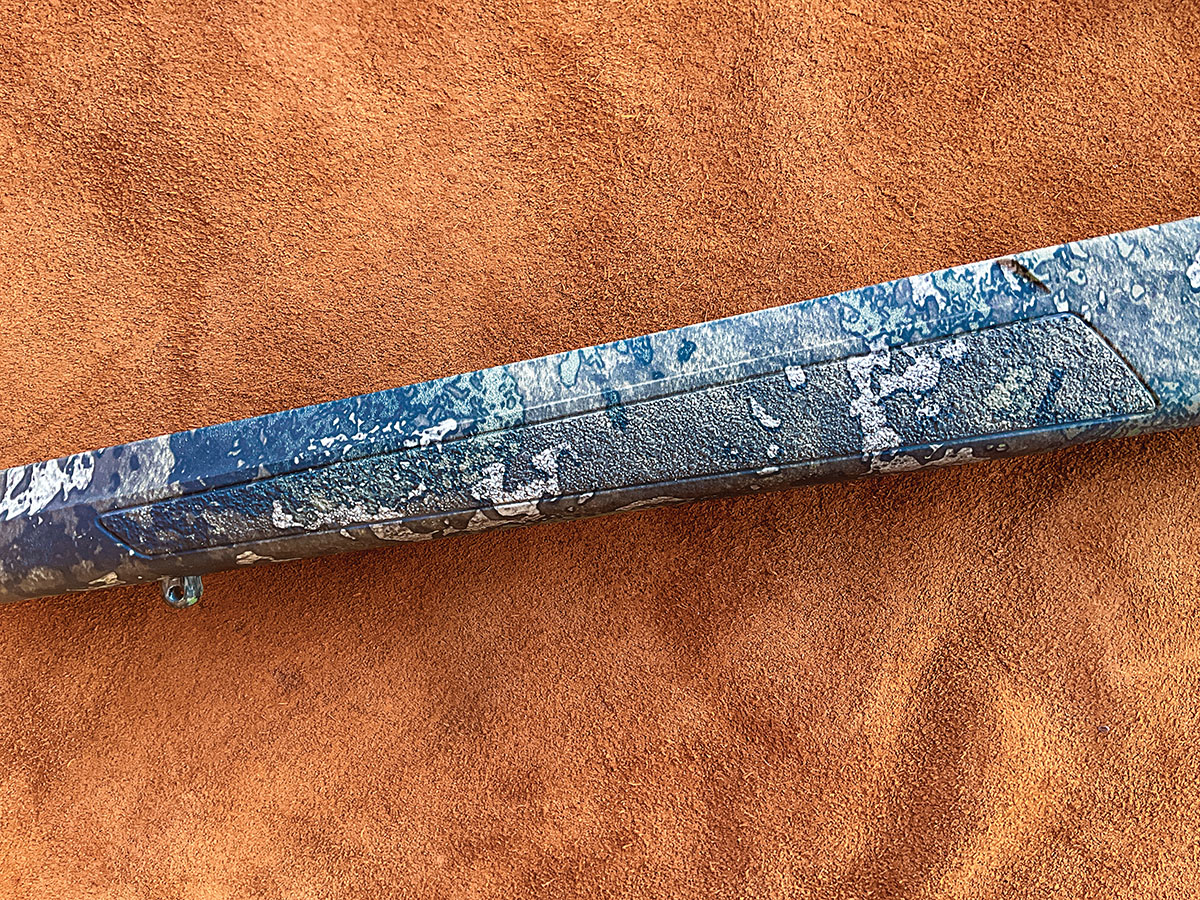
    Molded stippling on the forearm and wrist area provides a positive hold under the worst conditions.
    Molded stippling on the forearm and wrist area provides a positive hold under the worst conditions.
    The chrome-moly stress-relieved barrel is button rifled and burnished smooth to reduce copper and carbon buildup. It’s also free-floated off the stock. The gap is small, but a dollar bill will slide all the way to the receiver. I prefer a wider gap to ensure the barrel doesn’t contact the stock when using a bipod or under recoil. Typically, I would increase the gap by sanding the stock, but I hesitate to alter the engineered structure of the synthetic stock. Stocky’s Stocks offers a selection of XPR-compatible stocks that I may change to in the future. A word of caution: if a pine needle, twig, ice, or whatever gets jammed into the gap between the stock and barrel, it can cause a change in the point of impact.

    While most XPR rifles have a threaded muzzle for a brake or suppressor, my rifle didn’t. As soon as I received the gun, I brought it to my friendly gunsmith to have it rectified. The $100 cost was well worth it, as I hunt suppressed. I already have military service-induced tinnitus, and I need to protect the hearing that I have left.
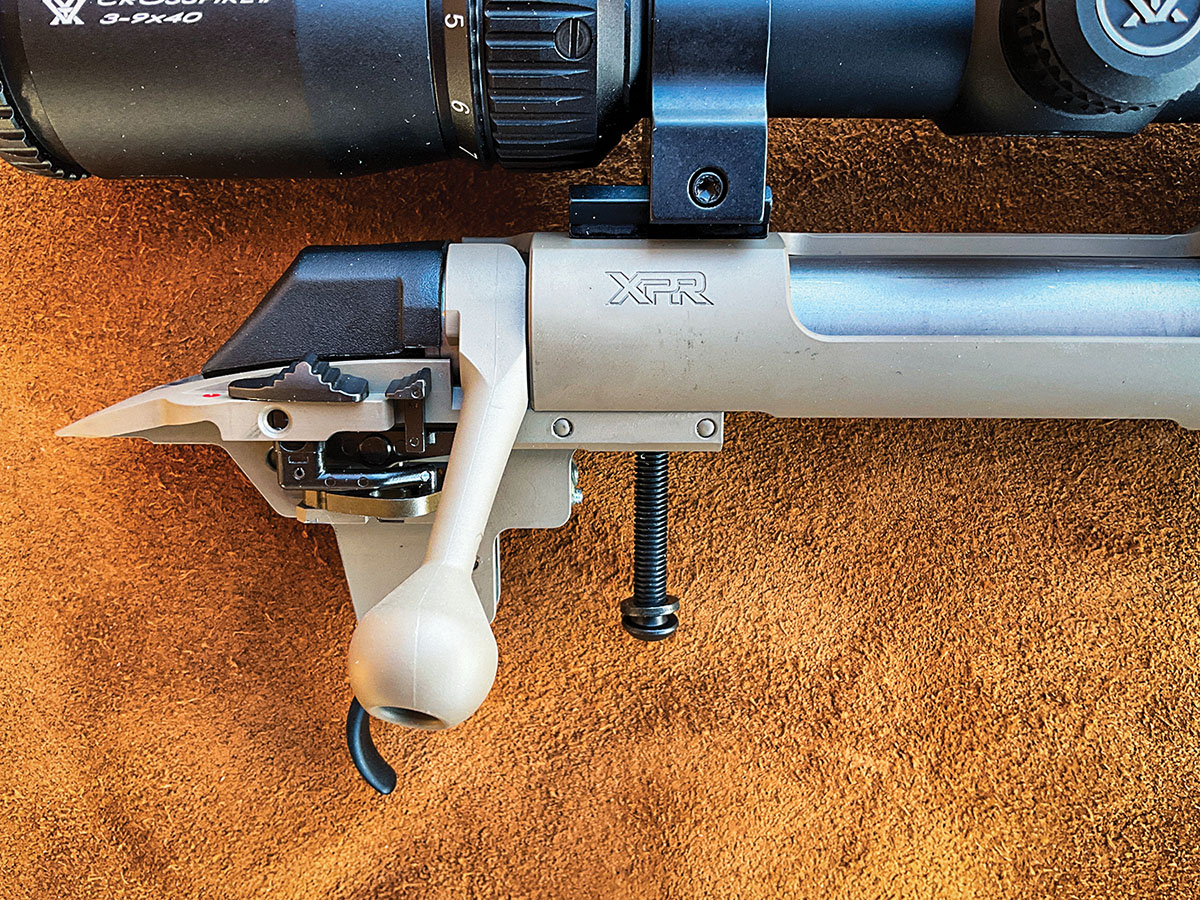
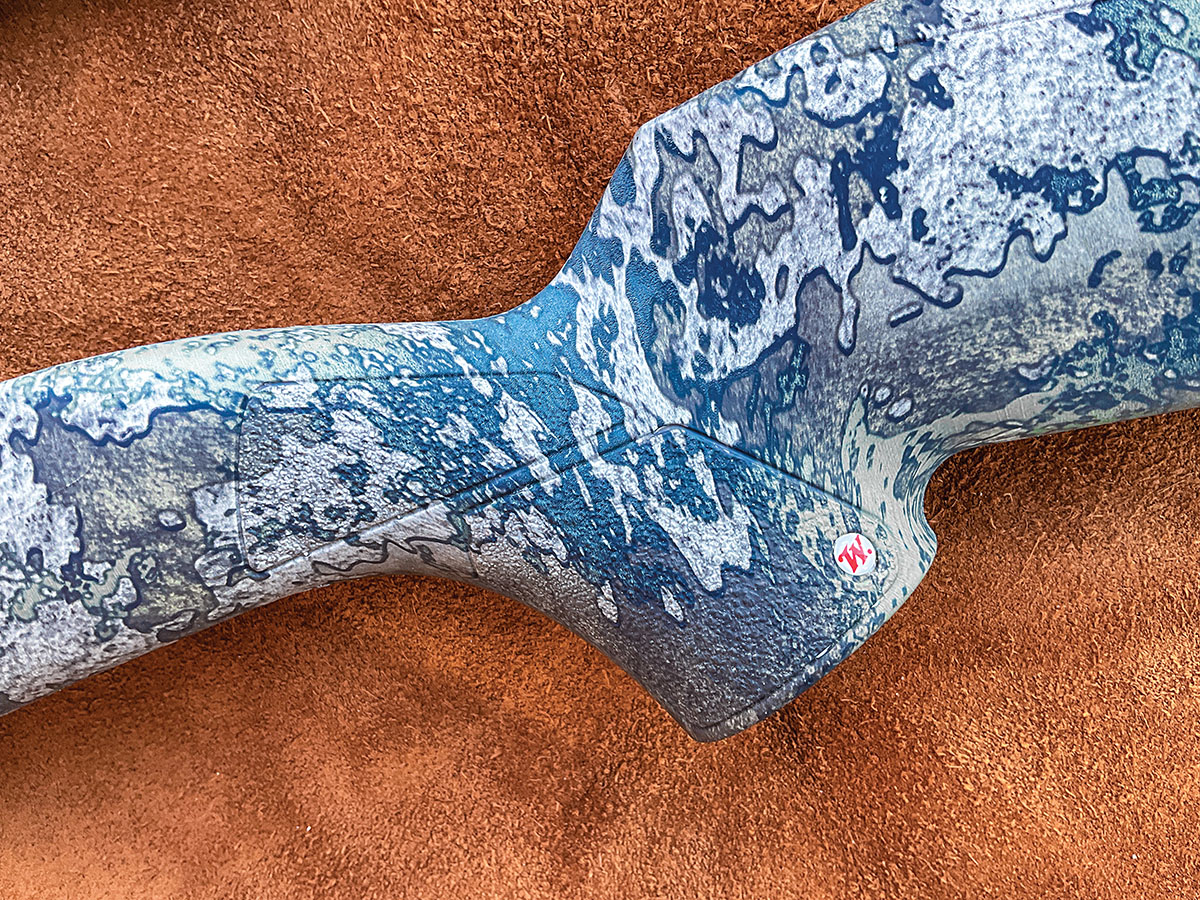
    The two-position safety is easily operated with the shooter’s thumb.
    The two-position safety is easily operated with the shooter’s thumb.
    The “bottom metal” isn’t metal. The trigger guard and trim around the magazine well are made of high-impact plastic resin. The Fudd in me screams that it should be metal, but I haven’t heard of any failures, and since I couldn’t find any aftermarket offerings, I will accept it as is.

    The plastic magazine for my 6.8 Western holds three cartridges. Admittedly, it took a little study to figure out the proper way to insert cartridges. Since the magazine is single-stack, a recommended spare magazine will comfortably fit into a hip pocket. An issue I had when getting familiar with the rifle was the failure to feed single rounds. I was lazy and didn’t want to pull the magazine to insert more cartridges, so I laid a fresh round on top of the magazine and tried to push the bolt home. The nose of the bullet rammed into the breech face, refusing to make the jump into the chamber. I was bull-headed and tried it a few more times, and all I succeeded in doing was deforming the nose of the bullet. This was 100% on me, as the cartridges fed perfectly when stripped from the magazine.

    The XPR comes in different configurations and action lengths. The basic models are predominantly seen
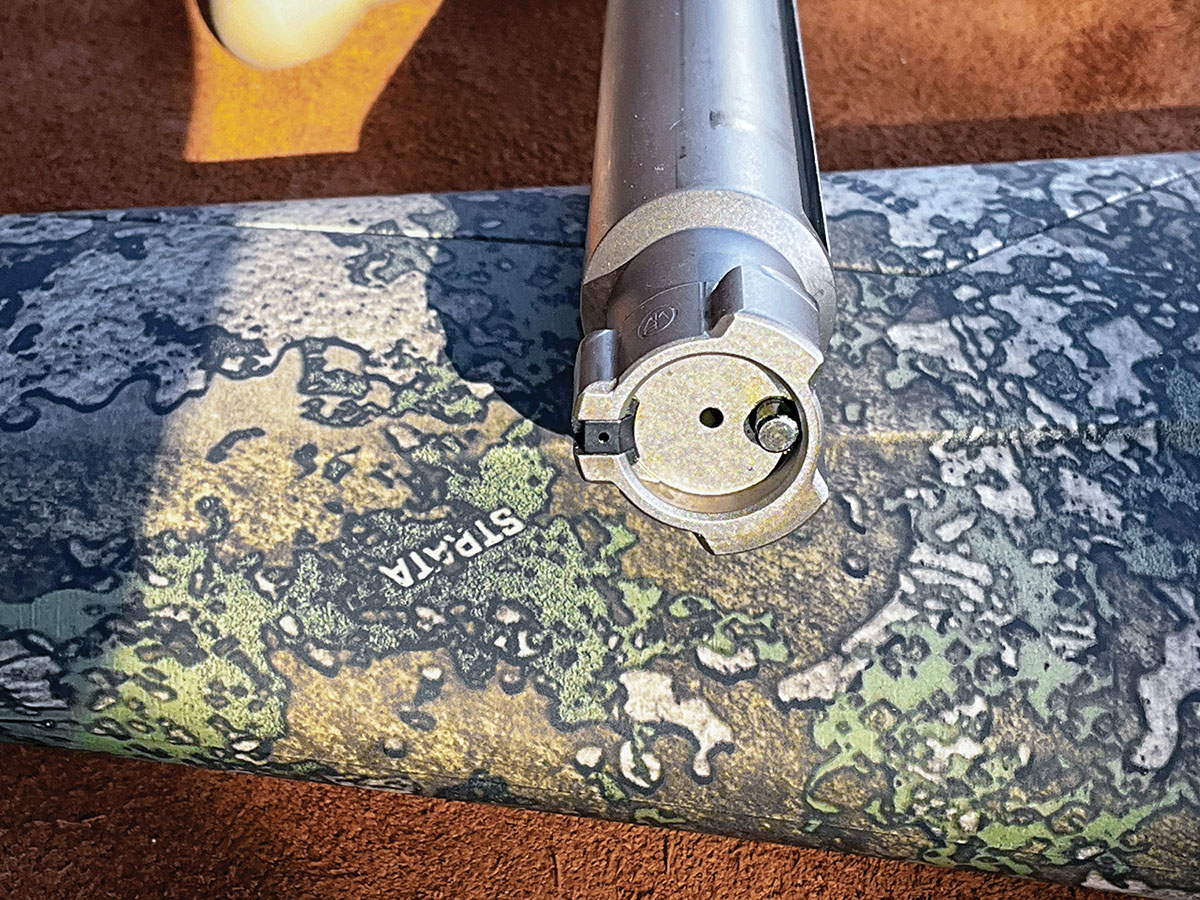
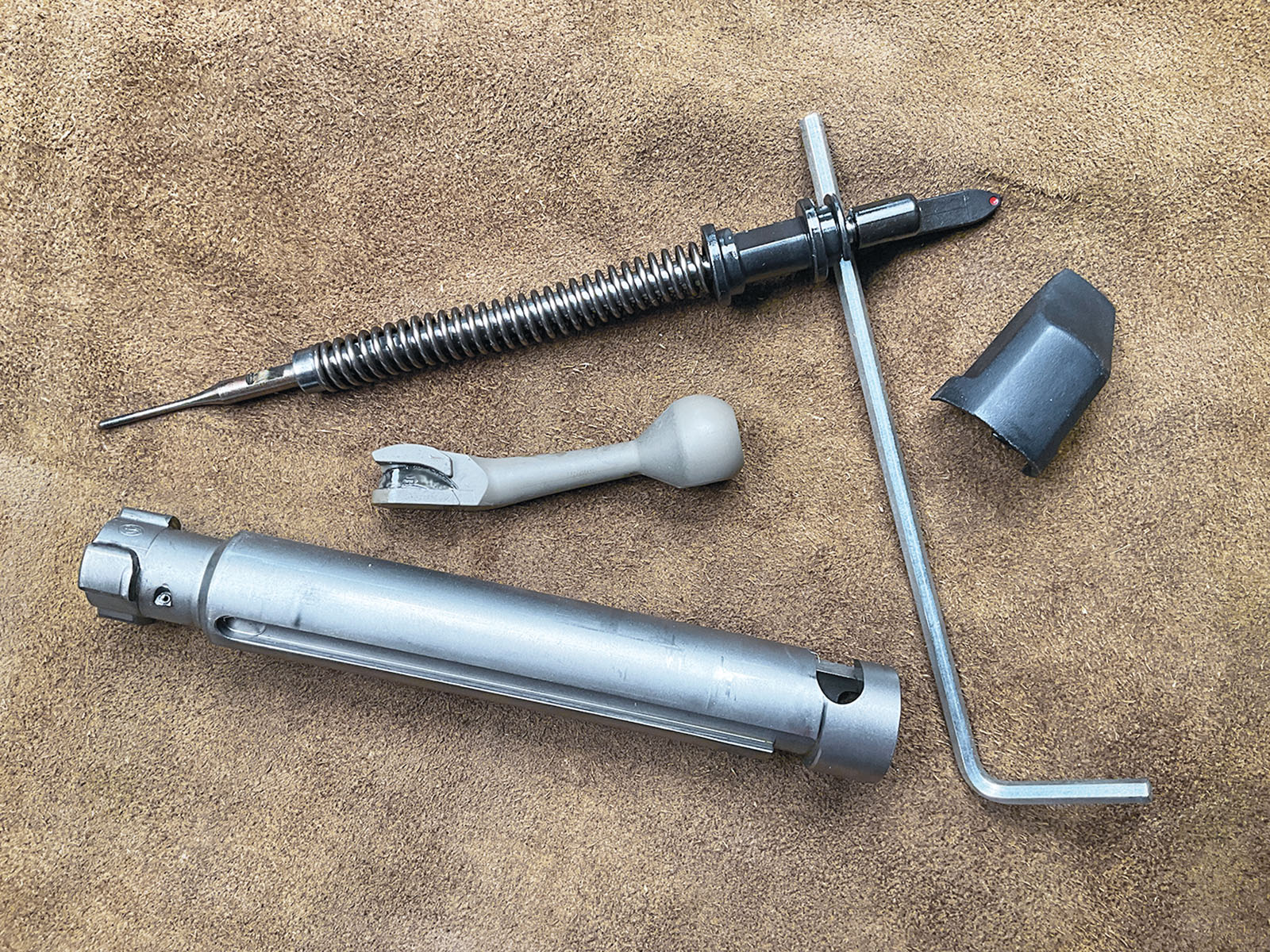
    The oversized bolt uses three lugs for extra strength where it’s needed.
    The oversized bolt uses three lugs for extra strength where it’s needed.
    in black. My action and barrel came in Winchester’s Dark Earth Perma-Cote, which matches well with the True-Timber Strata-patterned camouflage stock. The Strata camouflage coloring easily blends into the muted juniper-
    The bolt can be field stripped in seconds with anything the size of a 16-penny nail.
    The bolt can be field stripped in seconds with anything the size of a 16-penny nail.
    pinon habitat color palette of central Arizona. The stock is stippled on the forend and the pistol grip area, making the rifle easier to handle in adverse conditions. The one-inch-th`ick recoil pad helps reduce felt recoil, but it goes beyond just being soft. The pad has internal ribs that, during recoil, force the stock ever so slightly downward away from the shooter’s cheek, reducing or eliminating the “slap” of the rifle stock.

    No provisions for open sights were included, and I would have removed them if they were, as I prefer a clean muzzle when weaving through the coat-snagging oak brush and cacti where I often hunt. The rifle came with a Vortex Crossfire II 3-9x40mm scope and Winchester two-piece scope mounts. Due to issues with my eyes, I need the scope farther back than most shooters prefer, and the original bases wouldn’t allow it. I have had good luck with EGW 

    Picatinny scope rails, and the extra length they provide for scope positioning. One thing I didn’t like was the Winchester scope rings. It doesn’t matter which screw is loosened; the scope is free to turn and slide, requiring the scope to be re-leveled after each change. I prefer scope rings that use a separate set of screws to clamp to the scope base and another set to clamp the scope tube. However, the gun was free, so I shouldn’t look a gift horse in the mouth.
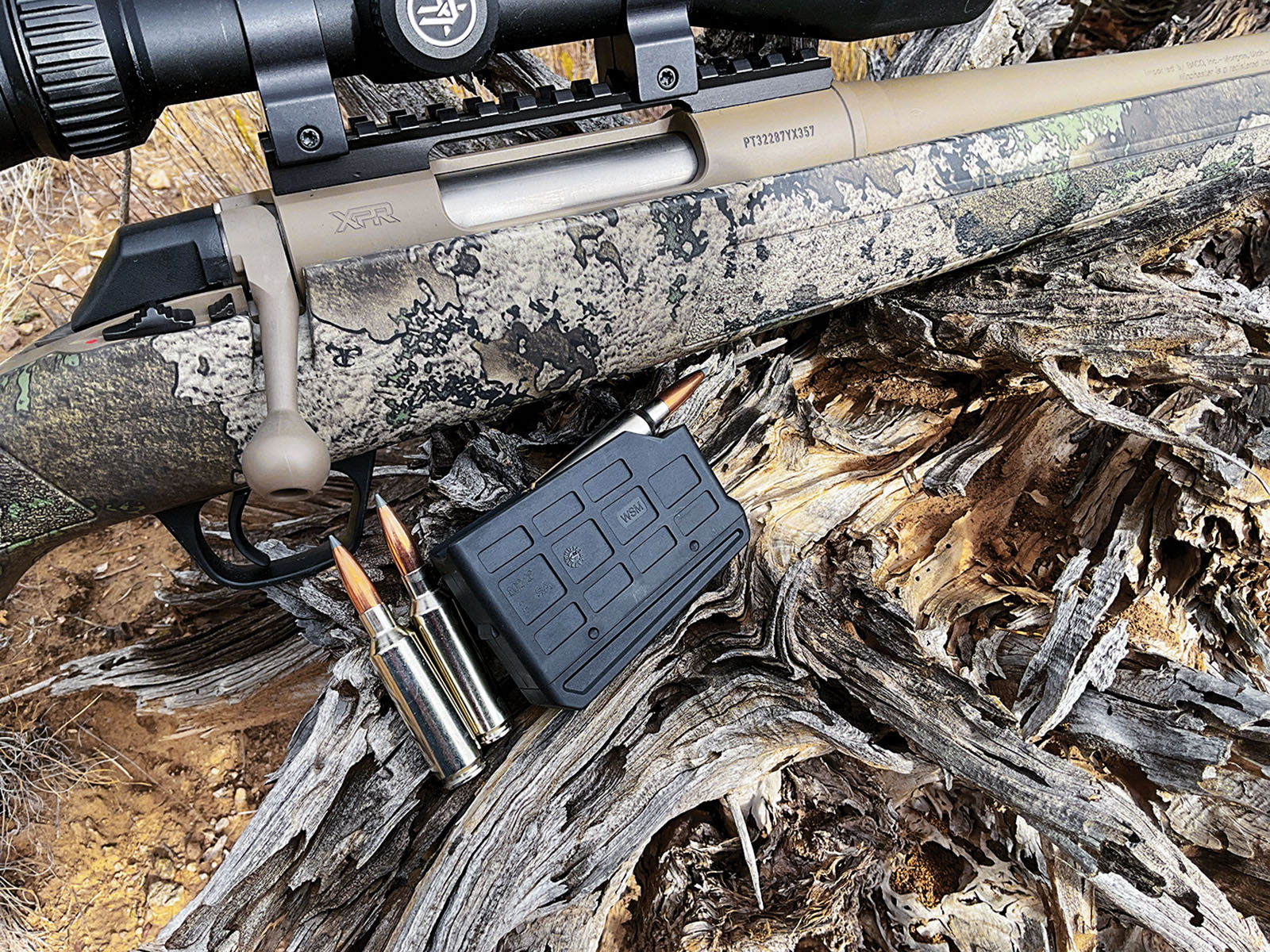
    The petite magazine holds three cartridges.
    The petite magazine holds three cartridges.
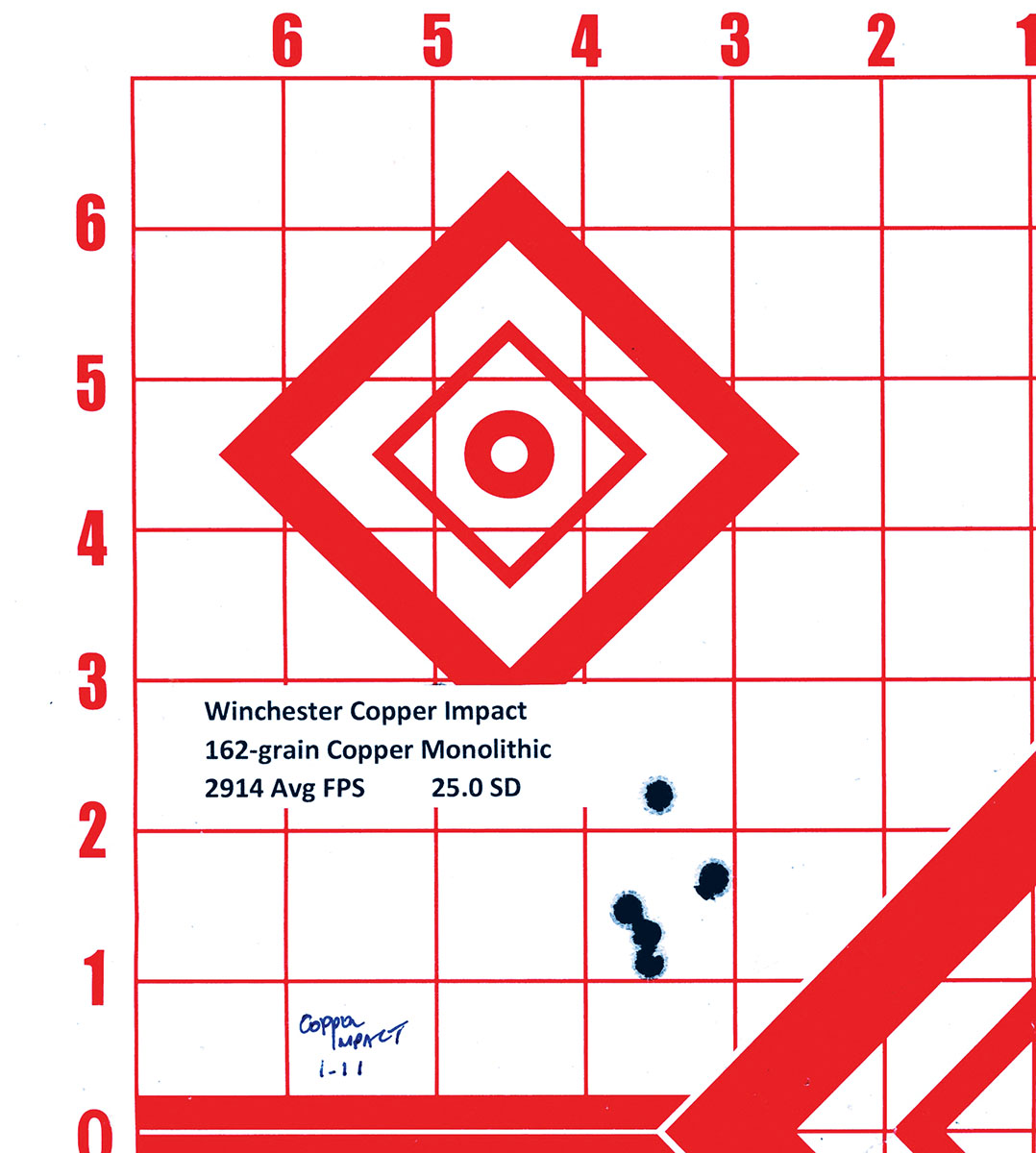
    A target showing the results of testing Winchester Copper Impact  ammunition.
    A target showing the results of testing Winchester Copper Impact ammunition.
    If you’re like me and enjoy tinkering with a rifle to make it more personalized, know that you’ll be limited with the XPR. Yes, a sling-mount style of bipod can be used, but the stock structure is such that adding a Picatinny or Arca rail to the forearm will require great care. The ribs inside the stock will be destroyed if accidentally damaged with a drill bit. Yes, there are voids large enough to accommodate a backing nut and washer, but it will take careful layout and planning to make it work well. If metal stock pillars are essential to you, cautious machining should allow the fitment of aluminum inserts into the plastic pillars molded into the stock – but with the trigger guard being plastic resin, is the juice worth the squeeze?

    At seven pounds, the XPR is comparable in weight to the Ruger American II, the Savage 110 Apex and its sister, the Model 70. Overall, I find the Winchester XPR a fitting checkmate to other competitive entry-level hunting rifles. 

    I found the accuracy acceptable for a hunting rifle. Considering the size of the kill zone of a deer, elk, or moose, the XPR would reliably make a killing shot out farther than most of us should be shooting. Practice and proper gun handling will always improve accuracy.

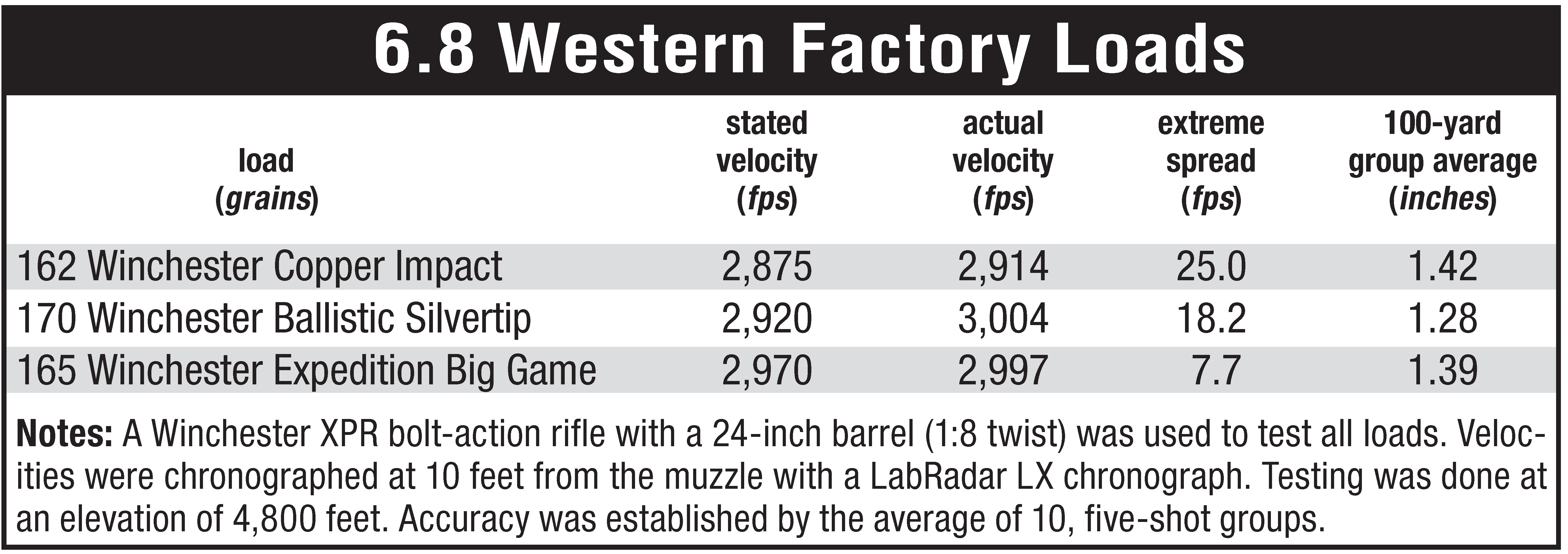
    Shooting accuracy varied depending on bullet weight and type. All shooting was done from the shoulder, across a sandbag. A LabRadar LX was used to test all loads. Of the types I tried, the Winchester 170-grain Ballistic Silvertip gave the best results with five-shot groups running from 1.11 to 1.45 inches at 100 yards. Next was the Winchester Copper Impact 162-grain load, which ran 1.11 to 1.72 inches at 100 yards. The Winchester Expedition Big Game 165-grain load ran from 1.32 to 1.46” at 100 yards. I was amazed at the velocity. All loads tested were well over 2,900 fps, and the Ballistic Silvertip beat them all, averaging 3,004 fps. 

    Wolfe Publishing Group