Login


Wolfe Publishing Group
    Menu

    The Colt Walker Dragoon

    The Horse Pistol of the Texas Rangers

    Without words, the Walker Colt tells a man what it is made for. In hand, it is barrel-heavy. The hammer easily cocks with the the supporting hand. 
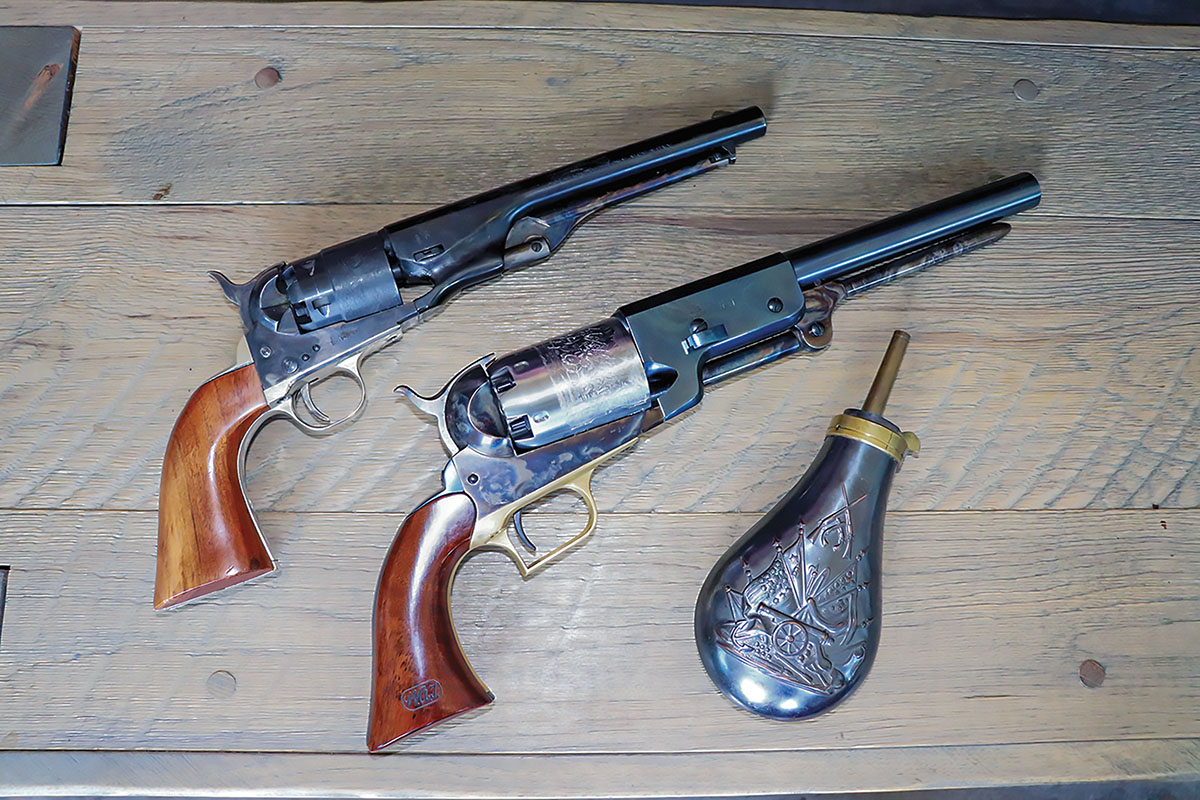
    The Walker Colt (by Cimarron Firearms) contrasted with the 1860 Army replica (left).
    The Walker Colt (by Cimarron Firearms) contrasted with the 1860 Army replica (left).
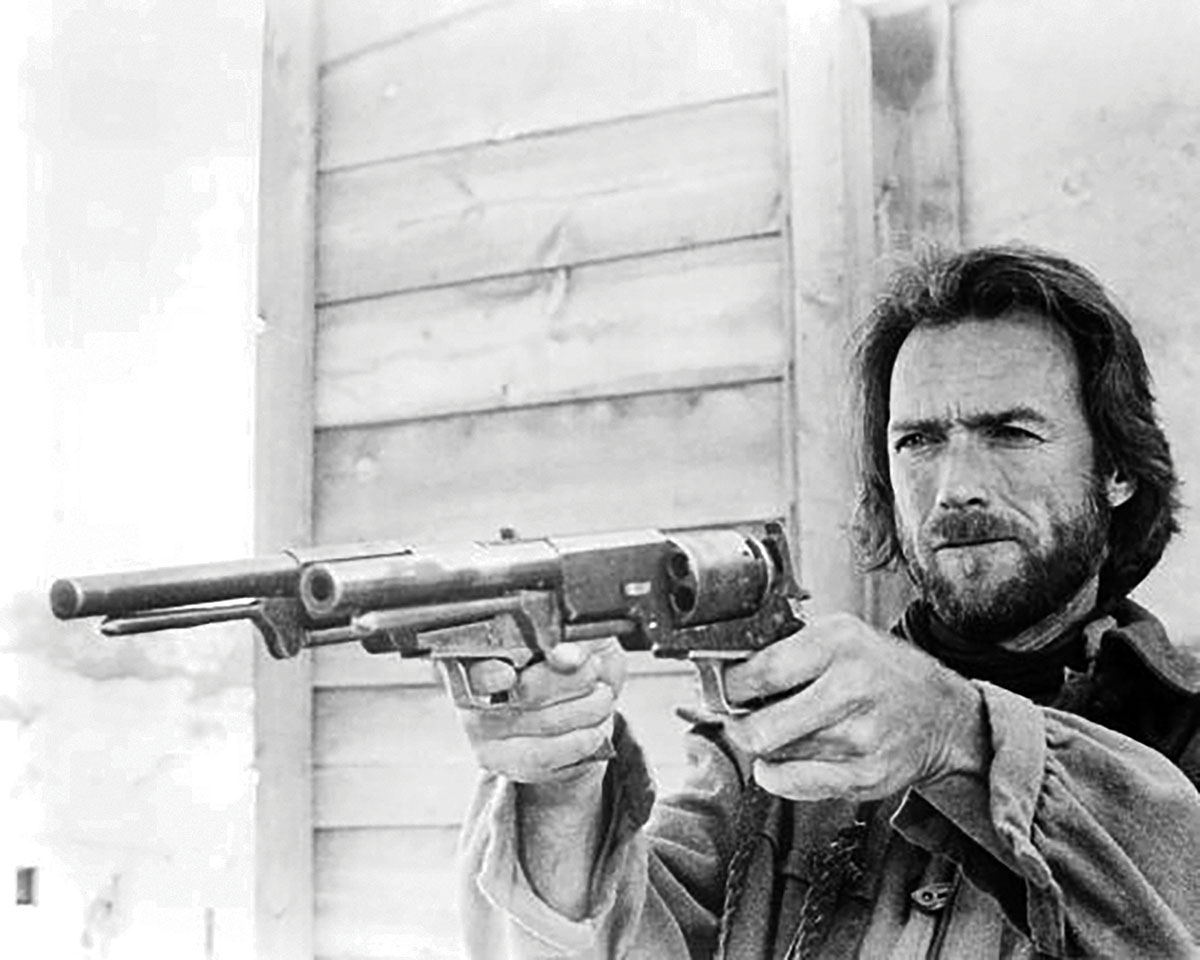
    In 1976, Clint Eastwood carried two Walker Colts as The Outlaw Josey Wales.
    In 1976, Clint Eastwood carried two Walker Colts as The Outlaw Josey Wales.
    Shoot it two-handed, supported over a saddle or one-handed while the other holds the reins. Its rear sight is notched in the cocked hammer. The grip is shaped like a plow handle, a shape all hard-working men and women are used to. The chambers hold up to 60 grains of black powder. The Walker Colt wants to be carried on the saddle, not in a belt or pocket. Strapped in holsters on each side of the pommel. Because you want two of them. At least two of them. Look at the engraving on the cylinder – this is a gun for the mounted fighter. To bring the battle on horseback, then dismount and fight on foot. A gun for the Texas Ranger. 

    At the 2026 SHOT Show in Las Vegas, I talked to Greg Slaughter at the Cimarron Firearms booth. The flagship of their percussion cap-fired line is a fire-breathing dragoon called the Walker. Chief among their offerings are the Lonesome Dove commemoratives. Mine showed up a couple of weeks after the SHOT Show, and I let it speak to me for a couple more weeks before loading it with powder and ball. 

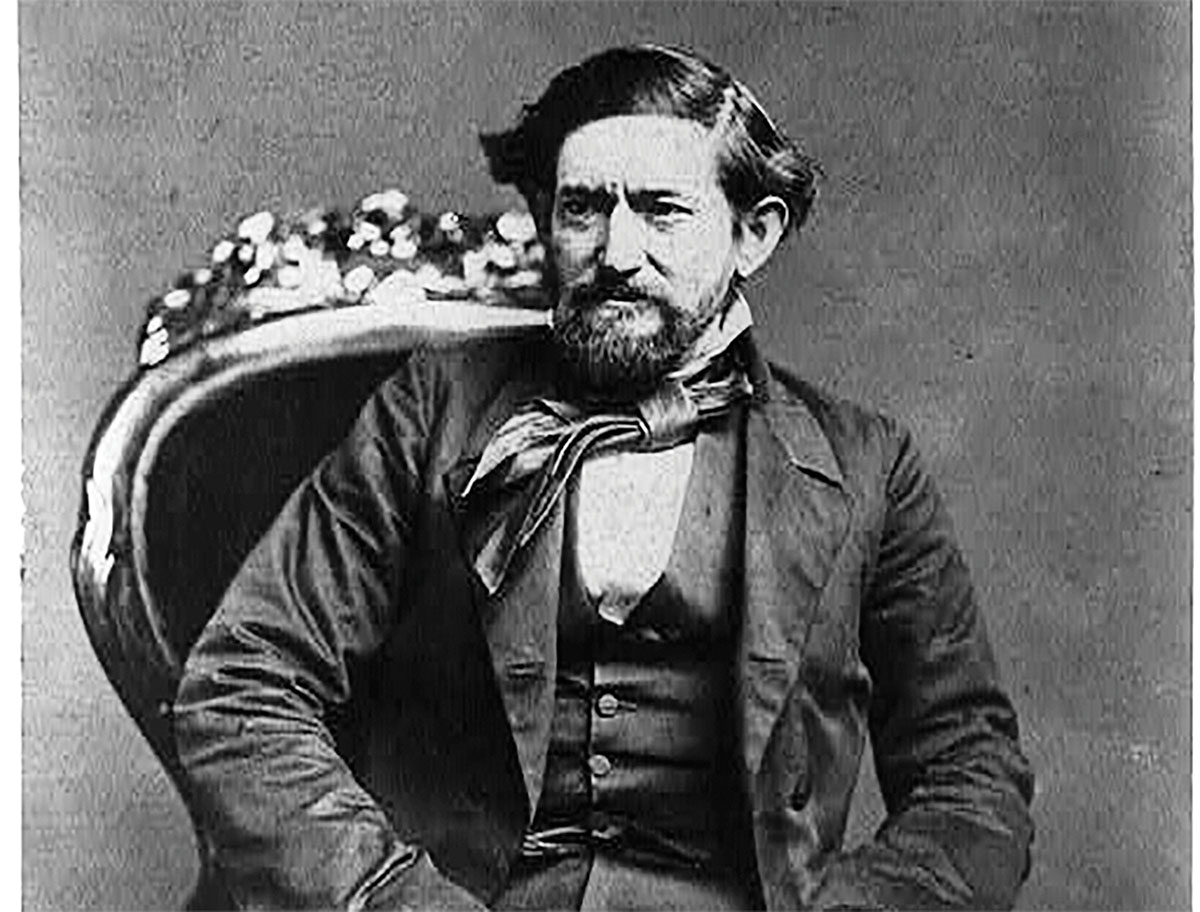
    The Colt Walker was purpose-built for the Texas Rangers by Sam Colt. Samuel
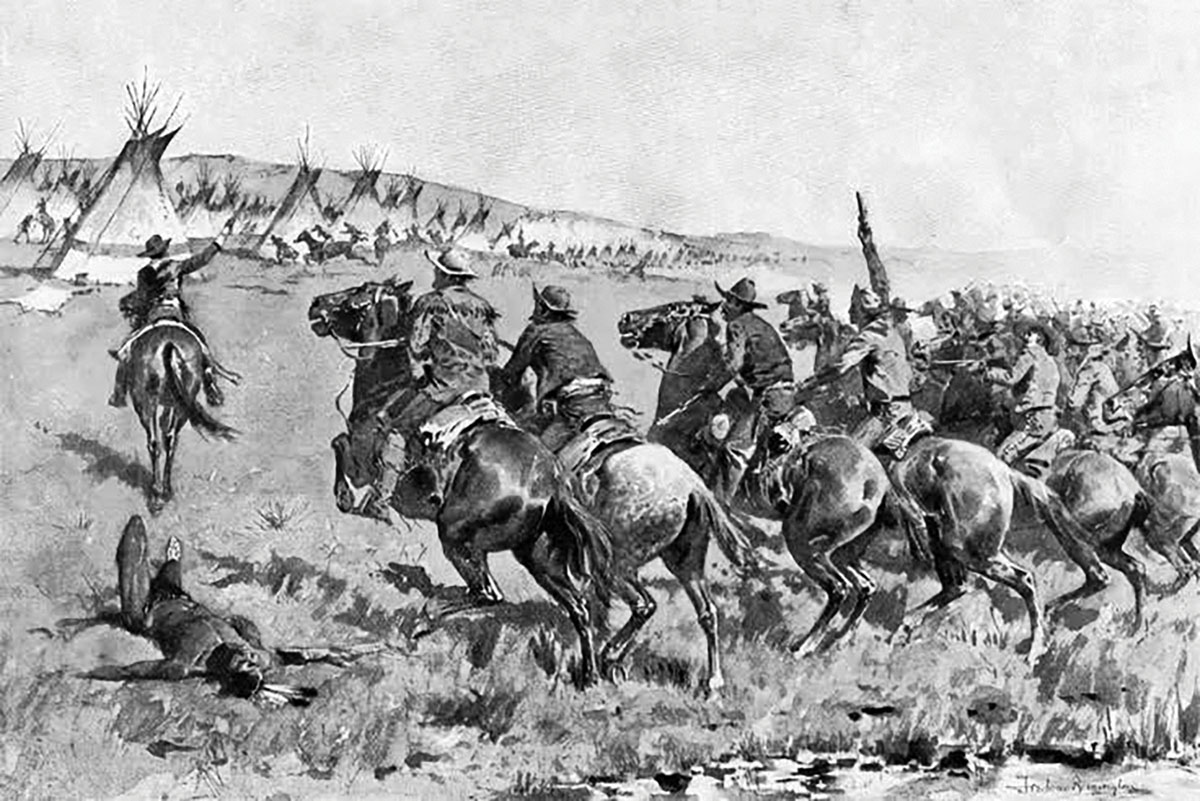
    The Battle of Little Robe Creek was the turning point for the Comanches, and the Walker Colt was one of the deciding factors in the spring 1858 campaign in the Antelope Hills.
    The Battle of Little Robe Creek was the turning point for the Comanches, and the Walker Colt was one of the deciding factors in the spring 1858 campaign in the Antelope Hills.
    Walker, who was employed in 1846 as a captain in the United States Mounted Rifles, hand-delivered his design improvements to the Colt Patterson to create the Walker. 

    The Indians called him Brave-Too-Much. John Coffee “Jack” Hays was born in Tennessee in 1817. In 1836, at the age of 19, he enlisted with the Texas Rangers. Sam Houston eventually appointed Hays captain of a company of Texas Rangers, where Hays would fight alongside a young Sam Walker. Their friendship and ultimate alliance with Sam Colt helped inspire all the Colt firearms that followed. Jack Hays was presented with an 1847 Colt serial number 1001.
    The Indians called him Brave-Too-Much. John Coffee “Jack” Hays was born in Tennessee in 1817. In 1836, at the age of 19, he enlisted with the Texas Rangers. Sam Houston eventually appointed Hays captain of a company of Texas Rangers, where Hays would fight alongside a young Sam Walker. Their friendship and ultimate alliance with Sam Colt helped inspire all the Colt firearms that followed. Jack Hays was presented with an 1847 Colt serial number 1001.
    The order for 1,000 military contract revolvers saved Samuel Colt financially, and 100 more revolvers were built for the civilian market at the Eli Whitney plant. 

    Walker (and Captain John Coffee “Jack” Hays) envisioned the guns to be carried in pairs on saddle-mounted holsters. The first shipment of Walker Colts arrived in Vera Cruz and were immediately put into action in the Mexican-American conflict. That was in 1847. Captain Walker died the same year in the Mexican town of Huamantla when 2,000 of Santa Anna’s soldiers surrounded his men. He was 30 years old, and his last words were, “I am gone, boys. Never surrender! Hand me my six-shooter.” Four hundred of the guns that were to bear his name were delivered to U.S. troops before the cessation of hostilities. 

    The Walker Colt was capable of holding 60 grains of black powder in each of its 44-caliber chambers. While energy levels were in excess of 500 foot-pounds, there was a danger of overloading the
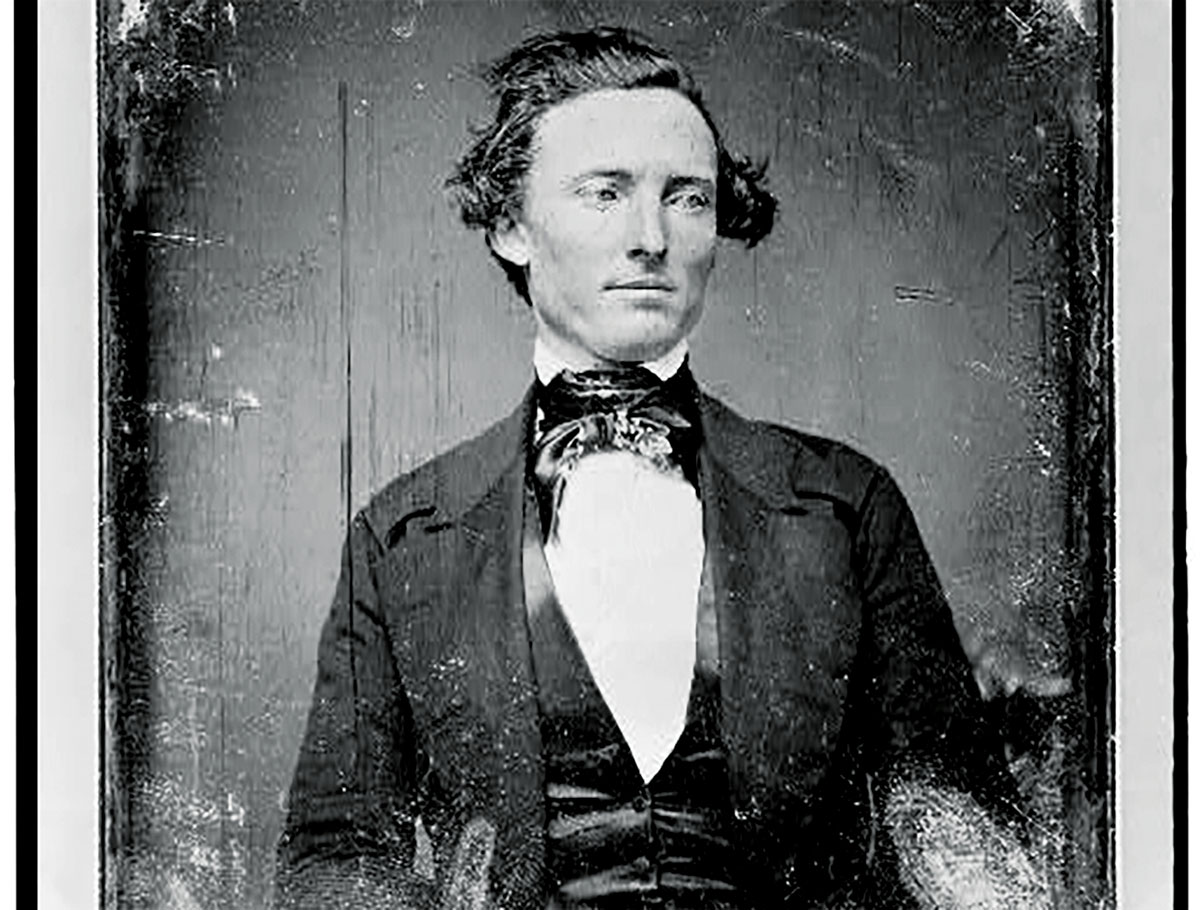
    The Colt Walker was purpose-built for the Texas Rangers by Sam Colt according to design improvements to the Colt Paterson design hand-delivered by Samuel Walker, who in 1846 was employed as a captain in the United States Mounted Rifles.
    The Colt Walker was purpose-built for the Texas Rangers by Sam Colt according to design improvements to the Colt Paterson design hand-delivered by Samuel Walker, who in 1846 was employed as a captain in the United States Mounted Rifles.
    cylinder, which resulted in ruptures of the cylinder. 

    Another failure of the first design was the loading lever, which dropped in recoil and tended to disrupt follow-up shots. Troops tied a leather loop around the barrel to slide over the loading arm. 

    After the war, many Walkers got “lost” as troops mustered out and the big Colts ended up on the saddles of Texas Rangers. They were going to need all the firepower they could get. One of the first major conflicts after the Mexican-American War was with the Jicarillas, which pitted the United States against the Jicarilla Apache and their allies, the Utes. Fighting along the Santa Fe Trail lasted from 1849 to 1855. Both the Walker Colt and its next iteration, the Dragoon (introduced in 1848), were in the fray.  The Comanches, Kiowas and Apaches were striking back against the invasion of white settlers on the Texas frontier. The furnace of war whipped white hot in 1857.  


    The Bloody Years
    “I impress upon you the necessity of action and energy. Follow any trail and all trails of hostile or suspected hostile Indians you may discover, and if possible, overtake and chastise them if unfriendly.” Governor Hardin Richard Runnels was a Democrat and the
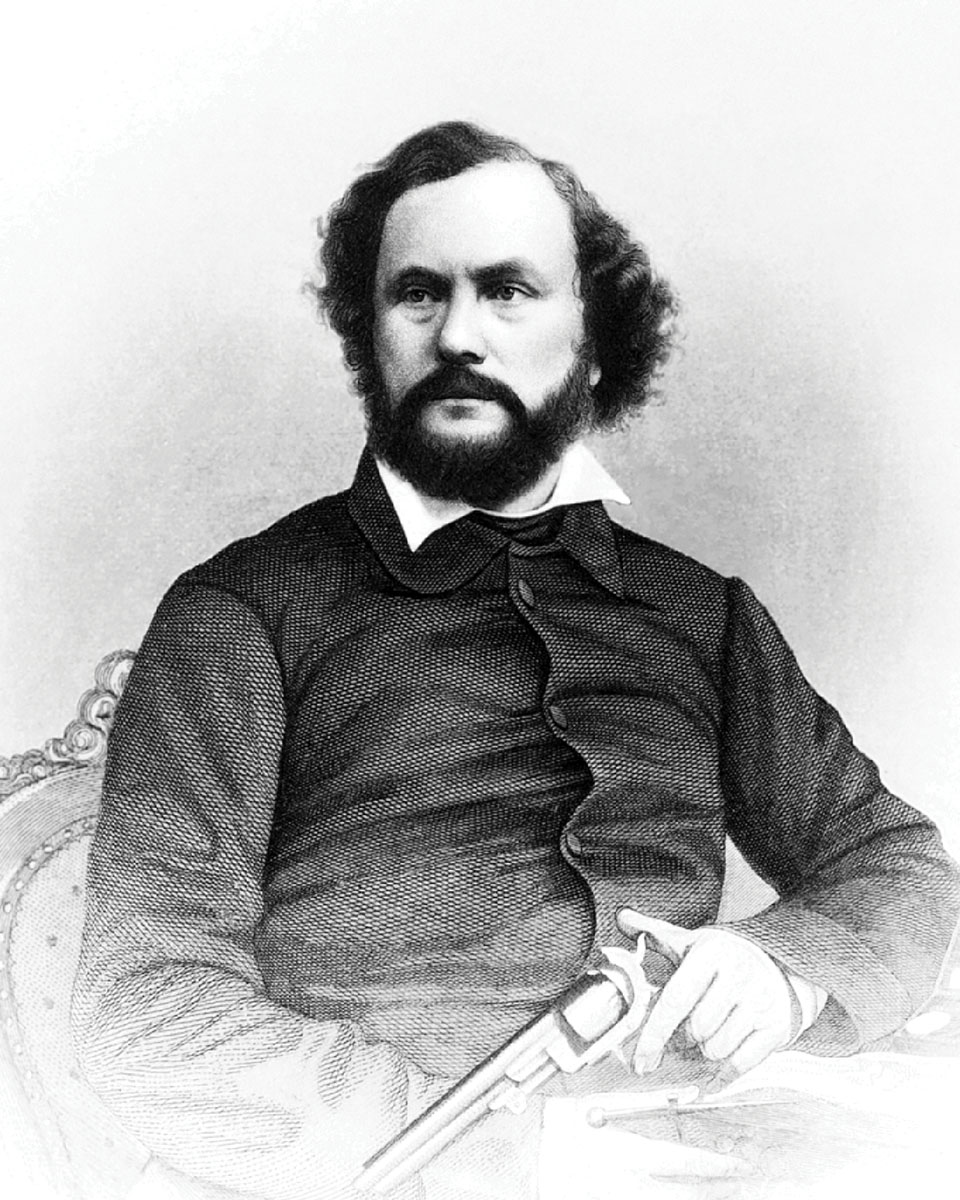
    Samuel Colt died at the age of 47 (in 1862)  having revolutionized manufacturing methods with interchangeable parts, primarily in the  manufacture of revolvers. He was one of the world’s wealthiest men.
    Samuel Colt died at the age of 47 (in 1862) having revolutionized manufacturing methods with interchangeable parts, primarily in the manufacture of revolvers. He was one of the world’s wealthiest men.
    only person to ever defeat Sam Houston in a political contest. The year Runnels took office, the Comanche were at the zenith of their power and could be counted on, under any full moon to sweep down on the settlements to burn and kill. In his letter to John (RIP) Ford, Runnels authorized raising a force of 100 men to defend the frontier, which meant punishing the Comanche (and Kiowa and Apache) at every opportunity. Even if it meant breaking the law.

    Ford had the budget to outfit 100 Texas Rangers. Every man was expected to bring his own horse, and the horse needed to be every bit as durable and fierce as the man. And since 100 rangers were not going to be enough, he hired the ancient enemies of the Comanche to fight alongside. 

    The Comanche barrier to the civilization of the South Plains cost Texas settlers approximately 17 lives per mile (according to a study published in 1933). In the bloody years of 1858 and 1859, the Texas Rangers pushed back hard against the Comanches. They had the experience of the War with Mexico behind them and were armed with the Walker Colt, a force multiplier on par with the bow and arrow, which a warrior could fire at 50 arrows a minute. 
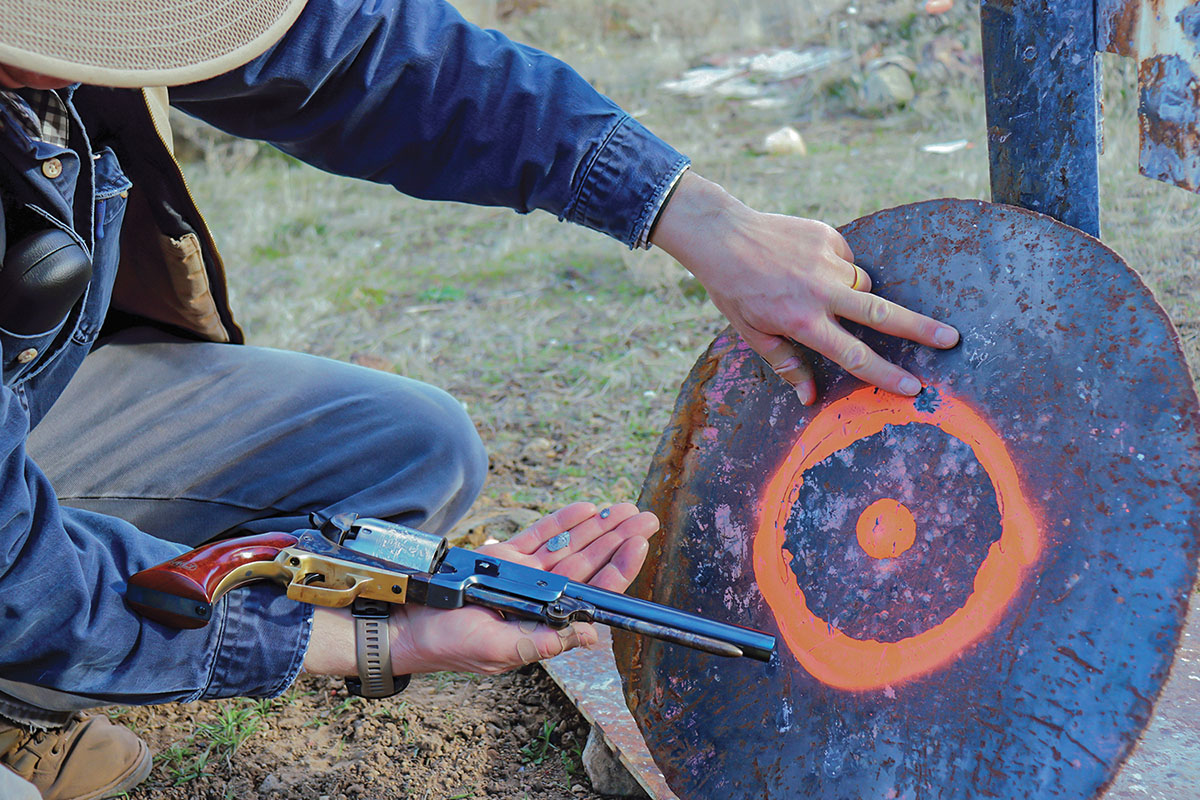
    Roundball splatters on steel from 20 yards. The Walker Colt is capable of holding 60 grains of black  powder in each of its 44-caliber chambers.
    Roundball splatters on steel from 20 yards. The Walker Colt is capable of holding 60 grains of black powder in each of its 44-caliber chambers.
    The Comanche were exceptionally well-mounted, and the rangers, too, rode the best horses they could afford. Warrior against ranger, they were evenly matched. Except every ranger was armed with two Colts, a saber, a knife (usually a Bowie) and “every man his rifle.”

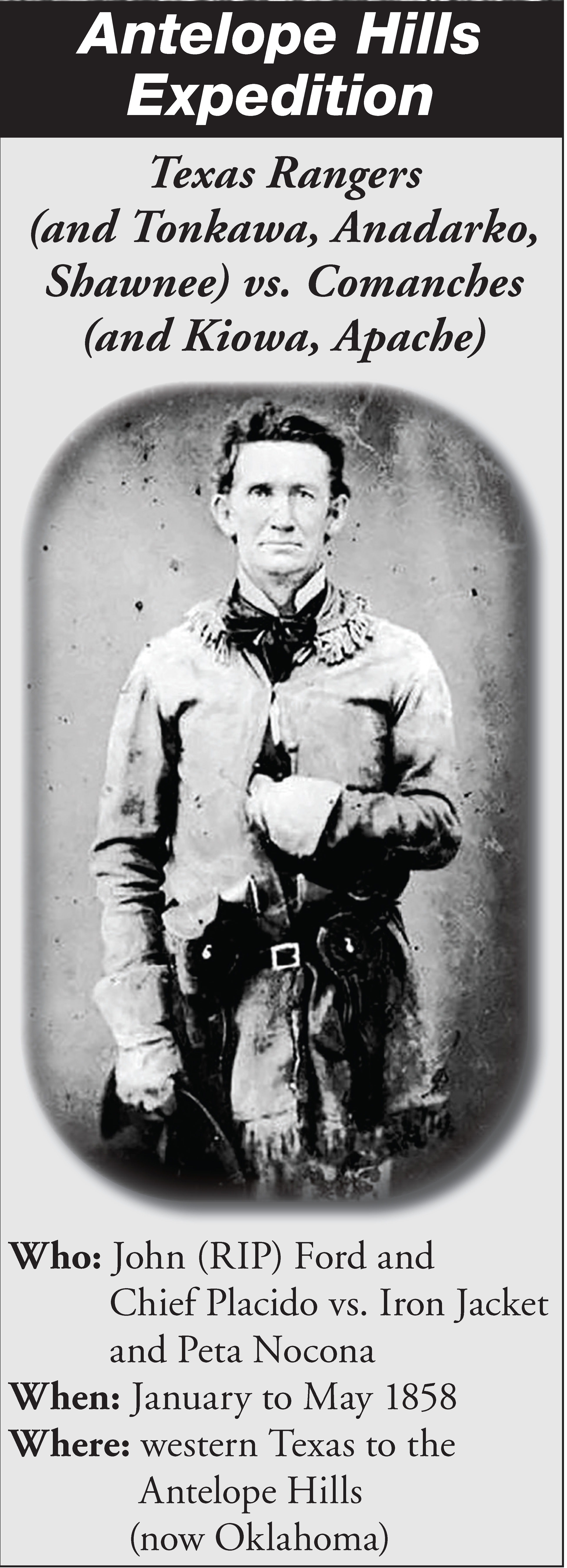
    Feeding themselves on buffalo and rabbits, the rangers and their allies (also armed with revolvers) crossed the Red River into Indian Territory at the end of April. Scouts fanned out 15 to 20 miles in every direction. On May 10, scouts killed a buffalo that had Comanche arrowheads in fresh wounds and knew they were close. Before dawn on May 12, the Tonkawa and Anadarko Indian allies wound white bandanas around their heads to distinguish themselves from Comanches. The men advanced six miles, striking a small village at 7 in the morning. They came upon a second village, sending the scouts into battle first to draw out the Comanche and then, when 350 Comanche warriors poured out of the lodges, the rangers joined the battle. Chief Iron Jacket, wearing Spanish chain mail, was killed. By afternoon, Peta Nocona’s warriors had arrived from a third camp, and by this time, many of the rangers’ allies had lost their identifying bandanas. At dusk, the fight was over, and the rangers fell back to resupply, knowing there was a village full of Buffalo Hump’s warriors not far away.  

    After the Antelope Hills campaign, the Comanche were never again able to retreat into Comancheria with confidence that they would not be followed. The fighting was to continue for 30 more years, but the balance of power had been tipped. 


    Shooting the Walker

    Out of the box, the Lonesome Dove Walker Colt is faithful to the look and feel of the 1847 Walker Dragoon with cylinder in white and a color case-hardened frame. Drawing the hammer to full cock is smooth and satisfying, taking two clicks to full cock. The cylinder, of course, rotates 1⁄12 of a turn at half-cock. This is where it can be cycled and loaded. This was one of the improvements over the Paterson model, which had to be disassembled into three pieces in the loading process, which must have been hard to do on the back of a nervous horse. 
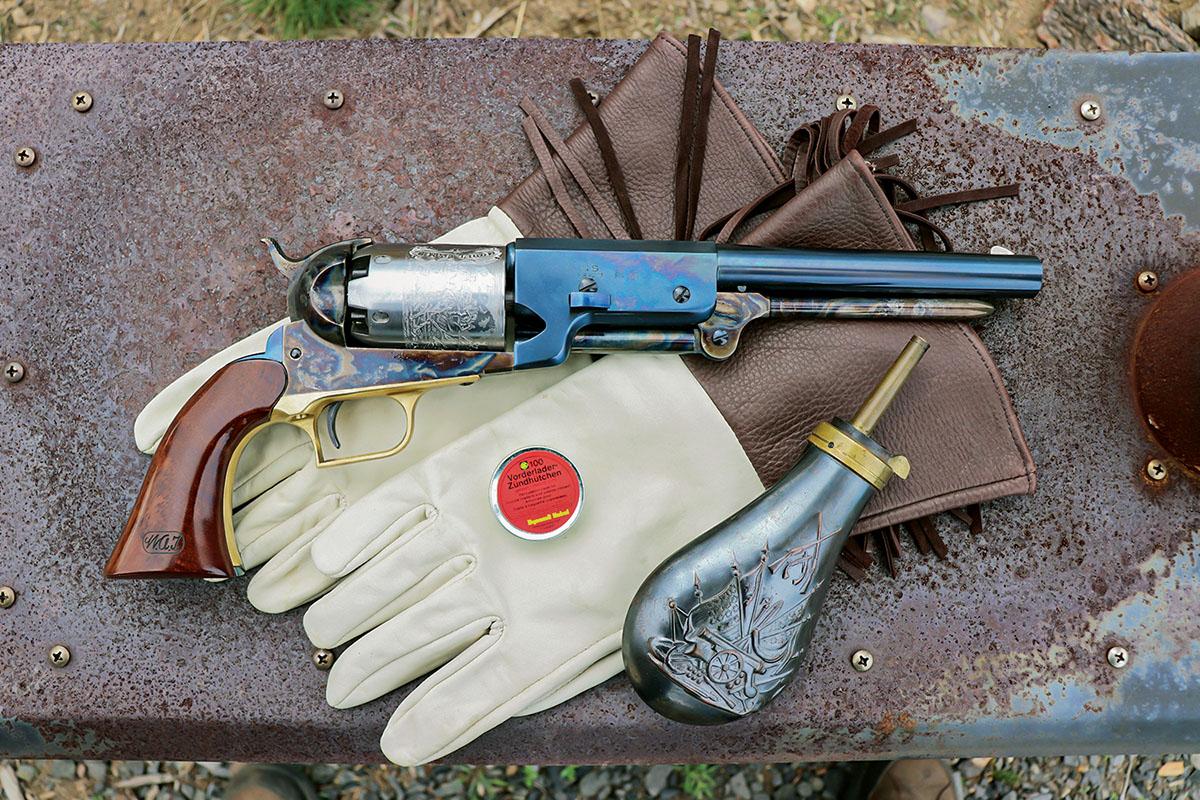

    The Rangers fed themselves on buffalo and jack rabbits on their campaign to the Antelope Hills. For buffalo shooting, the Walker must have been a vast improvement over the 36-caliber Paterson.  Of course, the Rangers had rifles too, but they were mostly single shot muzzleloaders and it would have been easy to make follow-up shots with the big revolvers.
    The Rangers fed themselves on buffalo and jack rabbits on their campaign to the Antelope Hills. For buffalo shooting, the Walker must have been a vast improvement over the 36-caliber Paterson. Of course, the Rangers had rifles too, but they were mostly single shot muzzleloaders and it would have been easy to make follow-up shots with the big revolvers.
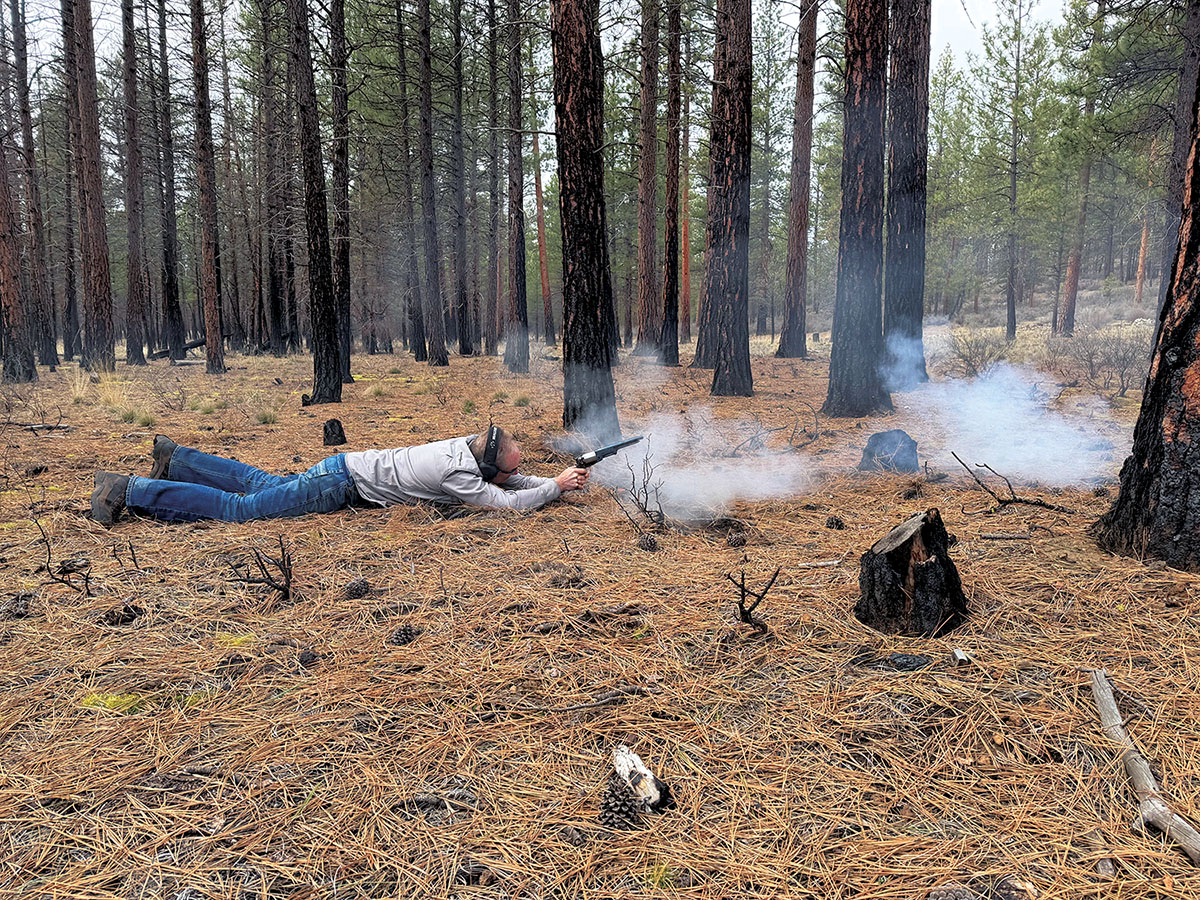
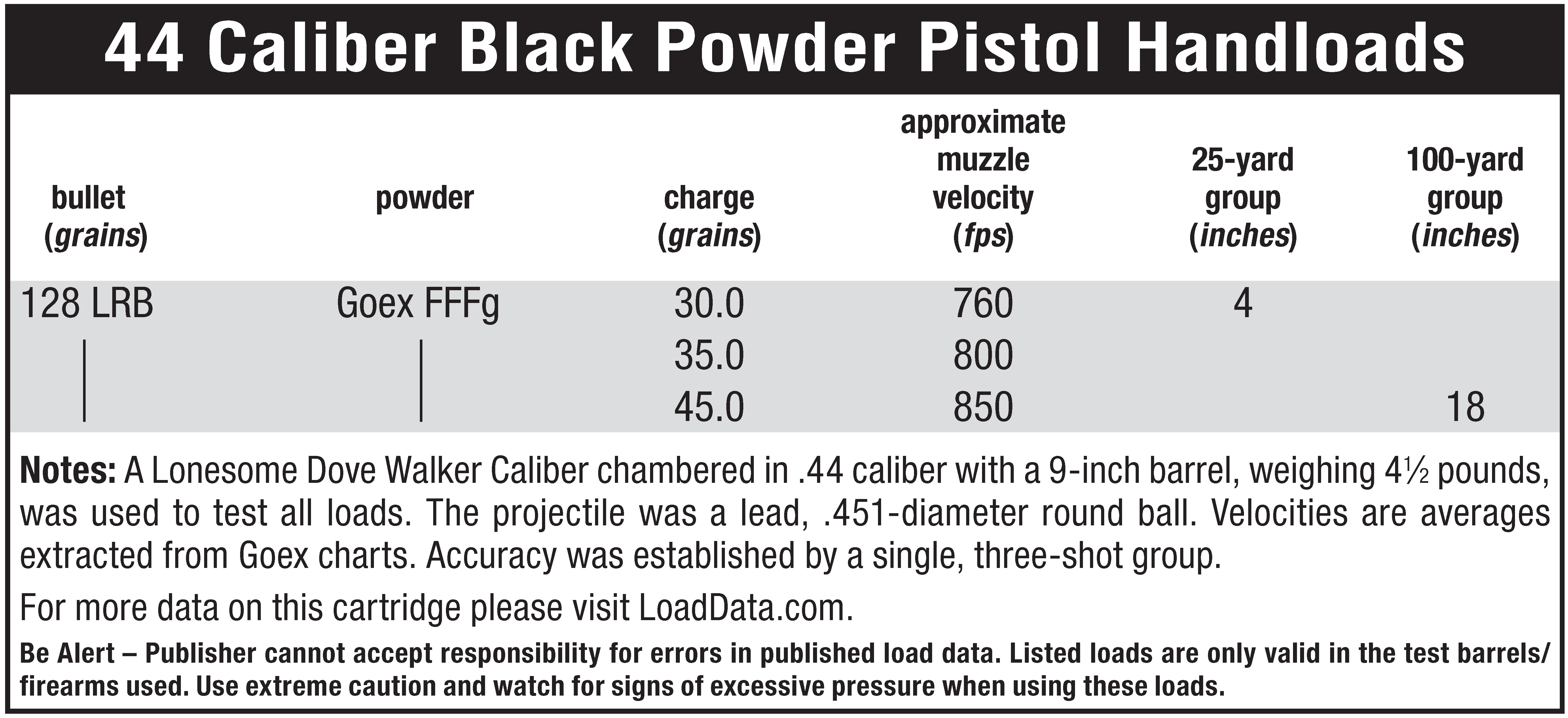
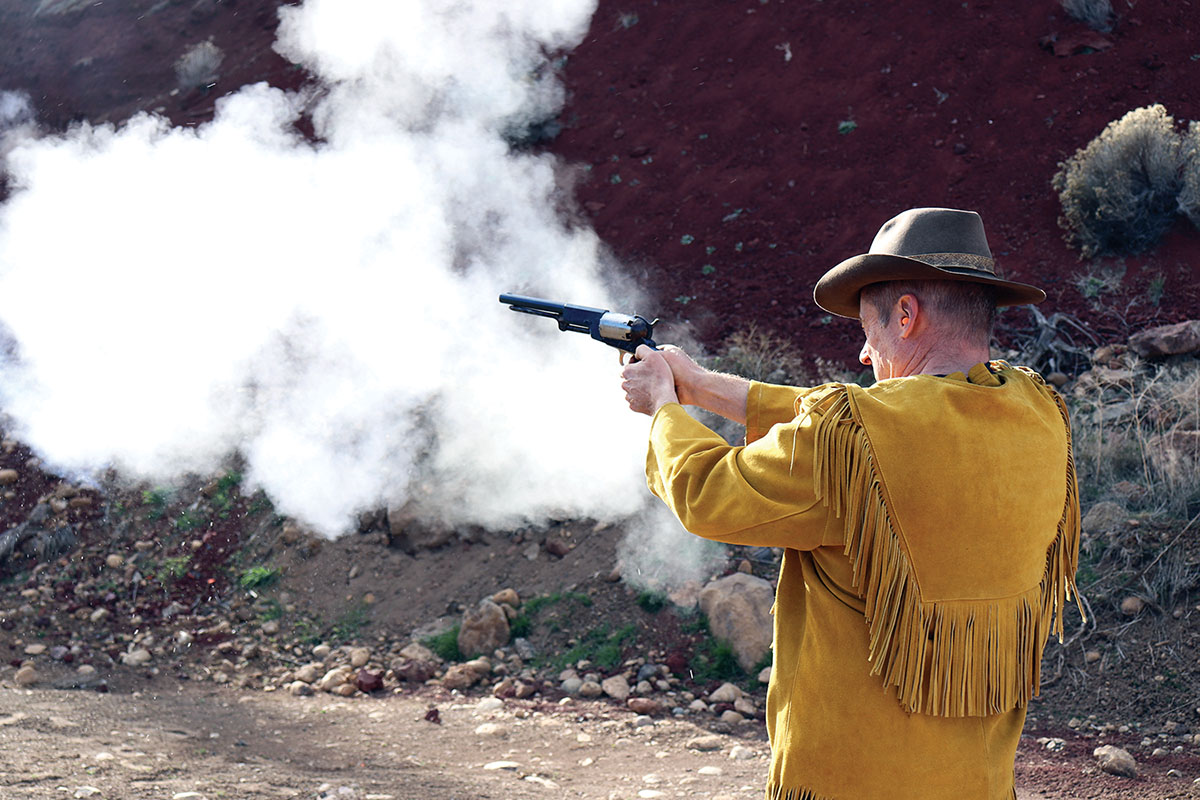
    Shooting prone in an old burn. The target was at 100 yards. The powder charge was 45 grains of FFFg and the projectile a .451 lead, roundball weighing  128 grains. The slow-burning black-powder recoil is calm, and the gun is pleasant to shoot. Eye protection is highly recommended.
    Shooting prone in an old burn. The target was at 100 yards. The powder charge was 45 grains of FFFg and the projectile a .451 lead, roundball weighing 128 grains. The slow-burning black-powder recoil is calm, and the gun is pleasant to shoot. Eye protection is highly recommended.
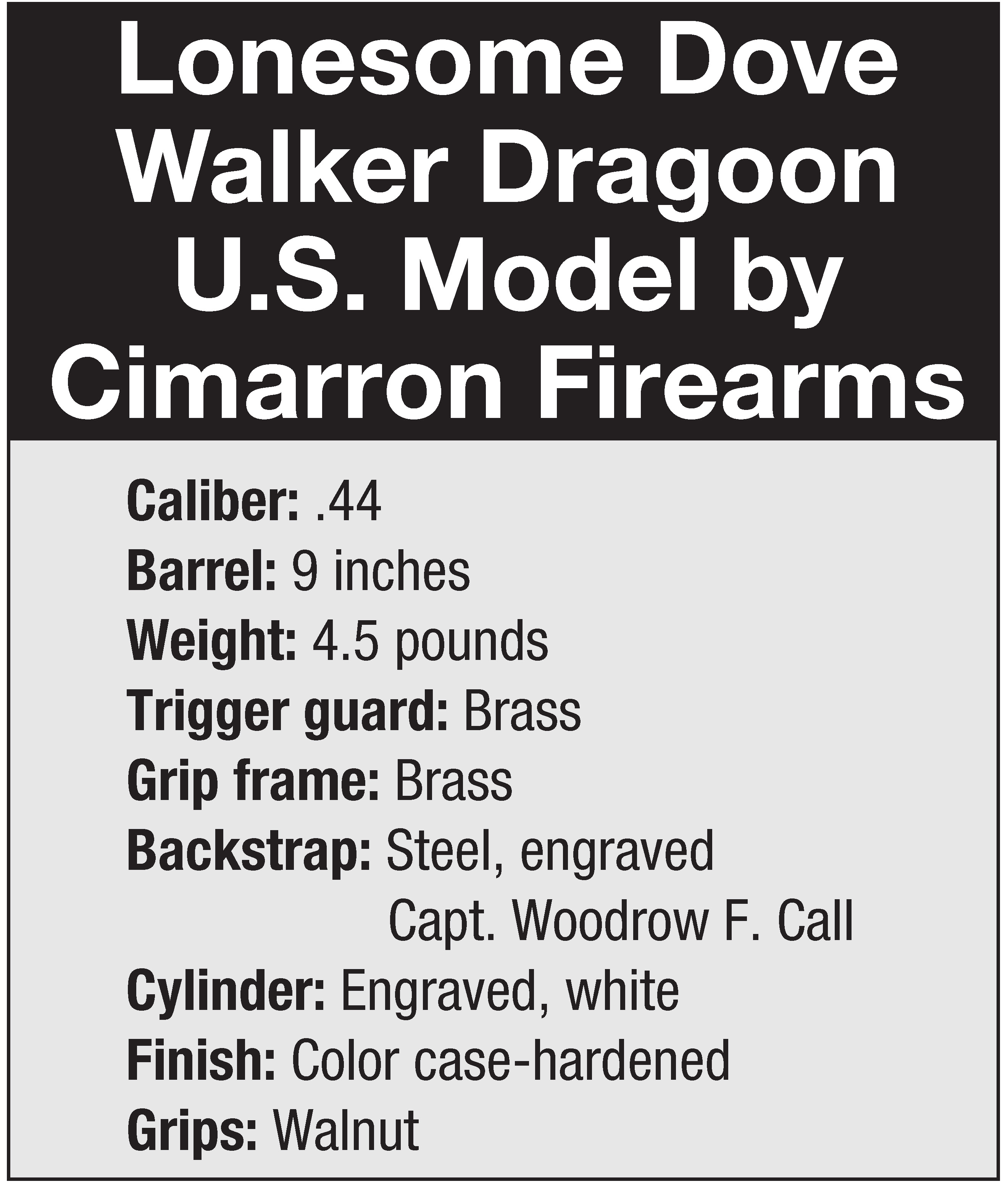
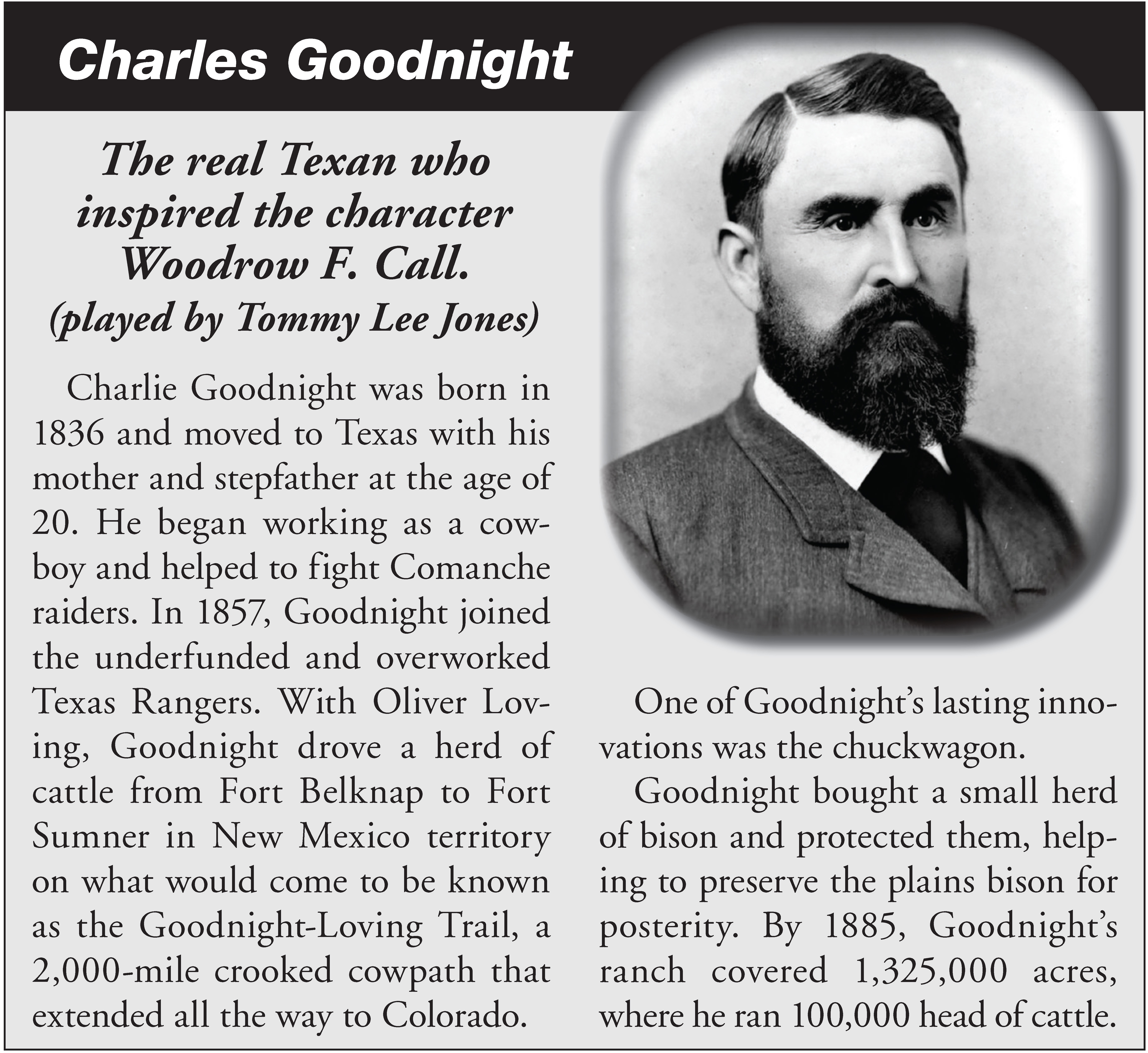
    For the first shooting session, I went to a privately owned gravel pit near my home. When I arrived, I was introduced to a young woman there on her birthday. Sareha told me she had just finished reading the books in the Lonesome Dove canon, and then she had watched the movies. “Well, that’s interesting,” I said, “because I just happen to have here a gun like the real-life characters carried.” “This one,” I showed her, “is inscribed Woodrow F. Call. And you can shoot it today.” First, I had to pull out the fixin’s. 

    For the first six shots, I loaded the revolver with 30 grains of Goex FFFg and a 148-grain .451 lead roundball.  Pour in a measured charge, set a ball on the chamber, rotate under the loading lever, press it down and repeat. When the chambers were stacked with powder and ball, I sealed each chamber off with Crisco (having been out of bear grease for a couple of years). This is an important step as sparks can ignite charges in adjoining chambers. 

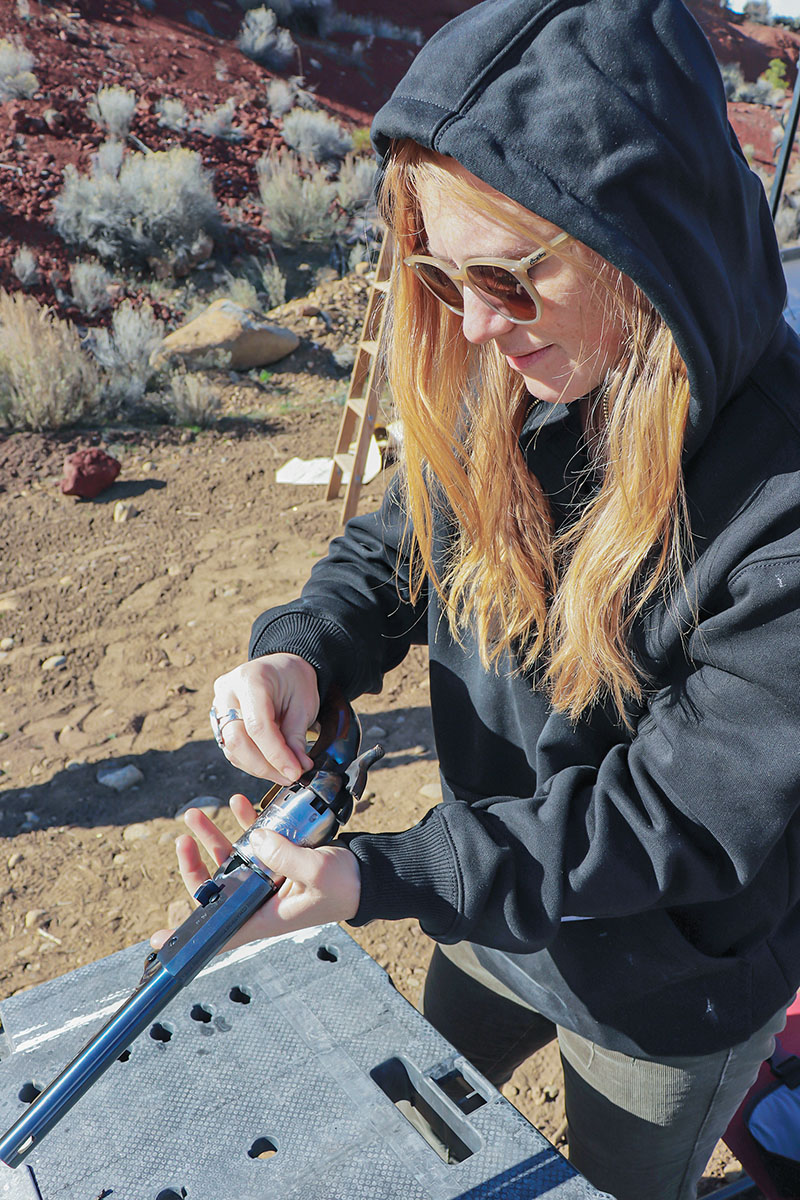
    I soft pinched the caps before pushing them onto the nipples. This is best accomplished by holding the action in the palm of the left hand and installing the cap in the dish-shaped relief on the frame. 

    At 25 yards, the revolver steadied, and the first three bullets went into a 4-inch group. The next three bullets were pitched offhand at a man-sized target (a 60-pound oxygen tank) on a far slope, making a second-shot hit at 128 yards. 
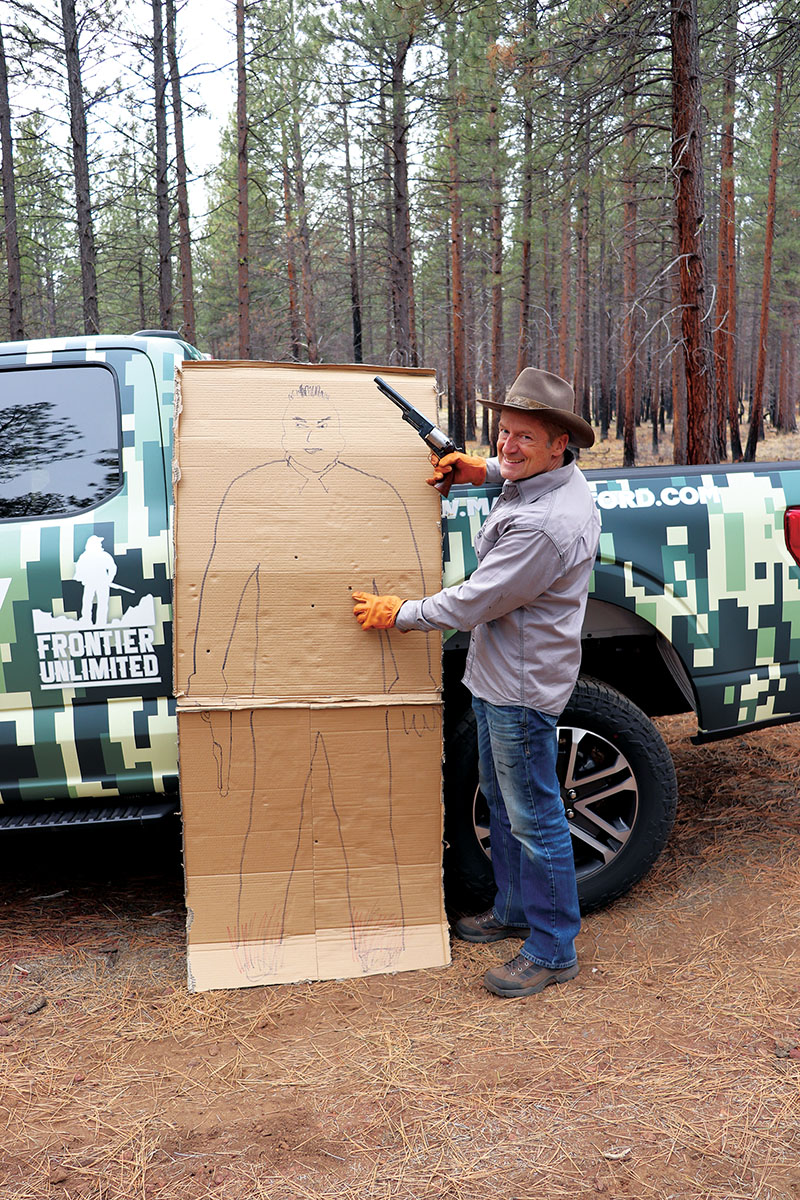
    The hole in the solar plexus is a screw that held the cardboard to the plywood. The other three holes were a string of shots held head-high at 100 yards. One in the wrist and two in the torso. Three for three at 100 yards. Not bad for an 1840’s design and a roundball.
    The hole in the solar plexus is a screw that held the cardboard to the plywood. The other three holes were a string of shots held head-high at 100 yards. One in the wrist and two in the torso. Three for three at 100 yards. Not bad for an 1840’s design and a roundball.
    For the next loading, I used 35 grains of FFFg and fired three supported shots at 25 yards and three more at the target on the hill. I expected the loading lever to fall in recoil, but the loading lever remained in place. 

    After reading and watching the complete  Lonesome Dove series, Sareha Sulesky found herself loading and shooting a Lonesome Dove Walker Colt replica.
    After reading and watching the complete Lonesome Dove series, Sareha Sulesky found herself loading and shooting a Lonesome Dove Walker Colt replica.
    After I loaded the massive chambers again, I handed the revolver to Sareha and let her pinch on the caps and blaze away. Call it a coincidence that she had just consumed everything Lonesome Dove, and then she went to the range and got to shoot a Woodrow F. Call commemorative? That’s just how it works sometimes.  

    First impressions: smooth to cycle, a gun for keeping enemies at a distance or to intimidate and overpower at close range, no malfunctions or stoppages. 

    One of the criticisms I noted in online discussions of the Walker Colt is that it could not be relied on to make shots at 100 yards and beyond. I beg to differ.  

    For the next shooting session, I made a man-sized target (5 feet, 10 inches tall) by having my wife sketch my likeness on cardboard. She gave it a handgun, too, so it would have a fighting chance. Out in the woods, I propped the plywood-backed target at 100 yards, then loaded the Lonesome Dove Walker Colt with 45 grains of FFFg in each chamber and lay down in the dirt like a Texas Ranger in a buffalo wallow – to see if I could snipe the cardboard warrior with a round ball. Holding on to the belt buckle, I fired three rounds. One ball whistled clean between the knees while two rounds went in the dirt. 

    For the next string, I sighted the top of the head and scored three hits out of three at 100 yards. 

    Consider the Walker a real threat at 100 yards. I’d back up if I were you. The 128-grain roundball tore a thumb-sized chunk out of the half-inch plywood. If you ever find yourself surrounded and the bad guys are closing in, get off the horse, get into a wallow and try to hold them off at 100 yards. With the 45-grain charge, the roundball averaged a 26-inch drop. Hold at the top of head and keep a second gun loaded in case they charge.  

    The heyday of the horse pistol lasted roughly 20 years as the Colt Walkers and Dragoons were replaced by the likes of the Colt Army (1860) and the Remington 1858, which benefited from better metallurgy and engineering. The Colt Walker was hailed as the most powerful production handgun until the 357 Magnum was introduced 88 years later. It is the Granddaddy of all Colt Revolvers, and the official handgun of the State of Texas. 

    Wolfe Publishing Group