

Sporting Bolt-Action Rifle Stock Designs
How Stock Geometry Shapes Comfort, Control and Accuracy
feature By: Brian Pearce | March, 26
The bolt-action rifle stock plays a huge role in shooter comfort and accuracy, and is a factor in how much the owner enjoys the rifle, or not. A poor-fitting stock can feel awkward, unnatural and can even beat up, bruise and cut the shooter, sometimes severely. In his classic 1946 book Keith’s Rifles for Large Game, Elmer states, “Many persons complain of the recoil of rifles which actually have very moderate comeback. This is due to improper holding of the rifle or, quite frequently, to a bad fitting stock. A stock of correct shape and dimension – for the individual – will go far toward damping the recoil of any shoulder arm that fires heavy loads.” Keith continues, “Recoil can be very bothersome with an ill-fitting stock. Excessive heel-drop, combined with a high comb, can give one sharp jab on the cheek-bone at every shot from a heavy rifle, particularly in the prone position. Also, too short a stock that allows one’s nose to be struck by the thumb is not conducive to pleasure in firing, nor to accurate shooting.”
The above words remain as true today as they did 80 years ago; however, perhaps Keith’s most powerful statement is as follows. “I well remember my first firing of the army qualification course with the old model 1903 Springfield. I already had had plenty of practice and game-killing with the Sharps and Winchester rifles of considerably more recoil, but that service ‘bayonet-handle’ surely punished my face! I wound up with an expert rifleman’s medal; a broken nose, from the safety; my upper lip cut almost through and swollen down over the lower lip, and my chin peeled by my finger nails. These evidences of an overdone facial massage and my blood-splattered shirt amply testified to the old service stock’s ability to deliver mayhem. Shoulder recoil had not bothered me a bit, although I weighed only 100 pounds at that time. My undoing could be laid to the ‘crawling’ that short stock in an effort to see the bull through the distant service peep sight. It was then that the safety hit my nose with such telling effect.”

A proper fitting bolt-action rifle stock designed for specific shooting tasks, can be nearly magic by reducing felt recoil, shoulders naturally, positions the eye perfectly with the sight or scope and will not allow the rifle to bite at any point including shoulder, nose, shooting finger, cheekbone or anywhere else such as the scope striking the face for the signature “moon” cut above the eye! For today’s purposes, let’s focus primarily on butt stock profiles, purposes and function.
I shoulder many, many rifles annually that have included tiny .17 calibers all the way up to the big 600 Nitro Express. Most of my shooting has not been a few shots to sight in a given rifle and go hunting; rather, most of that shooting has included testing guns for manufacturers, for editorial reviews, and developing (often extensive) handloading data for more than 300 different cartridges (with that figure including handgun cartridges). Reflecting on the huge variety of rifles and stock designs that I have used, I’ll share observations based on a lifetime of shooting, teaching others to shoot, helping shooters to find the best-fitting stock, etc.
First, let’s touch on the history of the modern commercial or sporting bolt-action rifle stock that really began just over 100 years ago and how it has evolved. The first widespread used U.S. military bolt-action rifle was the Krag-Jorgensen rifle chambered in 30 U.S. (aka 30-40 Krag) and formally adopted in 1892, but it was soon replaced by the 1903 Springfield and the 30-03 and by 1906 chambered for the 30-06 Springfield. (For clarification, the Remington-Lee Model 1885 and Winchester Model 1895 Lee Navy 6mm with straight pull became service rifles, but each had limited use and doesn’t really fit in today’s discussion.) As Keith indicated, these rifles had a short length of pull and were a one-size-fit-all approach for all soldiers of different shapes and sizes, but in general were poorly designed and had a reputation for kicking like a mule (especially in the prone position) in spite of the old 30-06 only producing moderate recoil. Soldiers returning from war still desired a sporting bolt-action rifle, but major U.S. manufacturer’s such as Remington and Winchester had not offered a suitable rifle.
Winchester developed its ultra-high-quality Model 51 Imperial Sporting Rifle around 1918, but with only 24 units

produced, it never went into production, and the project was soon scrapped. But Winchester was asleep at the wheel, as Savage introduced their little Model 1920 bolt rifle that was a slick, scaled-down Mauser 98 pattern gun, and by 1921, Remington began offering their Model 30 that was based on the military Model 1917 Enfield action (evolving into the Model 720A around 1941). Winchester finally realized that there was significant demand for bolt-action hunting rifles and introduced the Model 54 in 1925.

Since scope sights during that era were rather uncommon, as they were rather primitive and unreliable, and therefore not well received by hunters, the above early bolt action rifles all featured classic stock designs with significant drop at the comb and heel that were intended to align the shooter’s eye with open sights, like a shotgun. While they were usable, they lacked in several respects.
When Winchester redesigned the Model 54, and it became the Model 70 in 1935/36, the stock was improved with a longer length of pull, a thicker and higher comb, improved pistol grip and a larger recoil butt-plate, but it was still primarily designed for open sights. Remington and Savage likewise stayed with classic low-comb stocks designed primarily for open-sight shooters through World War II. Regardless, they all had more drop than was necessary even for iron sight use.
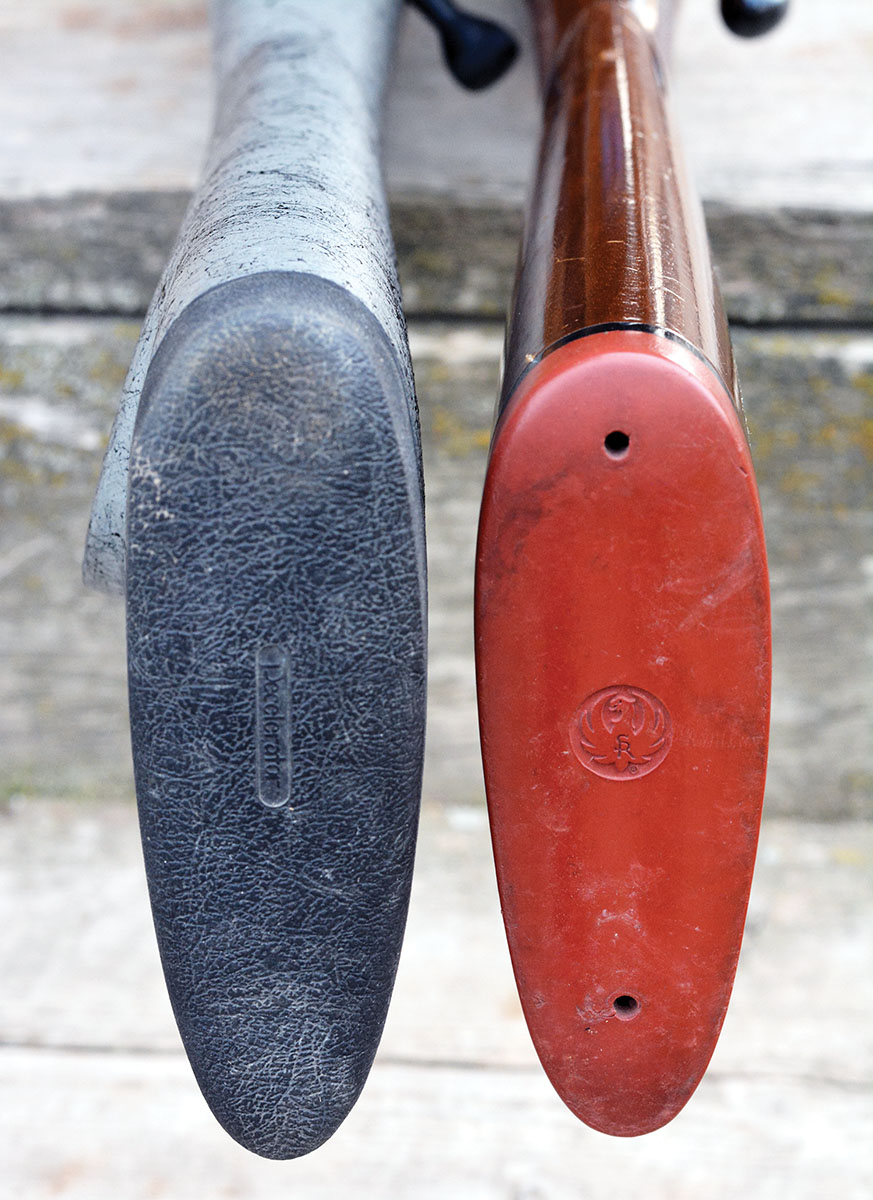
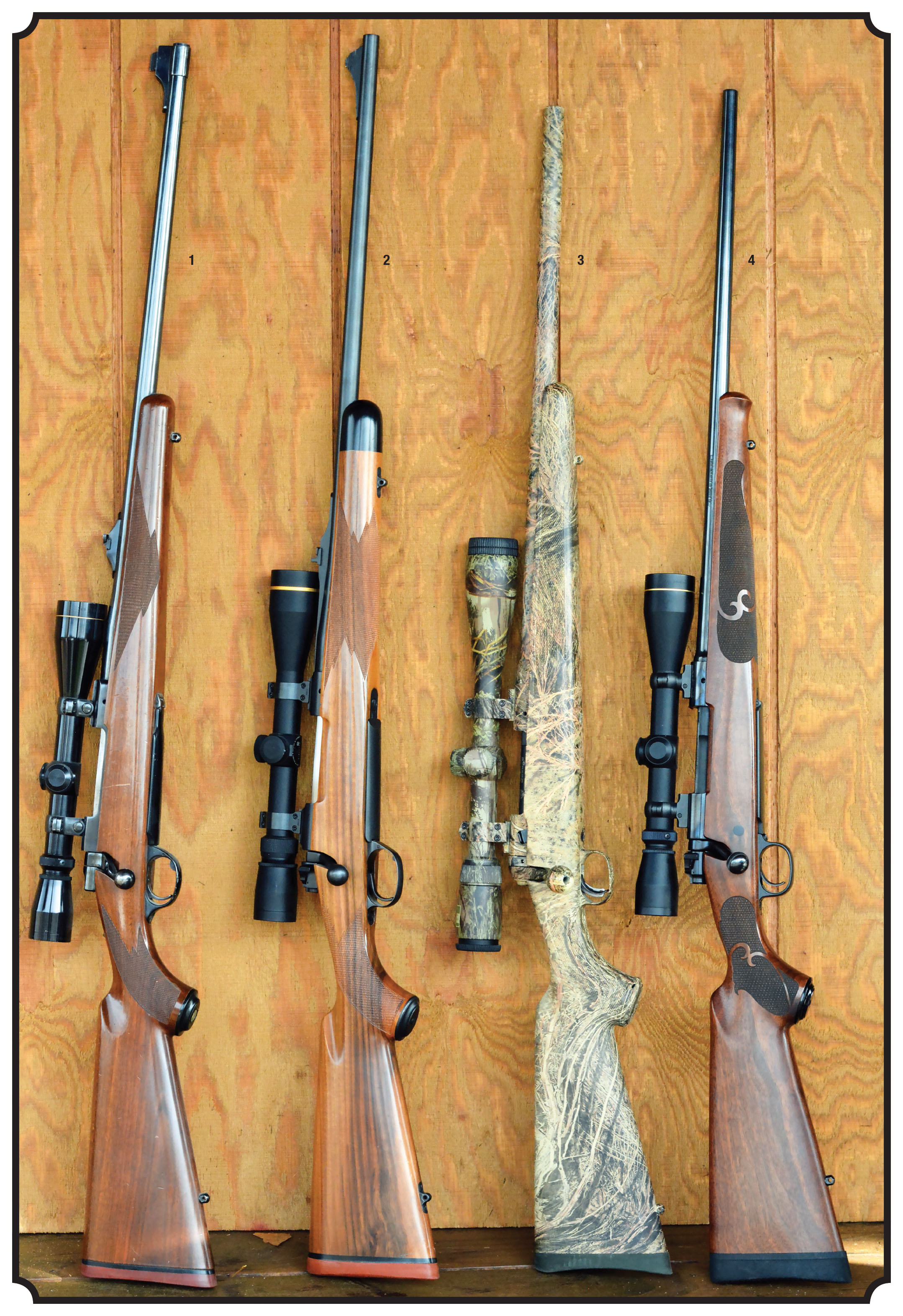
Significant stock design changes began during the 1930’s, but did not start with large rifle manufacturers, rather it started with noted custom gunsmiths and stock makers including R.F. Sedgley, John Dubiel of the Hoffman Arms Company, Seymour Griffin & Jim Howe, John Wehinger, Tom Shelhamer, C.W. Frost, Neubrand, Bob Owen, Fajen, Ted Hilderman, Frank Pachmayr and others that wanted to better improve comfort and obtain a more natural fit for shooters using both scopes and open sights. In essence, they raised the drop at the heel, raised and widened the comb, sometimes created a cast off for the ideal fit to a specific shooter, increased the size of the butt-plate to better disperse recoil over a larger area and redesigned the pistol grip area for a more natural position for the hand and wrist. Designs included classic, classic with cheek-piece, semi Monte Carlo, Monte Carlo, and Monte Carlo with cheek-piece, depending on application, shooter, sights, etc. Basically, these craftsmen employed the old British “try gun” shotgun fitment method to get a precise match to the customer’s face, height, and length of pull, but with a rifle. All the same features and principles developed during this golden era are still relevant today.
I don’t think anyone really knows when the first Monte Carlo stock was designed. It appears that it was created by an English-based gun maker by at least the early 1890s for shotguns used in the live pigeon shoots, but were soon tried on custom rifles in Europe and by custom stock makers in the U.S. But Monte Carlo stocks with cheek-piece appeared soon thereafter. Elmer Keith and some of his custom rifle maker friends were known to advertise this relatively new stock design in the American Rifleman during the 1930s, but major rifle manufacturers ignored the trend.

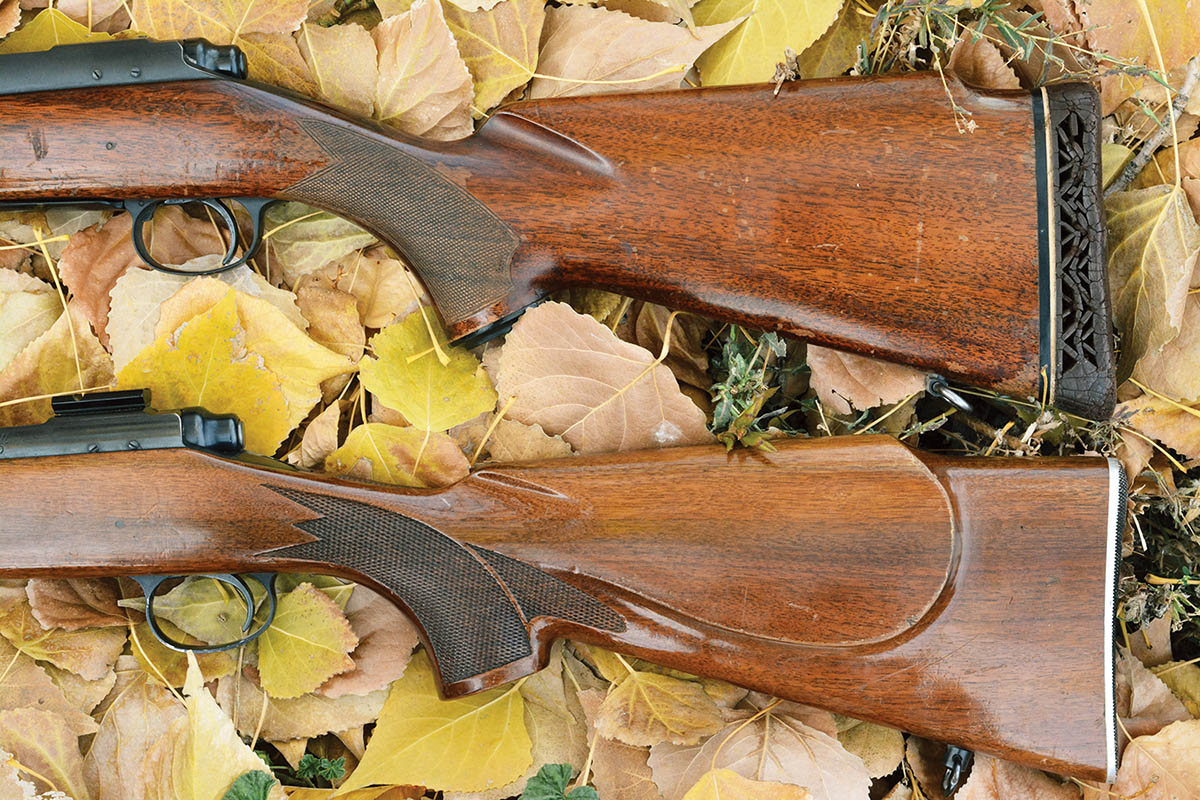
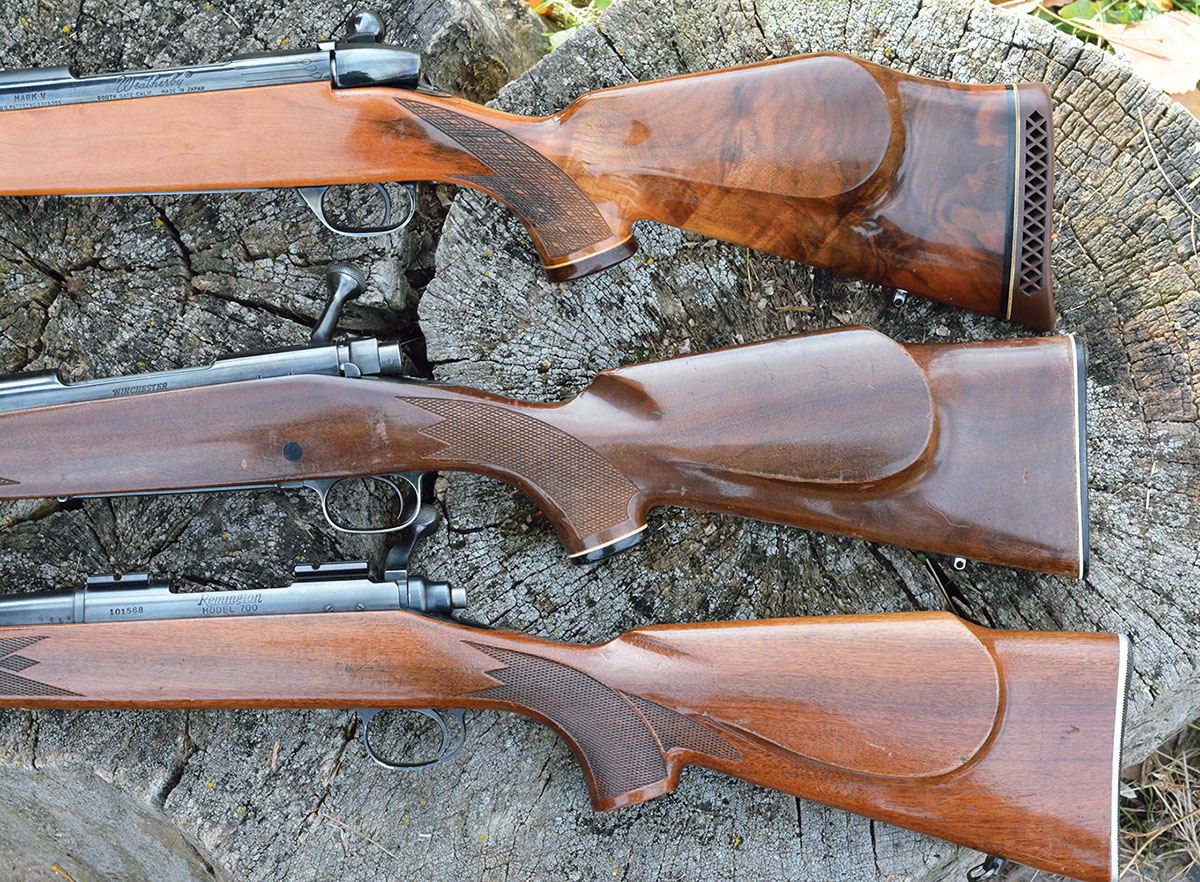
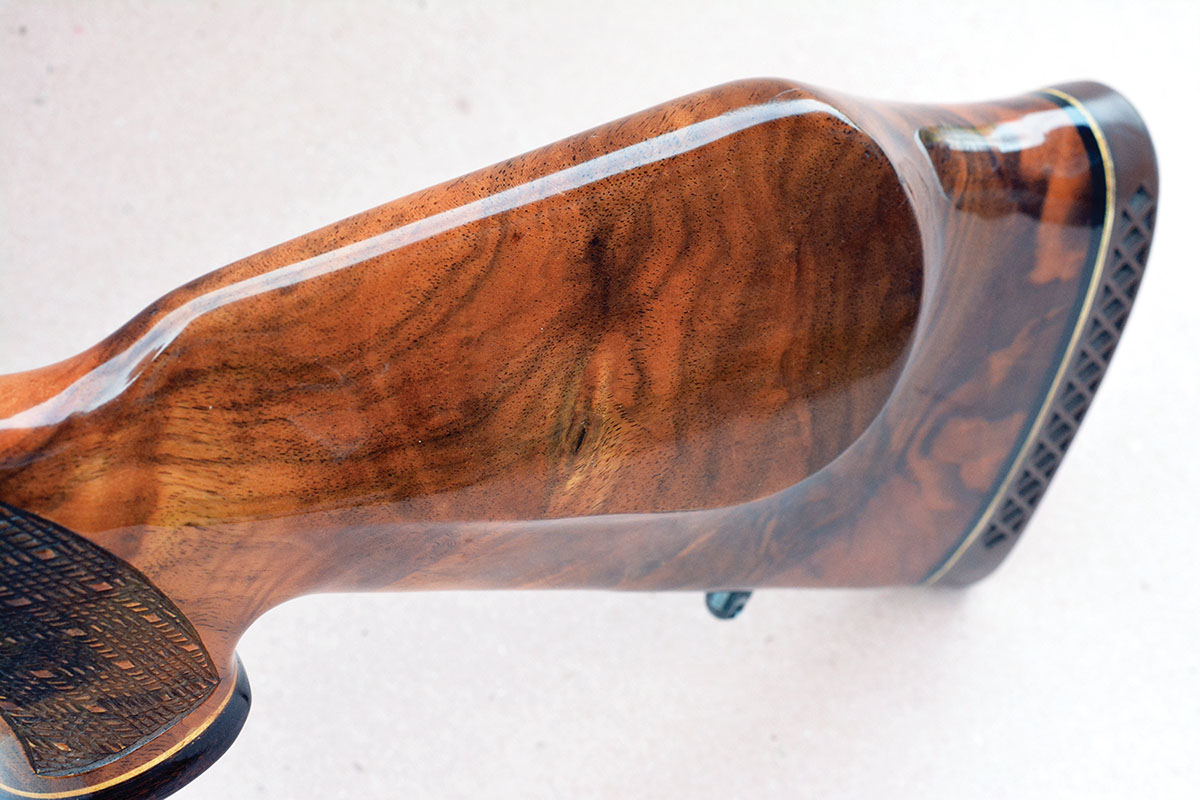
During World War II, Roy Weatherby began developing his now famous line of ultra-high velocity cartridges, beginning with the 270 Weatherby Magnum in 1943, and soon began building custom rifles and offering proprietary ammunition. Roy’s standard rifle stocks were Monte Carlo with cheekpiece and designed to position the shooter’s eye in line with a low mounted modern scope sight. While Roy created some truly bold stock accents with contrasting woods, diamond inlays, white line spacers, etc, the design was much more than to give a distinguished and futuristic appearance. What has become known as the
“California style” stock provided a good cheek weld and prevented the comb from hitting the cheekbone during recoil. There was usually some cast off to help the eye naturally line up with a scope sight. Weatherby rifles soon became a cultural icon, with many famous people, from presidents to movie stars, using and endorsing them.

When Browning began importing the FN Mauser 98 High Power in 1959, it came with a Monte Carlo stock with cheekpiece. Likewise, when Remington introduced the Model 700BDL rifle in 1962, it too appeared with a Monte Carlo stock with cheekpiece, white line spacers, high gloss finish, fore-end cap, etc., and when Winchester introduced the post 1964 Model 70, it too received a similar stock design. Clearly, this was a trending stock, and many other companies made copies to compete with Weatherby; however, each company had its own specifications and design, with some falling considerably short in terms of comfort and function, but others were very good.
In 1968, Ruger introduced the M77 bolt action and fitted it with a traditional, classic stock, but truly modernized. In addition to being American walnut, it boasted of conservative styling with a low gloss finish and was void of spacers, etc. The original design was by Lenard
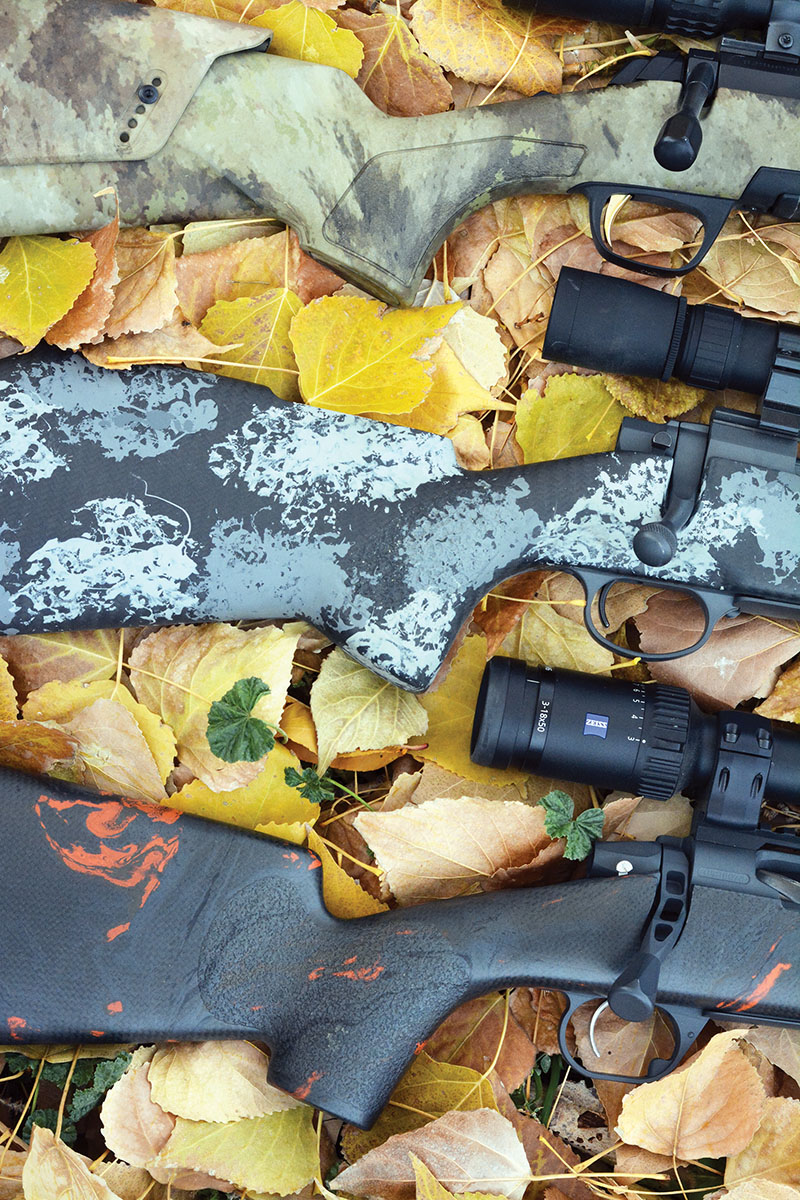
Brownell and had a 133⁄4 inch length of pull, a 15⁄8-inch drop at comb, and a 21⁄8-inch drop at heel. These dimensions were notably better than the classic stocks found on vintage Winchester and Remington rifles, as it helped reduce muzzle rise and minimized the comb from hitting the cheekbone. Plus, these dimensions actually worked well with open iron sights and scope sights. This modern stock was a big hit with shooters as they soon rediscovered the classic stock, its virtues and clean, handsome lines. Remington and Winchester began offering classic stocks for the Model 700 and Model 70, respectively, as did Savage, Browning, and other major companies with very similar dimensions as the Ruger/Brownell-designed stock. Even Weatherby began offering rifle stocks with both classic and Monte Carlo designs.

Both the modern classic and Monte Carlo with cheekpiece remain popular today. People tend to have significant favor for one or the other,depending on how it fits them and the type of shooting that they do, including positions, etc. Others favor one or the other based on eye appeal, which is highly subjective and just a personal preference.
With those thoughts in mind, I will offer a few of my own thoughts and observations. I am one of the few who generally get along well with both stock styles, but there are exceptions. A Monte Carlo with cheekpiece that is too short for the shooter and used in conjunction with heavy recoiling cartridges can be a problem.
Many years ago, I was a guest at the Remington Seminar when they unveiled the 375 Remington Ultra Magnum. They had a sample Custom Shop rifle with a classic stock and a fairly heavy barrel. At the range, it was shot extensively, wherein it proved very accurate and comfortable to shoot. I requested a sample rifle for editorial review; however, when it arrived, it was the Model 700BDL with a very lightweight barrel and Monte Carlo stock with cheekpiece. Recoil was quick and hard, but it was not bothering my shoulder; rather, the bolt handle and knob were pounding my trigger finger between the knuckle and first joint, which quickly swelled up and bled. A longer length of pull for my 6-foot-4-inch stature seemed like the answer, as that would allow the hand to be positioned further down the pistol grip and below the bolt knob. A 1-inch thick slip-on recoil pad was added, but this placed my cheek behind the cheek-piece, which, when fired repeatedly, was the equivalent of being in the ring with a pro boxer without gloves! After a few of those punches, the pad was removed, and my trigger finger was taped and padded to prevent further battering and bleeding as the test firing continued.

The above may be an extreme example, but it shows why proper fit is so important. A well-designed Monte Carlo with cheekpiece can be very comfortable when shooting from the bench, standing, or sitting positions, and explains why it has remained so popular for 3⁄4 of a century!
The modern classic stock tends to fit many shooters well and is less sensitive to cheek position. Many shooters report less felt recoil due to the straight nature of the design. The length of pull can generally be shortened or lengthened without concerns of where the cheekpiece is positioned against the face (with the exception of classic stocks fitted with a cheekpiece).
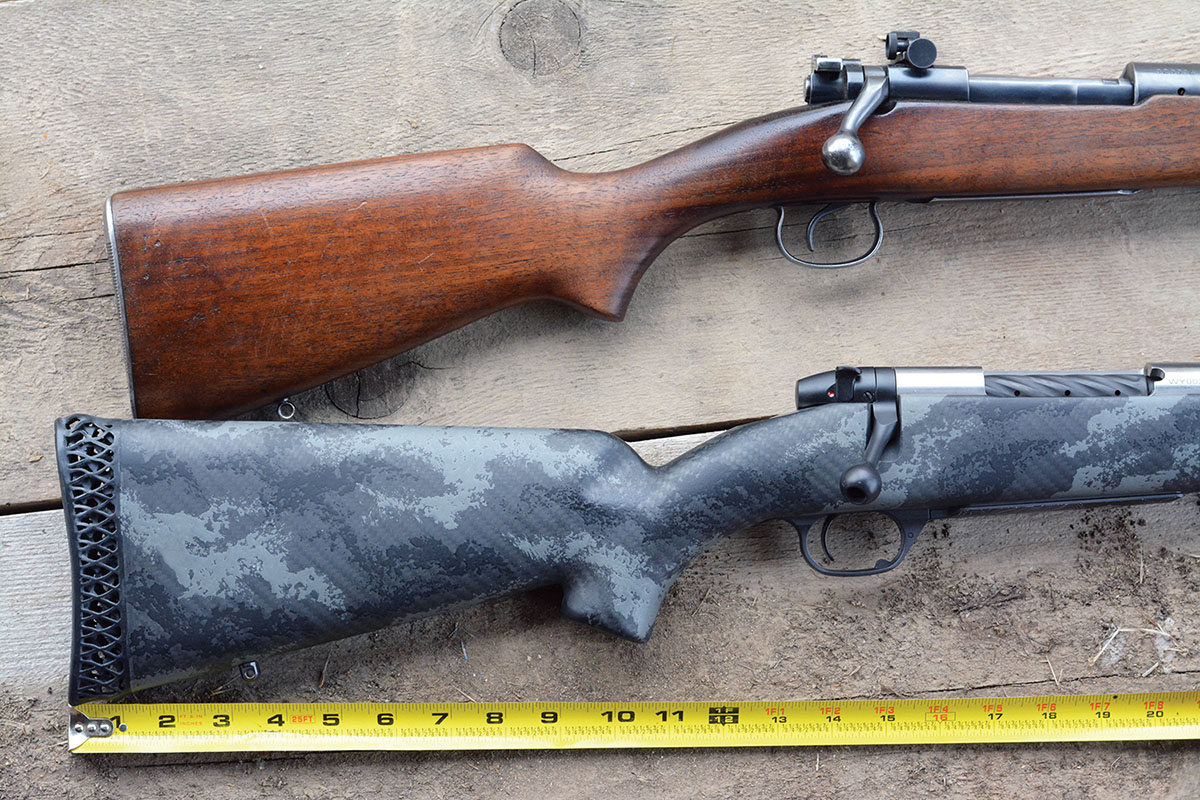
Both of the above stock styles can generally be used in conjunction with iron sights or low-mounted scopes. This makes them conducive to hunting in brush or timber country where shots are taken offhand, or at running game. In Europe, where deer, boar, and other game are often driven past the hunters, shots are virtually always offhand, and game is running. Ideally, a rifle will handle like a fine shotgun with fast handling characteristics, a great fit and perfect balance. In essence, it should feel like it could be used to shoot ducks. (This is only a description and not meant literally.) Clearly, both stock styles are still relevant and will be for many more years.
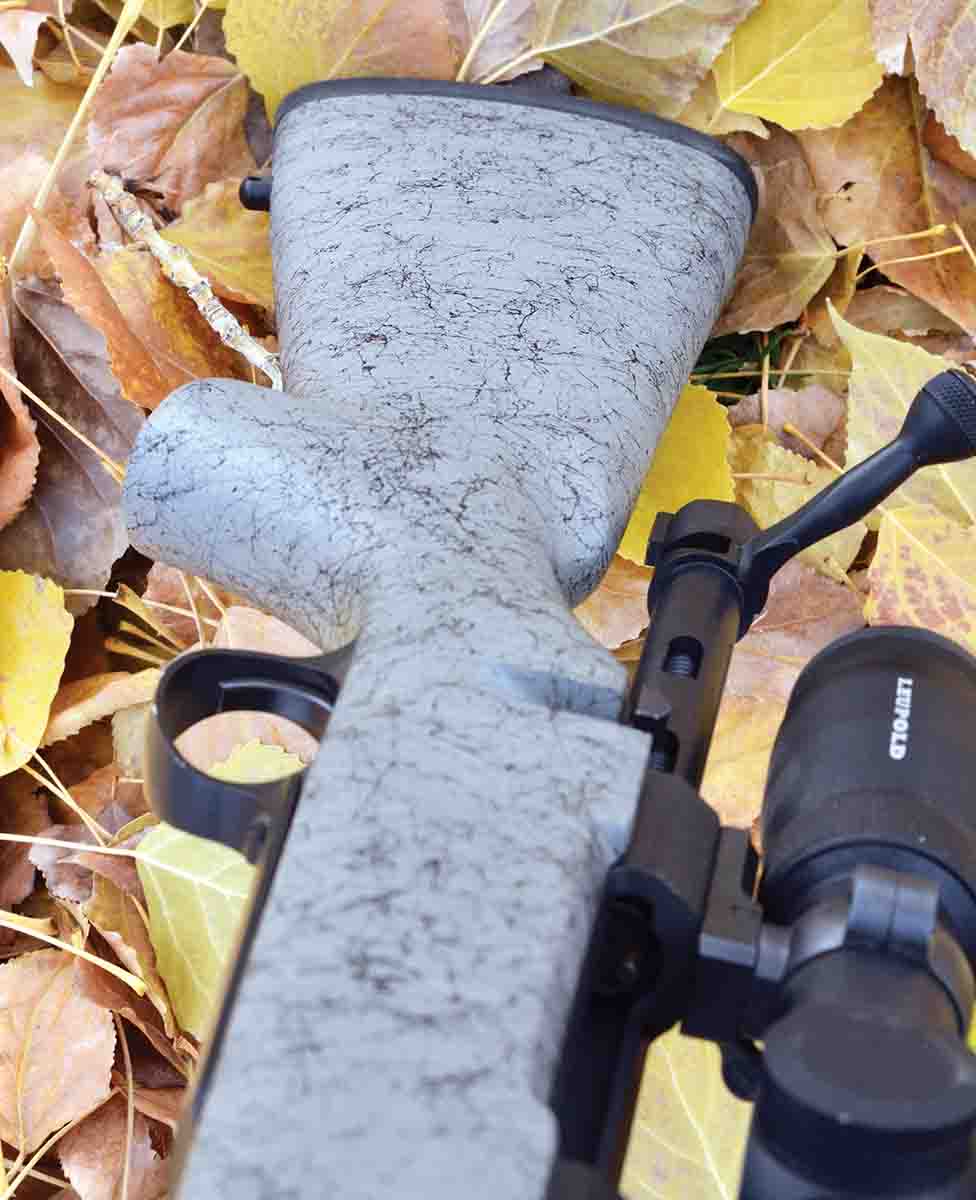
This brings us to more recent trends that have been the result of high interest in ultra-long-range shooting, rifles and cartridges. Scopes have become very large with 30mm tubes (or larger), high magnification, large objective lenses and eyepieces, and significant internal adjustment to accommodate dialing and compensating for bullet drop at extreme ranges. As a result, these large scopes must be mounted comparatively high to clear the barrel and bolt handle. Therefore, stock dimensions have been raised to position the shooter’s eye correctly with the scope and still obtain proper cheek weld.
Many relatively new rifle companies have emerged, catering to the sport of long range shooting, naturally each claiming that their stock is the best, most advanced, etc. Many of these are very precise, high-quality rifles that are essentially custom-built production guns. Space will not allow the minor detail differences of the various designs, but most feature a classic stock with a negative comb. Traditionally, the comb sloped down from the front of the comb to the butt. The negative comb is angled from the front of the comb upward to the butt (see photos). In this manner, the stock drop is minimal and limits muzzle rise that helps prevent the rifle from hitting the cheek during recoil, especially when mated to powerful long-range cartridges. The negative comb also allows the rifle to be fired comfortably (at least with most shooters) from a variety of positions, including standing, sitting and prone – without biting.
Other companies still utilize a very high comb Monte Carlo style stock without the cheekpiece, but this usually requires flattening the forward portion of the comb so that the bolt can fully cycle. Another option that several companies use includes adjustable length of pull and comb heights that allow each shooter to tune stock specifications for an ideal fit.
Pistol grip designs vary too, with some featuring a nearly vertical grip, but full pistol grips are popular, and some even like the thumbhole grip, but they are less common. Others feature a more moderate grip, such as the Nosler Model 48 or Browning X-Bolt, that tend to work well from a variety of positions.
We are no longer stuck with a single style of stock to fit all shooters and all applications. In a sense we live in a golden era, as highly specialized, purpose-specific stocks are readily available on production rifles or can be purchased as a component.