41 Magnum
A Big-Bore Sixgun Cartridge with Great Merit
feature By: Brian Pearce | September, 26
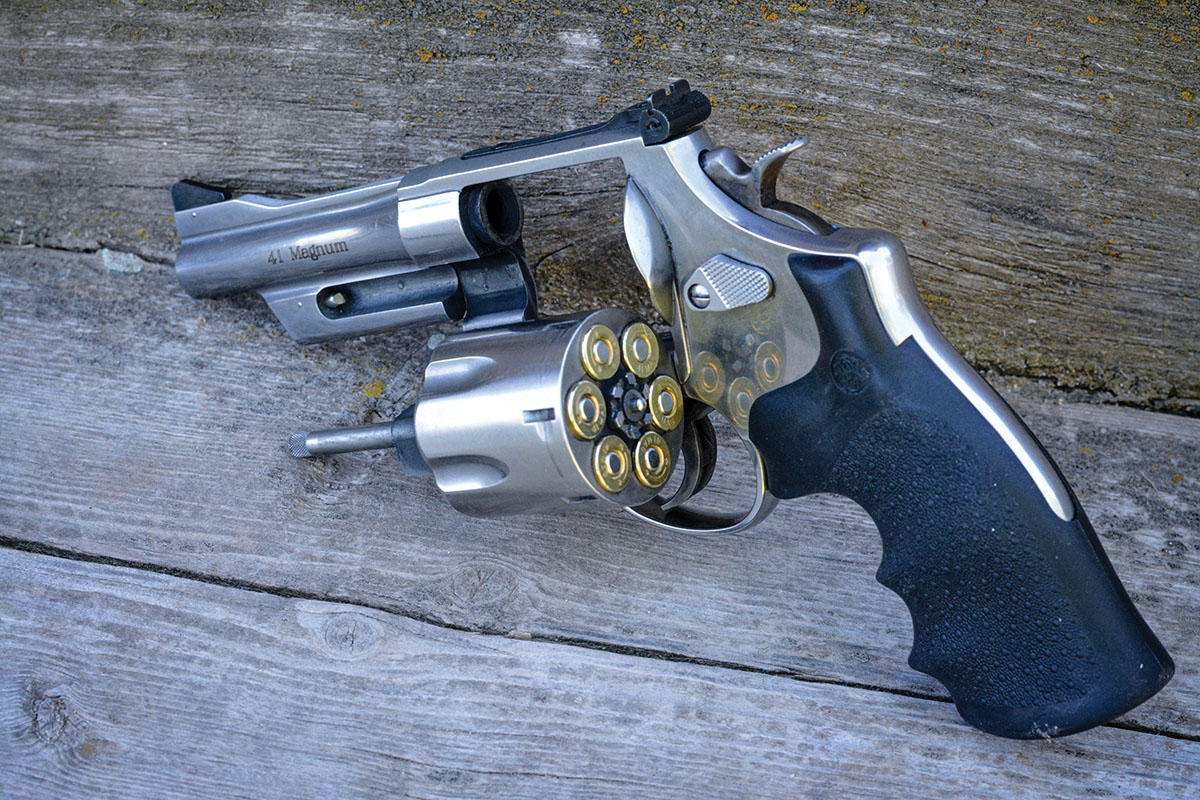
In 1998, I received a new Smith & Wesson Model 657 Mountain Gun chambered in .41 Magnum. Within 24 hours, the gun had been sighted in at 50 yards using my handloads and was accompanying me on a 10-day hunting trip to Texas. The first guide was a bit skeptical when I told him I planned to take a few head of deer with it, as this was a trophy hunt and a culling hunt intended to reduce whitetail numbers on the well-managed ranch. This assured there would be enough forage to carry the deer through winter. Unlike the two previous deer, each taken with a single shot at 15 and around 35 yards, the guide was present when the 3rd deer was taken at around 90 yards. The angle was difficult, but I had a good forearm rest, and the deer was standing perfectly still. The sixgun recoiled, and the buck dropped in its tracks as the bullet broke bone and perforated the vitals. The guide was elated and admitted that he was more than skeptical about how the handgun cartridge would perform. However, over the next few days, more game was taken, including Catalina ibex, javelina, turkey, hogs, etc., each with a single shot.
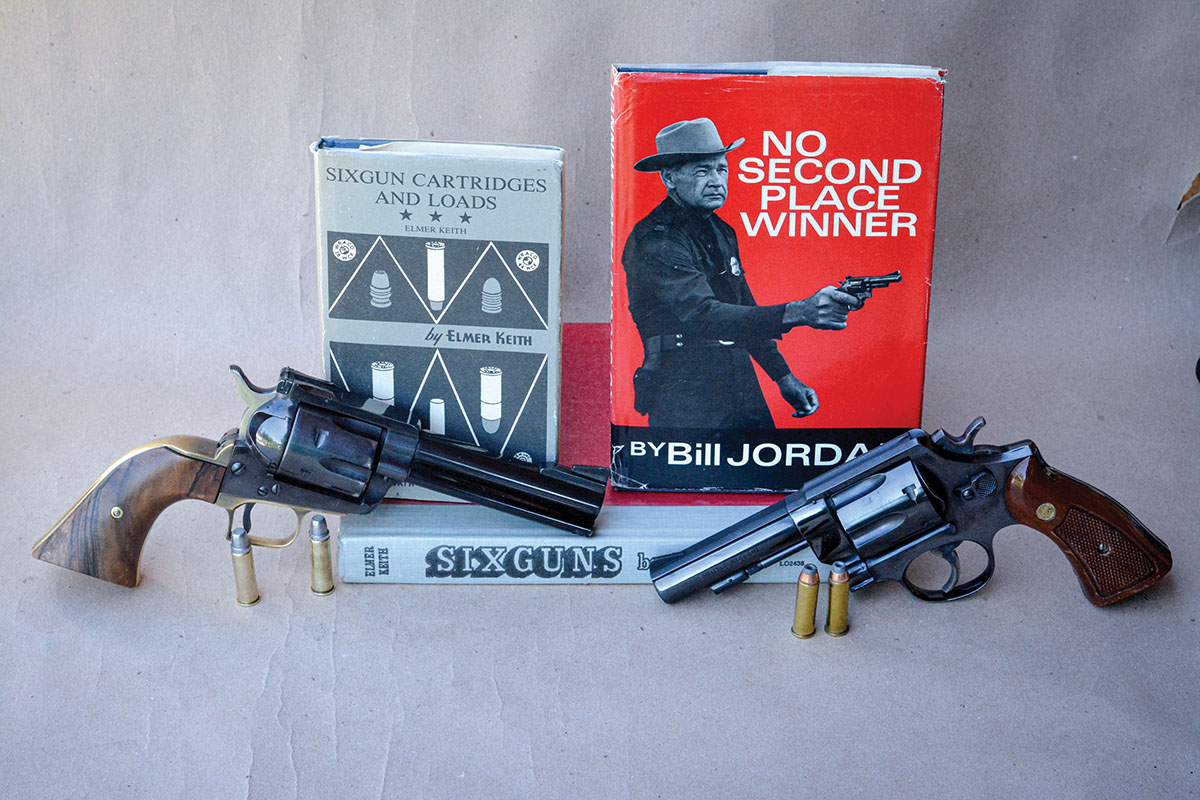
The 41 Magnum was developed at the request of two well-known industry icons, including Bill Jordan and Elmer Keith. Jordan served as a World War II combat veteran, then a Border Patrol agent, and was an amazing exhibition shooter. He had a working knowledge of handgun power and ballistics in real-world conflicts. Jordan was the driving force to convince Smith & Wesson President Carl Hellstrom to reengineer (and strengthen) the famous K-frame to handle the 357 Magnum cartridge that became the Combat Magnum in 1955, becoming the Model 19 in 1957. This was a great working gun for uniform officers, as it carried easily like a medium frame 38, but offered 357 power. Nonetheless, Jordan still wanted a larger caliber sixgun that offered greater power and reliability. The Smith & Wesson Model 29 44 Magnum was great, but Jordan wanted a lighter gun with less recoil to allow faster follow-up shots. He talked with his old friend Elmer Keith about it, and together they cornered Smith & Wesson, Bill Ruger, and Remington at the 1963 NRA annual meetings and convinced them to develop a new cartridge. Jordan originally wanted the new cartridge to contain a .40-caliber bullet weighing around 200 grains and with a muzzle velocity of 1,200 feet per second
(fps). He wanted it in a medium frame sixgun for daily duty carry and light enough to facilitate the fast draw.
In Keith’s extensive writings during the 1940s and 1950s, he gave certain praise to .40-caliber wildcat sixgun cartridges developed by Cyril “Pop” Eimer and Gordon Boser, based on the 401 Winchester case cut down. Nonetheless, Keith held out for a modern .44-caliber sixgun that ultimately became the 44 Magnum in 1955. This was Elmer’s dream cartridge, as it offered the power and reliability needed by big game hunters, guides and outdoorsman. When Jordan approached Keith to help convince gun and ammunition companies to create a modern .40 caliber for service and duty use, Keith immediately recognized the void and enthusiastically agreed with Bill. Somewhere in the discussion with Smith & Wesson and Remington, Keith suggested a cartridge with dual loads, which he called “medium” and “full power.”
When Remington engineer Earl Larson (the primary designer) was given the 41 assignment, he along with Smith & Wesson President Carl Hellstrom, quickly decided to abandon the .40 caliber cartridge idea and moved right to a .410-inch caliber to prevent the new magnum round from ever being chambered in antique (or weak) revolvers chambered for the 41 Colt (that was actually a .40-caliber cartridge) and featured bored-through chambers to accommodate heel-type bullets. This made the 41 Magnum a truly unique caliber and was not based on any other case.
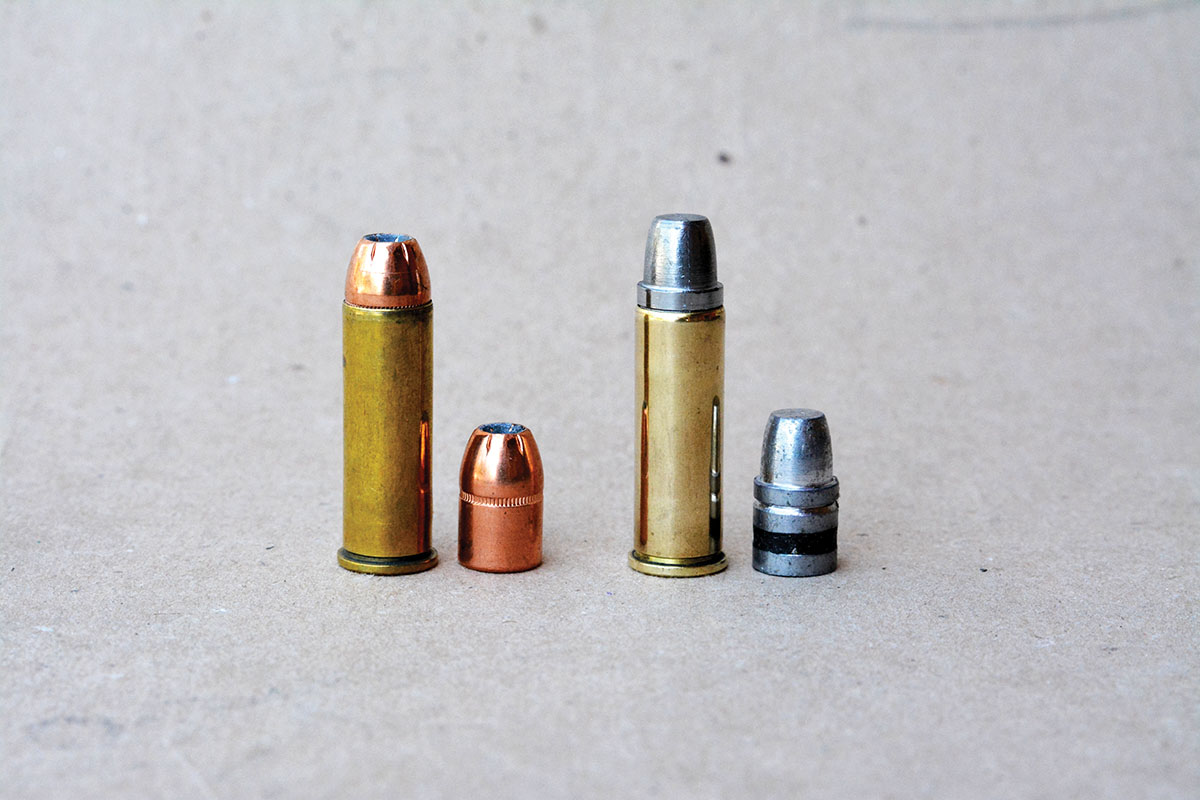
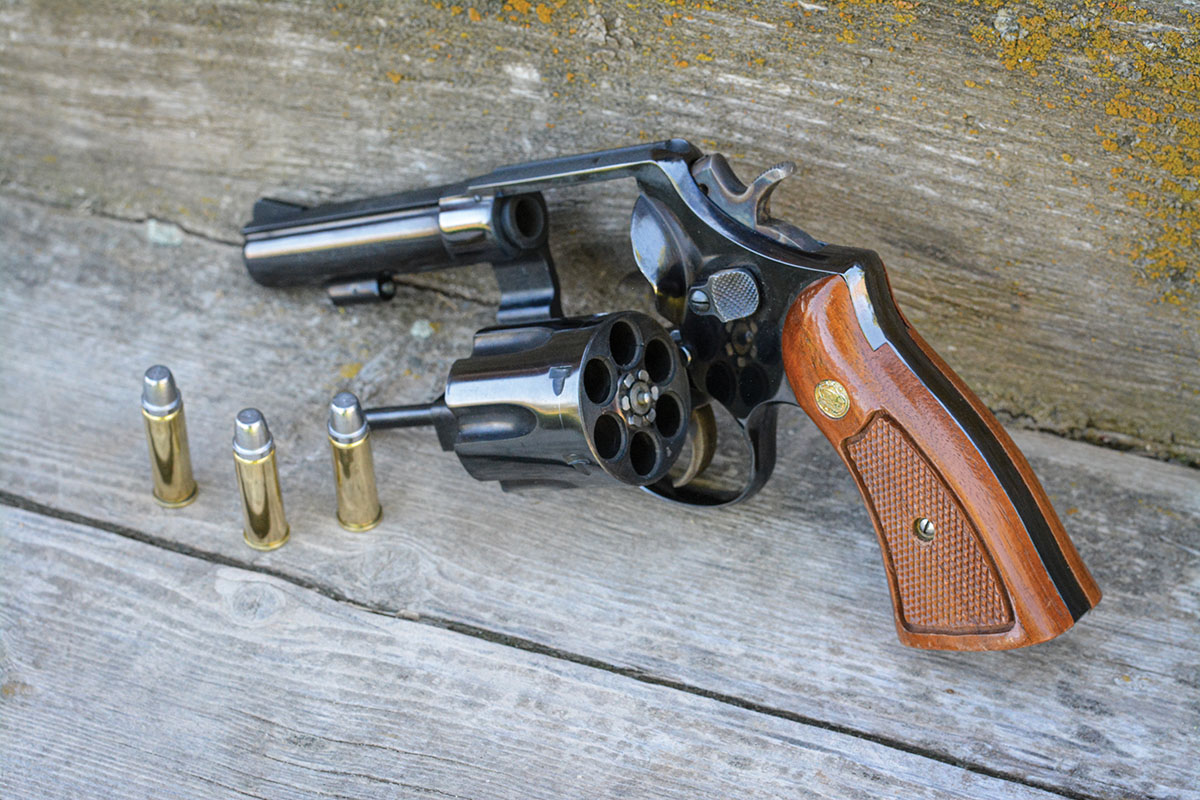
The new 41 Magnum was formally introduced in 1964 and Smith & Wesson began immediately shipping guns. Initially, there were two factory loads that included a so-called “Standard Velocity” version containing a 210-grain Lead SWC with a listed velocity of 1,050 fps from an 83⁄8-inch barrel, but actually reached around 950 fps in revolvers with 4-inch barrels. The standard velocity load was intended to be primarily for duty use, as it produced modest recoil, but was nonetheless an effective big-bore combat round. A second load was offered that contained a 210-grain SP (aka JSP) bullet with a listed velocity of 1,500 fps, but from production revolvers with 4- and 6-inch barrels actual velocity was usually between 1,350 to 1,425 fps (and was originally loaded to 43,500 copper units of pressure (CUP). The full power load was intended for two purposes. First, if police needed a greater range or penetration, such as stopping a vehicle, etc., it would be much more effective than the standard velocity load. Second, Smith & Wesson immediately promoted the new gun and cartridge for hunting (that we will discuss in a moment).
Initially, two guns were offered. The Model 58 was intended for service work and offered at a lower cost, as it featured fixed service sights, Magna stocks and a 4-inch barrel. The Model 57 was offered with 4-, 6- and 83⁄8-inch barrels and featured a fully adjustable target Micro rear sight and ramp front. Both models were built on the large N-frame and shared the same outside dimensions as the Model 29 44 Magnum,
but due to the smaller caliber, they actually weighed around 1.4 ounces more when each were fitted with a 4-inch barrel. Clearly, the engineers did not consider Jordan’s original criteria, and neither did they develop a new medium-frame size, such as the L-frame, that would not appear for 16 years. Several large police departments adopted the Model 58 41 Magnum, but it wasn’t long until the average cop complained about the gun’s weight for day-to-day belt use and switched back to the smaller frame guns, such as the Models 10 and 15 chambered in 38 Special, or the Model 19 357 Magnum.
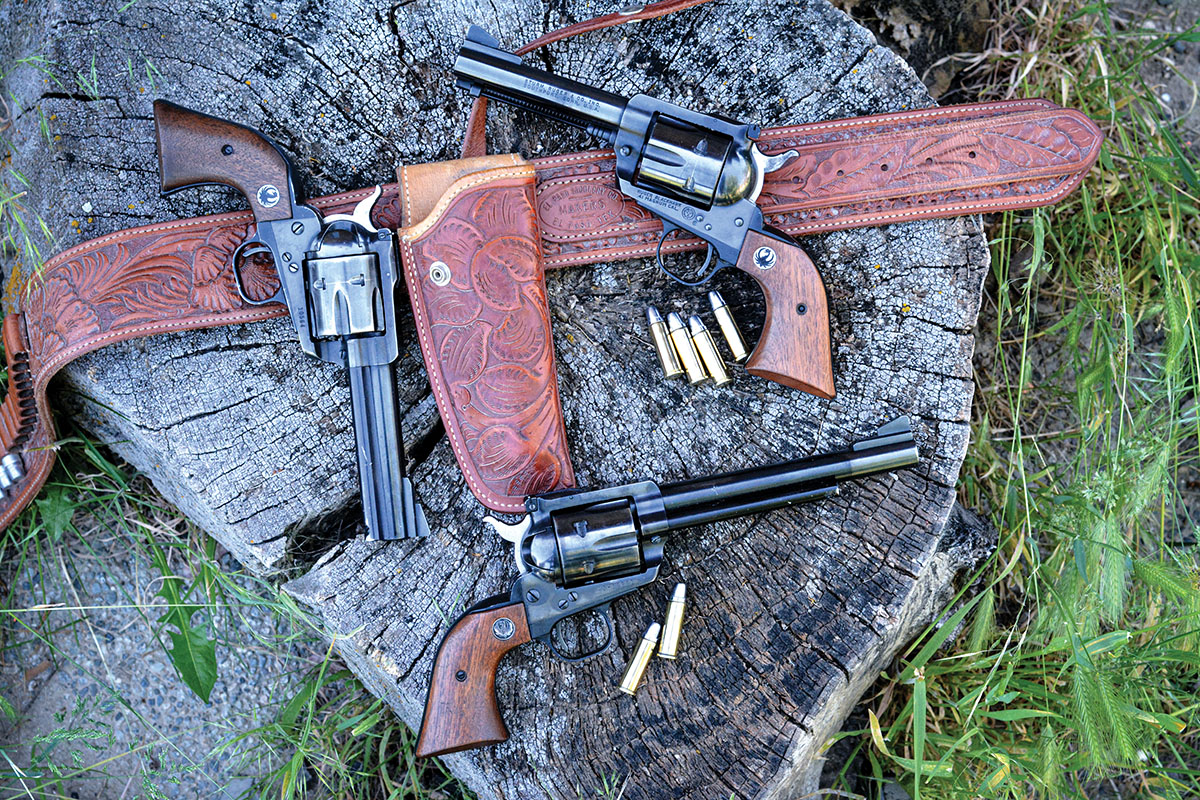
Bill Ruger was included in the development of the 41 Magnum and began producing the Blackhawk in 1965. This gun was built on the large 44 frame, but it featured a shorter cylinder than the Super Blackhawk 44 Magnum, and came standard with flutes, an aluminum grip frame, and 45⁄8- and 61⁄2-inch barrel lengths. As a result, the 41 weighed nearly 10 ounces less, or a practical 38 and 40.5 ounces for the 45⁄8- and 61⁄2-inch barrels, respectively.
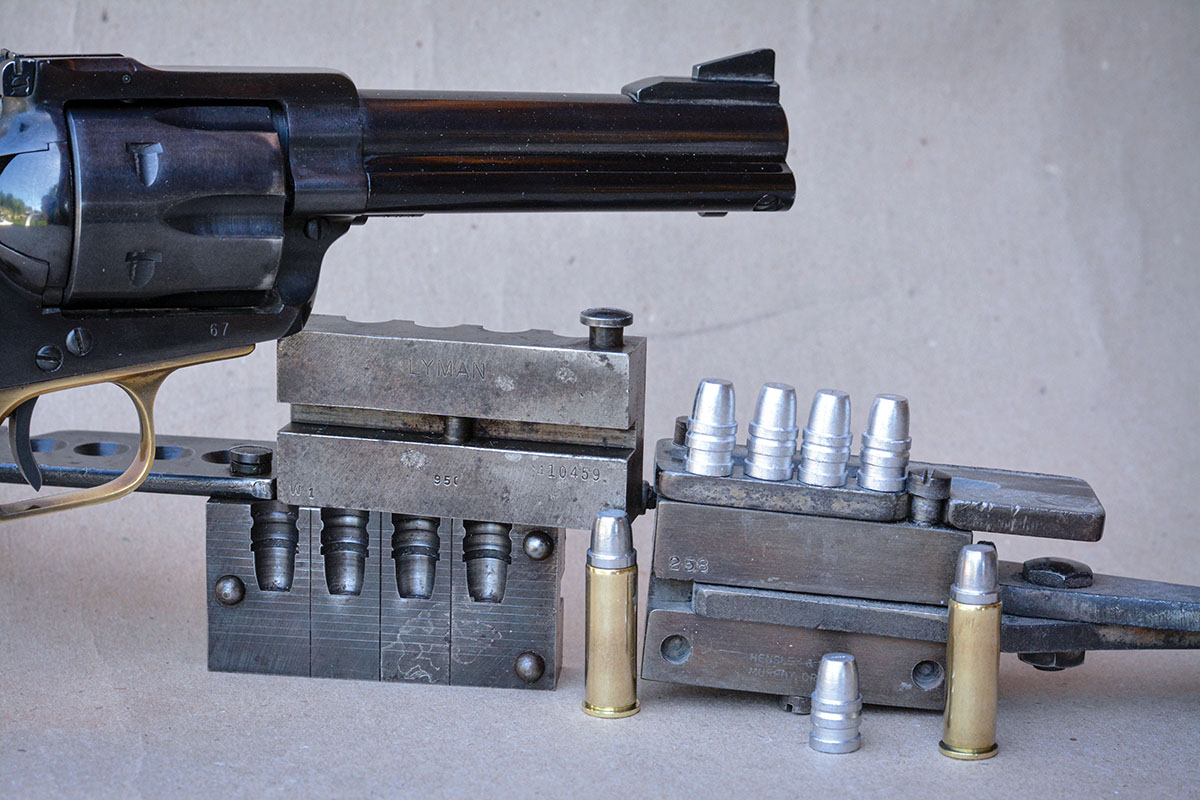
Keith’s most comprehensive article on the 41 Magnum appeared in Wolfe Publishing’s Handloader (No. 10, November-December 1967). In short, within an hour of receiving a consecutive pair of Smith & Wesson Model 57s via airmail with 4-inch barrels, Keith stopped at Wagonhammer Spring (just below his home in Salmon, Idaho) to sight the guns in as he left for Seattle, then flew to Kotzebue, Alaska (33 miles north of the Arctic Circle) to hunt polar bear. After taking his bear, he took four caribou with the new 41 Magnum at distances estimated at 90 to 400 yards in temperatures of 30 degrees below zero. Keith was not only impressed with the accuracy and performance on game of the new magnum, but he felt that it shot flatter than his 44 Magnum sixguns. Soon thereafter, Keith received a Blackhawk from Bill Ruger with 45⁄8-inch barrel bearing serial number 67. This became his favorite sixgun for long-range jackrabbit shooting in Idaho’s Pahsimeroi Valley (about an hour drive from Salmon). This gun resides in my collection and has produced outstanding accuracy, naturally with 223-grain cast bullets from Hensley & Gibbs Keith mould No. 258.
Other notable shooters and industry icons have praised the 41 Magnum as a big bore sixgun cartridge for field use, including Bob Hagel, Skeeter Skelton, Jeff Cooper, John Taffin and many others.
While most of my handgun hunting has been with several other big-bore sixgun cartridges, I have used the 41 to take mule deer, whitetail deer, feral hogs, javelina, turkeys, coyotes and other game. I have great respect for it in regards to terminal performance on game, but also its consistent accuracy in a variety of guns. To say that it is an underrated cartridge is a gross understatement!
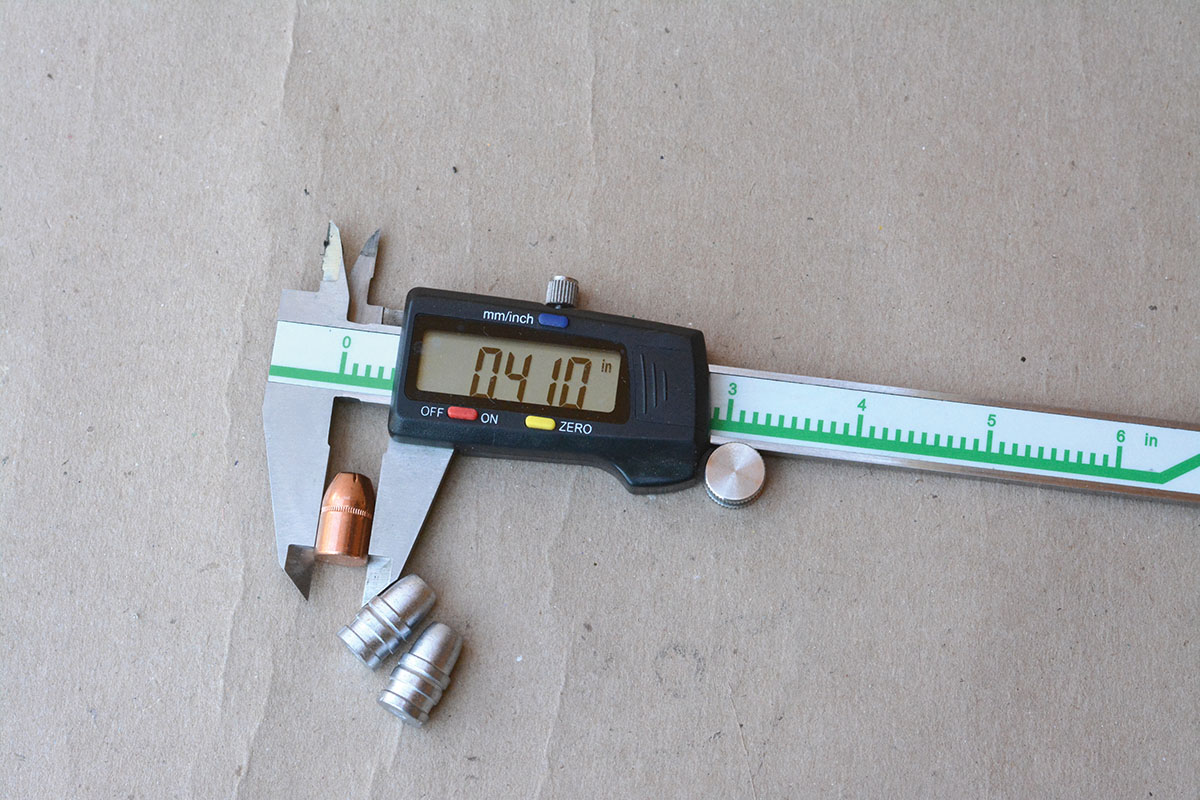
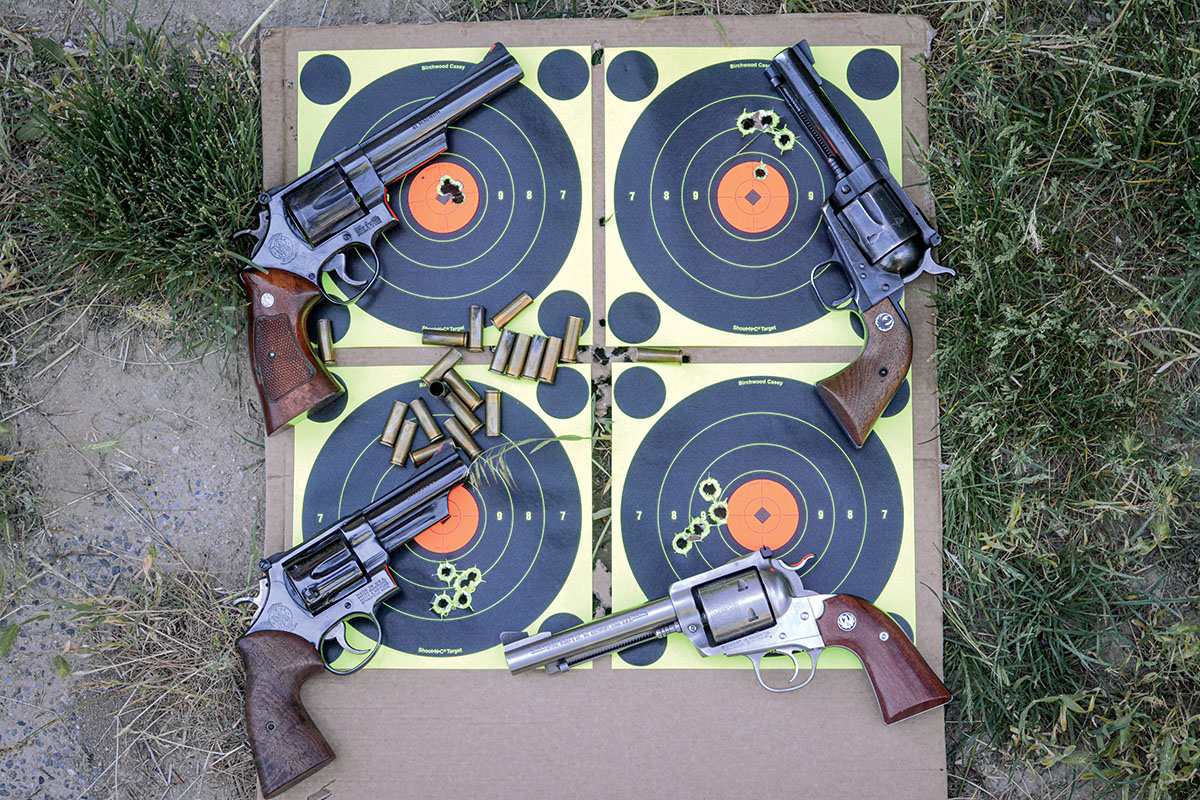
Let’s first discuss accuracy. Virtually all guns from Smith & Wesson, Ruger and Freedom Arms feature .410- to .411-inch throats and a .410-inch barrel groove diameter. When combined with .410-inch jacketed bullets or cast bullets sized to .411-inch, this is a perfect recipe for outstanding accuracy. By comparison, many other sixgun cartridges suffer from huge differences in throat diameter (up to .012-inch variance), as well as significant groove diameter variances. This has resulted in accuracy complaints from time to time with other ancient and modern big-bore sixguns and cartridges. In short, due to the 41 Magnums modern SAAMI (Sporting Arms and Ammunition Manufacturers’ Institute) standardized groove diameter and chamber specifications, a quality sixgun is expected to produce one ragged-hole type groups with reasonable loads.
This comment is not meant to undermine cartridges that offer greater power, as I am very fond of the 44 Magnum, 45 Colt +P style handloads, 454 Casull and even larger calibers. However, many sixgunners will shoot the 41 Magnum more accurately than larger, heavier recoiling cartridges. As any experienced big game hunter will tell you, choosing the right bullet for the game and shot placement are hugely important factors for success. If a hunter shoots the 41 better than heavier recoiling rounds, then perhaps it is a better choice. The 41 still offers a flat enough trajectory with full house loads to help make hits at reasonable distances.
I am always careful about making cartridge comparisons, but today it seems appropriate. The 41 is often referred to as the “middle magnum,” indicating that it is sandwiched between the hugely popular 357 and 44 Magnums. However, technically speaking, the 41 is closer (ballistically speaking) to the 44 than the 357. For example, the bullet diameter is just .019 inch smaller than the 44 and .053 inch larger than the 357. Standard bullet weight is 30 grains less than the 44 and 52 grains heavier than the 357. Current industry pressures for the 41 and 44 are listed at 36,000 pounds per square inch (psi), or 40,000 CUP, while the 357 is listed at 35,000 psi. Using standard weight bullets for each caliber (158-grains for the 357, 210-grains for the 41, 240-grains for the 44), each can reach around 1,300 fps (or higher with select loads) and share very similar trajectories in the field at distances that a traditional sixgun would be used. If all factors are equal, the 41 probably offers a slightly flatter trajectory, but it is not a significant advantage at any normal distance that game would be taken with a traditional big bore sixgun.
With that said, not all factory loads are loaded to their full potential in each caliber. Sometimes loads are developed by factories based on getting the product to consumers at competitive prices, rather than maximizing performance potential (which is one reason that we are avid handloaders).
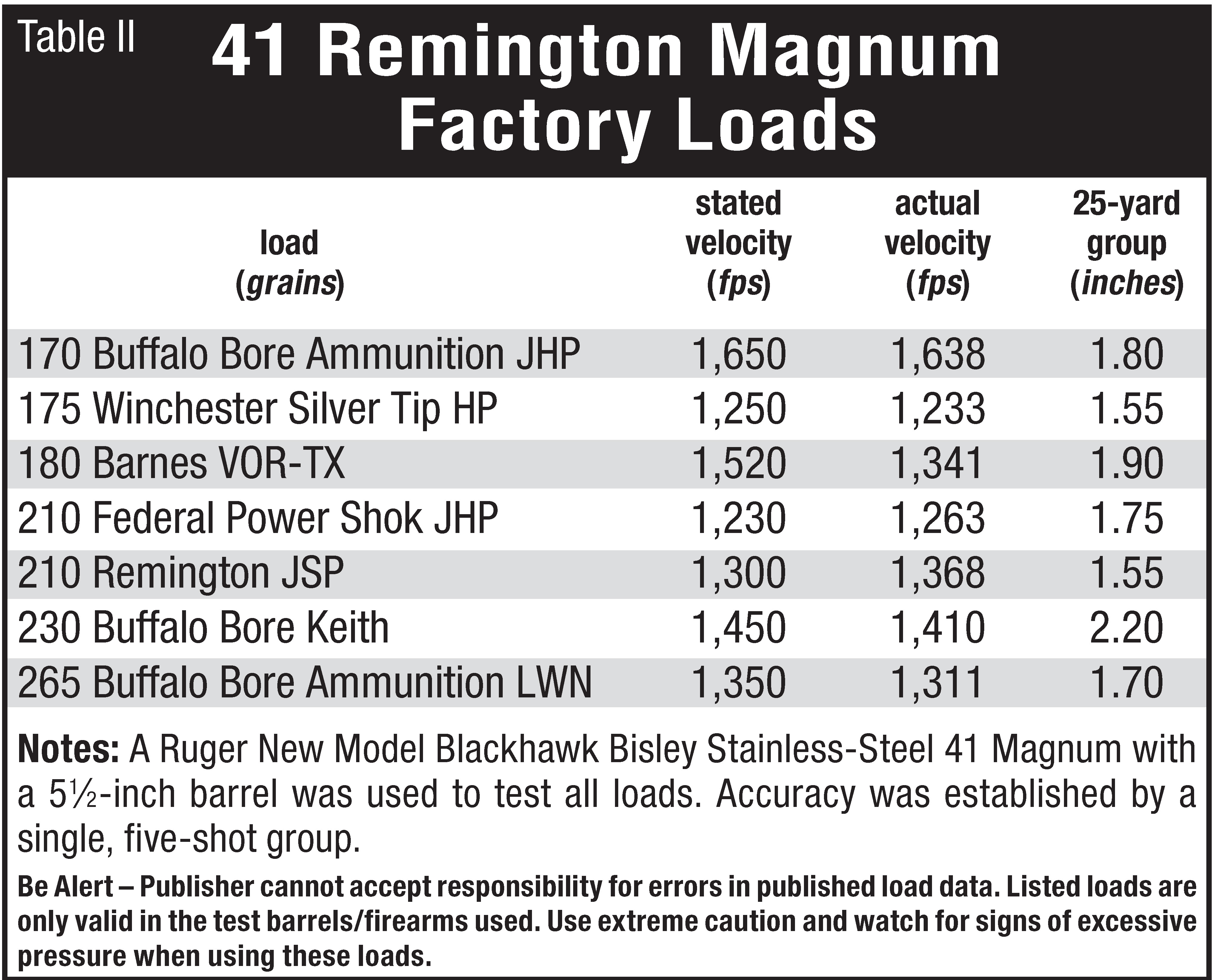
Currently, Remington lists their traditional 210-grain JSP bullet at 1,300 fps from a “4-inch vented test barrel,” but in real-world production revolvers, this load generally reaches 1,350 and sometimes 1,400 fps. (For reference, Remington lists the 44 Magnum with a 240-grain bullet from a 4-inch vented test barrel at 1,180 fps.) Federal lists the 41 with a 210-grain JHP at 1,230 fps (identical velocity as the 44 Magnum). Hornady lists their proven 210-grain XTP-HP bullet at 1,545 fps, and for levergun shooters, they offer their 190-grain FTX bullet at 1,620 fps, but those velocities were obtained from a 10-inch non-vented test barrel. Buffalo Bore Ammunition offers a 170-grain JHP at 1,650 fps, a 230-grain SWC cast at 1,450 fps or a 265-grain LBT-LWN at 1,350 fps.
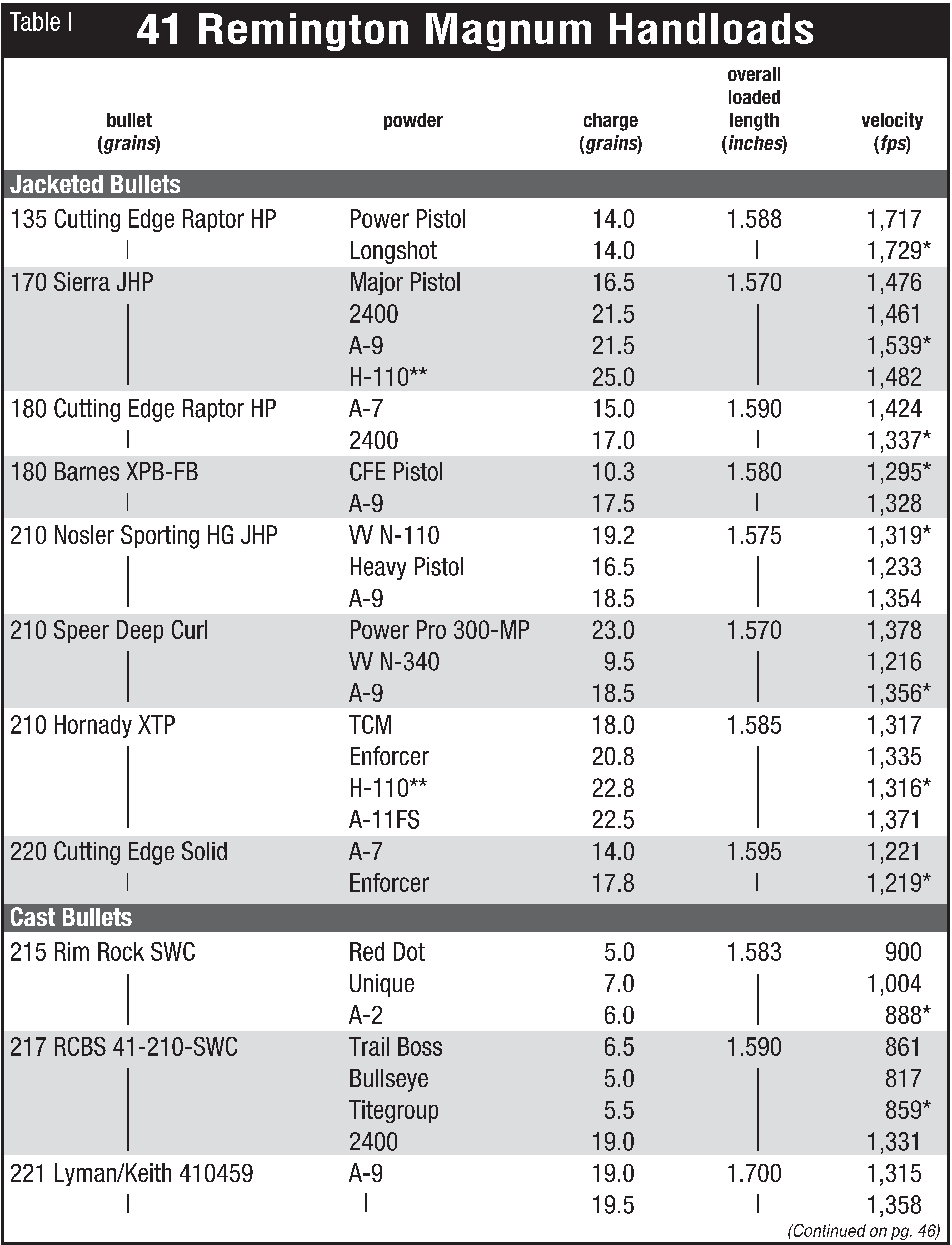
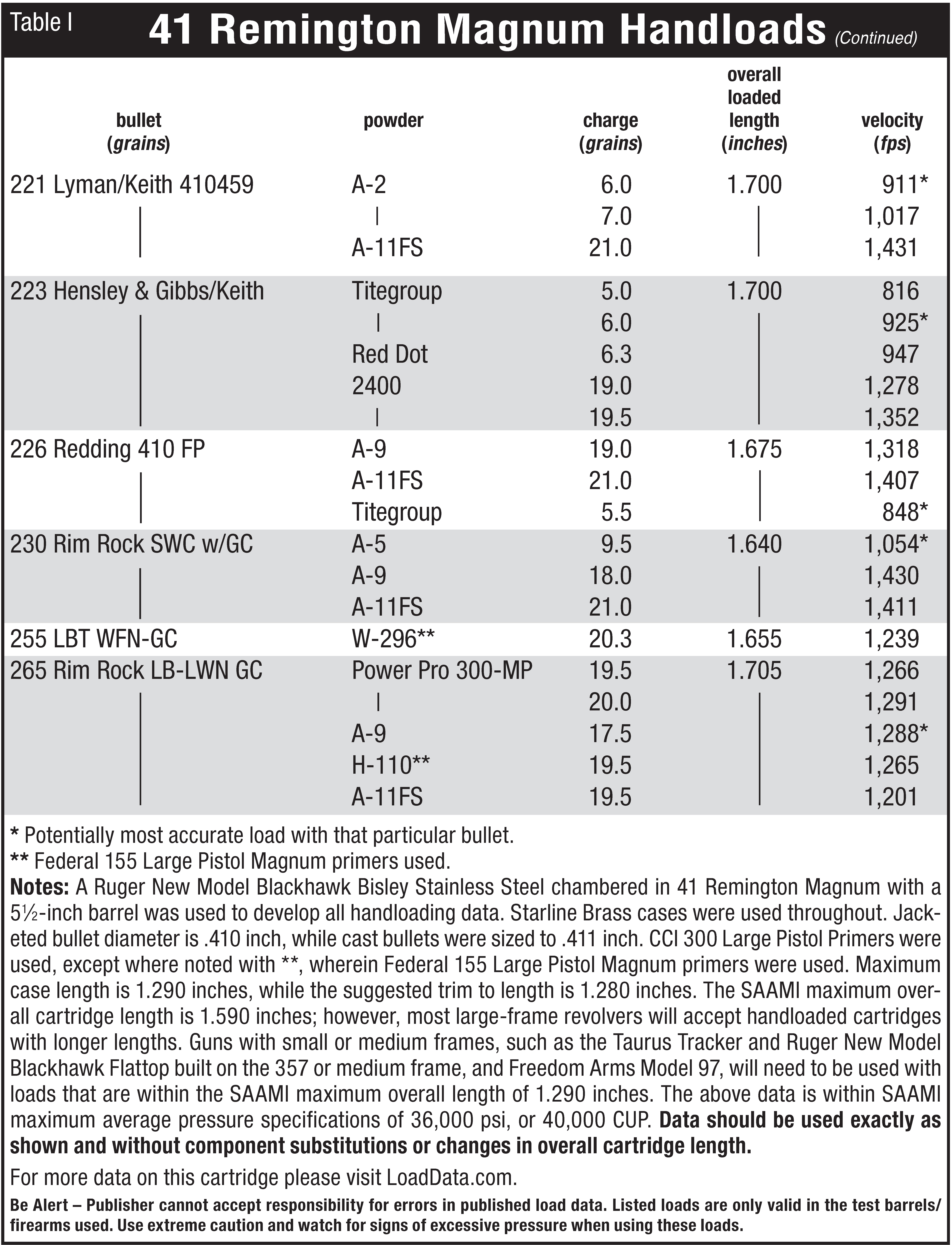
Almost everyone I know who shoots a 41 Magnum handloads for it. This is where its versatility really begins to shine. The service loads, or standard velocity loads, have long been discontinued; however, handloaders can more or less duplicate those using one of several cast bullets from Lyman mould 410459, RCBS 41-210-SWC, Hensley & Gibbs No. 258, or commercial cast 215-grain SWC versions from Rim Rock Bullets. (See data table for details.) With cast bullets pushed to velocities of 800 to 1,000 fps, the 41 is still powerful but pleasant to shoot. The original Keith-designed bullet from Hensley & Gibbs, or Lyman Keith mould 410459 at 223 and 220 grains respectively, can be pushed to 1,400 to 1,450 fps and are still excellent choices for general field use as they offer flat trajectories and are capable of taking deer, elk, black bear and other big game. Heavyweight cast bullets, including the above Keith designs and the 265-grain Rim Rock LBT-LWN, will easily penetrate elk and even moose on broadside shots, making it very effective as a hunting cartridge.
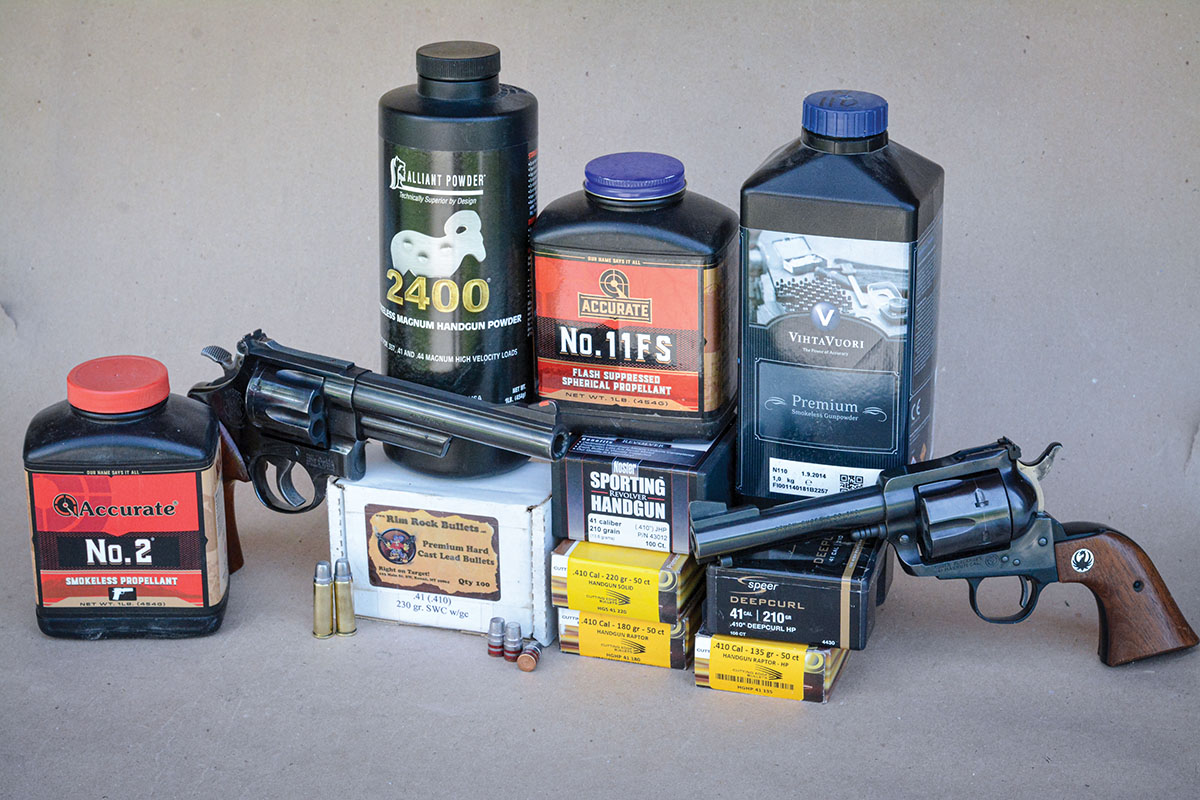
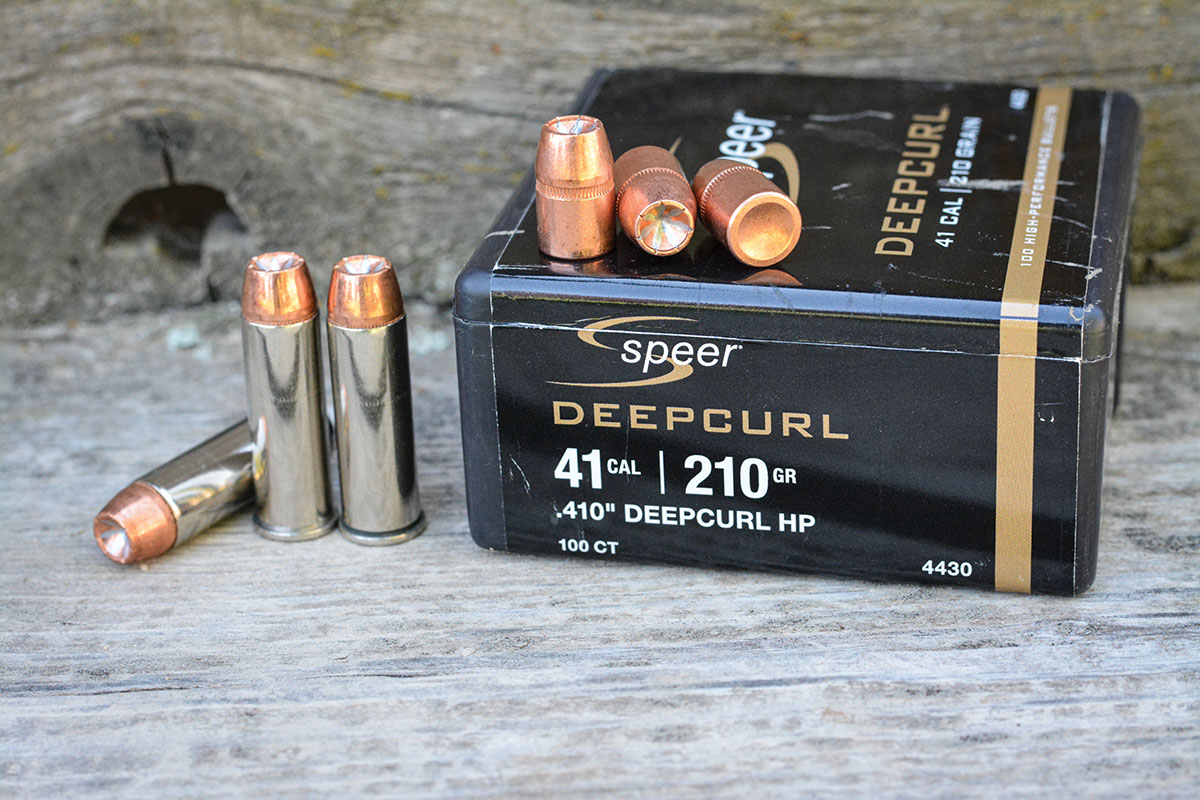
There is a reasonable selection of cup-and-core-style jacketed hollowpoint bullets readily available, including the 170-grain Sierra JHP (with velocities up to 1,450 to 1,550 fps), 210-grain Nosler Sporting Handgun JHP, 210-grain Hornady XTP and 210-grain Speer Deep Curl (formerly Gold Dot). The 210-grain versions are popular with deer hunters as they offer reliable expansion, while giving proper penetration. Again, handloaders can easily push these bullets to 1,350 to 1,400 fps while staying within industry pressure guidelines. Another bullet that has gained popularity is the all-copper 180-grain Barnes XPB-FB; however, due to its great length and required deep seating, powder capacity is limited, and velocities are generally held to 1,300 to 1,350 fps.
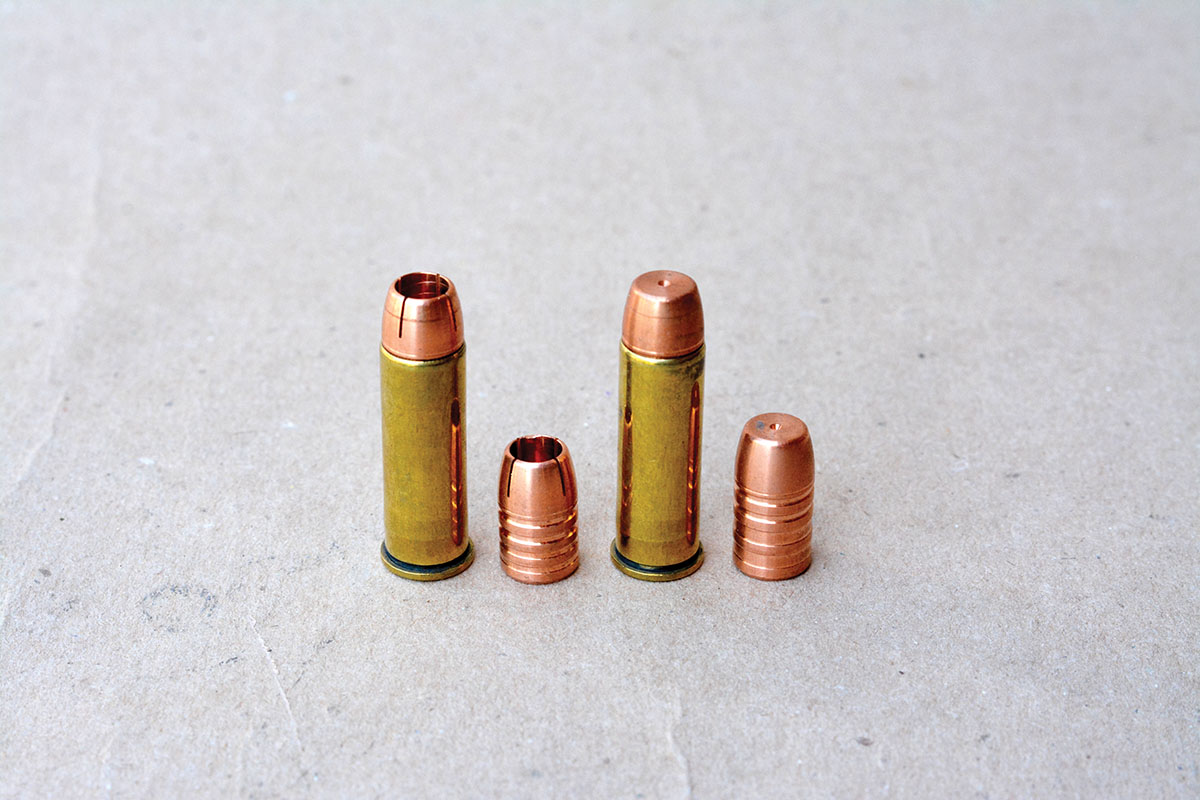
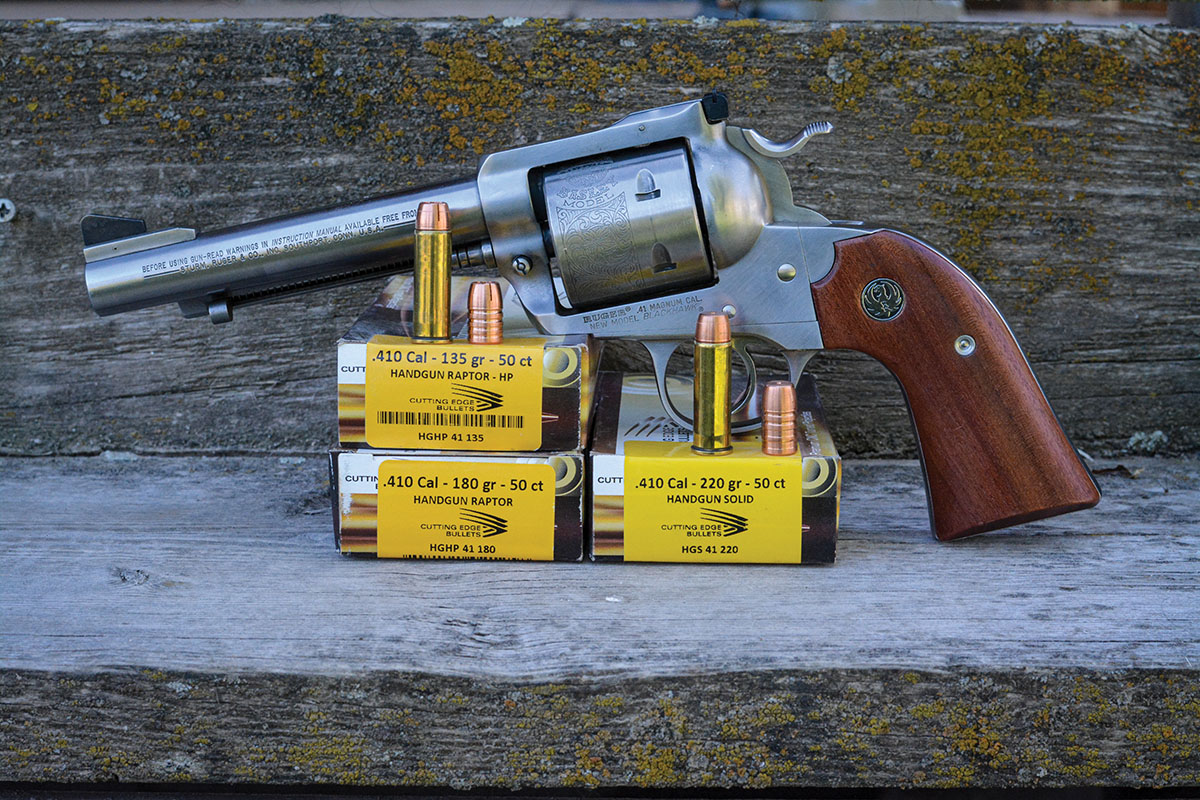
Cutting Edge Bullets offers their excellent solid copper expanding Raptor hollowpoint bullets that have given remarkable accuracy in several of my sixguns. It features pre-cut relief slots vertically on the ogive that allow the petals to instantly peel back upon impact, while the shank acts like a solid to penetrate. The 135-grain version can be pushed to over 1,700 fps, and the 180-grain to nearly 1,450 fps. The Cutting Edge 220-grain Solid is a top choice for really heavy game where deep penetration is desired. It can easily reach 1,250 fps and has given remarkable accuracy in several guns.
A significant amount of handloading data is included in the accompanying table. Full power loads that are approaching maximum pressures should only be used exactly as shown. In other words, do not make component substitutions, including bullets, primers, Starline cases, etc., and overall cartridge lengths should be used as listed.
I have been shooting 41 Magnums since the mid 1970s. What is interesting is that in the early 1970s, several so-called authorities began predicting that the 41 would soon become obsolete. Today, there are many firearms manufacturers offering more models than at any time in its history. Marlin has even made several production runs of their Model 1894 lever action, while Henry lists it as a standard offering in their extensive levergun line.
What was conceived as an ideal police cartridge is actually a truly outstanding sixgun round that offers versatility, remarkable accuracy, moderate recoil and enough power to readily harvest most thin-skinned big game. It has been offered in our finest revolvers from Smith & Wesson, Ruger, Freedom Arms, and many others. By any measure, it is a great round that stands tall on its own merit.