Horse Pistols of the Indian Wars
Shooting Over Their Saddles
feature By: Gary Lewis | September, 26
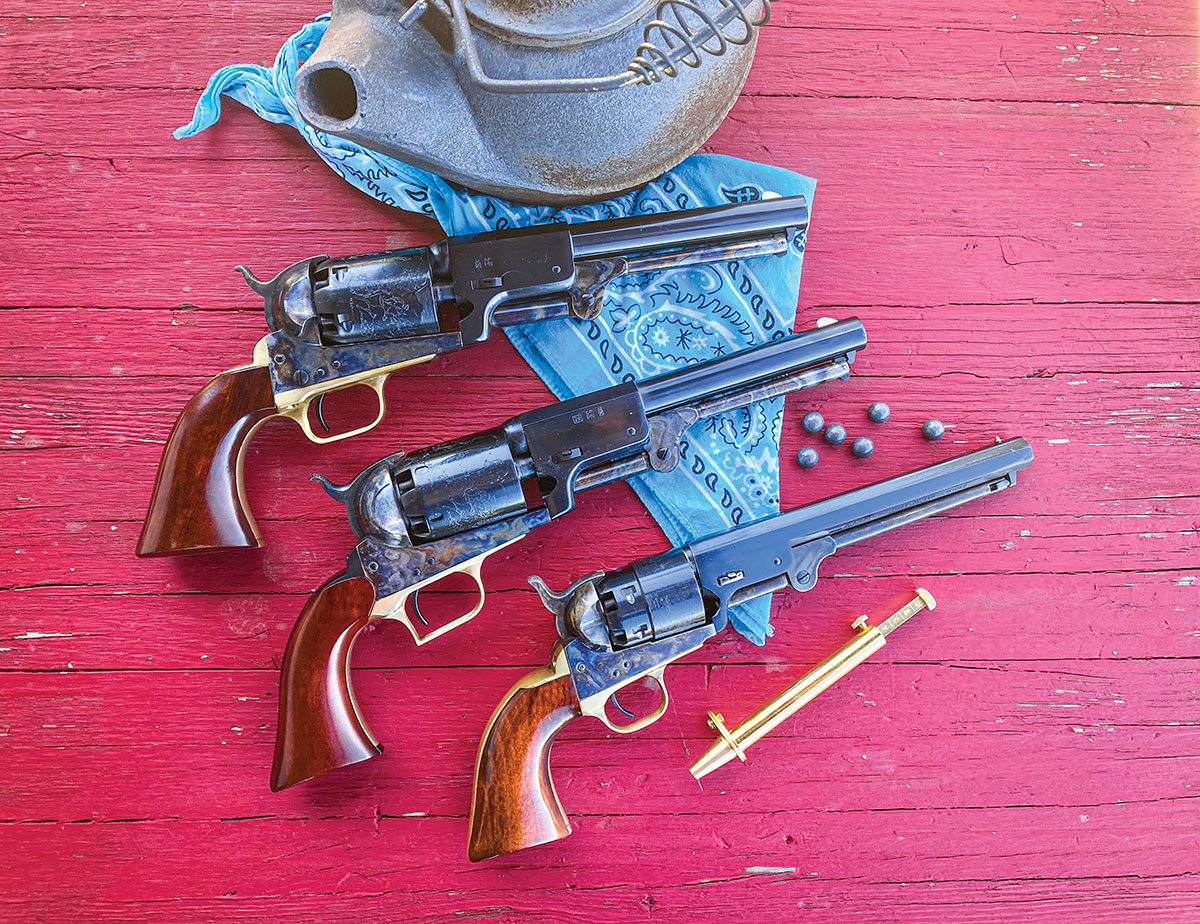
Including the Walkers, there were 19,800 total Dragoon revolvers made from 1847 to 1860, with the big Colt revolvers on the saddles of soldiers, cowboys and gunfighters from Mexico to Montana and from Oklahoma to the Okanogan.
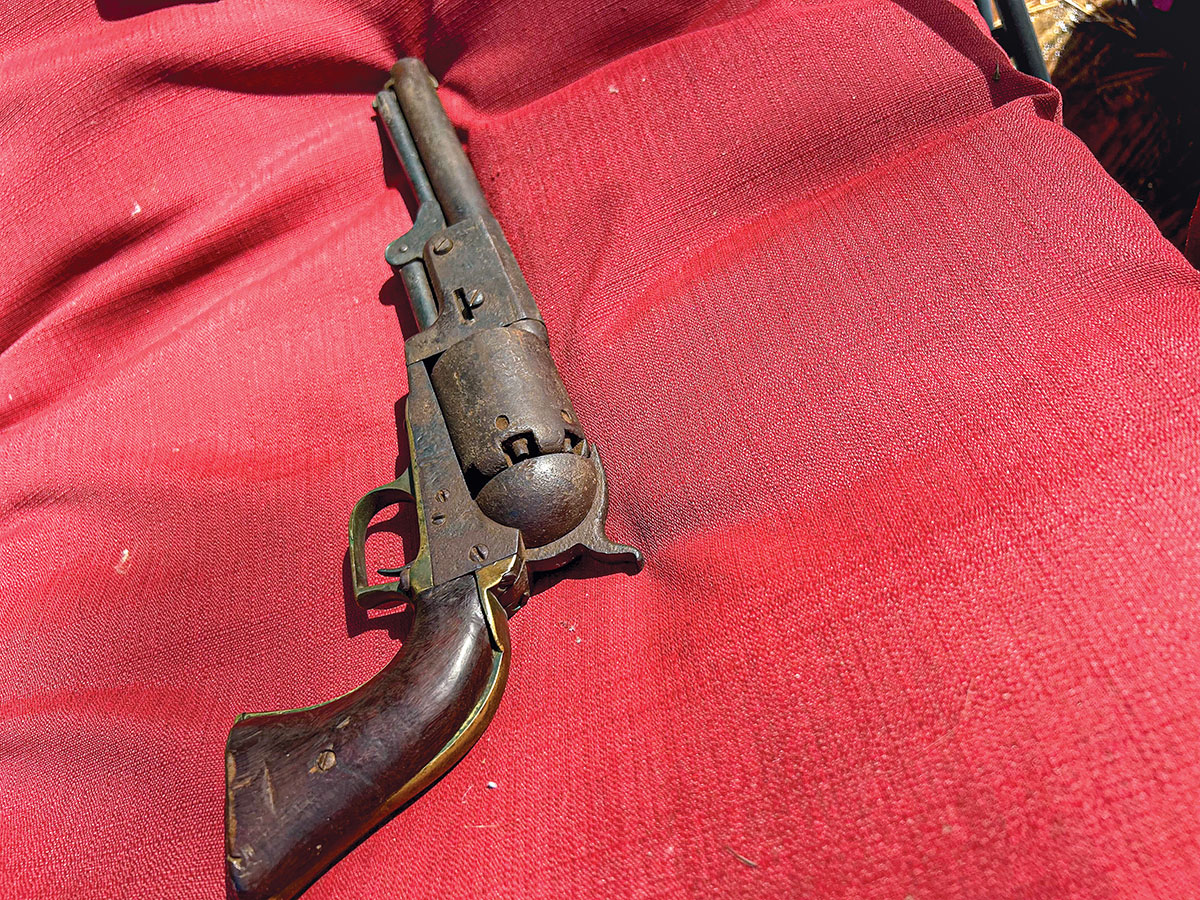
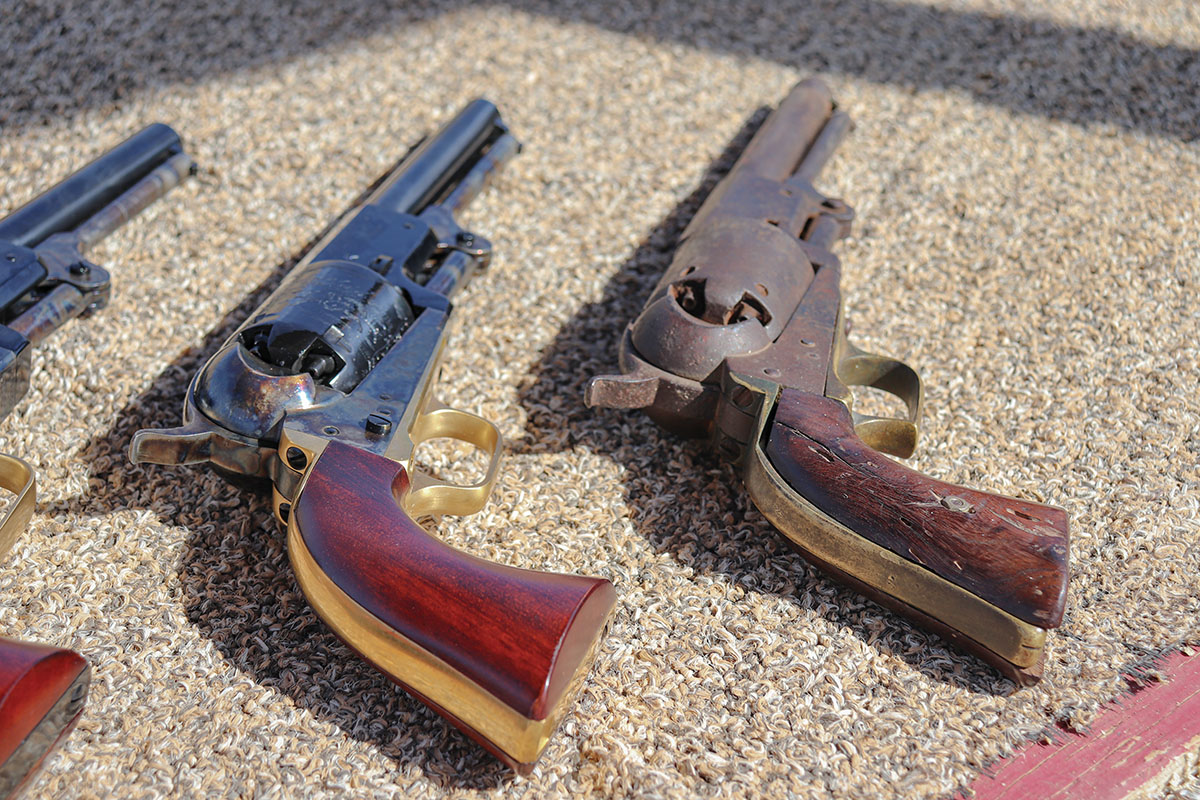
A shipment of 750 Dragoons were shipped to the British market. Various types include the Whitneyville Walkers, sometimes called the Transitional; there were about 240 of these made, and then the 1st Model came along with 7,000 manufactured before changes were made. Of the 2nd Model, 2,550 were produced in 1850 and 1851. Then came the 3rd Model with about 10,000 produced between 1851 and 1860.
The term Dragoon came to America from France, where the soldiers (dragoons) were armed with a blunderbuss or similar weapon they used against French protestants.
The term dragoon in the Americas by the mid-1800s came to refer to an infantryman on a horse. The Colt Dragoon was imagined as a horse pistol for a mounted soldier. The soldier was expected to ride to battle and dismount to fight. At the start of hostilities, the command would dismount in groups of four, with one trooper designated as horse-holder, while the other three would go to the sound of the guns.
The Indian-fighting army of the 1850s carried muzzleloading rifles that were hard to reload on horseback, but by the middle of the decade, officers carried Colt’s Dragoon revolvers, often two or more to a man, and the pistols probably saved a whole command in Washington Territory.
In the middle of May, 1858, Lieutenant Colonel Edward J. Steptoe led a wagon train out of Walla Walla in Washington Territory. Steptoe hoped to strike a peace deal with the Indians, and he didn’t plan on a fight. So confident was he of diplomacy that a few miles from the fort, he turned back to offload ammunition.
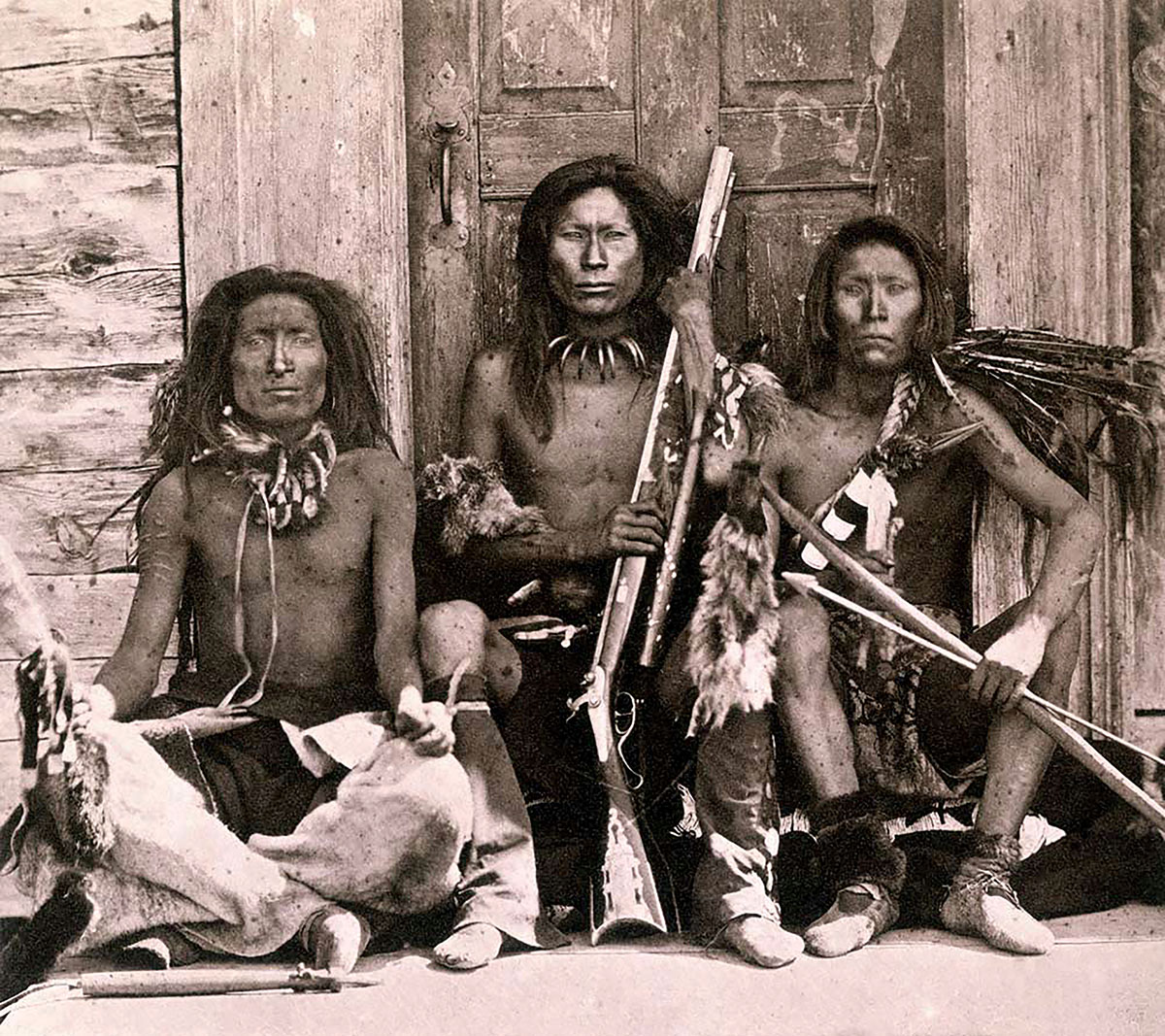
To save weight, Steptoe left behind an average of 40 rounds per man. Steptoe sympathized with the Indians and hoped to avert a war. Soon after crossing the Snake River, the Indians, a coalition of Palouse, Cayuse, Yakimas, Spokanes and Cour d’Alenes, began to shadow the caravan. On May 16, the command was confronted by close to 1,000 Indians, and the two sides met to parley. Steptoe decided to withdraw to the Snake River and await reinforcements.
By daylight, the 158-man command was on the move, along the banks of Ingossomen
Creek (today’s Pine Creek). The Indians charged, leaned tight along their horses’ necks, and fired into the soldier ranks. Outnumbered, Steptoe looked for a high place to make a stand. The column stopped on a knob on the south end of a high ridge and formed a circle. A line of soldiers formed a perimeter, lying on the ground, hiding behind their saddles and packs. A smaller circle was formed to protect pack animals, supplies, and the wounded.
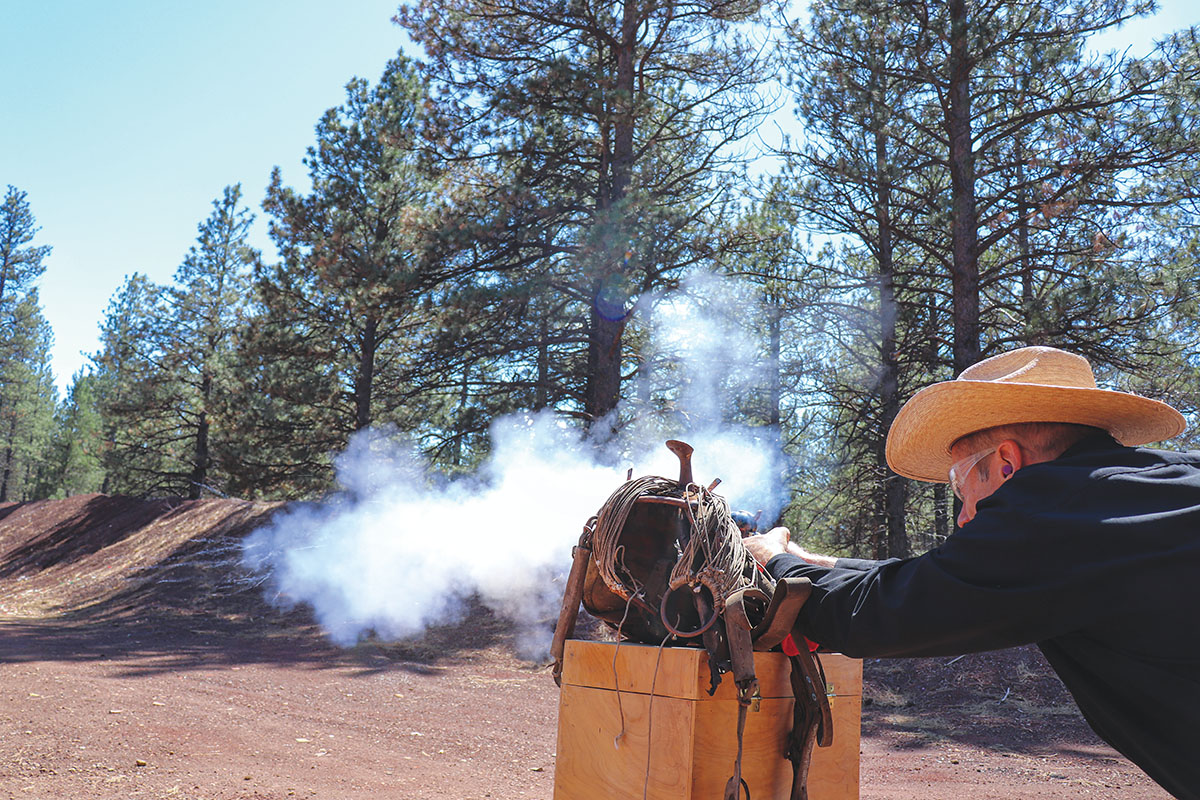
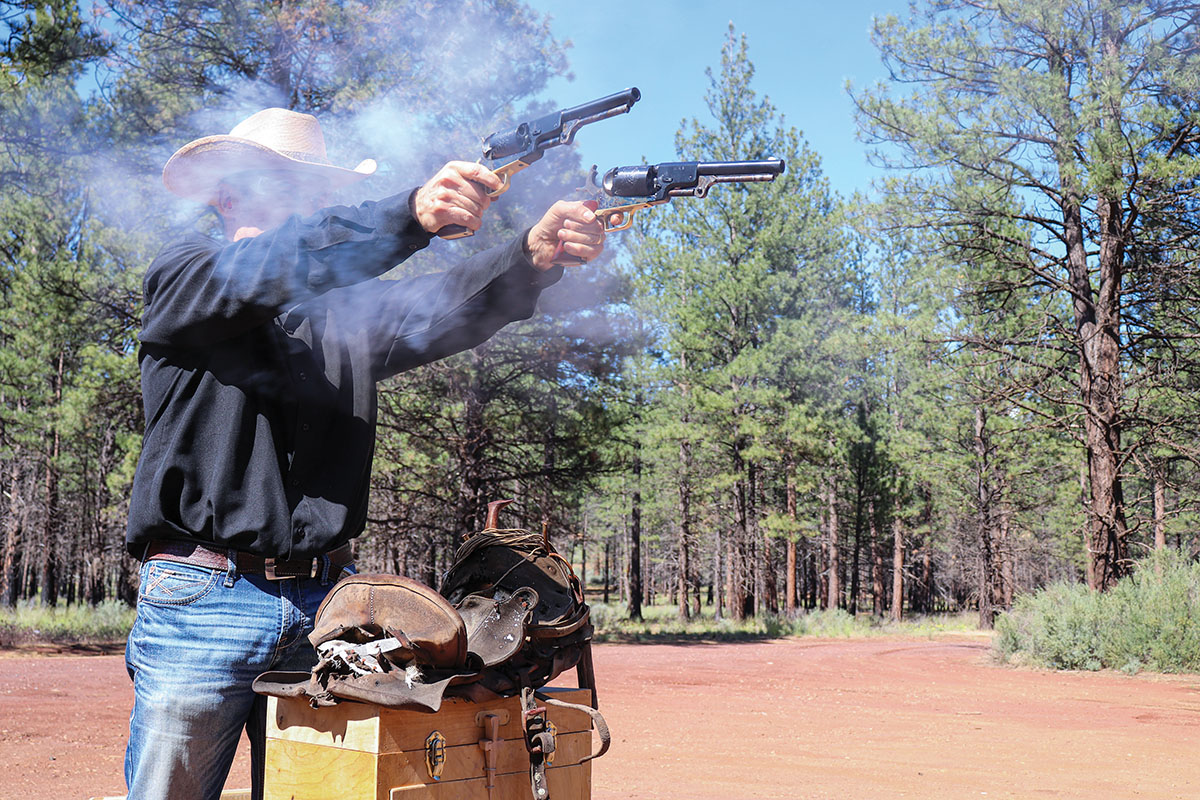
The Colt Dragoon was ideally suited for the defensive situation of firing over the top of the saddle barricade. By the end of that long day, Steptoe’s bloodied command held a small piece of hilltop. Out of ammunition, a trooper named Victor De Moy swung his Springfield like a club and kept one last round in his Colt Dragoon, a bullet he intended to save for himself. By nightfall, the men were down to three rounds apiece.
At dark the Indians withdrew, planning to finish off the soldiers at daylight. The soldiers buried their dead, tended the wounded, and dreaded the dawn. Steptoe, with the aid of a friendly Nez Perce, found a way out in the darkness. With hands covering horses’ nostrils, hooves sacked in cloth, and every bit of metal blackened with soot, the soldiers found their way between the enemy fires and struck the trail back to Fort Walla Walla. By daylight, they had the head start they needed.
A recent perusal of the auction sites revealed an original Colt London Dragoon with powder flask and mold, and a current bid of $805 going north. A Colt 1st Model was available at the Buy It Now price of $18,500.
My friend Rob Anderson has a 1st Model Dragoon that his grandfather found when he was about 10 years old near the old Texas Fort Concho. The young Anderson boy, this would have been in the 1920s, dug the pistol out of the dirt. It was still loaded with two rounds and still is. When we went to the range, Anderson allowed me to examine his grandfather’s pistol, in surprisingly good condition after 40-some years of burial in Texas dirt.
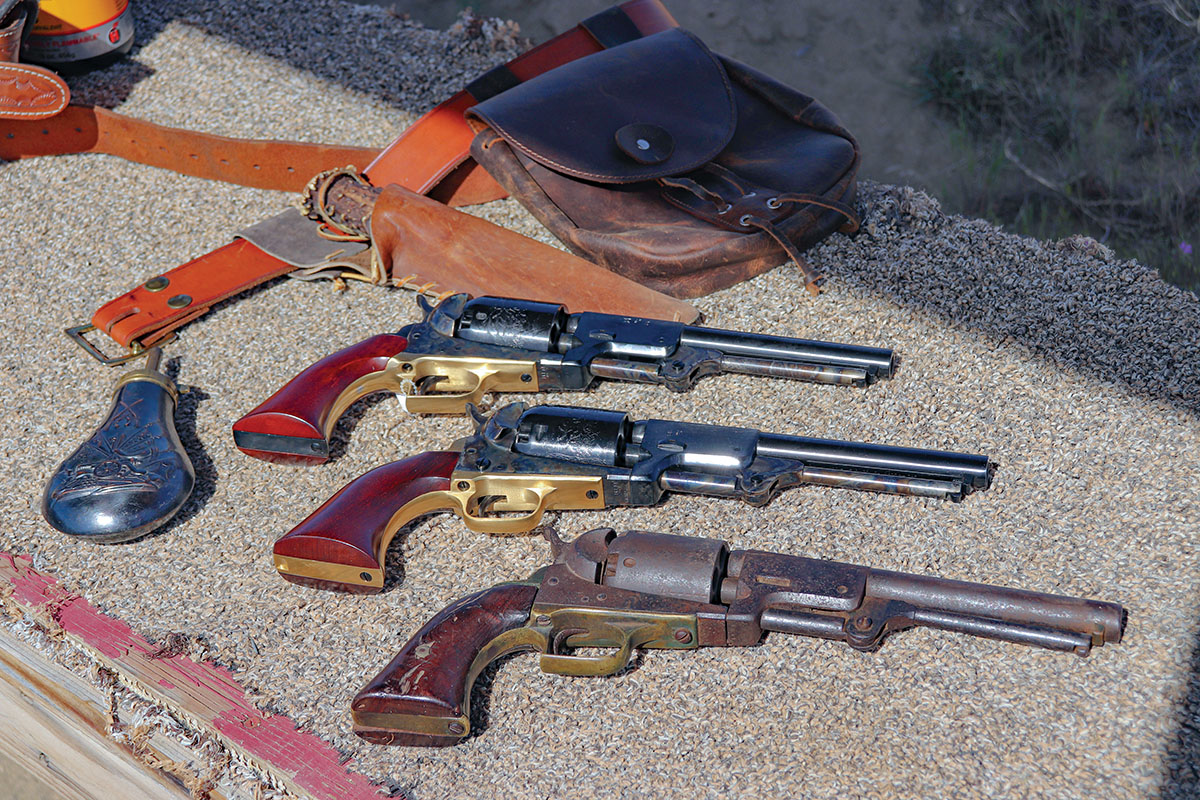
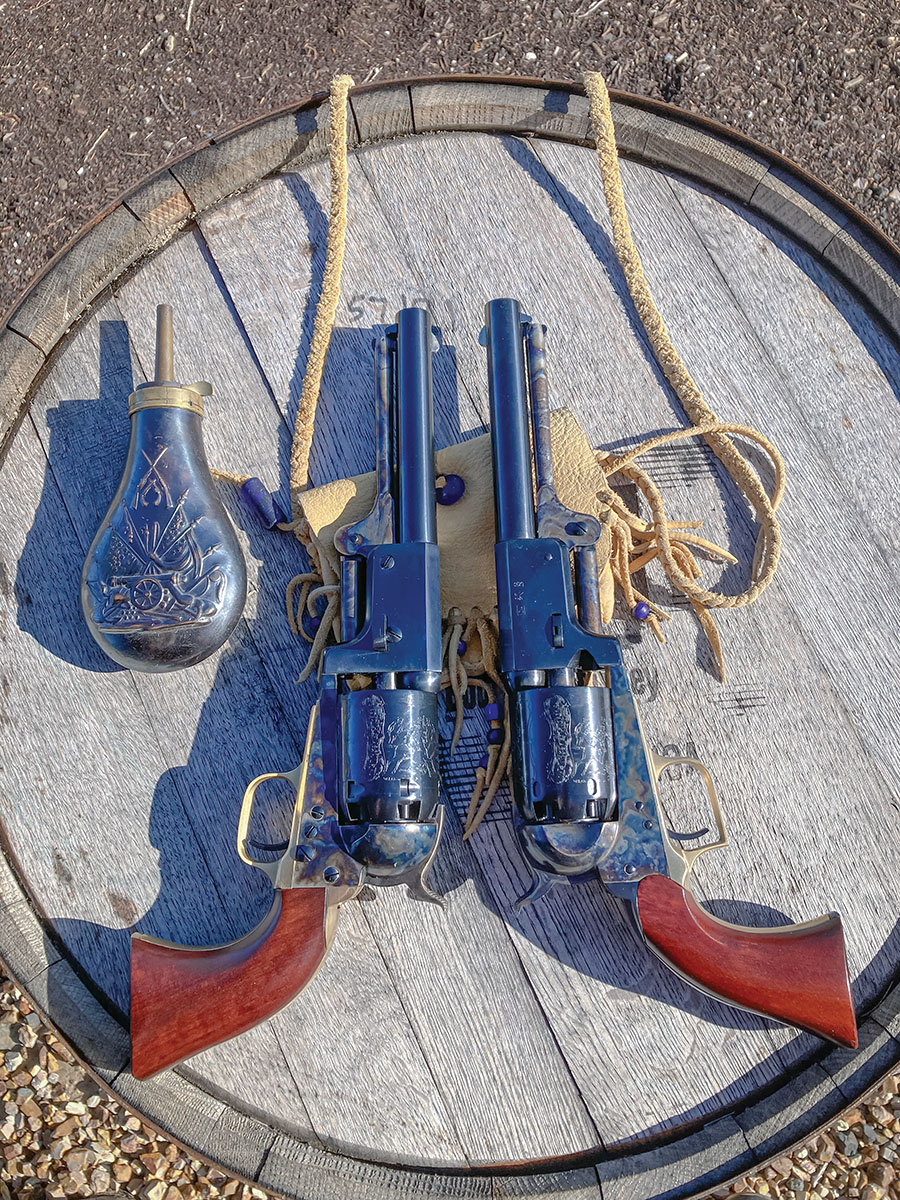
When I decided I needed a replica Colt Dragoon of my own, I contacted the folks at Cimarron Firearms and ordered a 3rd Model with the idea I might someday put a shoulder stock on it. Along with the gun I purchased, Cimarron shipped a Walker Lonesome Dove commemorative and a Whitneyville transitional replica for test and evaluation. All these guns are manufactured by Uberti to Cimarron specifications.
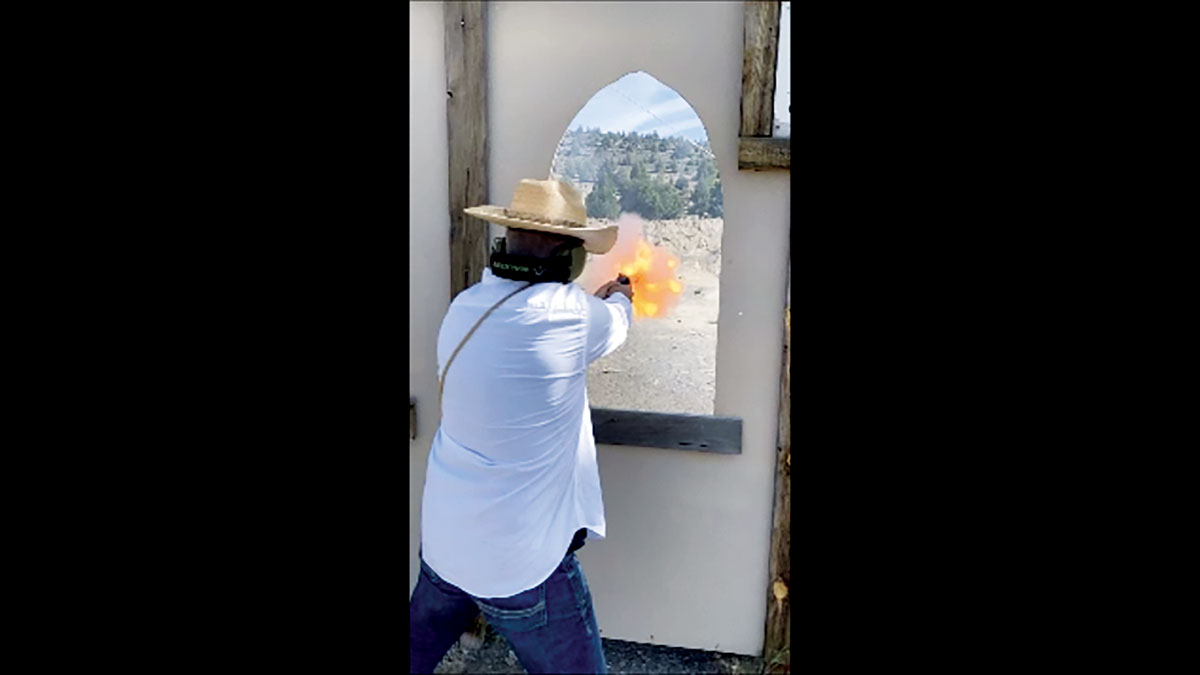
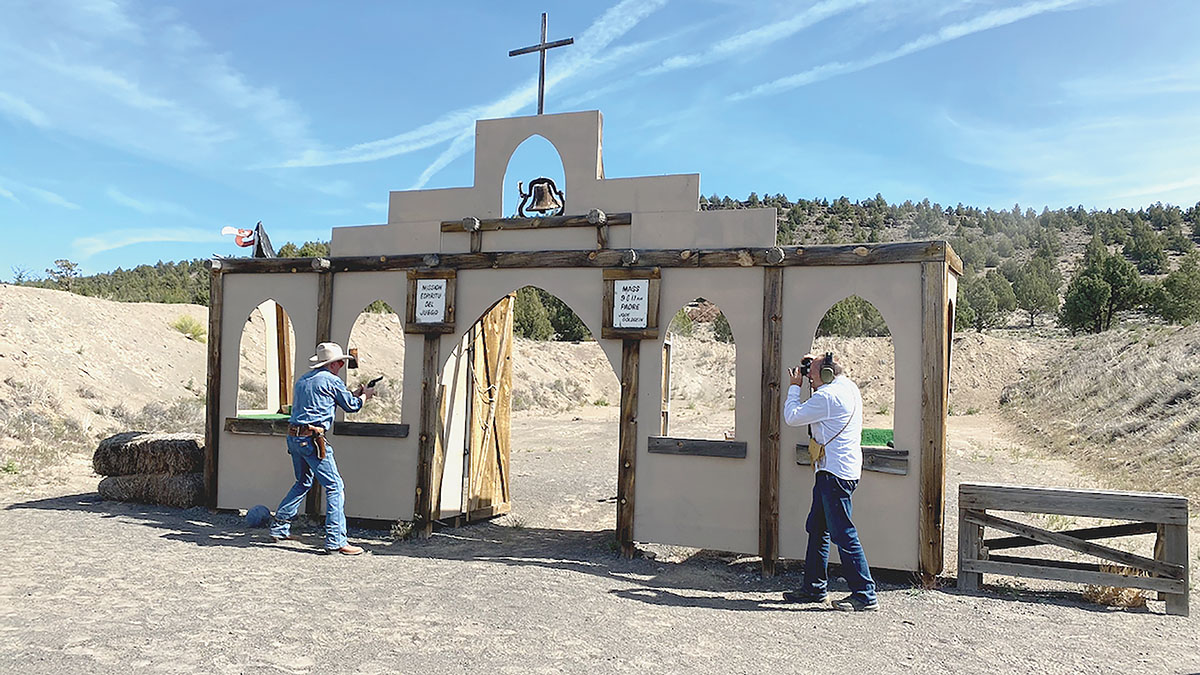
Before shooting the 3rd Model the first time, a couple of friends of mine and I went to 11 a.m. Mass at Mission Espiritu Del Juego, which was built by the Horse Ridge Pistoleros at the Central Oregon Shooting Sports Association Range. It’s a false-fronted house of worship to keep the single action faithful in fine fettle.
To symbolize the weight of our sins, we took turns dragging a ball and chain (a 16-pound bowling ball) window to window. With a bowling ball and a horse pistol, I fired the first and second strings, then handed over the gun to my companions, each in turn. As if the gates of the jail were thrown open like at Tubac in 1864, we each had one last chance at freedom if we could blaze away with a black-powder revolver at the Coyotero besieging the city. Our target was a 33⁄4-inch circle on a cardboard box. Encumbered with a ball and chain, we shot well enough (averaging 5-inch groups, offhand) to fight another day.
Out in the pine trees, I set target stands at 25 and 50 yards. The targets were mountain lions I drew on cardboard and then added a 1-inch orange sighting dot.
The big Colts were designed to be carried on the saddle, to shoot from or over the saddle, so I set up a saddle for a rest. Next, I charged the guns and got behind the saddle like Steptoe on the end of a ridge. Let me say in advance, the sights are as primitive as they get. The front sight is a blade, and the rear sight is a notch in the cocked hammer. I probably could have shot better groups if I had been at the range on sandbags instead of shooting off a 100-year-old saddle.
The first load was 30 grains of Pyrodex RS (equivalent to black powder FFg) and shot at 25 and 50 yards. The best I could do with the 3rd Model was a 3-inch group at 25 yards. That same load, when fired at 50 yards, was able to hit a 12-inch circle. Next, was 20 grains of Pyrodex RS in each pistol. The best I could do with the 3rd Model was a 51⁄4-inch group. When shooting the Whitneyville, I managed to shoot a 17⁄8-inch group. Shooting both guns with 40 grains of Goex FFFg, I did the best with the 3rd Model, managing a 4-inch group. My main pistol flask is loaded with the Goex FFFg and is a proper dragoon replica. When measured out through the spout, it clocks 40 grains, which would have been about right for combat.
If shooting at a mountain lion at 25 yards with either of the dragoons in hand, I probably would have hit it. At 50 yards, the cougar had better than a sporting chance.
Last, I moved both targets up to 10 yards, about five yards apart, and stapled an 81⁄2x11-inch piece of paper on each target backing. Then I loaded both guns (3 rounds in each) and, with one in each hand, shot them as fast as I could. I managed to hit the left target two out of three shots and the right target once out of three, for 50 percent on paper.
Throughout the 3-hour session, both guns performed flawlessly, with the only stoppages caused by shot caps getting caught in the cylinder’s rotation.
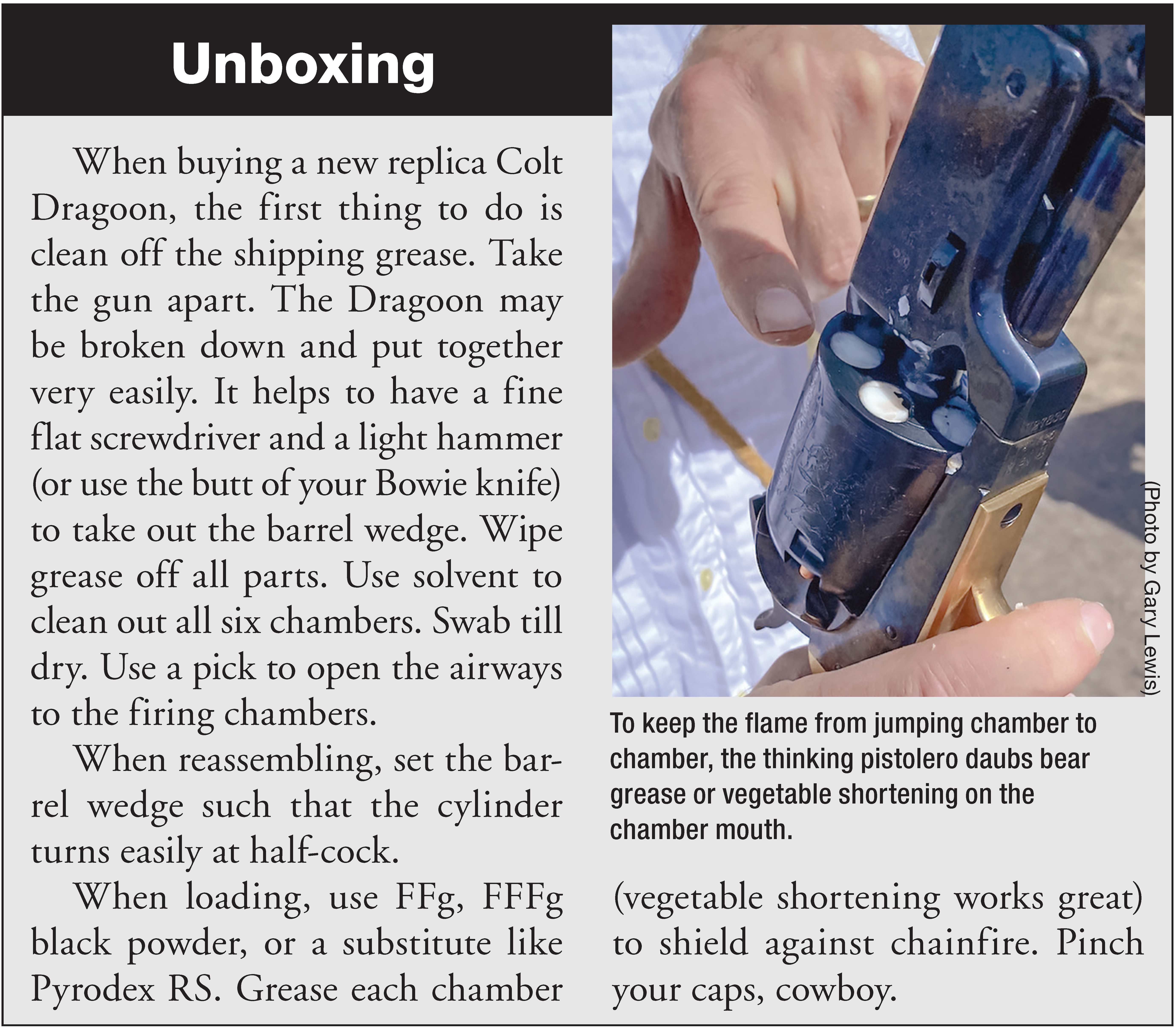
This was an issue for revolver shooters all the way from the Paterson in 1836 up until the introduction of cartridge guns in the early 1870s, and there were probably countless losers of gunfights, not to mention countless lives saved, because a cylinder stuck on a cap fragment. Which brings up a note on cap management. Not all caps are created equal. My current favorite is the Vorderlader-Zundhutchen No. 11 by Dynamit Nobel. Best practice is to lightly pinch the cap so that the compression holds it on the nipple better.
Forget to pinch the caps, and they are likely to fall off in recoil or jar loose in the saddle holster.
The Colt Dragoon is a big, rugged, powerful, reliable handgun capable of about 300 foot-pounds of energy. It was the difference maker in many battles after the Mexican War and before the Civil War.
At the Battle of Little Robe Creek (1858) between the Texas Rangers and Comanches, the big revolvers were the factor that outplayed the Indians’ hand. When Jicarilla Apaches and Utes pitched against the 1st Cavalry at Cieneguilla (1854), the dragoons were in play, and again, at the Battle of Cooke’s Spring (1857) in New Mexico. The big revolvers went to battle at Pima Butte, Ojo Caliente, the Battle of Placito and were featured in countless other confrontations between the wars.
I could not help but compare these two to the Lonesome Dove Walker I shot out to 100 yards and beyond. For those long shots, it seemed like the extra length of the Walker’s barrel made a difference.
The Whitneyville transitional model is characterized by a 90-degree angle at the trigger guard and a more graceful grip contour than later models. The original 1st Model found on the grounds of old Fort Concho was like the grip of the 3rd Model Cimarron. As other writers have reported, these grips were shaped like the plow handle all the farm boys used, which made it easier, in the run-up to the Civil War, to turn tillers into killers.
I did not shoot the guns as accurately as they could be shot, but I did have glimpses of the accuracy to which the guns are capable. Twice in testing, I shot groups with two holes touching.
Looking at my own accuracy numbers and imagining my troopers behind the baggage, surrounded by the enemy, I would hold fire “till we can see the whites of their eyes.” Within 25 yards, the dragoons were deadly. Six shots in the hands of a man who was cool in battle would count a whole lot more than smoke and fire beyond 50 yards.
The dragoon revolvers were the deciding factor in Steptoe’s fight and a lot of shootouts from the Oregon Territory to Arizona. If Steptoe’s men had to rely on their single-shot rifles alone, they would have been wiped out to the last soldier. Not to mention the help of a friendly Nez Perce who found the path through the sleeping enemy.