

The Lee-Enfield Lives On
The Great Lady of Bisley
feature By: Terry Wieland | September, 26
George MacDonald Fraser, novelist and editor of The Flashman Papers, was an infantryman during the Second World War, serving with the Border Regiment in Burma.
The Border Regiment was drawn from the northern counties of England, up against the Scottish border. Fraser, a native of Carlisle (although of Scottish heritage), enlisted in 1943 at the age of 18 and was immediately shipped east. Fifty years later, firmly established as an historian and novelist, he wrote of his time in Burma in Quartered Safe Out Here.
In the memoir, Fraser devotes considerable space to uniforms and equipment, not least of which was his faithful Lee-Enfield No. 1 Mk. III*, a rifle which had already been superseded by the No. 4 Mk. I, with the No. 5 “Jungle Carbine” waiting in the wings. Although he was offered the chance to exchange it for a newer, lighter weapon, Fraser steadfastly refused. Like many another soldier, his bond with his rifle was firmer than the most sincere “I do.”
Exactly how Fraser came to be issued a No. 1, Mk. III, the original SMLE (Short, Magazine, Lee-Enfield) is unclear. Probably, the explanation is that even by the fourth year of the war, the British Army was using whatever came to hand, and there were more SMLEs to be found in India than any other model. Of course, the Indian armory at Ishapore produced No. 1, Mk. IIIs rather than No. 4s, as did the Australian armory at Lithgow.
The phenomenon of individual soldiers insisting on keeping an older, familiar rifle, often against direct orders and in defiance of ordnance officers, is not that unusual. Look at the attitude toward the Garand by soldiers trained to shoot the Springfield 03A3, or Canadian snipers in the Great War who clung to the super-accurate Ross after it was withdrawn from service and replaced by the Lee-Enfield.
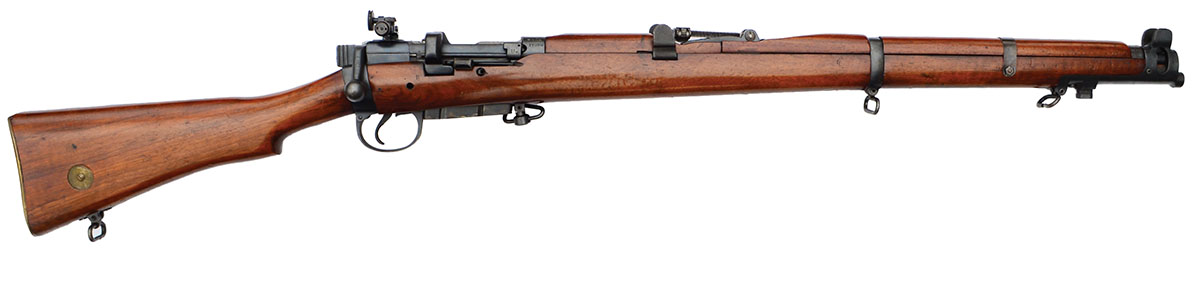
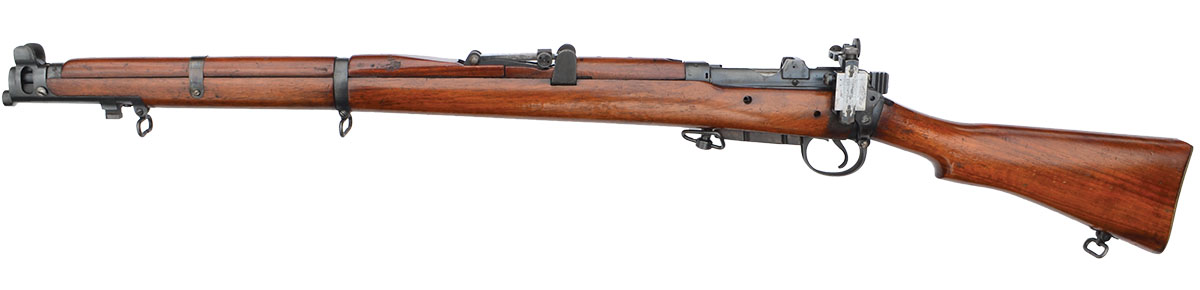
There are good reasons for each of these, and in the case of the Lee-Enfield No. 1 versus the No. 4, much had to do with ergonomics. The No. 1 in all its marks and asterisks was, indeed, a mass-produced military rifle, but it was built on the principles of Victorian gunmaking. Its replacement was simplified, lightened, corner-cut, cheapened and roughened up. The No. 4 was undoubtedly stronger; many were later converted to 7.62x51mm NATO, but whether it was actually more accurate or dependable was questionable. It most certainly did not have the seductive slickness of the carefully machined, fitted and polished SMLE.
Without getting into the arcane cracks and corners of Lee-Enfield evolution and production (which was carried out over the course of a century in every corner of the world including Britain, India, Canada and Australia) the No. 1, Mk. III was perfected before 1914 and employed throughout the Great War; the No. 4 was developed between the wars and adopted officially in 1939. At that point, however, war was imminent and there was no mass reissue of No. 4s. Some units had them, some did not.
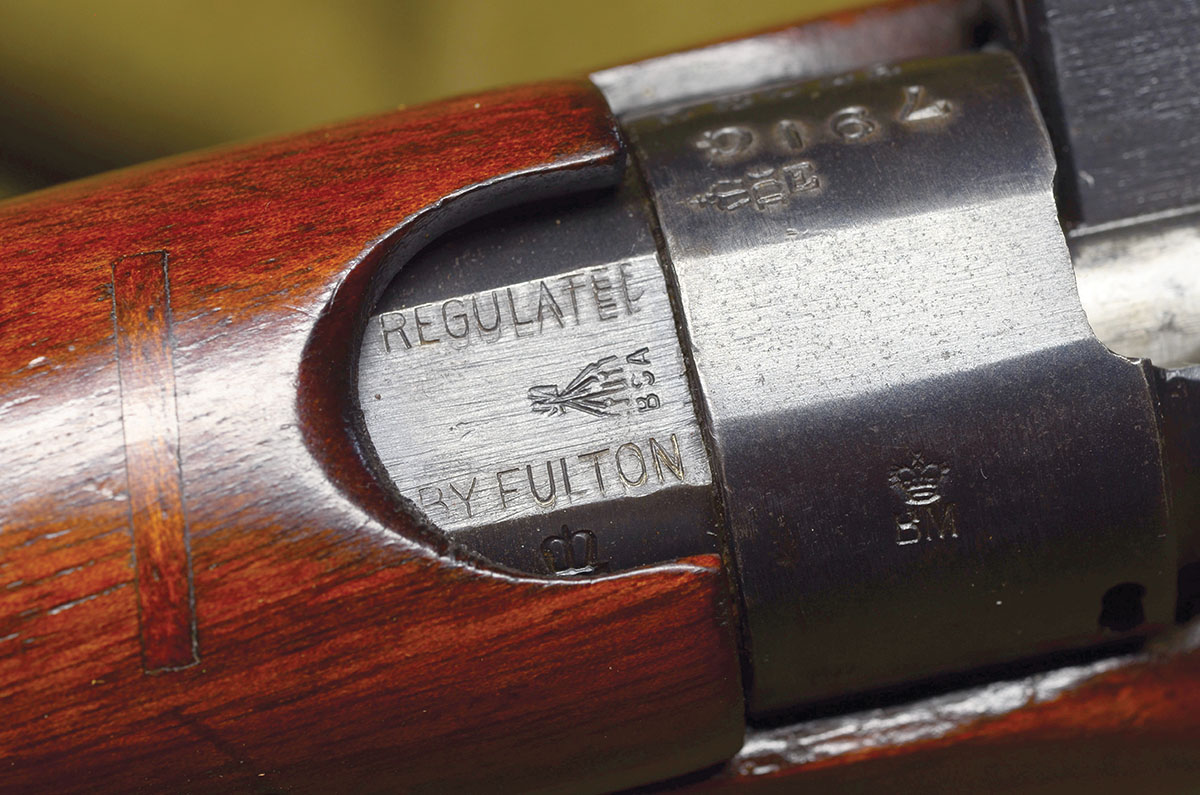
The No. 1 we are looking at here was produced by Birmingham Small Arms (BSA) either before 1914 or very shortly after the Great War broke out. Either way, it saw little, if any, time in the trenches of the Western Front. From its condition, it could have strolled out of the BSA factory yesterday. Early in its life, impossible to say when, it was tapped for the glamorous career of a top-grade match rifle and turned over to the Bisley gunsmithing firm of Fulton for modification, accurizing and fitting of target sights.
Target shooting with rifles has been a British passion, off and on, and usually when danger threatens, for more than two hundred years. The shooting ranges at Bisley have been its nerve center since Queen Victoria. There, shooters, both military and civilian, have contested possession of national and international titles. An entire infrastructure of supporting companies, big and small, have also centered on Bisley. One, Fulton, is still in business today.
The history of this No. 1 is sketchy, but still more generous than most. After surviving both world wars as a target rifle, by the 1930s, it had come into the possession of Sgt. J.H. Blais of the Royal Canadian Mounted Police (RCMP), a member of the Canadian national shooting team. Sgt. Blais shot the rifle at both Bisley and Canada’s Connaught Ranges, and several times held the Quebec provincial title. He was still shooting the No. 1 in the 1950s, long after many shooters had switched to an accurized No. 4 Mk. I, shades of George MacDonald Fraser.
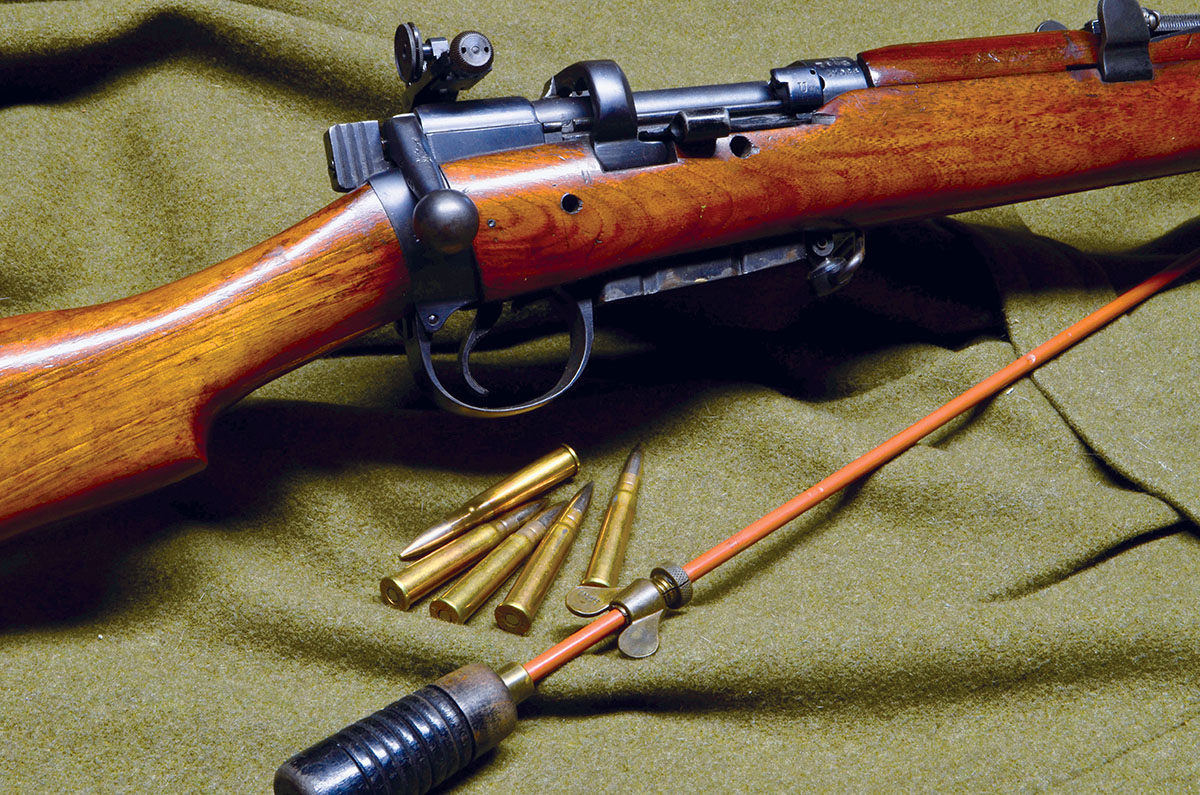
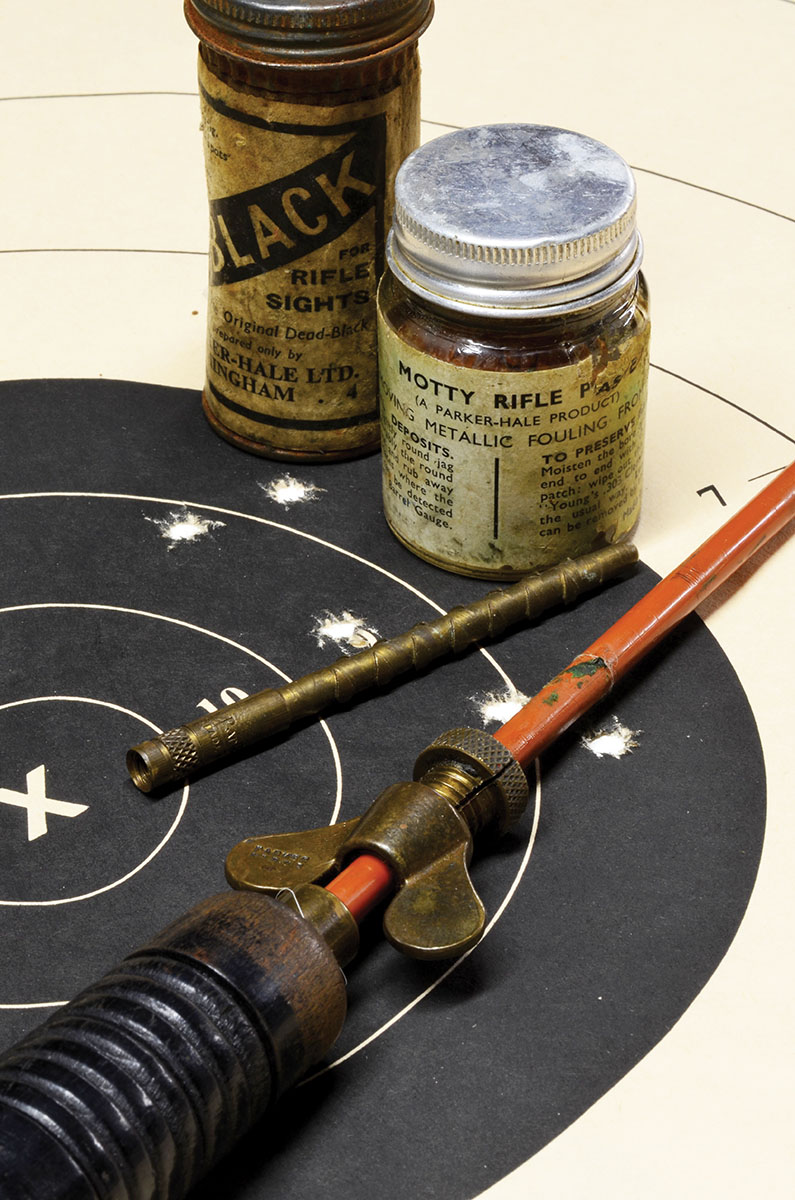
After Sgt. Blais, the rifle found its way to a museum of military weapons in Florida. When the museum closed, it was consigned to the Rock Island auction, whence it came into my loving possession, complete in its British Army shipping crate with cleaning tools and various target-shooting accoutrements.
When you venture into the history of the Lee-Enfield, you are entering a labyrinth of information, some contradictory, much of it incomplete (at least, as far as you can find), with intriguing hints and glimmers that lead you deeper and deeper.
Standard military models (of which there are at least two dozen spanning 75 years of use) are bad enough; target rifles that have been modified, possibly several times, are impossible. The best anyone can do is look at the individual features and try to guess the who and the when.
To begin with, we know this rifle is a No. 1 Mk. III, not the more common No. 1, Mk. III*. The asterisk denotes the lack of a magazine cutoff, which turns the rifle into a single-shot while keeping its 10-round mag in reserve. It also allowed the shooter to use the rifle as a single-shot without the magazine in place.
BSA, unauthorized, began eliminating the cutoff in 1915, to save time, which earned them the disapprobation of the War Office before someone in authority realized that, on the Western Front in 1915, a cutoff was not exactly essential. There, the troops were working to achieve the Lee-Enfield’s (proven) maximum rate of fire of 28 rounds per minute. At Mons, in August 1914, the Lee-Enfield in the hands of Britain’s highly trained professional soldiers had convinced the German Army they were facing massed machine guns.
In 1916, the cutoff was formally eliminated, and the rifle was awarded the asterisk. Now you know.
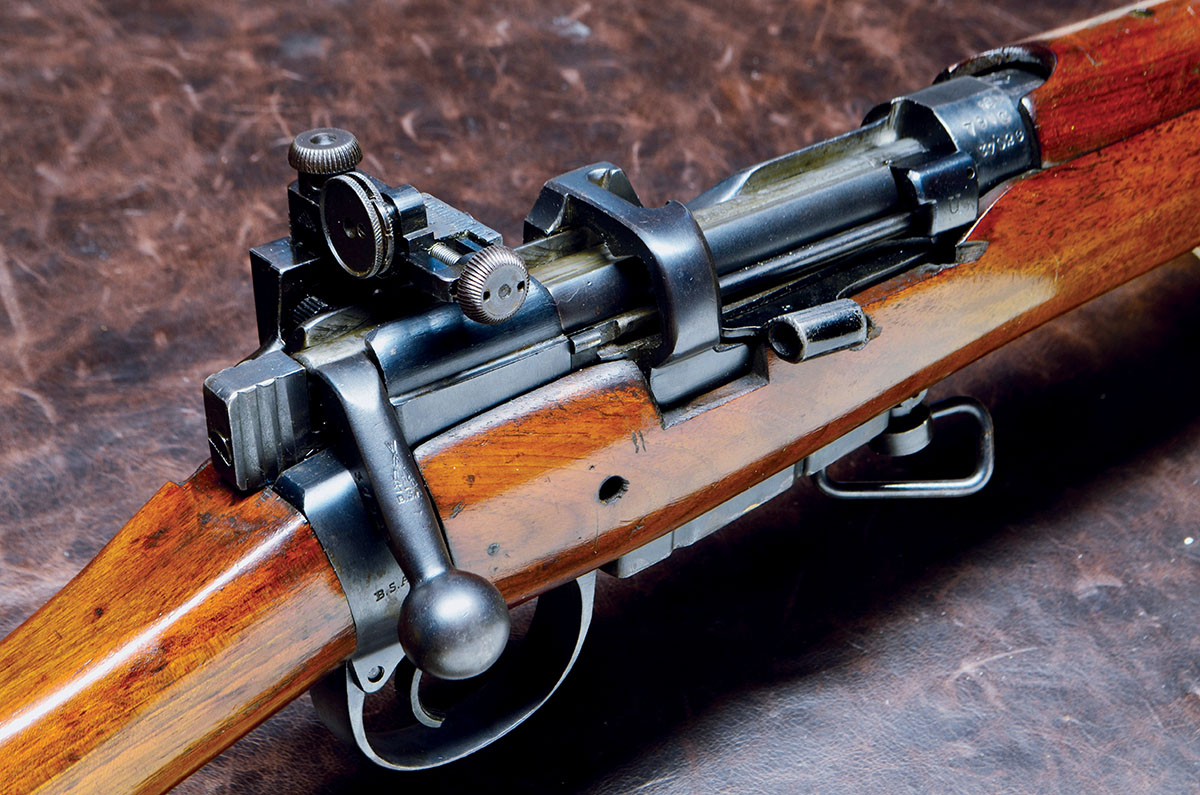
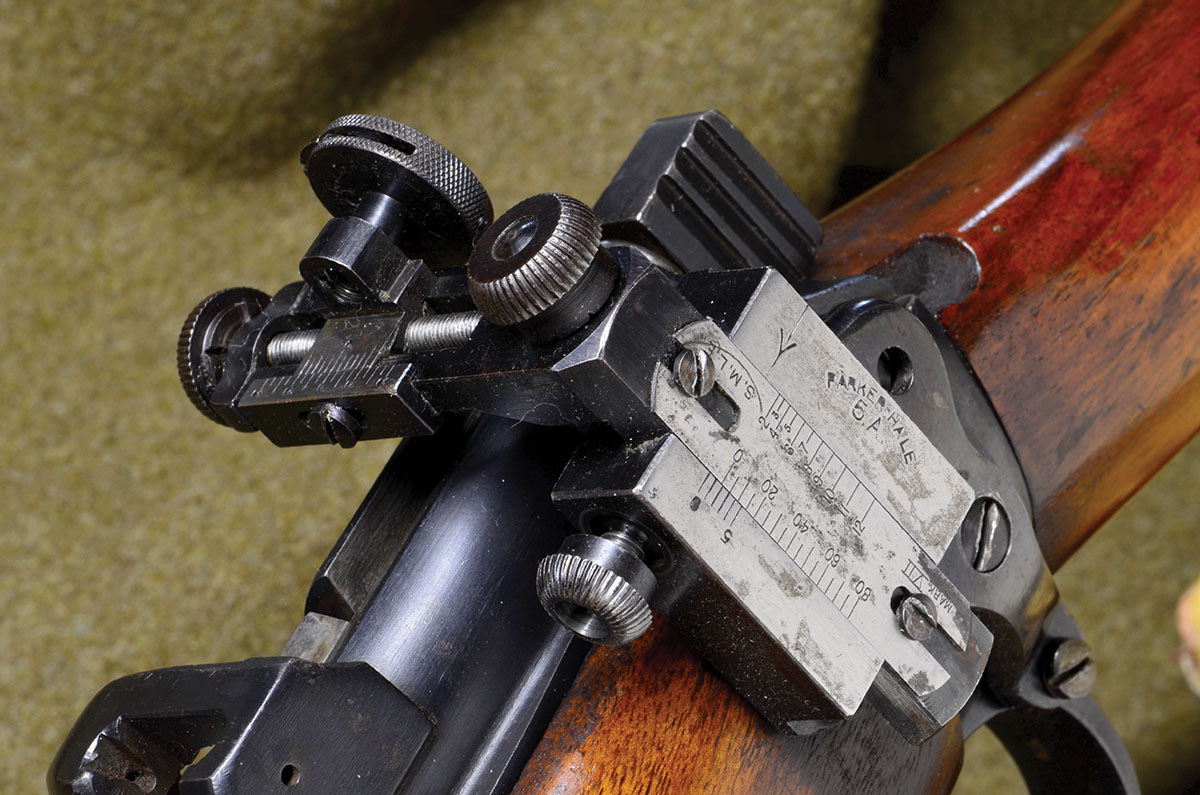
My No. 1, Mk. III has the auxiliary long-range sight removed and replaced by a Parker-Hale Model 5A fitted with the P-H Premier 6-hole aperture. The 5A was introduced around 1925.
The cocking piece is the flat, grooved model of later, rather than the round one commonly found on No. 1s. It could have been replaced at any time.
The rifle has two magazines, one the standard 10-round military, the other a special five-round target model. The front guard screw, or “king” screw, is fitted with a special sling swivel for a target sling.
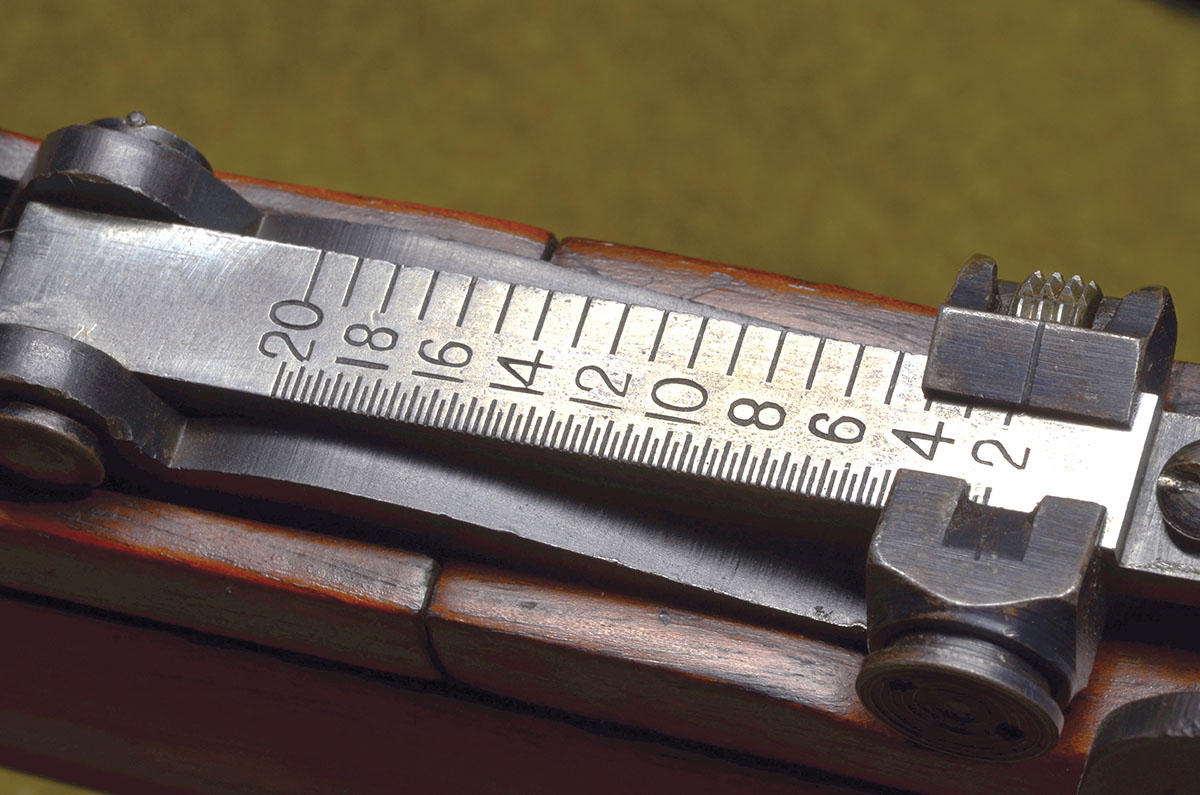
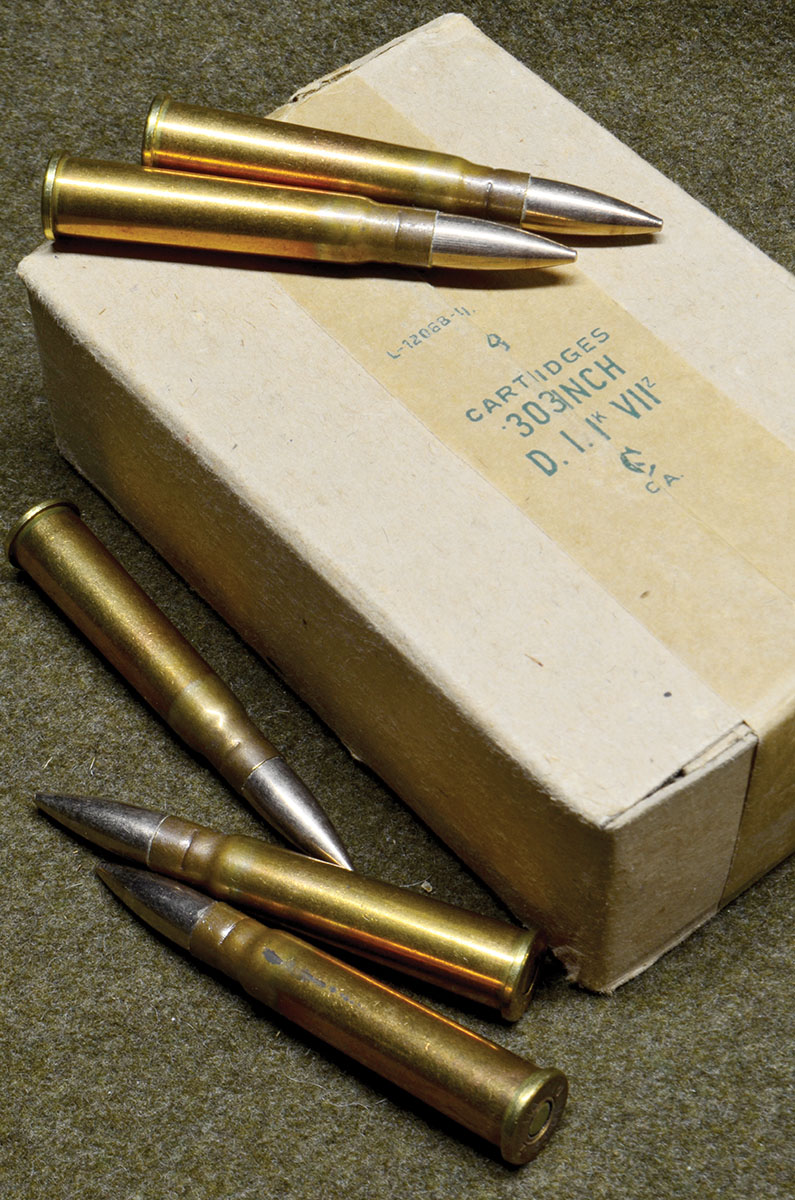
From the ramp on the standard military rear sight on the barrel, we can see the rifle was regulated with 303 British Mk. VII ammunition, introduced in 1910. Previous 303 ammunition used a 215-grain round-nose jacketed bullet, while the Mk. VII was a 174-grain spitzer.
When you delve into the history of 303 ammunition, you are entering a parallel labyrinth that sometimes intersects and sometimes diverges from the rifle’s history. This is partly because the ammunition was also used in the Vickers machine gun, which had different requirements. To make the 215-grain bullet more effective, technicians at India’s Dum Dum arsenal had developed the infamous Dum Dum bullet, which expanded on impact. Outlawed by the Hague Convention of 1899, the British came up with an alternative. The original Mk. VII was 160 grains with a two-part core lead in the rear, aluminum up front, which caused it to tumble on impact, thereby imparting a more serious wound.
Alas, it also adversely affected accuracy, so it was abandoned and replaced by a full lead core, which increased its weight to 174 grains. For whatever reason – possibly to avoid embarrassment – the Mk. VII designation was retained. Wartime experiments to develop a better bullet for the Vickers
resulted in a 175-grain boat-tail bullet, designated the Mk. VII with a tiny ‘z’. This was adopted for all .303 ammunition in 1921 was standard issue for the next 40 years.
Since Mk. VII ammunition had a flatter trajectory, the ramps for raising and lowering the hinged leaf of military rear sights were flattened slightly, allowing one to see the ratchet teeth on the elevating stem, and that’s how you can tell what early rifles were regulated with.
Is it any wonder some collectors become obsessed by the Lee-Enfield in its myriad forms and look at nothing else?
At various times, SMLEs were manufactured at factories in several different parts of the British Empire, and ammunition was made at scores of plants in many different countries. Since manufacturing standards varied, along with tolerances, Lee-Enfields were given very generous chambers to accommodate ammunition from anywhere. (One of the failings of the Canadian Ross was that its tight chamber and close machining would not accept any but Canadian ammunition.)
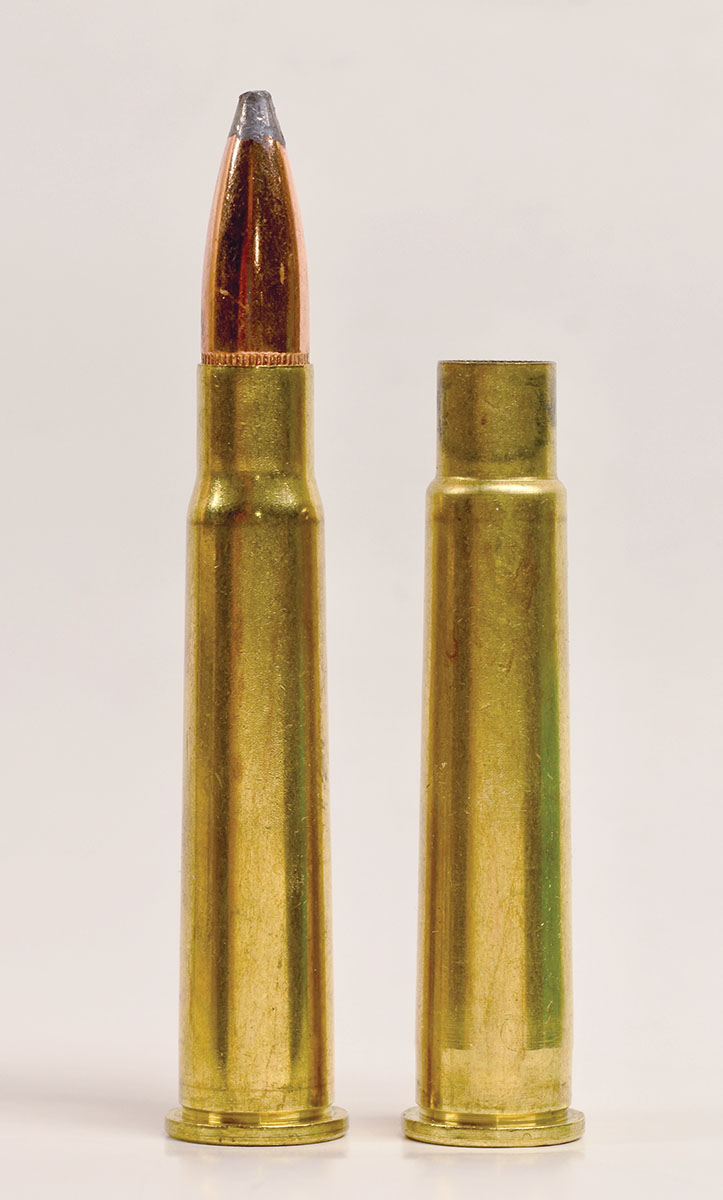
Over the years, I’ve seen empty cases emerge from various Lee-Enfield chambers in some rather surprising shapes, and this No. 1 is no exception. Fired cases have a noticeably expanded base, as well as the shoulder pushed forward to the base of the neck. For military use, of course, reloading cases was not a consideration, and since roomy chambers did not adversely affect accuracy for their purposes, no one cared much. For reloading purposes, however, it is best to keep fired brass segregated for each rifle.
The barrel has the standard Enfield five-groove, left-hand twist rifling, with a twist rate of 1:10 inches. It is not shiny bright after 112 years, but the rifling is sharp with no sign of corrosion. I obtained some Canadian match ammunition from the 1940s, but did not shoot it in the rifle for fear of corrosive priming. Ammunition I did try was standard Federal 180-grain spitzer softpoints, which grouped acceptably.
The Parker-Hale 5A sight is a sheer joy to use, with its click adjustments, vernier scales and the multi-hole aperture. Adjusting to get a group into the bullseye was straightforward and positive, with the rifle responding to each adjustment like a dressage horse. Windage-wise, at 100 yards, the group was 1.25 inches side to side, but difficulty placing the black blade front sight consistently against a black bullseye resulted in an elevation spread of close to three inches.
Trying to recreate British match ammunition from years ago is difficult because of the availability, or lack thereof, of suitable bullets. Currently, the best bullet I can find is Sierra’s 174-grain HPBT MatchKing. It’s the right weight and shape, designed for the right purpose. It would be fun to get some of the 215-grain “needlepoint” bullets that Sir Charles Ross used in his match-winning 1910 ammunition, but I doubt one could get the velocity necessary to stabilize that long bullet in 1:10 rifling.
***
In early 1945, George MacDonald Fraser was promoted to Lance Corporal and was forced to give up his faithful Lee-Enfield No. 1 Mk. III* (we are assuming the asterisk there) and carry a Thompson submachine gun instead – and he hated it.
The Tommygun, he wrote, rusted at the sight of rain, which was a major drawback in the monsoons, and was so inaccurate it was only effective if one sprayed bullets like “Corporal Capone.”
Despatched on an independent mission with his squad, Lance Corporal Fraser captured four Indian Army deserters armed with some very well-maintained Lee-Enfields. He tossed the Thompson into a nearby stream, commandeered one of the captured SMLEs, and carried it for the duration.
It was, he wrote, “like coming home.”