Sixguns, Slugs and Such
New Mould Versatility
column By: Jeff “Tank” Hoover | September, 26
For a bullet caster, nothing’s more exciting than getting a new bullet mould. To think otherwise would be boring. New moulds provide the potential for unleashing endless possibilities for different cartridges in various guns of that caliber. Plus, cast bullets can be sized down, within reason, and with a little imagination, along with some innovative thinking, the same bullets can be used for slightly smaller calibers.
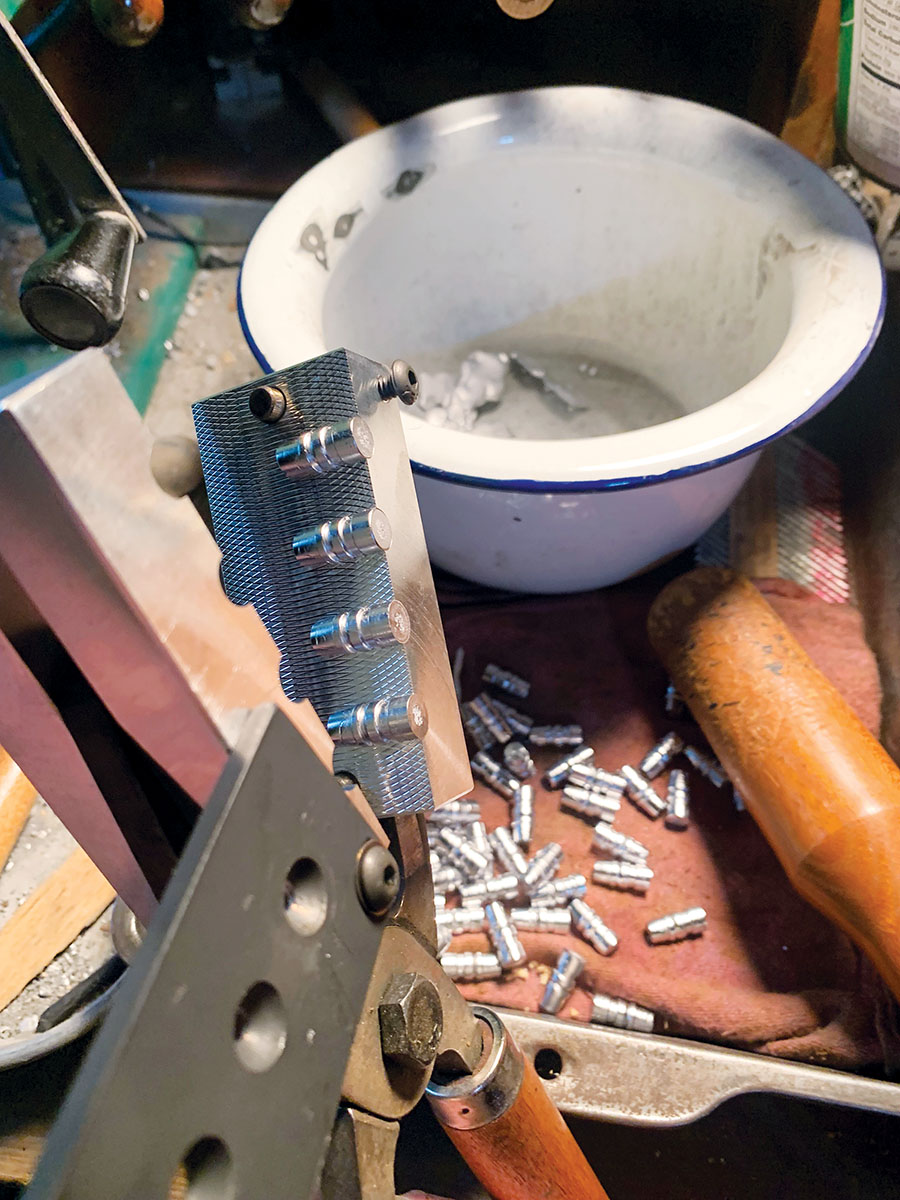
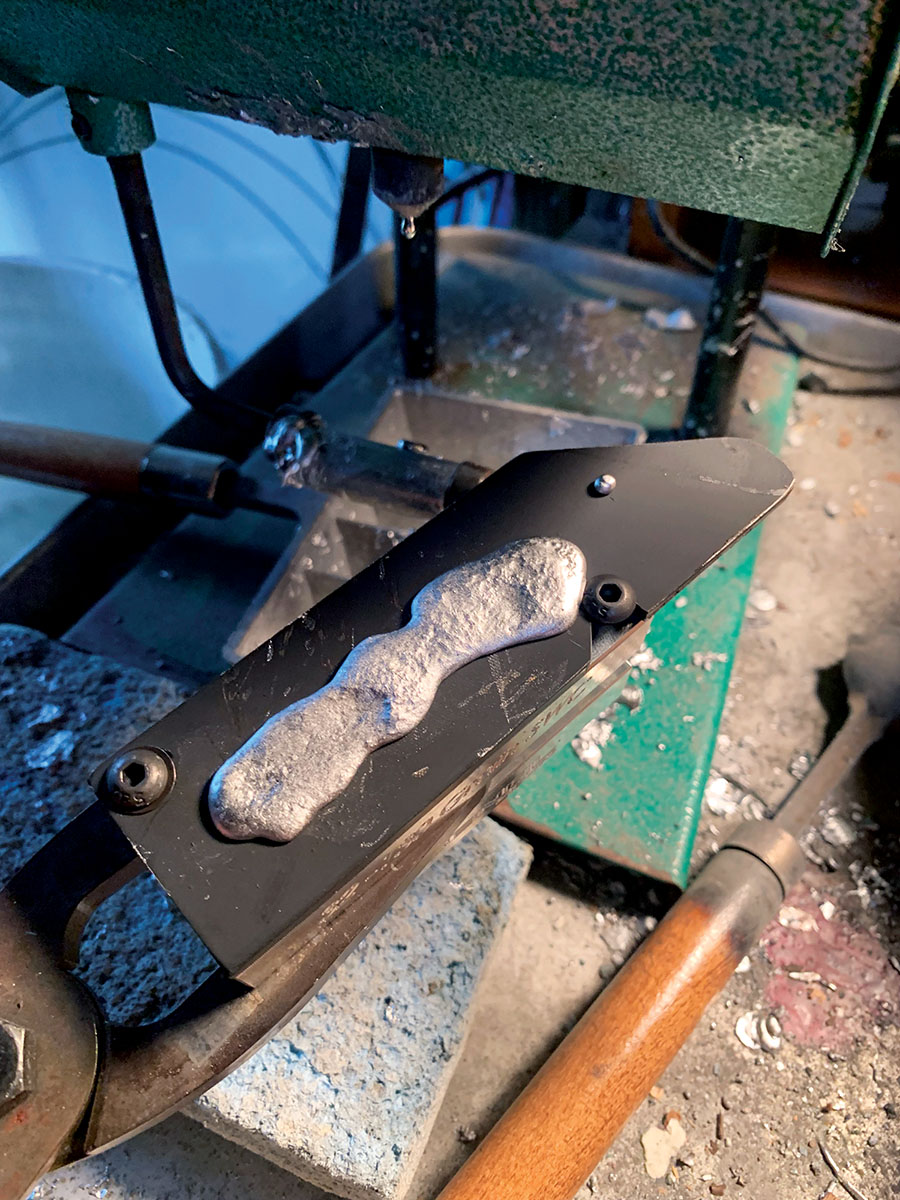
I recently took delivery of an Arsenal Molds .32-caliber bullet mould. My cast slugs drop at just over .315 inches with my alloy. Higher lead alloys will have slightly smaller diameters, while alloys rich in antimony will be slightly larger in “as-cast” condition.
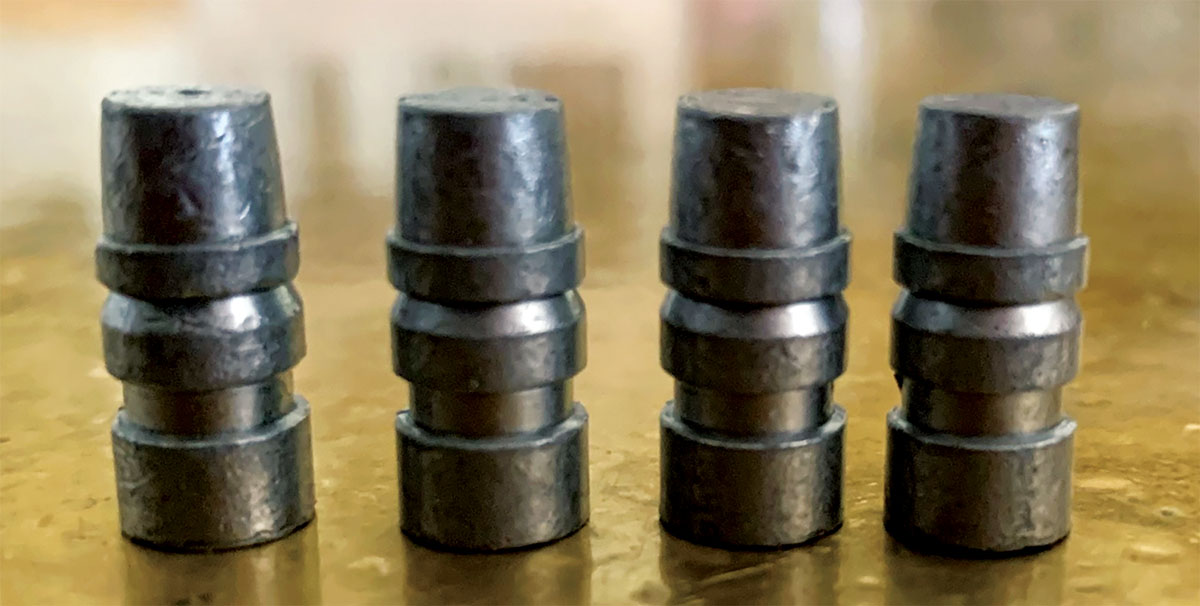
This new mould profile is a semiwadcutter design with a short nose and weighs approximately 130 grains. Again, weight differences are caused by alloy mix. Alloys with a higher lead concentration weigh more than alloys with a lower lead concentration. The bullet’s base is rather stout from bottom to lube groove, and the front driving band is full diameter, and stout as well, for engaging the rifling when fired. This helps center the bullet for better accuracy.
The nose taper is rather blunt, almost giving the profile of a full wadcutter. The meplat, or nose, is flat and large for diameter, meaning it will produce a large, permanent wound channel while driving through any flesh in its wake.
I originally saw this bullet on a social media site posted by a friend who’s also a cast bullet fan. I liked the looks, especially after being fired from his 327 Federal Magnum revolver. This is the reason for the short nose profile. Since 327 Federal brass is longer than .32 H&R and 32 Long brass, the shorter nose is required so loaded cartridges won’t poke through the cylinder throat, effectively tying up the cylinder.
The mould I wanted was out of stock, but I ordered it anyway. It arrived within two weeks. I also ordered the four-cavity
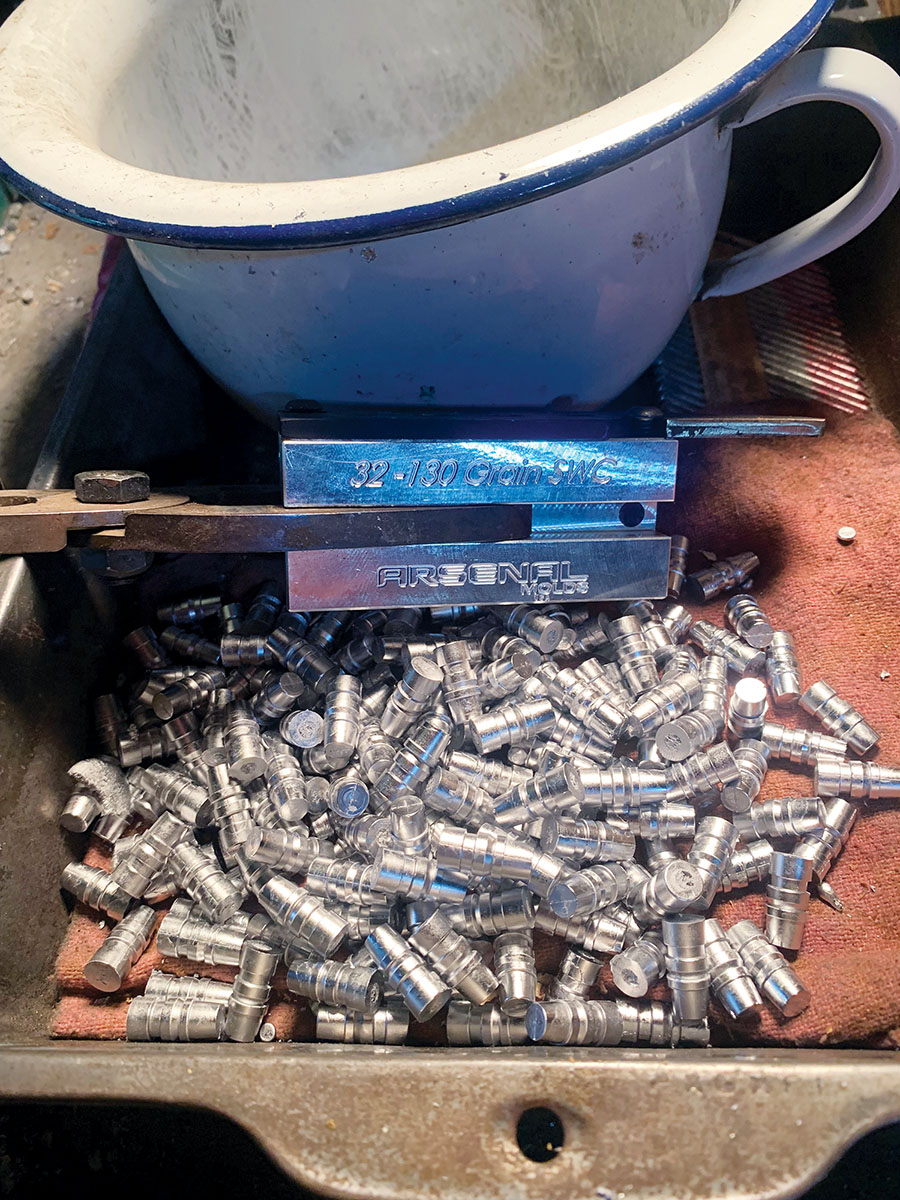
aluminum version of the mould. Over time, I’ve learned to always order 4-cavity molds, if possible, for two reasons. First,
there isn’t much difference in cost, and second, it speeds up production by filling twice as many cavities in basically the same amount of time as a two-cavity mould. I’ll gladly pay more for this benefit. Saving time while speeding up production is a double bonus.
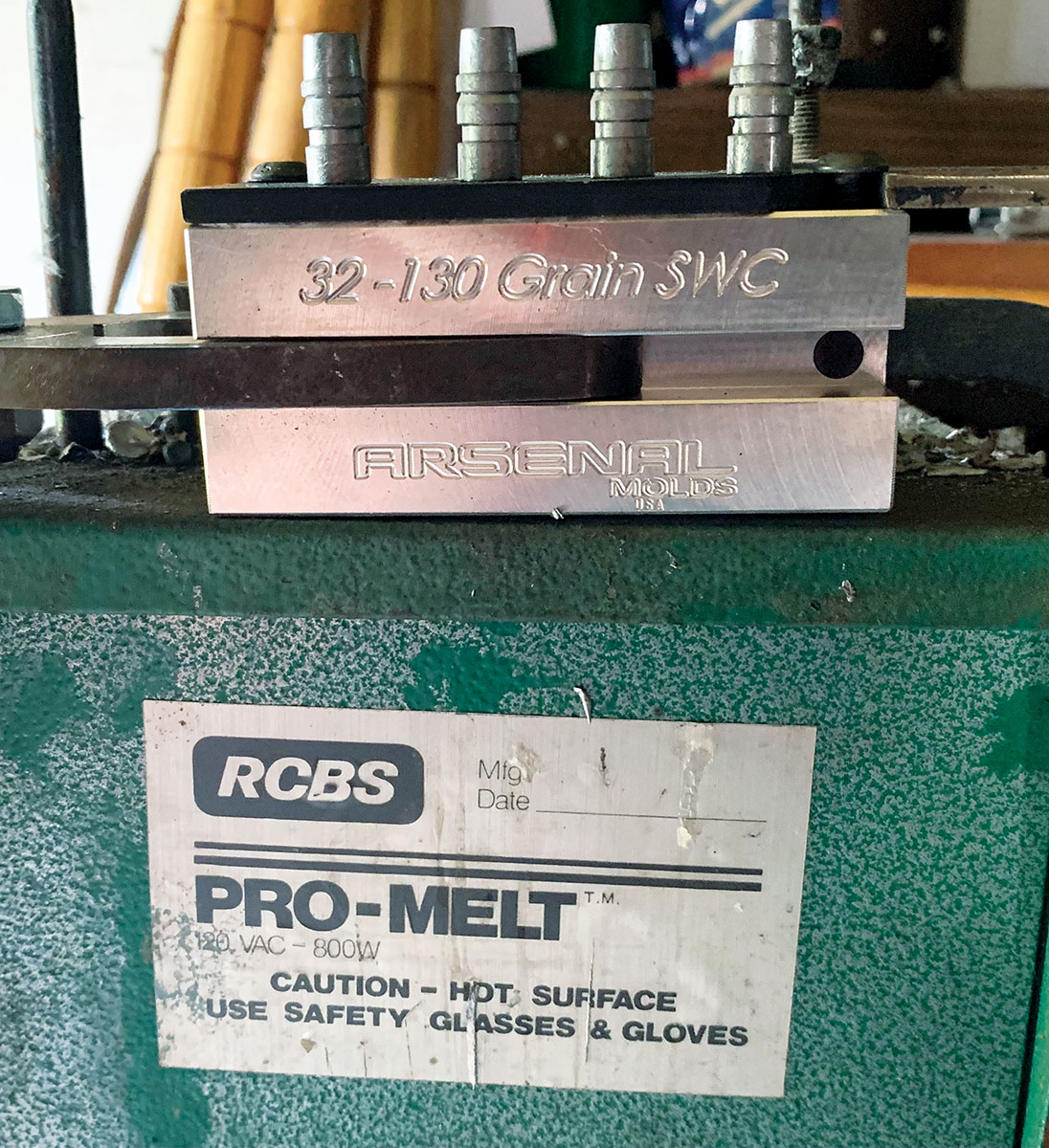
The Arsenal Molds bullet mould I purchased is made of aluminum and has four cavities. The cavities themselves are well polished and free from any burrs, which can make cast bullets hang up in the mould when opening the halves. The mould utilizes Lee Precision mould handles, which is nice, since they are reasonably priced. Arsenal Molds offers their moulds in aluminum or brass, with two to five cavities, depending on style and are priced accordingly.
I always pre-heat my moulds on a single-burner electric hot plate. After filling my casting furnace with lead ingots and turning it on, I plug in the hot plate and set the mould on top of it. This saves time, as the first cycle usually produces perfect, well-filled bullets with sharp corners and no wrinkles. Those who don’t pre-heat their moulds will have to cast several cycles to bring the mould up to temperature for casting perfect slugs.
After filling the mould cavities, the liquid alloy will change color as it solidifies. That’s how you’ll know it’s time to hit the

sprue plate to cut the sprue. Some people talk about casting with two or more moulds at a time, but I find I’m more efficient casting with just one mould, especially a four-cavity mould. Over time, a rhythm will be established, and when mould temperature and alloy temperature are set just right, it will only take a second or two for your sprue to cool for cutting, and you will do it without the sprue plate causing a lead smear on top of the mould.
If you start smearing lead, your pace is too fast. Either lower your casting furnace a few degrees or cool your
mould by flipping it over and placing the mould bottom on a damp sponge for a second after the sprue has solidified.
When casting hollowpoint bullets with an MP-style mould, you need to allow a few extra seconds for the bullet body to cool sufficiently, so you don’t damage the bullet while tapping the hollowpoint pins to dislodge the bullet from the mould.
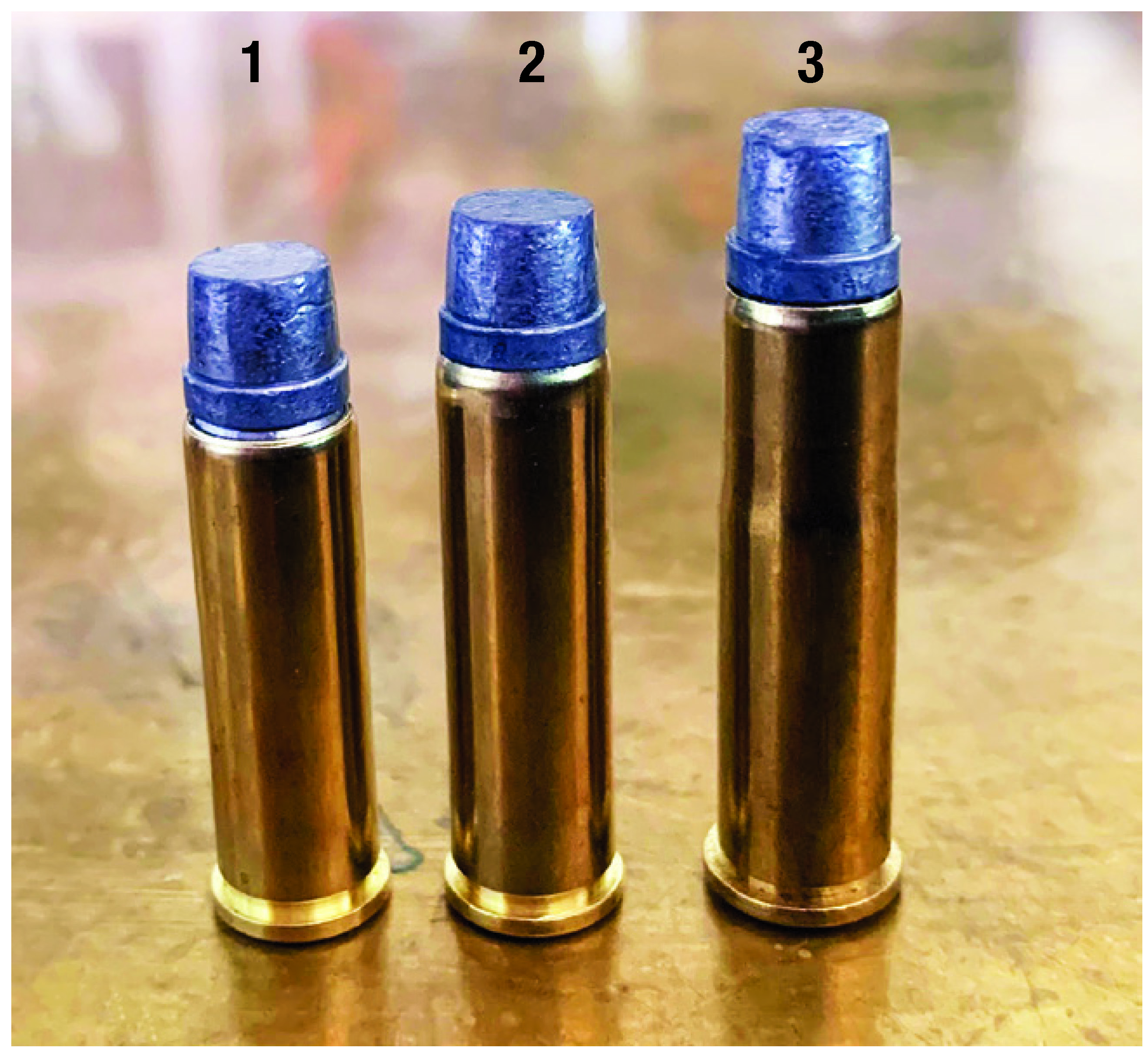
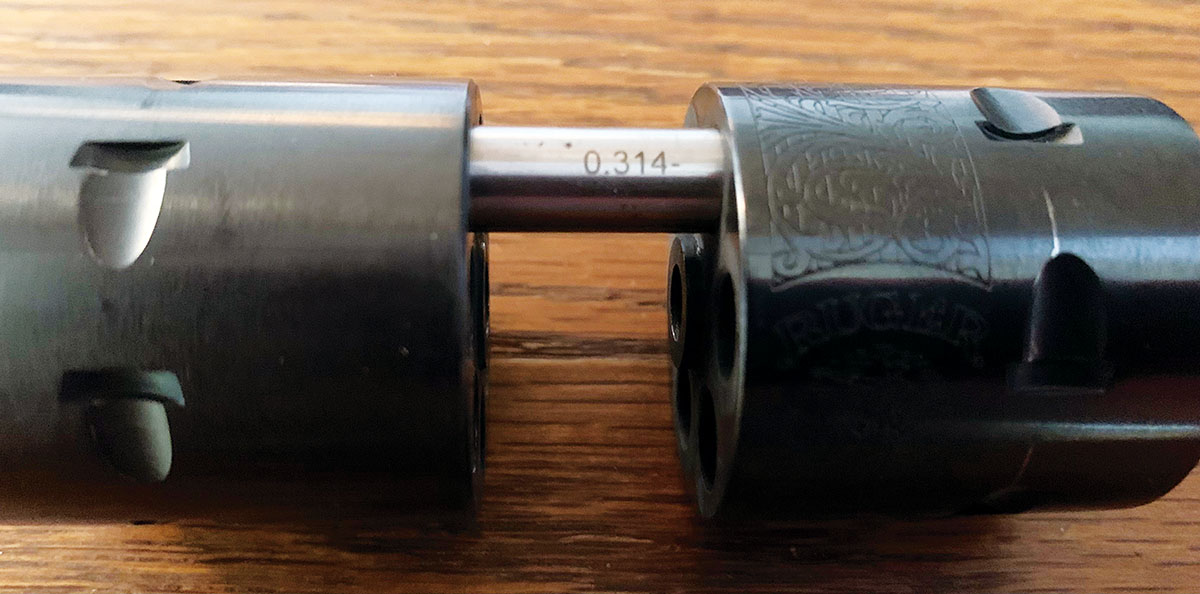
For most of my 327 Federal Magnum guns, I size my bullets to .314 inches after powder coating them. Sized this way, I’m good for shooting these slugs in either 32 S&W Long or 32 H&R Magnum, and even 32-
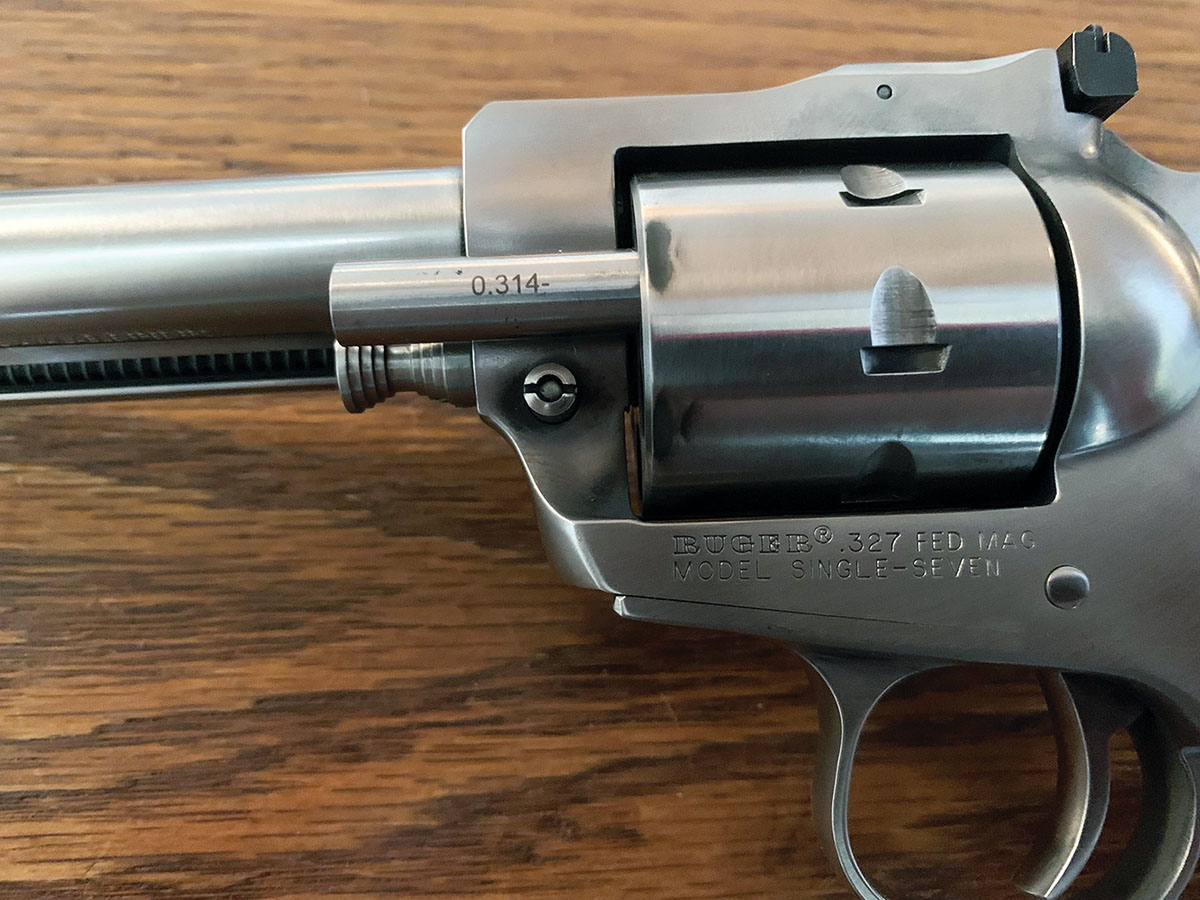
20. If I sized this same bullet down to .311 inch, I could use it in a 30-30, 300 Blackout or 300 HAM’R for small-game loads, or plinking. I do this quite often with several other .32-caliber moulds. It adds an uncanny versatility to the mould.
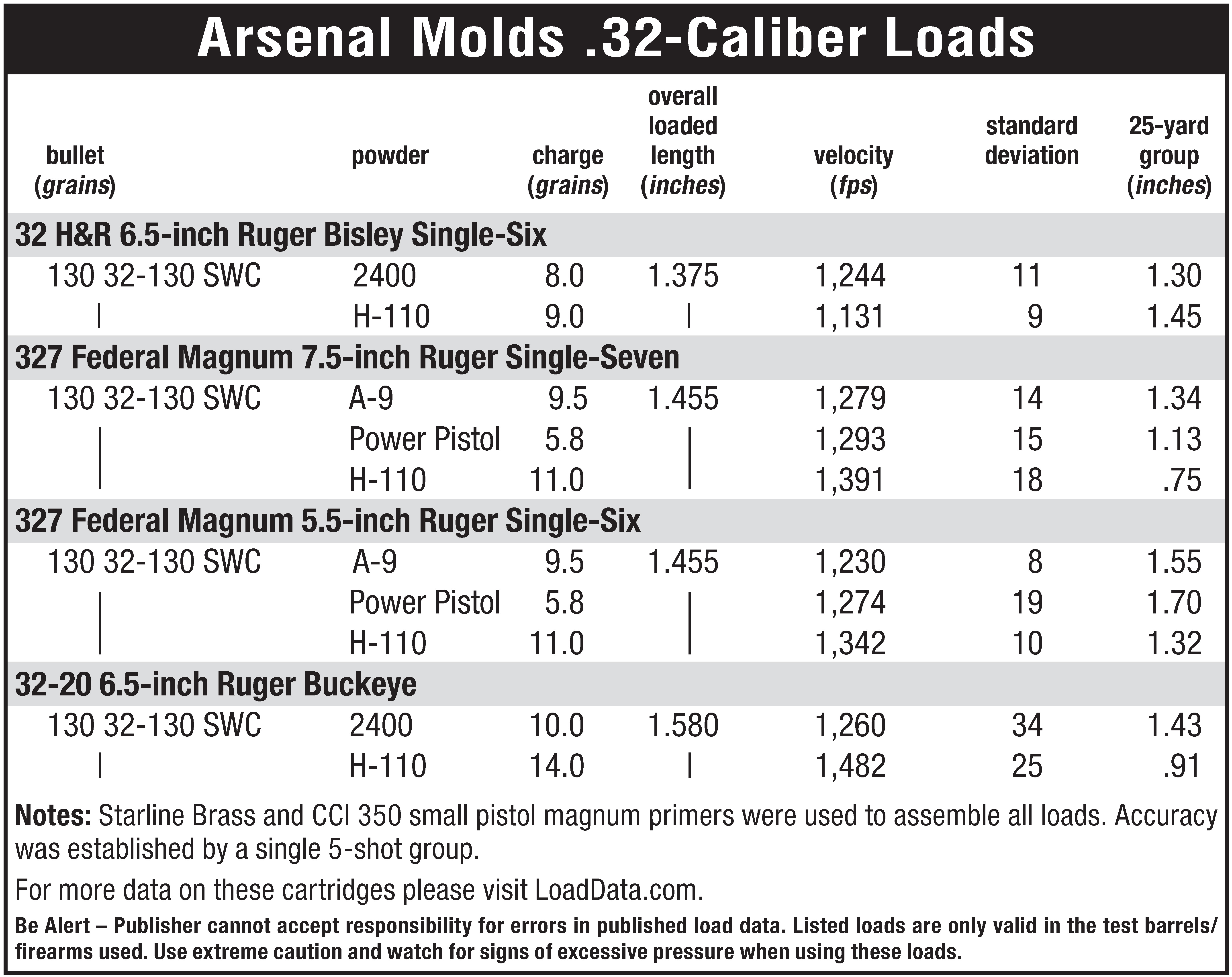
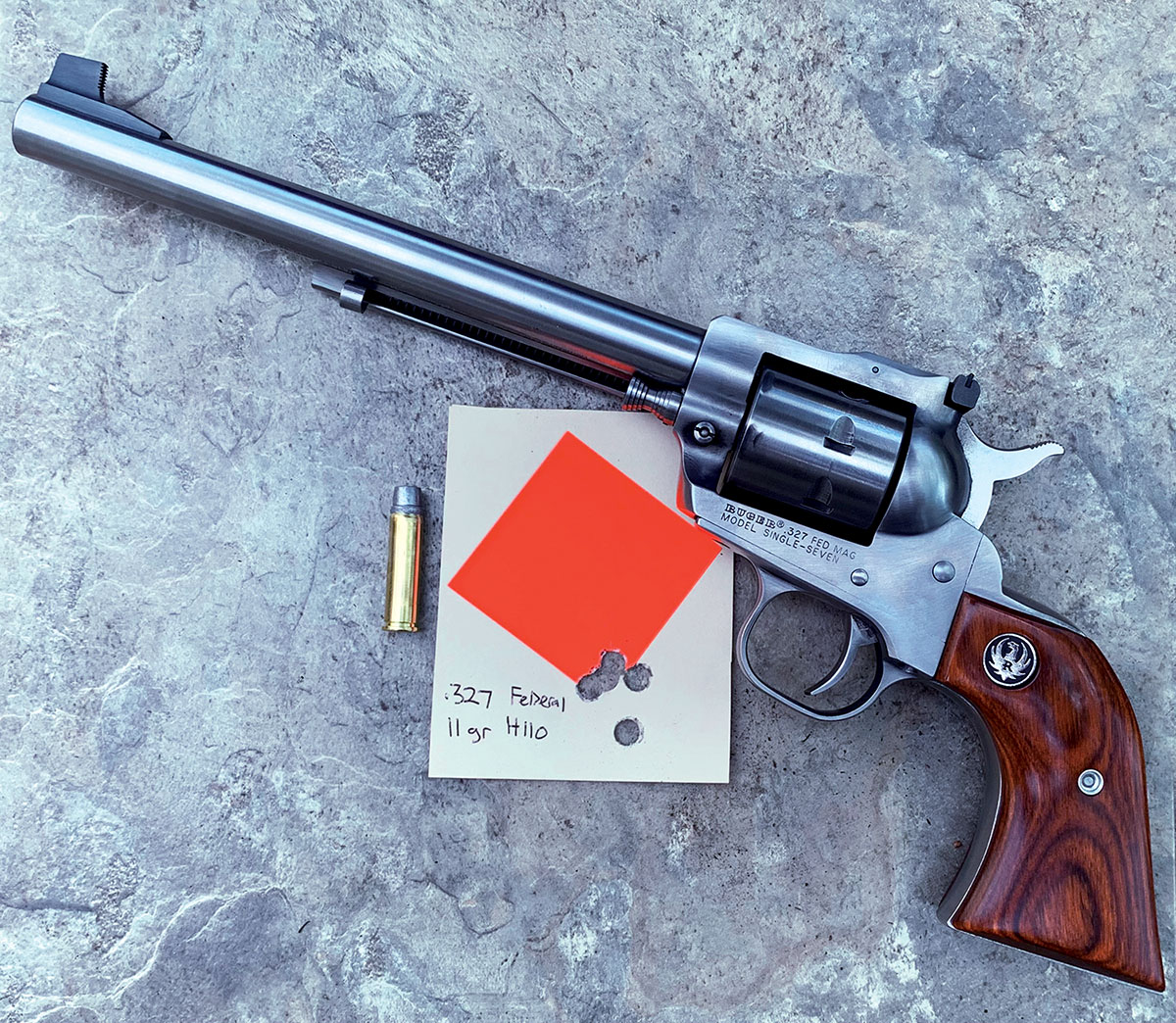
For the 327 Federal Magnum, I used three powders for various hand-loads: Alliant Power Pistol, Hodgdon
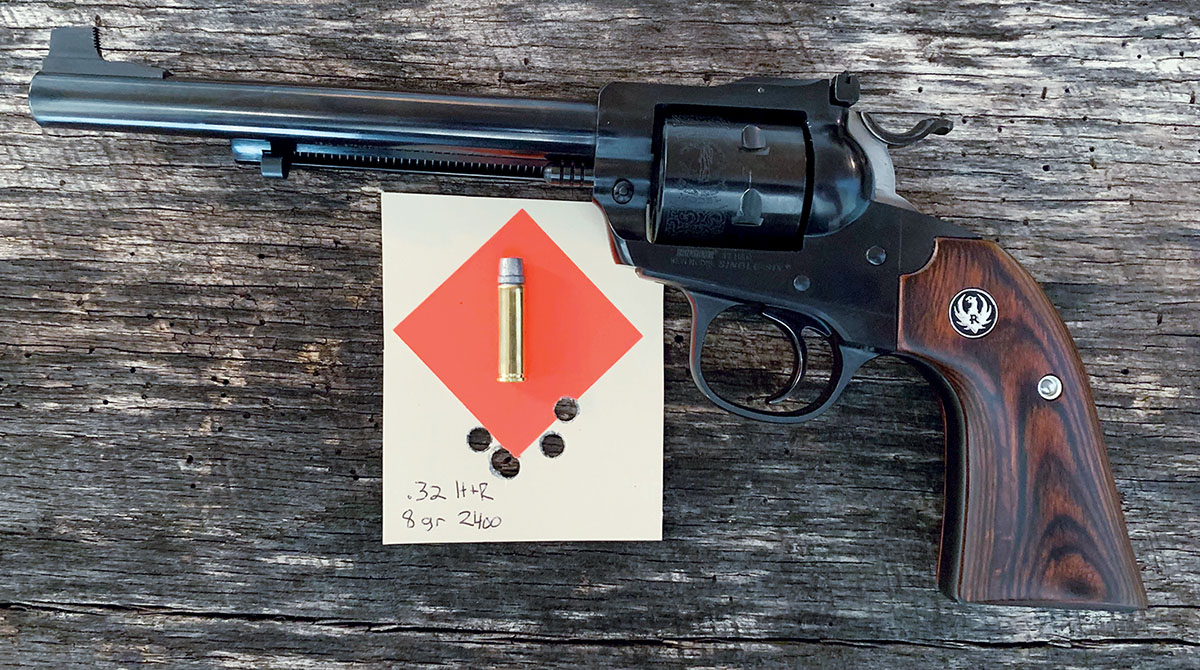
H-110 and Accurate No. 9. For the 32-20 and 32 H&R, Alliant’s 2400 was used, as well as Hodgdon H-110. CCI 350 small pistol magnum primers were used for all loads.
Handloads were loaded on a Dillon 550C progressive press using Starline brass for all cartridges.
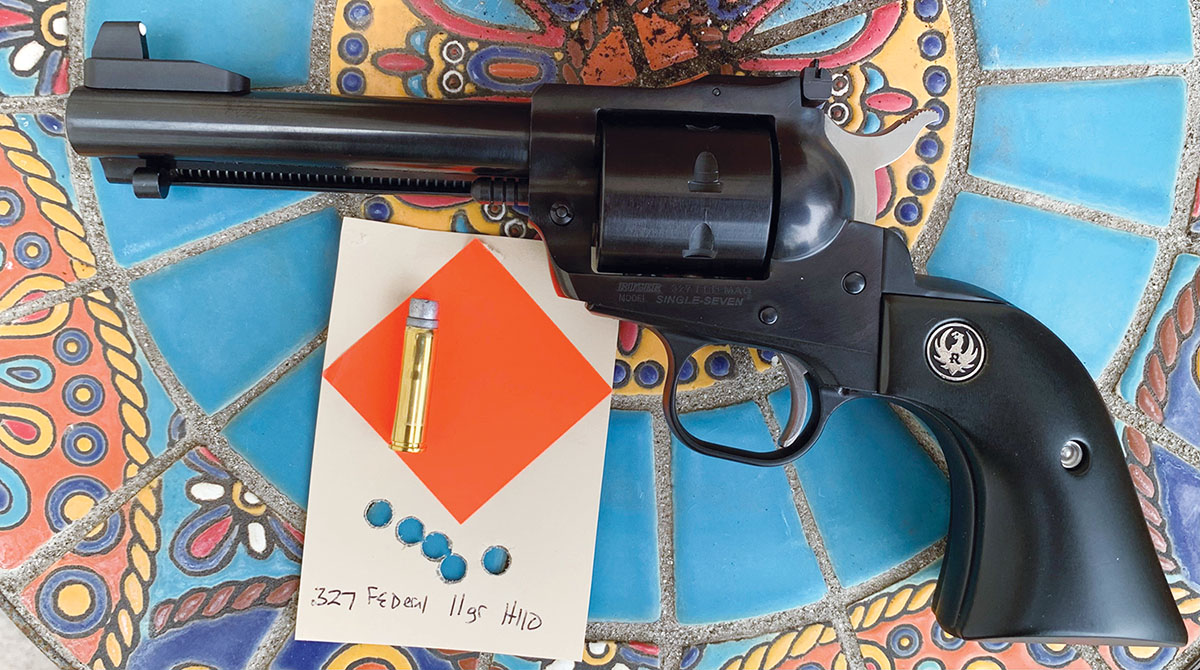
For testing the 327 Federal Magnum, I used two different guns. First was a stainless Single-Seven with a 7.5-inch barrel, and the second gun was a Lipsey’s Exclusive Ruger Single-Six with a 5.5-inch barrel, express sights and an aluminum grip frame. The 32 H&R test gun was a Ruger Bisley Single-Six with a
6.5-inch barrel. The 32-20 was an old full-size Blackhawk from Buckeye Sports that a friend had given me, with a 6.5-inch barrel.
The cylinder throats were tight on the 32-20 gun, and I honed them to .314 inch. This greatly
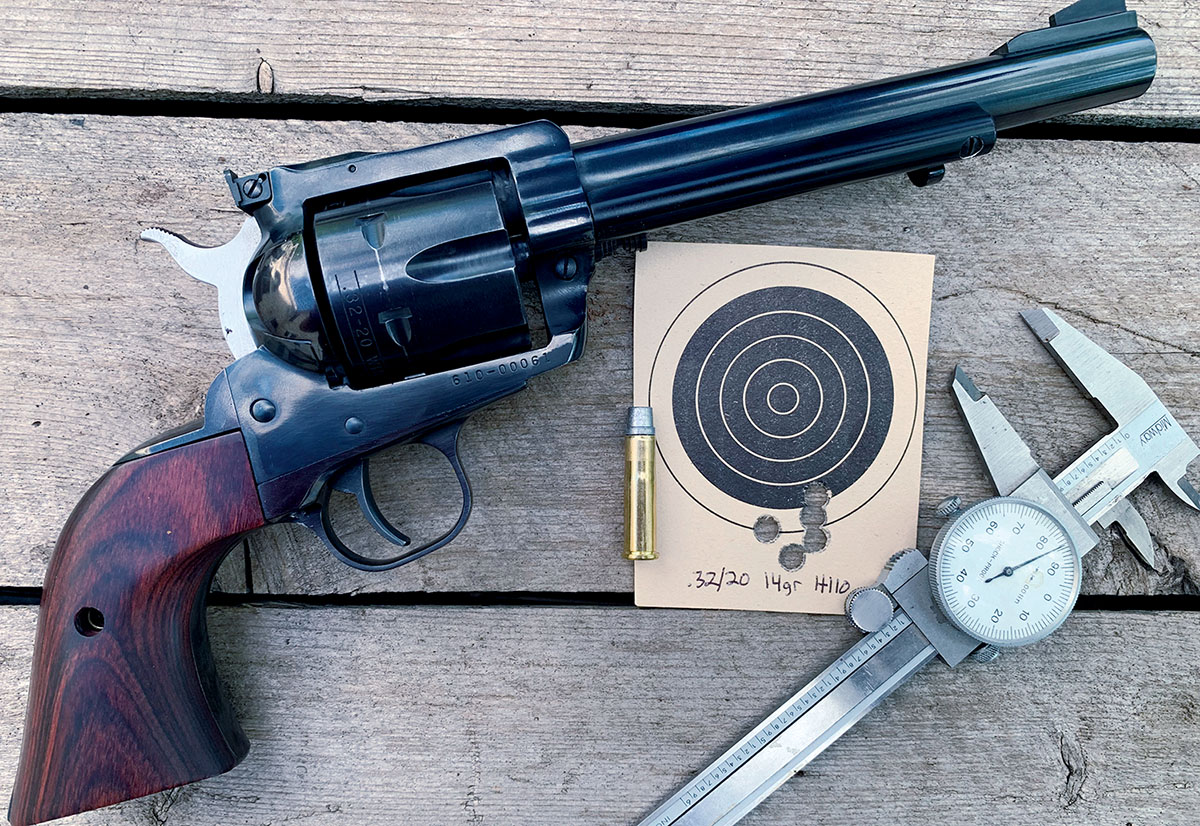
improved accuracy. All the other guns had throats measuring .314 inch.
Shooting was done at 25 yards using a sandbag rest sitting on top of a 6x6-inch block of wood standing on edge. Groups consisted of 5-shot strings. All loads extracted easily, and there were no misfires. The little .32s are a pleasure to shoot and are quite accurate. The largest group measured only 1.55 inches, and the smallest group measured .75 inches.
To say I’m happy with the Arsenal Molds would be an understatement. The mould is very versatile for several cartridges, and the large meplat hits hard while driving deep with this heavy-caliber mould design.
Arsenal Molds makes a fine product with many useful bullet designs. I have a few others, and they have all worked wonderfully while casting with them. The .32s are useful cartridges, great for plinking, varmint duty and small-game hunting, and I know of some instances where they have taken deer.
Nothing provides you with mountain-man pride and independence like making and loading your own ammunition. It’s with principles like these that our country was built on. Keep your lead hot and your powder dry! A gun’s only enemies are rust and politicians.