


A Rifleman’s Optics
Burris Optics FastFire 4 Multi-Reticle Reflex Sight
column By: Patrick Meitin | September, 26

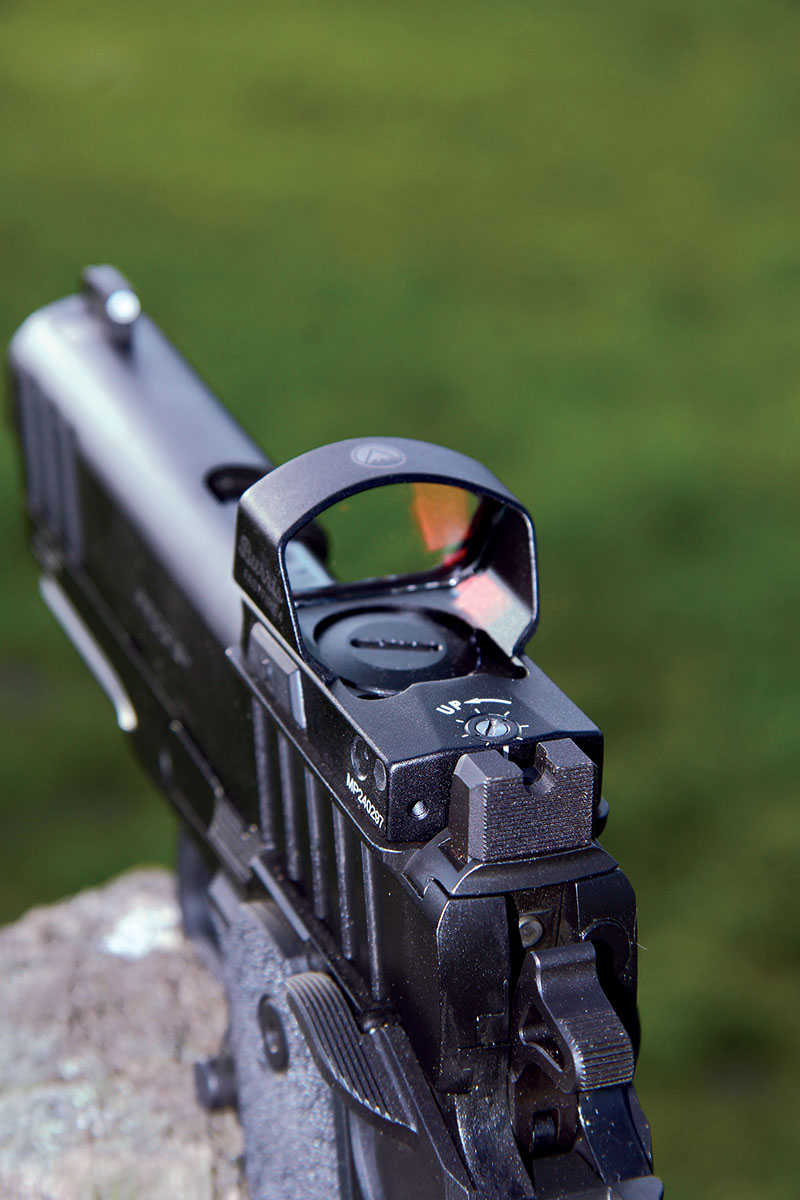
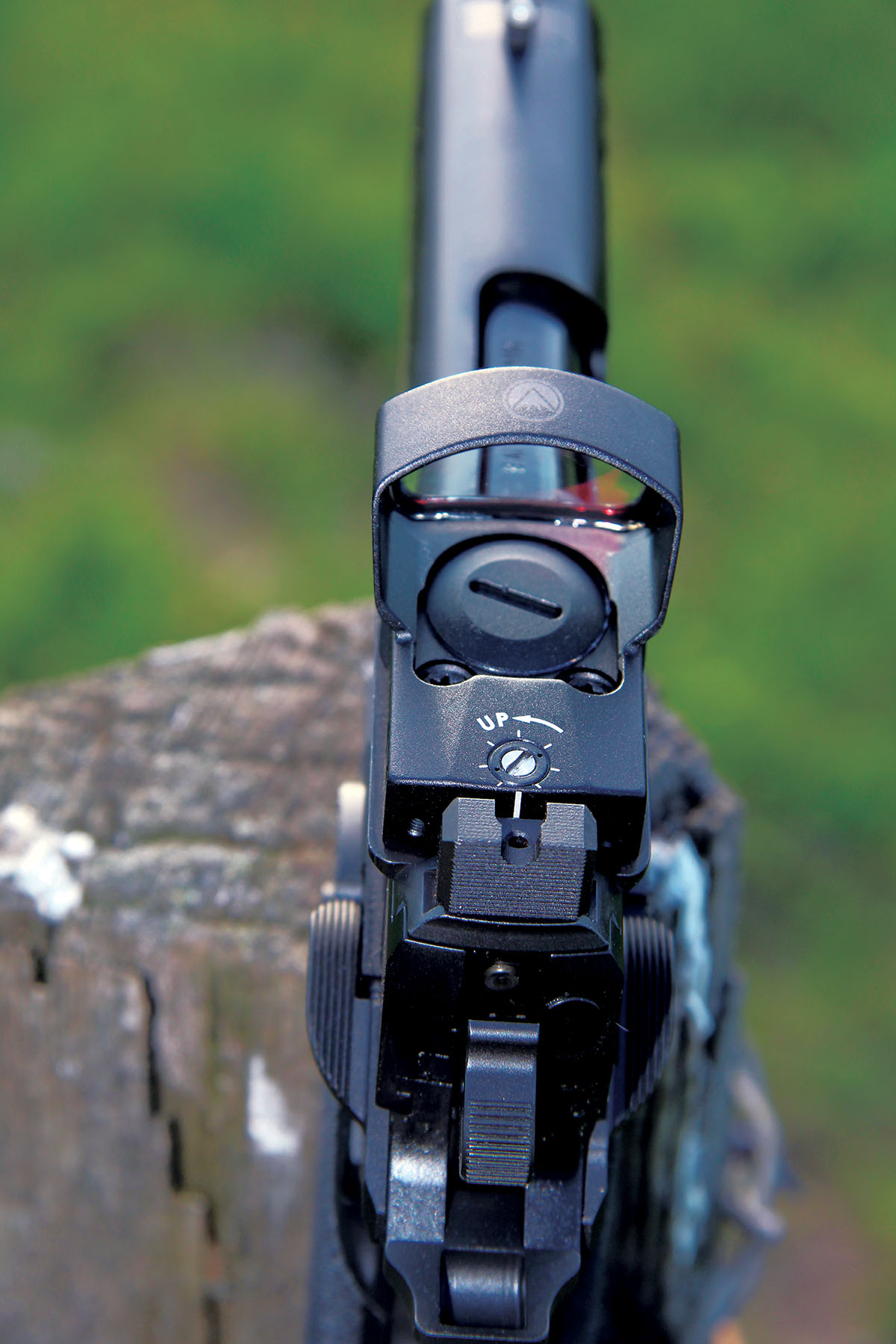
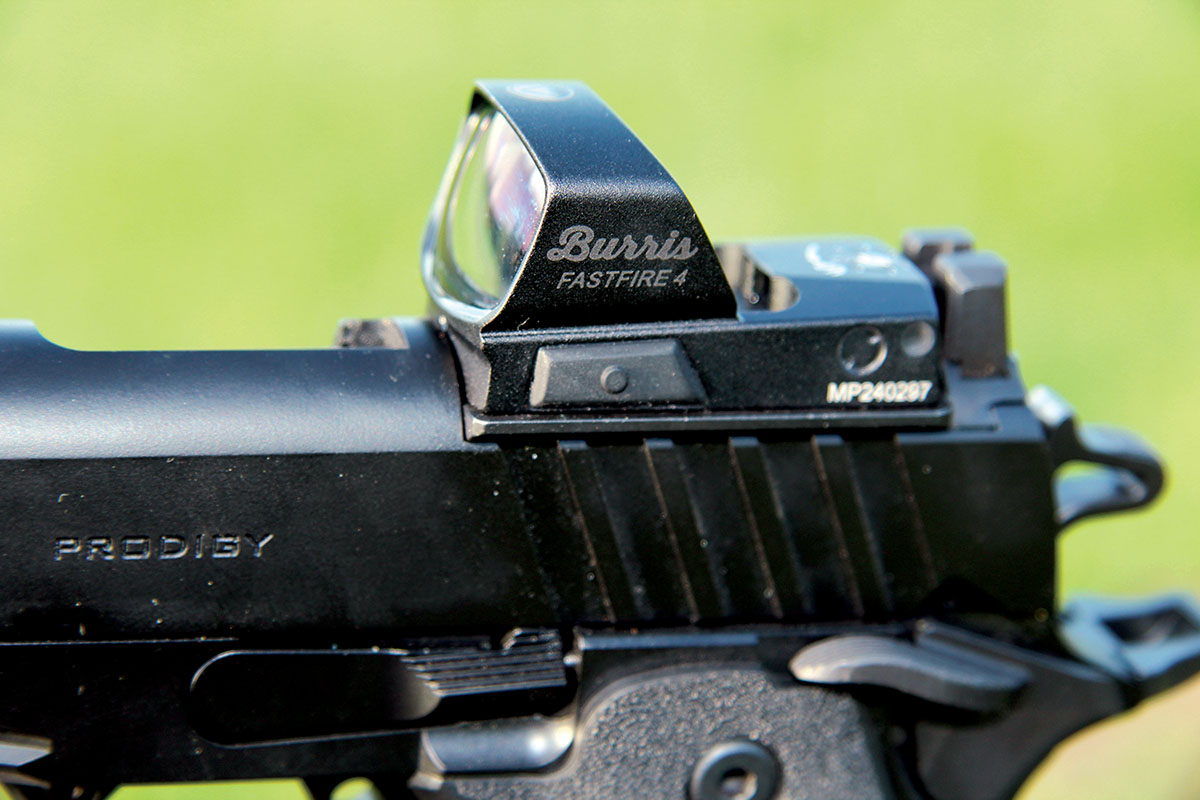
While recently testing a Springfield Armory 1911 DS Prodigy Compact 31⁄2-inch handgun, I decided to give the dot-optic approach a thorough run-through with a serious handgun, in my case, meaning something larger than a 22 LR. I added a Burris FastFire 4 via a Springfield adaptor plate to create a streamlined mating.
Burris should be a familiar name to any firearms enthusiasts – a Greenly, Colorado, company founded in 1971 to provide a full lineup of rifle and handgun scopes, hunting, competition and law enforcement sights, binoculars, spotting scopes, mounts and accessories. I have reviewed a couple of Burris riflescopes in this column, never failing to be impressed by the combination of quality and affordable price.
The FastFire 4 red dot reflex sight was designed to be compatible with any weapon platform, including PPC and AR rifles holding Picatinny rails and shotguns. Yet I really see this compact optic as an ideal handgun slide-mounted sighting system. Burris has gradually refined the FastFire 4 over the past decade, introducing new reticle options and greatly improving battery life.
Like any reflex dot system, the FastFire 4 requires familiarization through repetition. When I put my first dot system on a Ruger 22/45, holding Picatinny rails instead of iron sights, I initially struggled to find the dot or reticle while addressing the target. This became even more pointed when faced with a point-blank spring ground squirrel or fall grouse volunteering itself for a shot. With the FastFire 4, I was able to closely correlate the dot sight to the irons, making reticle/dot acquisition automatic.
My experiences there bear noting.
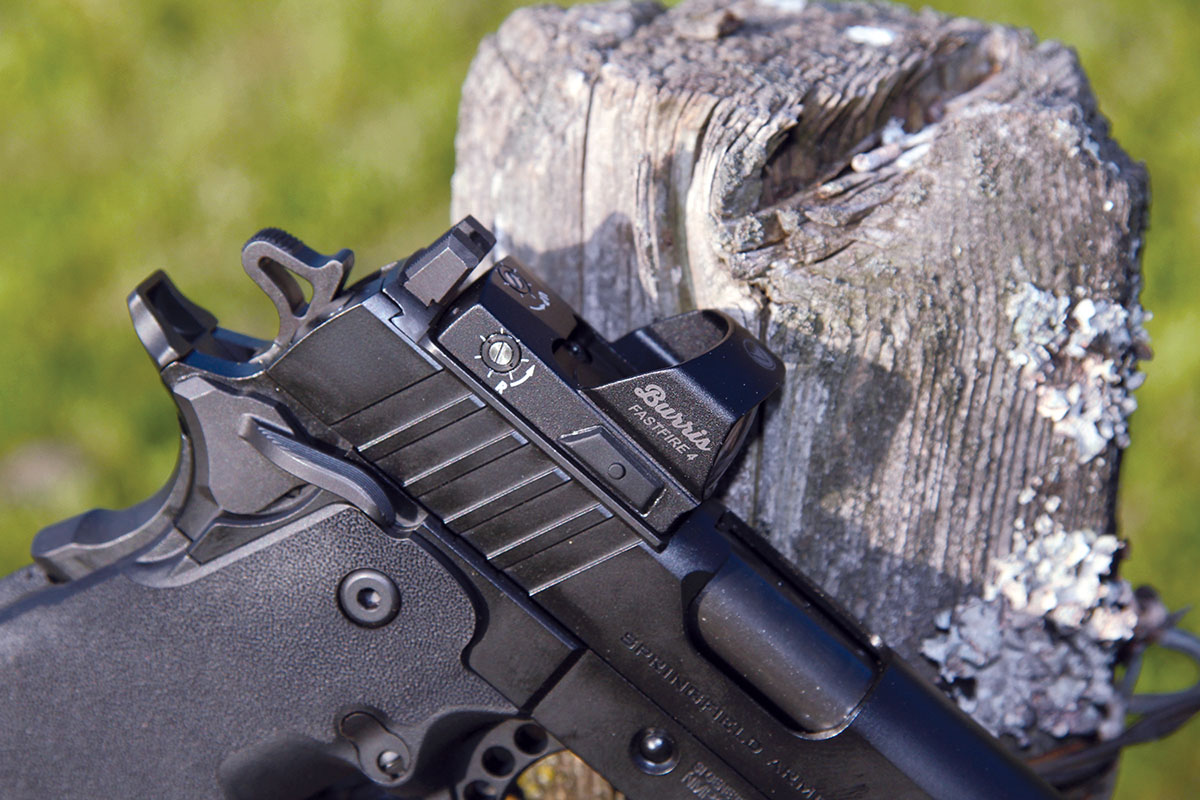
Regarding reticles, the FastFire 4 can be toggled between four different options. The most basic is an independent 3-MOA red dot, which I found best for precision work, like shooting groups while auditioning various ammunition. There is also a red dot encircled by an open-bottomed, 11-MOA “horseshoe,” the same 11-MOA encircled dot surrounded by a wider broken circle, and a 3-MOA dot with left and right leveling wings and a large broken circle. I see the latter options as useful when speed is vital, and center mass hits are sufficient. Reticles include three manual brightness levels, plus an automatic system that

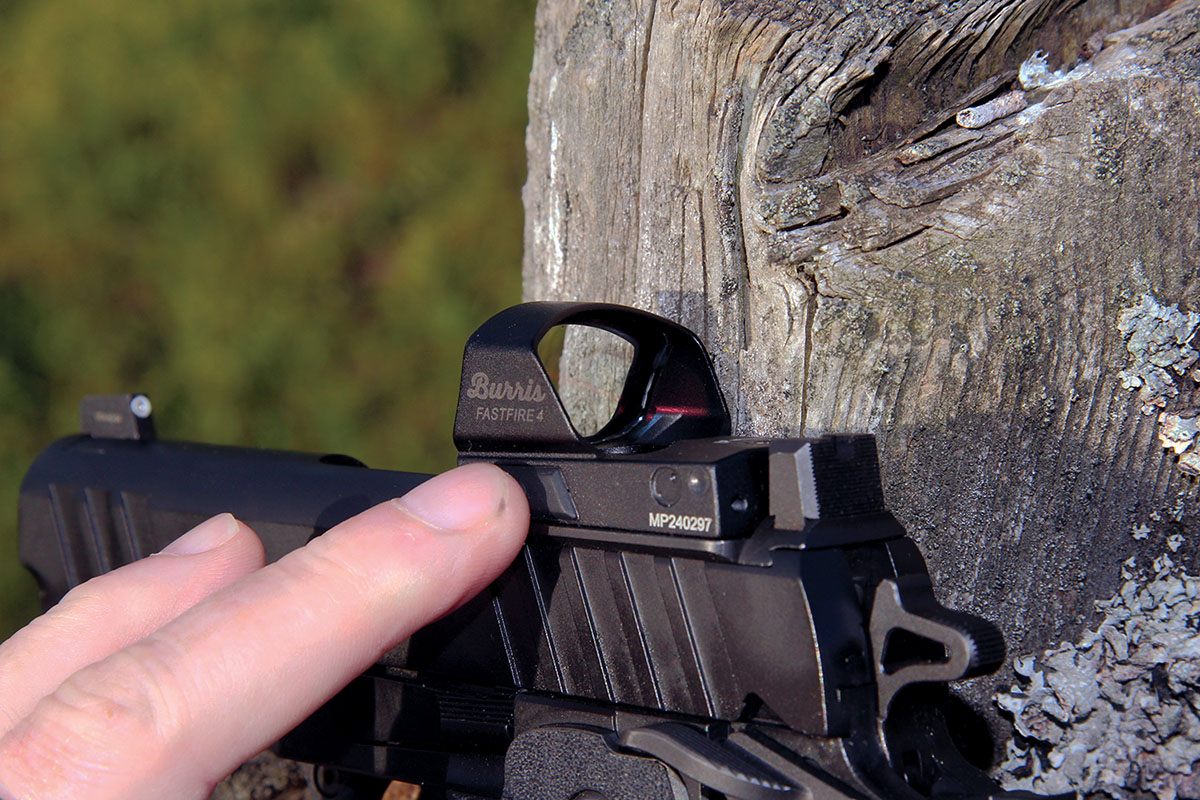
The optic comes with an optional screw-on weather shield, and the impact-resistant housing includes a generous sight window to provide a wider field of view. The sight is compatible with Picatinny and Weaver mounting for attachment to long guns, or various plates (available through Burris) for slide mounting to automatic handguns.
The FastFire 4’s slim profile made an ideal pairing with the tested handgun, providing unlimited eye relief. The improved housing makes it stronger and more reliable than past FastFire models. It includes a matte black finish, and is fog,
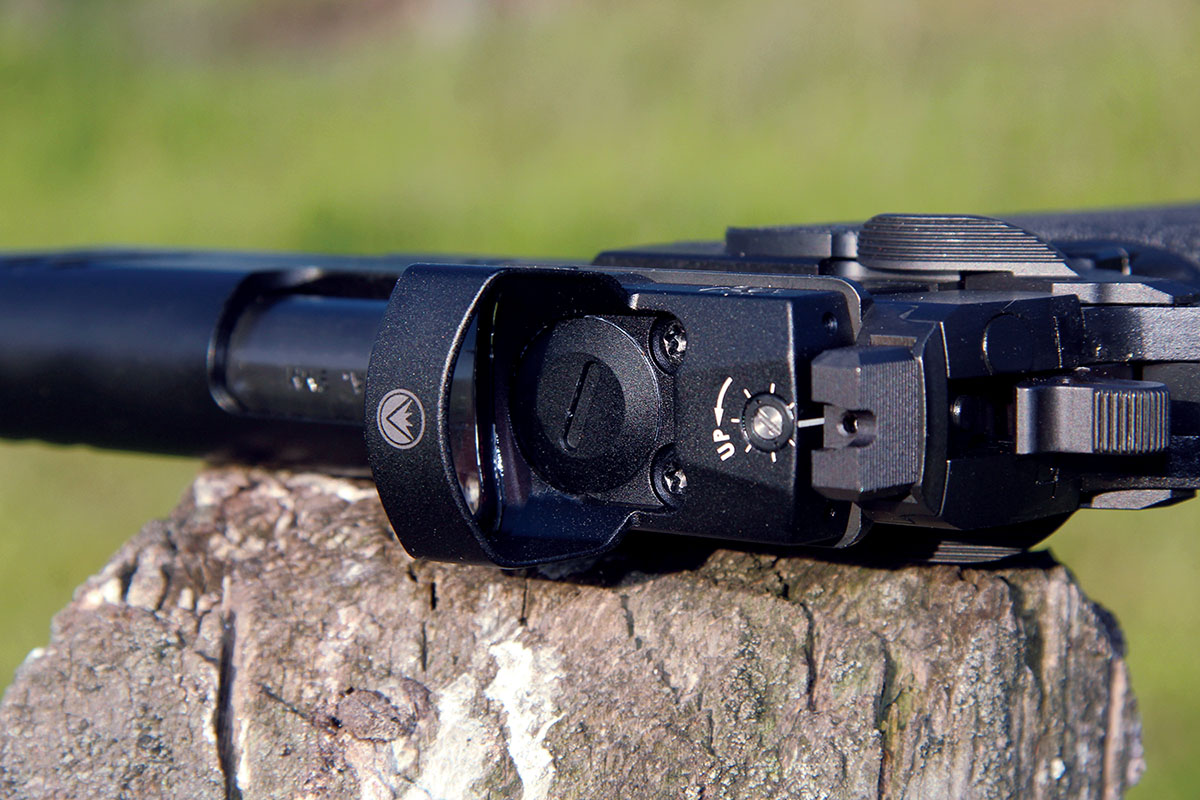
Regarding the greater battery life hinted at earlier, the FastFire 4 provides up to 26,000 hours of battery life on a single CR1632 lithium coin cell through increased efficiency and the unit’s automatic 8-hour shutoff feature. Battery access is located on the top of the optic via a slotted, screw-off cap, so the unit does not have to be removed from the firearm to replace the battery.
The FastFire 4 weighs just 1.6 ounces and includes a compact 1.9-inch overall length. It includes an MSRP of $480. Like other optics from the company, the
FastFire 4 comes with a Burris Forever Warranty.
The FastFire 4 didn’t convince me I needed to abandon my irons and equip all of my handguns with dot sights, but it did show me the obvious appeal.
Most noticeably, while shooting groups off a bench and not pressed for time, the 3-MOA dot did provide a greater degree of consistency than irons would have allowed. With enough practice and repetition, it appears the system would offer a speed edge in disciplines such as 3-Gun competition. I see the potential, and the Burris Optics FastFire 4 reflex sight would be a solid sight to start that journey.
Go to BurrisOptics.com to learn more.