

Weatherby’s Mark XXII Semiautomatic Rifle
A Blast from the Past Comes in an Unusual Way
feature By: Stan Trzoniec | September, 26
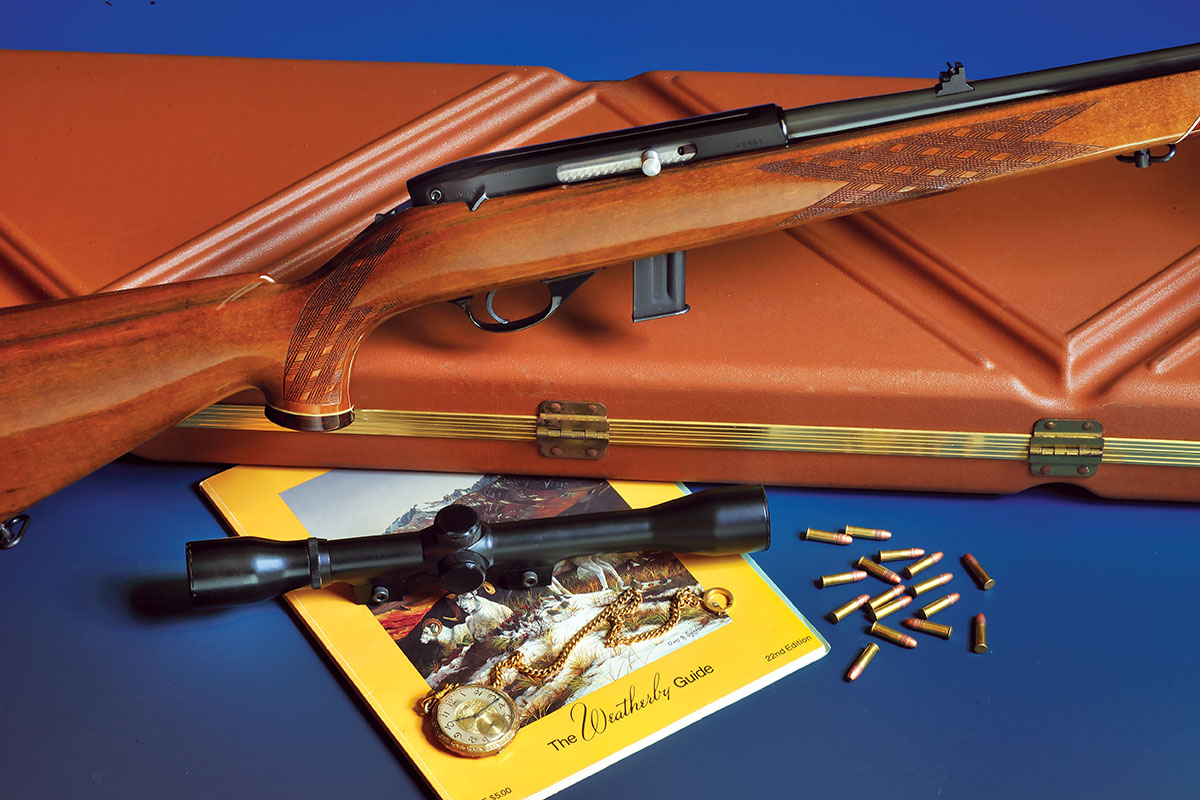
History is always an interesting part of gun collecting, so this gun was no exception. Starting in 1961, both Roy Weatherby and his engineer, Fred Jennie, had completed work on a .22 rimfire rifle. Checking the Weatherby. The Man. The Gun. The Legend. book by
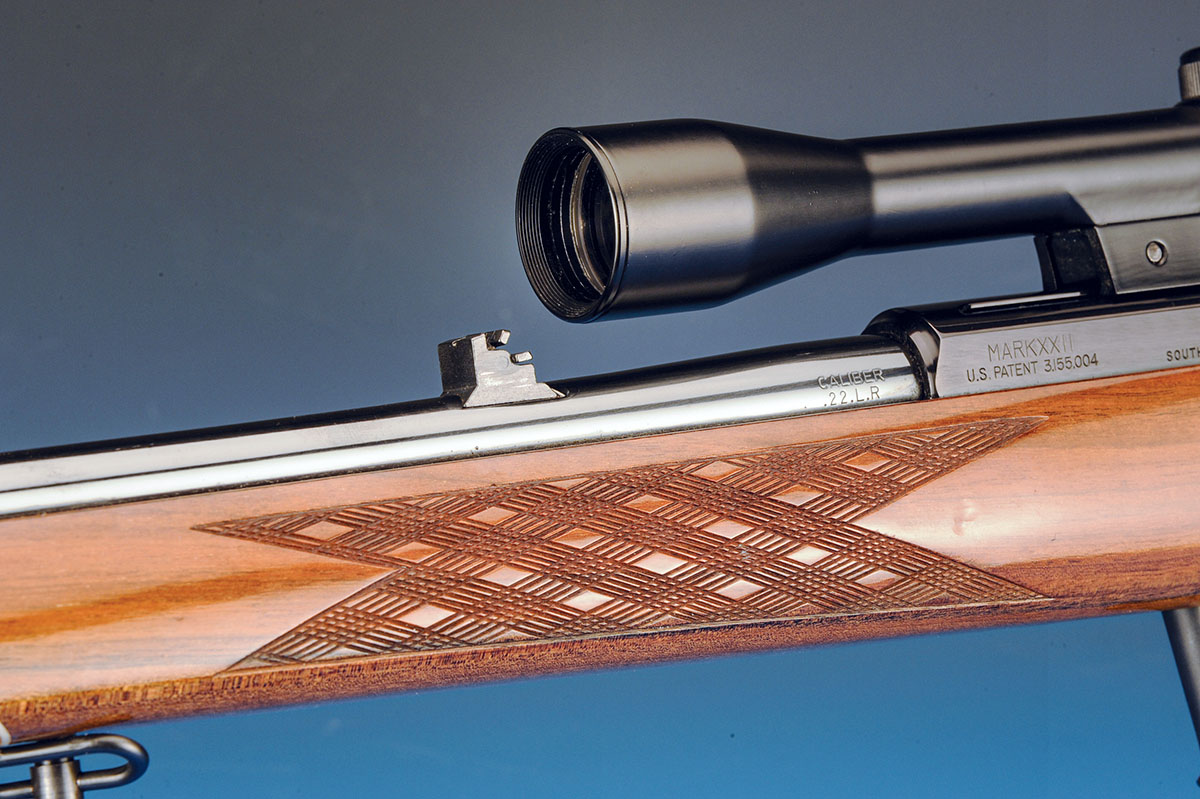
In the hand, this rifle certainly follows Roy Weatherby’s thinking on how a rifle should be made, with interesting features not seen on rimfire rifles at the time. For sure, the gun follows his famous Mark V centerfire guns right down to the glossy finish and select wood. In addition, the gun was available with either a detachable magazine holding 5 or 10 rounds or a tubular model sporting 15 rounds of 22 Long Rifle ammunition.
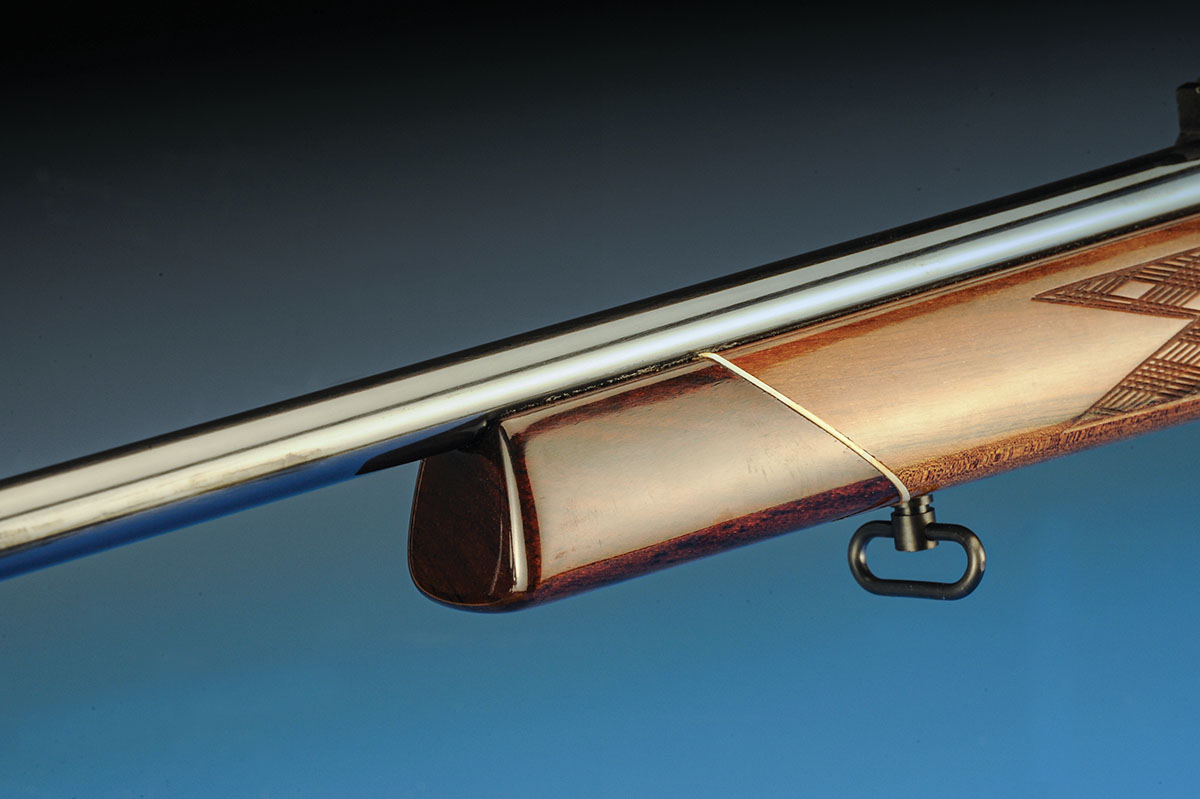
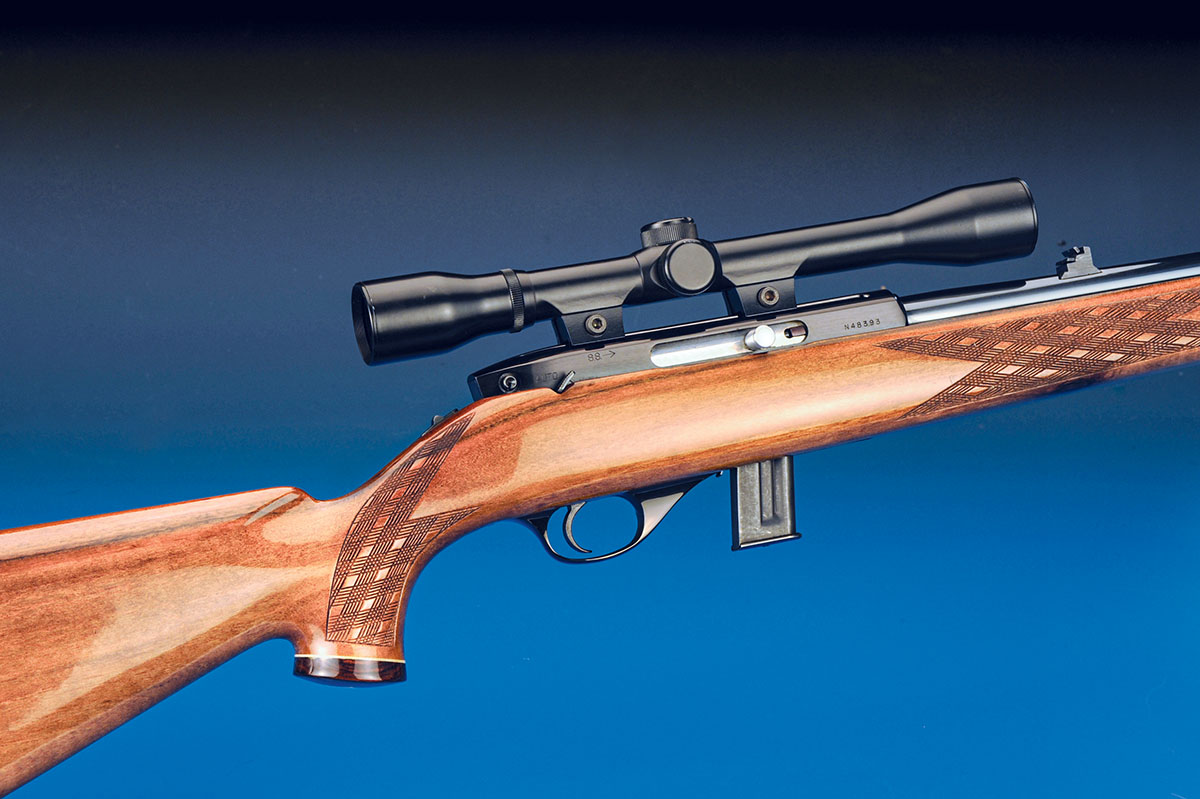
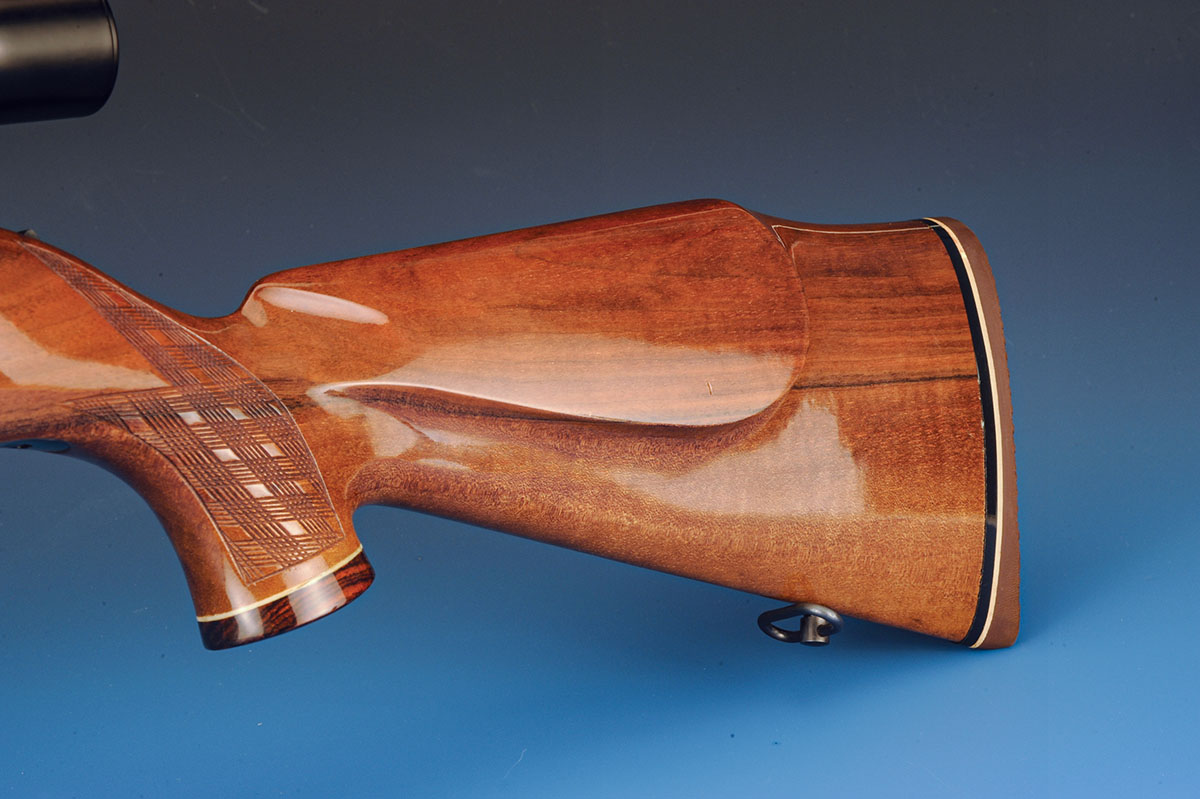
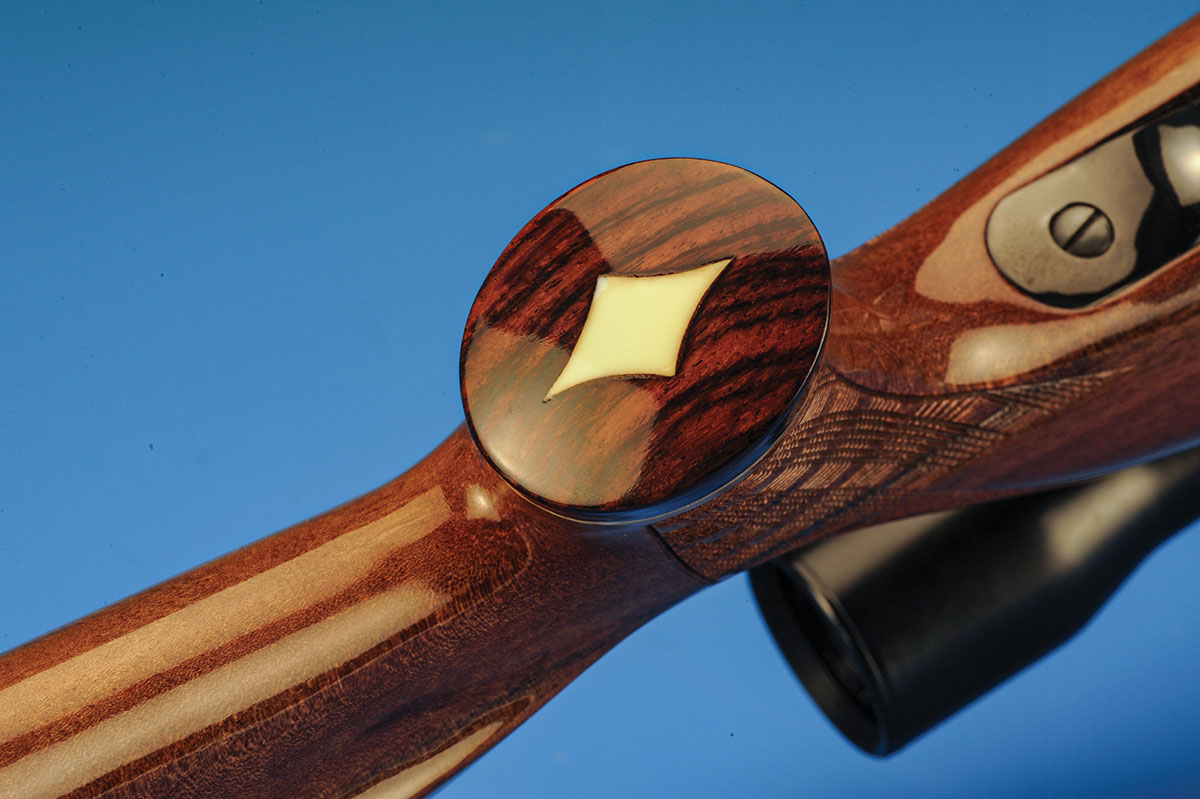
From here, the stock takes a turn to the thinner side at the pistol grip, again with skipline checkering to accent this area. The grip is formed for a good hold, and with the rosewood grip cap and white-line spacer, allows a bit of a flare, allowing all three fingers to fit comfortably. Naturally, at the base of the grip, the company’s trademark diamond inlay has been installed for that custom look.
The butt part of the stock is full size, includes an undercut cheekpiece and has a Monte Carlo profile with a hint of a fiddleback grain pattern. Like its centerfire cousins, the stock is a right-handed cast off finished with a quarter-inch Pachmayr classic styled rubber buttpad with a black and white spacer, complemented with a basket weave pattern to keep it from slipping off your shoulder. Finishing up, the inletting around the
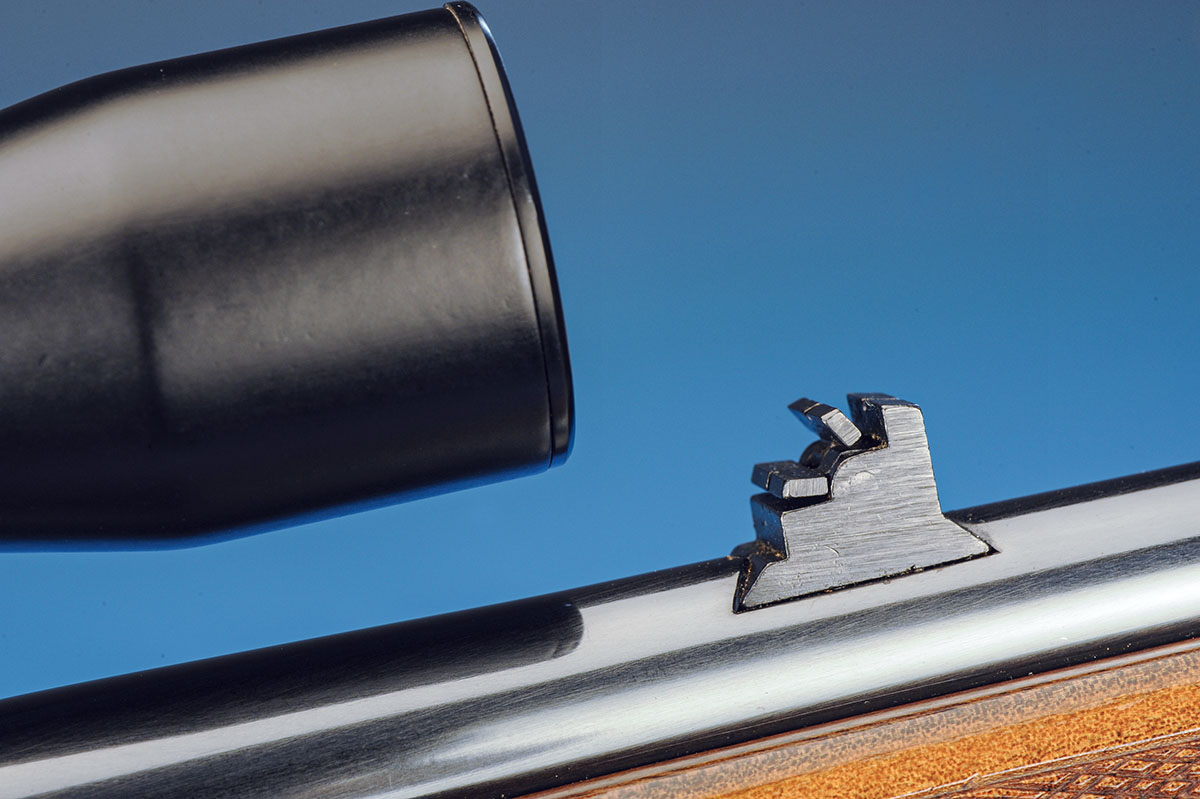
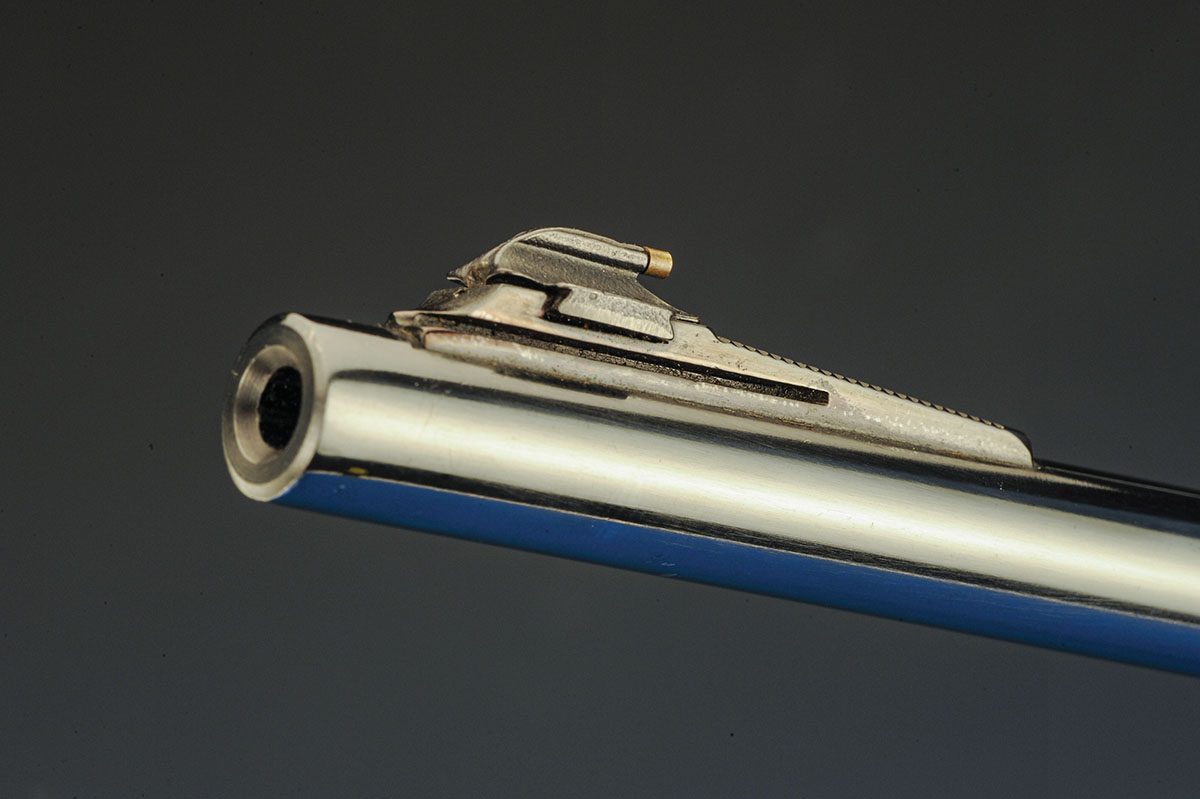
The barreled action is true to form with Weatherby. All parts of the action and barrel are polished and finished with a deep bluing. The sporter barrel measures 24 inches with a muzzle diameter of .520 inch with a rounded crown. The front sight is standard on both models, consisting of a serrated ramp with a blade incorporating a gold bead. The rear sight is a folding-leaf design with three settings of 50, 75 and 100 yards, set up for high-velocity ammunition. Since I already had my scope, I mounted my Mark XXII 4x50mm with its integral rings directly on the rifle. With a 7⁄8-inch tube, it is the perfect match for any rimfire rifle. Additionally, since the “rings” are part of the scope, it assures you a perfect alignment for the reticle in both the vertical and horizontal position. As a side note here, the “50” number on the scope actually refers to the relative brightness or the amount of light gathered; the objective lens on the scope measures 28mm.
After Roy Weatherby dissolved his relationship with KTG in Japan in 1972, he turned over the manufacturing of the rifles to Nikko Kodensha a year later, to this firm, which made my rifle. Overall, the Mark XXII is a pleasure to hold, shoot and enjoy, especially when it comes to the barreled action.
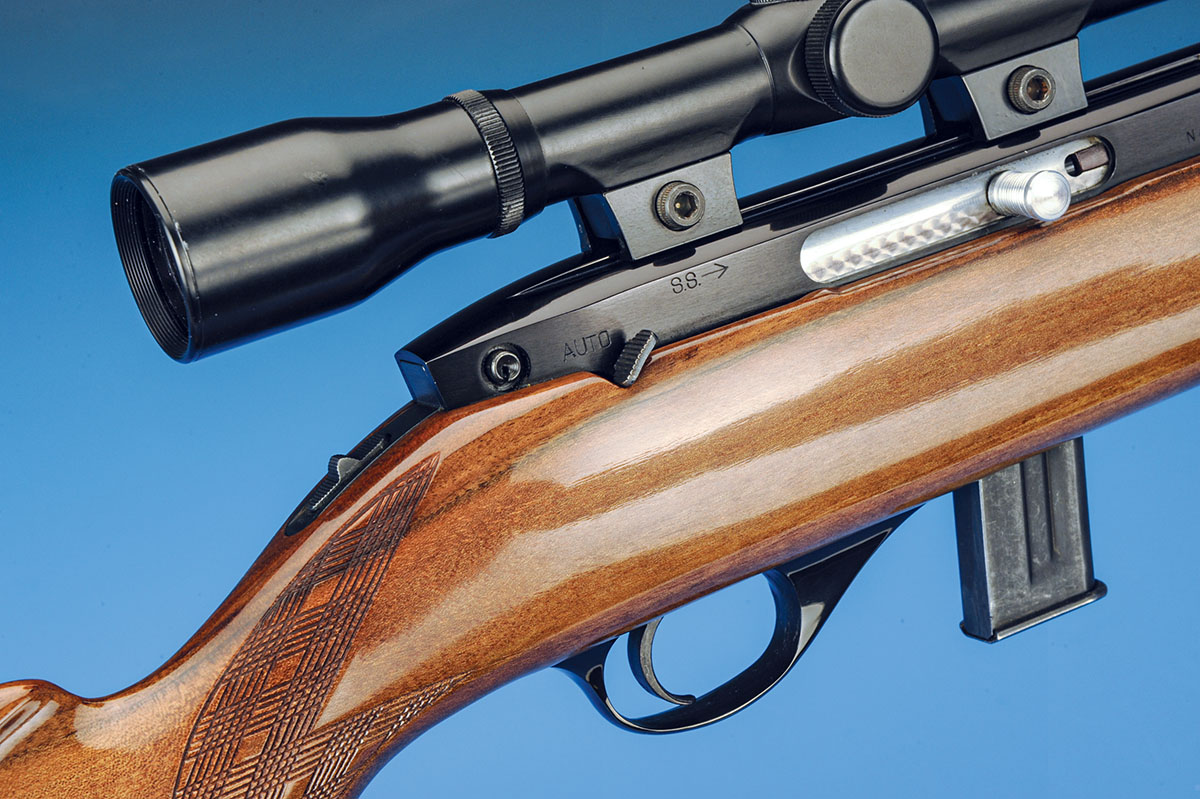
The receiver measures 71⁄4 inches from the barrel juncture to the shroud. It is well machined and free of any machining or polishing marks. Topside, you’ll find machined rails for a scope or bases, and just under is the bolt and operating handle. The bolt is jeweled, and the handle is serrated for a non-slip surface.
Again, at the rear of the receiver is another innovative feature. What Weatherby calls the takedown pin is actually the key to easily disassembling the rifle for cleaning or inspection. Pushing the pin out from right to left now allows you to push the receiver forward while lifting it completely out of the stock. Now, everything within the receiver is accessible for ease of maintenance with no need to disassemble any further. To reassemble, drop the receiver and barrel back into the stock, push it back until the holes line up, and replace the pin.
Unusual and slightly ahead of its time on a rimfire rifle, a tang, shotgun-type safety is installed on the rear of the receiver. Easily moved by the thumb, forward to fire, back for safe. The bottom metal on the gun houses the graceful guard with the trigger and magazine well. The gun had a smooth, consistent 21⁄4-pound trigger pull with minimal creep and a 10-round detachable magazine that slid in and out of the gun with little effort. As made, to me, the gun came with a 5-round magazine; the 10-round magazine was an
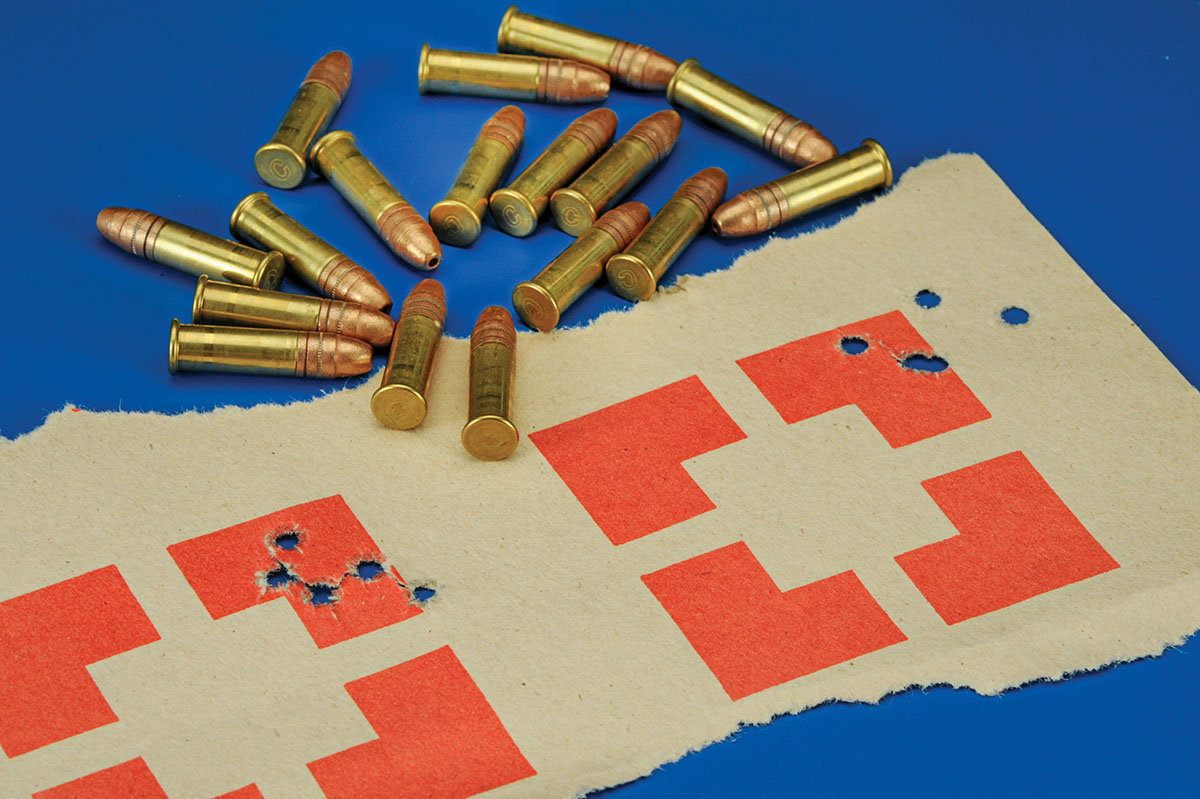
At the range, this shooter could not have been more pleased with his latest purchase. I have said this before, since you don’t reload rimfire ammunition and I rarely shoot at long distances, tracking velocities is unnecessary. I am happy with the specifications the factories list in their catalogs. With the velocities shown after each name, I grabbed a box of SK solid-tip Rifle Match at 1,085 feet per second (fps), CCI Mini-Mag hollow points at 1,235 fps and trusty Winchester High Velocity solids at 1,280 fps.
It is summer now in New England, and temperatures can get hot fast, so morning shoots at the range are the norm. Setting up for 50 yards, I fired five-shot groups and then picked the smallest. With the SK brand, the best of the best showed up as a tight .670-inch group. The Mini-Mags hit .865 inch, followed by the Winchester Power Point samples at .855 inch. I was more than pleased and continued the morning plinking away without any failures to eject, just as I did when I was a youngster on the farm with my single-shot Winchester. Shooting this rimfire rifle offhand was akin to holding a larger caliber gun due to its profile, and walking around in the woods on the property proved again that this rimfire gun was indeed worth the purchase. Later this summer, I’ll take a ride out to my favorite farm for some close stalking on the wily woodchuck with this 22 rimfire, just like I did when I was a kid.
Overall, I have to credit Roy and his engineer Fred Jennie for designing such a handsome and innovative gun, especially in the period of over 60 years ago. You have to remember, production methods were quite different from what they are today, and getting a gun up and running with this kind of quality surely deserves some credit. Just for the record, the list price for this rifle in 1985 was $369.95, and add $85.35 for the scope. That makes me wonder why I did not buy one back then.
Years later, can you respect the Mark XXII as a classic in rimfire circles? Considering the design features, looks and accuracy, yes, I think so and thanks Roy, you did a hell of a job!